In the vast cosmic theater where gravitational forces choreograph celestial dances, astronomers are now turning their attention to one of the solar system's most intriguing yet overlooked phenomena: Trojan asteroids. These cosmic hitchhikers, trapped in gravitational sweet spots, have long fascinated planetary scientists studying our own cosmic neighborhood. Now, researchers are pushing the boundaries of exoplanet detection by searching for these elusive objects—dubbed "exotrojans"—in one of the universe's most extreme environments: the violent realm of pulsar binary systems.
A groundbreaking study published in The Astrophysical Journal by Jackson Taylor from West Virginia University and his international team of collaborators represents a bold new frontier in the hunt for these cosmic companions. Rather than focusing on conventional star systems, the researchers deliberately chose to investigate black widow pulsars—extraordinarily violent binary systems where a rapidly spinning neutron star systematically cannibalizes its companion. This unconventional approach could revolutionize our understanding of planetary formation and orbital dynamics in the most extreme cosmic environments imaginable.
The search for exotrojans has proven remarkably challenging despite decades of effort. While our solar system harbors more than 10,000 confirmed Trojan asteroids—with Jupiter alone hosting the vast majority—detecting similar objects around distant stars has remained frustratingly elusive. The Kepler Space Telescope and other planet-hunting missions have discovered thousands of exoplanets, yet not a single confirmed exotrojan has been definitively identified, despite theoretical predictions suggesting they should be commonplace throughout the galaxy.
Understanding the Gravitational Architecture of Trojan Systems
To appreciate the significance of this research, one must first understand the elegant gravitational mechanics that give rise to Trojan populations. In any two-body system—whether it's the Sun and Jupiter, or a pulsar and its companion—there exist five special locations known as Lagrange points where the gravitational forces of the two massive bodies create regions of equilibrium. These points, designated L1 through L5, represent solutions to what mathematicians call the restricted three-body problem, first described by the Italian-French mathematician Joseph-Louis Lagrange in 1772.
The most stable of these locations are the L4 and L5 points, which form equilateral triangles with the two primary bodies. Objects positioned at these points lead and trail the smaller body by approximately 60 degrees along its orbital path. The remarkable stability of these regions means that asteroids, dust, or even planets that wander into these gravitational harbors can remain trapped there for billions of years, orbiting in lockstep with their larger companion.
In our solar system, every major planet except Mercury and Saturn has confirmed Trojan populations, though Jupiter's collection dwarfs all others. NASA's studies of Trojan asteroids have revealed these objects to be pristine remnants from the solar system's formation, offering invaluable insights into the conditions that prevailed 4.6 billion years ago. The upcoming Lucy mission, launched in 2021, will visit several Jovian Trojans to study their composition and structure in unprecedented detail.
Black Widow Pulsars: An Extreme Testing Ground
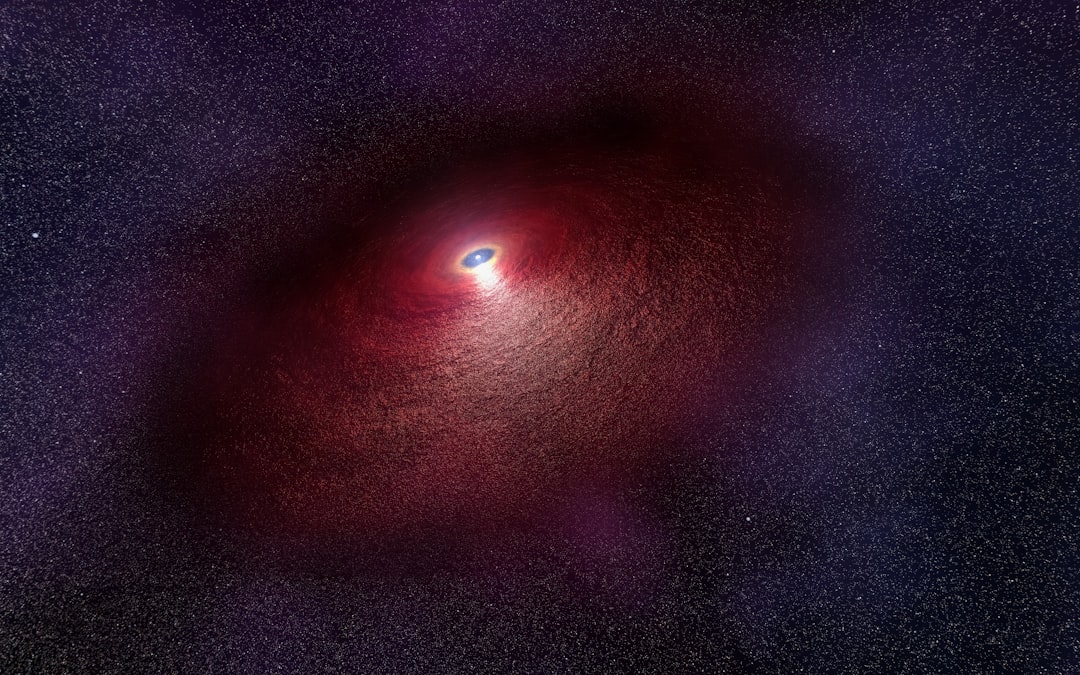
Taylor's team made the counterintuitive decision to search for exotrojans in black widow pulsar systems—some of the most violent and energetic environments known to astrophysics. These exotic binary systems consist of a millisecond pulsar—a rapidly rotating neutron star spinning hundreds of times per second—paired with a low-mass companion star typically weighing only about 1% of our Sun's mass.
The nickname "black widow" aptly describes the destructive relationship at the heart of these systems. The pulsar emits intense radiation and a powerful stellar wind that relentlessly strips material from its companion star, gradually evaporating it over cosmic timescales. This process creates spectacular displays of high-energy radiation and complex interactions between the pulsar wind and the companion's stellar atmosphere.
"At first glance, black widow pulsars seem like the last place you'd look for stable planetary orbits," explains Dr. Taylor. "However, the mathematics of orbital stability actually favor these systems because the low-mass companion creates a more favorable mass ratio for Trojan formation compared to typical binary star systems."
The extreme precision of pulsar timing makes these systems ideal laboratories for detecting subtle gravitational perturbations. Millisecond pulsars function as cosmic clocks of extraordinary accuracy, with their radio pulses arriving with timing precision that rivals atomic clocks. Any additional mass in the system—such as a Trojan planet—would create detectable variations in the pulsar's apparent rotation period as observed from Earth.
Innovative Detection Methodologies for Extreme Environments
Traditional exoplanet detection techniques, such as the radial velocity method or transit photometry, prove inadequate in pulsar binary systems. The gravitational influence of the companion star overwhelms any signal from a potential Trojan planet, while the intense radiation environment makes optical observations extremely challenging. To overcome these obstacles, Taylor's team developed two complementary detection strategies specifically tailored to pulsar systems.
Optical-Radio Comparison Technique
For the binary system PSR J1641+8049, the researchers employed an innovative approach comparing optical light curves with radio pulse timing data. This method exploits a fundamental asymmetry in how different wavelengths trace the system's dynamics. Optical observations peak when the heated, irradiated face of the companion star points toward Earth, effectively tracking the companion's position. Meanwhile, radio pulses from the pulsar track the center of mass of the entire system, including any unseen Trojan bodies.
If a massive Trojan planet exists at the L4 or L5 point, it would shift the system's center of mass away from the simple two-body prediction. This displacement would manifest as a systematic offset between the optical and radio timing measurements—a telltale signature of a third body in the system. The technique requires exquisite precision in both optical photometry and radio timing, pushing current observational capabilities to their limits.
NANOGrav Pulse Timing Analysis
The second methodology leveraged the NANOGrav 15-year dataset, one of the most comprehensive pulsar timing arrays ever assembled. The North American Nanohertz Observatory for Gravitational Waves has been monitoring dozens of millisecond pulsars with extraordinary precision for over a decade, primarily to detect gravitational waves rippling through the fabric of spacetime.
Taylor's team applied this dataset to search for libration signatures—the characteristic wobbling motion that Trojan objects exhibit as they oscillate around their equilibrium points. Even though Trojans occupy stable locations, they don't remain perfectly stationary; instead, they execute complex tadpole or horseshoe-shaped orbits around the L4 or L5 points. This libration causes the system's center of mass to oscillate at a predictable frequency, creating periodic variations in the times of arrival (TOAs) of radio pulses from the pulsar.
The researchers analyzed eight different black widow binary systems using this technique, searching for the subtle periodic signals that would betray the presence of a Trojan companion. The sensitivity of this method allowed them to place stringent limits on potential Trojan masses, ruling out objects as small as Earth-mass planets in most of the systems studied.
Observational Results and Constraints
Despite employing two sophisticated detection strategies across nine different pulsar binary systems, the research team found no definitive evidence for exotrojans. However, the null result proves scientifically valuable, establishing important constraints on the prevalence and properties of Trojan populations in extreme environments.
The NANOGrav analysis revealed two systems with intriguing signals that initially appeared promising. However, detailed statistical analysis suggested these were likely false positives rather than genuine Trojan detections. The spurious signals probably originated from either intrinsic timing noise in the pulsars themselves—millisecond pulsars occasionally exhibit subtle rotational irregularities—or from systematic errors in the observational data collected by the Arecibo Observatory before its tragic collapse in 2020.
For the remaining seven binary systems in the NANOGrav sample, the researchers established robust upper limits on potential Trojan masses. They could confidently rule out the presence of Earth-mass or larger objects at the L4 and L5 points of these systems. The optical-radio comparison of PSR J1641+8049 provided less stringent constraints, limiting any Trojan to a maximum mass of approximately eight Jupiter masses—still a valuable constraint that rules out the most massive possible companions.
Implications and Future Prospects
While the absence of detected exotrojans might seem disappointing, it raises fascinating questions about planetary formation and orbital dynamics in extreme environments. The ubiquity of Trojans in our solar system—where even Neptune and Mars host small populations—suggests that the mechanisms for capturing objects at Lagrange points should operate universally. The failure to detect exotrojans in pulsar systems could indicate several possibilities:
- Environmental Destruction: The intense radiation and particle winds from pulsars may prevent Trojan formation or systematically destroy any objects that form, through processes like photodissociation or radiation pressure.
- Formation Constraints: The violent history of pulsar binary evolution—including the supernova that created the neutron star—may preclude the survival or formation of stable Trojan populations in these systems.
- Detection Limitations: Current observational techniques may lack the sensitivity to detect smaller Trojans, such as asteroid-sized or Mars-sized objects, which could still populate these systems below detection thresholds.
- Statistical Sampling: With only nine systems examined, the sample size may simply be too small to capture rare Trojan configurations, especially if exotrojans occur in only a fraction of suitable binary systems.
The upcoming NANOGrav 20-year data release promises to dramatically improve detection sensitivity through longer baseline observations and improved timing precision. Additional pulsar timing arrays, including the Square Kilometre Array currently under construction, will provide unprecedented capabilities for detecting subtle gravitational perturbations in pulsar systems.
Beyond pulsar systems, the search for exotrojans continues around more conventional stars. The James Webb Space Telescope offers new possibilities for detecting dust clouds or thermal emission from Trojan populations, while future missions like the PLATO spacecraft may finally achieve the photometric precision necessary to detect exotrojans through transit timing variations.
Broader Context in Exoplanetary Science
The quest for exotrojans represents more than just an attempt to find cosmic analogs to Jupiter's asteroid swarms. These objects could provide crucial insights into planetary formation mechanisms, orbital migration histories, and the long-term stability of planetary systems. In our solar system, Trojan populations serve as fossil records of the primordial solar nebula, preserving materials from the epoch of planet formation in gravitationally stable cold storage.
Discovering exotrojans around other stars would enable comparative studies of planetary system architecture across diverse stellar environments. The mass, composition, and orbital characteristics of exotrojans could reveal whether planet formation proceeds similarly across different stellar masses, metallicities, and galactic environments. Furthermore, large Trojan planets—sometimes called "Trojan Earths" in science fiction—could potentially harbor habitable conditions if located in their host star's habitable zone.
The techniques developed by Taylor's team for studying pulsar binaries may find applications beyond exotrojan searches. The same methods could detect circumbinary planets, debris disks, or even gravitational wave signals from merging black holes in the early universe. As pulsar timing arrays achieve ever-greater precision, they will probe increasingly subtle phenomena at the intersection of astrophysics, gravitational physics, and planetary science.
While the first confirmed exotrojan remains elusive, the systematic exploration of pulsar binary systems demonstrates the creativity and persistence that characterize modern astronomical research. As observational capabilities continue advancing and theoretical models become more sophisticated, the discovery of these cosmic stowaways seems not a question of if, but when. The universe, it seems, still guards some of its secrets jealously—but astronomers are learning new ways to coax them into the light.