Astrophysicists Want to Forecast When a Black Hole Launches Its Jets
Black holes are not merely objects in the conventional sense. Some astrophysicists prefer to describe them as locations — singular points in the cosmos where the Universe's known laws of physics are pushed to their most extreme and exotic limits. At these extraordinary thresholds, matter, energy, space, and time become entangled in ways that continue to challenge our most sophisticated theoretical frameworks.
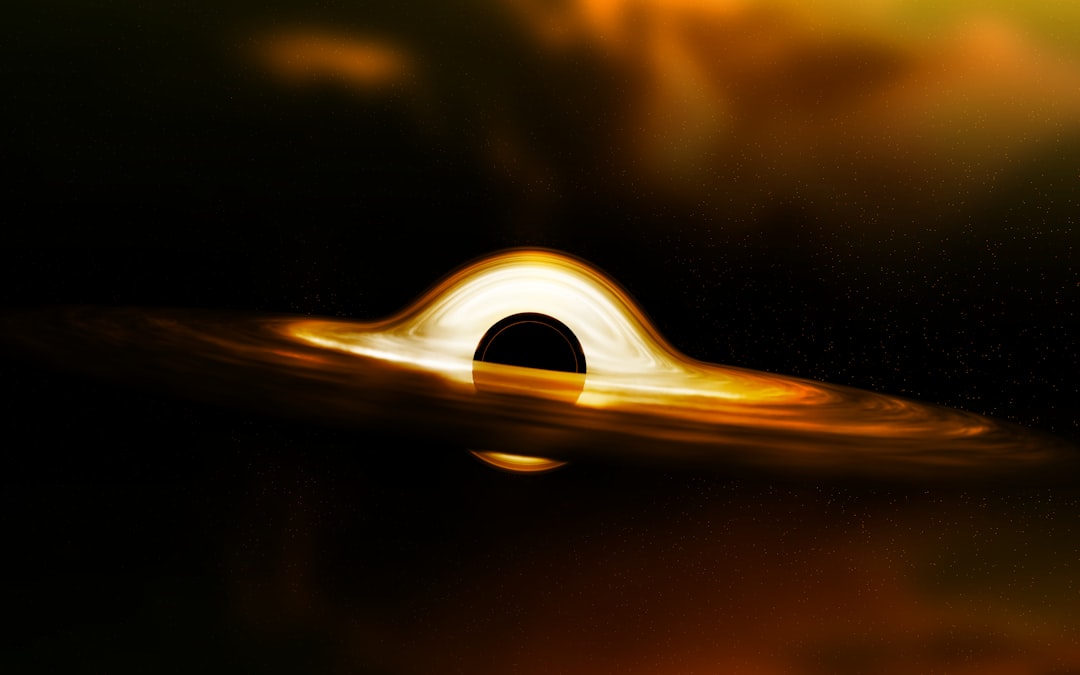
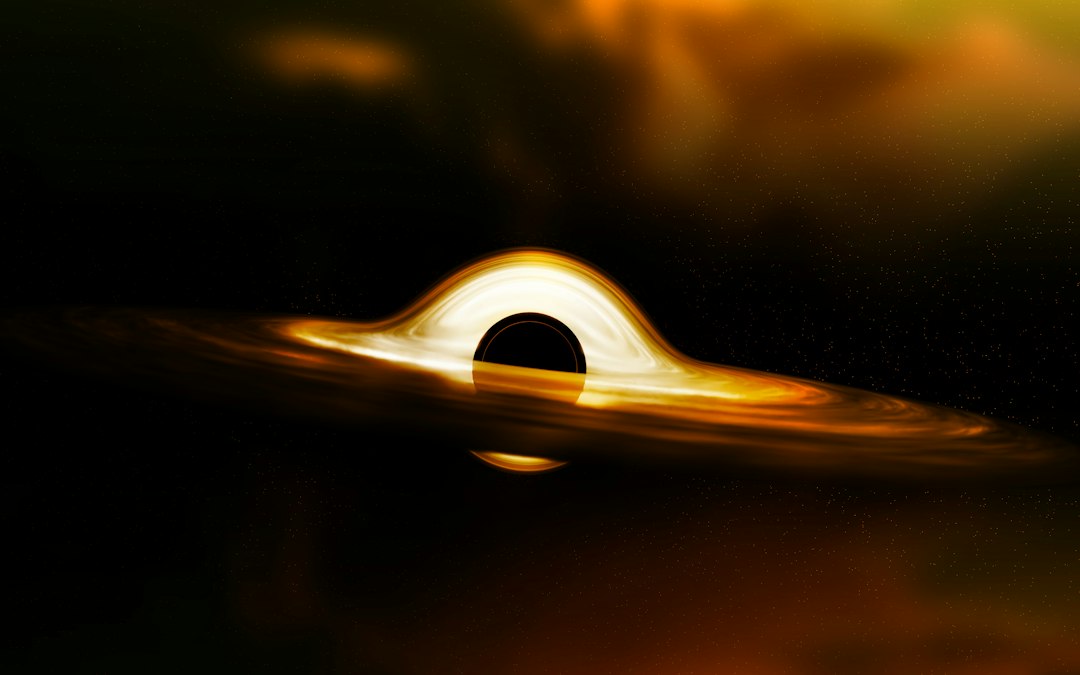
Black holes are gravitational gluttons, drawing everything in their vicinity inexorably toward them. When an unfortunate neighboring star strays too close, the black hole can strip away its outer gas layers through a process known as tidal disruption. But that stolen material does not simply vanish behind the event horizon and disappear from our observable Universe without ceremony. Instead, it first accumulates in a rapidly rotating structure called an accretion disk, where intense friction, compression, and magnetic forces raise temperatures to tens of millions of degrees Kelvin. Under these extraordinary conditions, some of the superheated material is expelled outward along the black hole's rotational axis in a pair of tightly collimated, powerful streams known as astrophysical jets.
The Nature and Scale of Astrophysical Jets
These jets are composed of relativistic plasma — streams of charged particles and electromagnetic radiation — that can travel at a significant fraction of the speed of light. Their reach is staggering: the largest jets, emanating from supermassive black holes (SMBHs) at the centers of active galaxies, can extend for millions of parsecs into intergalactic space, dwarfing even the galaxies that birth them. Despite decades of observation, however, the precise physical mechanisms that trigger and sustain these jets remain one of the most compelling open questions in modern astrophysics.
The leading theoretical models invoke a complex interplay of extreme gravity, intense magnetic fields, and relativistic frame-dragging effects. The Blandford-Znajek mechanism, for instance, proposes that the rotational energy of a spinning black hole can be electromagnetically extracted to power jets. The Blandford-Payne mechanism offers a complementary picture in which magnetically driven winds from the accretion disk itself are collimated into jets. Each model explains some observational features, yet no single framework comprehensively accounts for all the phenomena that astronomers have recorded.
Astrophysical jets profoundly shape their galactic environments in a process known as AGN feedback. By injecting enormous amounts of energy into the surrounding medium, they can heat star-forming gas and drive it outward on a massive scale, suppressing the formation of new stars. Since stars condense from reservoirs of cool, dense molecular gas, the thermodynamic disruption caused by jets works directly against that collapse. Jets can also inflate vast cavities and radio lobes in the hot, diffuse gas that fills galaxy clusters, creating regions where the gas is too rarefied and too hot to form stars. Understanding when and why jets are launched therefore has implications far beyond individual black hole systems — it speaks to how galaxies themselves evolve over cosmic time.
"Jet ejections in the Universe produce high-energy photons and particles, such as neutrinos, and such cosmic rays have long influenced the evolution of living creatures on Earth, including human beings." — Prof. Toshihiro Kawaguchi, University of Toyama
A striking illustration of extreme astrophysical jets can be found in Messier 87 (M87), one of the most massive galaxies in the local Universe. Its central supermassive black hole, famously imaged by the Event Horizon Telescope in 2019, carries a mass of approximately 6.5 billion solar masses. The jets emanating from M87 have been captured in exquisite detail by instruments including the James Webb Space Telescope (JWST), revealing the raw power of black hole-driven outflows. This system serves as an archetype — an extreme benchmark against which models of jet formation must ultimately be tested.
A New Study Aims to Predict the Moment of Jet Launch
Astrophysicists have long dreamed of being able to predict when a black hole is about to launch its jets, so that the full arsenal of modern observatories can be trained on the event at precisely the right moment. Now, a new research paper published in The Astrophysical Journal has brought that goal measurably closer. The study, titled "Jet Forecast: Timing of Discrete Jet Ejections of Stellar-mass Black Holes Anticipated via X-Ray Properties," was authored by Toshihiro Kawaguchi of the Graduate School of Science and Engineering at the University of Toyama and Kazutaka Yamaoka of the Institute for Space-Earth Environmental Research (ISEE) at Nagoya University.
The research focuses specifically on X-ray binary (XRB) systems — compact binary systems in which a stellar-mass black hole actively accretes material from a companion donor star. These systems undergo dramatic outbursts during which their X-ray luminosity can increase by orders of magnitude over days to weeks, making them ideal natural laboratories for studying accretion and jet physics in real time. Unlike the behemoth SMBHs at galactic centers, stellar-mass black holes in XRBs evolve on human-accessible timescales, offering a window into accretion and jet dynamics that complements observations of their supermassive counterparts.
Building on Previous Work
Kawaguchi and Yamaoka have been systematically building toward this forecasting capability. In a 2025 precursor study, they examined an X-ray binary and identified a compelling link between the geometry of the inner accretion disk and the onset of jet activity. Specifically, they found that as the accretion disk's inner edge — characterized by the parameter Rin — shrank toward its theoretical minimum boundary, the Innermost Stable Circular Orbit (ISCO), the black hole launched its jets.
The ISCO is a critical concept in general relativistic descriptions of black hole accretion. It represents the smallest circular orbit at which a particle can stably orbit a black hole before being drawn inexorably inward. For a non-rotating Schwarzschild black hole, the ISCO is located at three times the Schwarzschild radius, while for a maximally spinning Kerr black hole it can approach the event horizon itself. The behavior of the inner accretion disk relative to the ISCO therefore encodes deep information about both the black hole's spin and the state of its accreting material.
"This fact suggests that the jet materials originate from accreting matter from the innermost part of the disk." — Kawaguchi & Yamaoka, 2025
That earlier paper was based on observations of a single X-ray binary, XTE J1859+226, captured during an outburst spanning 1999–2000. While suggestive, a sample of one is never sufficient to establish a universal pattern. The researchers explicitly acknowledged this limitation, calling for denser, simultaneous multi-wavelength coverage — X-ray spectral, X-ray timing, and radio observations — to fully characterize the disk-jet connection and confirm whether their identified precursors were genuinely reliable predictors.
Expanding the Survey: Four X-Ray Binary Systems
The new study significantly broadens the observational foundation. Rather than relying on a single system, Kawaguchi and Yamaoka analyzed four black hole X-ray binary systems, incorporating the original XTE J1859+226 alongside three additional systems. By examining a more diverse sample, the researchers could test whether the precursor signals they had previously identified were idiosyncratic to one system or genuinely universal indicators of impending jet ejection.
For each system, the team carefully tracked two key observational parameters:
- Rin: the inner radius of the accretion disk, derived from X-ray spectral fitting. A shrinking Rin indicates the disk's inner edge is migrating inward, approaching the ISCO.
- rms variability: a measure of X-ray emission variability, specifically the root mean square amplitude of rapid fluctuations in the X-ray light curve. A declining rms indicates that the rapid, stochastic flickering characteristic of accretion is decreasing, suggesting a systematic transition in the disk's physical state.
Critically, the researchers cross-referenced these X-ray properties with radio observations, since radio emission is a well-established tracer of jet activity in XRBs. Discrete jet ejections manifest as sharp increases in radio flux density, often accompanied by the formation of resolved, moving radio-emitting blobs that can be tracked with high-resolution radio interferometry.
Key Results: A Reliable Precursor Signal
The results were compelling across all four systems. The researchers found that the combination of a rapidly decreasing Rin and a concurrent decrease in X-ray variability (rms) consistently preceded jet ejection events by a characteristic window of time. As the authors state directly in the paper:
"All the four sources turned out to show the precursors of jet ejections (drops in Rin and rms) 1–10 days before radio activities."
A precursor window of 1–10 days is scientifically significant. It is long enough to allow astronomers to mobilize observatories worldwide — and potentially even in space — to converge their attention on the system before the jet erupts. This kind of advance notice would be transformative, as many of the most scientifically interesting observational windows around jet ejection events have historically been missed due to the lack of reliable early warning indicators.
The Role of the Accretion Rate
One of the study's additional insights concerns the behavior of the mass accretion rate (Ṁ) in the lead-up to jet ejections. Some theoretical models have posited that a sudden surge in accreted mass — a kind of feeding frenzy — is what triggers jets. However, the new data do not support this picture. The researchers found no large, systematic increases in Ṁ immediately preceding jet launches across the four systems. Instead, in the well-characterized case of XTE J1859+226, the accretion rate was found to be exponentially decaying during the outburst, with a characteristic e-folding timescale of approximately 30 days, with no significant jumps around jet ejection events.
Intriguingly, the data for XTE J1859+226 did hint at a subtle enhancement — roughly a 20% increase in Ṁ immediately before each jet production episode. However, this signal falls below the threshold of statistical certainty with current data quality, and the authors are appropriately cautious:
"Such fine structures in the time evolution of Ṁ will be examined by the better data via the 'jet forecast' in the future."
Challenging the Eddington Limit Requirement
Another theoretically significant finding involves the Eddington luminosity limit — a critical threshold defined by the balance between the inward gravitational force on infalling material and the outward radiation pressure from the luminous accretion disk. Accretion above this limit, termed super-Eddington accretion, has been proposed by some models as a necessary condition for triggering relativistic jet ejections, since it implies particularly intense radiation and potentially strong disk winds that could help collimate and power outflows.
The new data challenge this requirement directly. In two of the four systems studied, jet ejections occurred at luminosities below the Eddington threshold, in the sub-Eddington regime. This finding constrains jet formation models considerably, suggesting that the decisive physical mechanism is linked more closely to the structure and dynamics of the inner accretion disk — specifically to Rin reaching the ISCO — than to the absolute magnitude of the accretion luminosity. Interested readers can explore the theoretical landscape of accretion physics further at the NASA Black Holes Science Portal.
Toward a "Jet Forecast" System
The ultimate ambition of this research program is the development of an operational "jet forecast" system — a real-time monitoring framework that continuously tracks the X-ray properties of known XRB systems and issues automated alerts when the precursor signatures are detected. The concept is analogous to meteorological forecasting: by monitoring diagnostic indicators of an impending event, scientists can mobilize resources and collect data precisely when and where it matters most.
When both Rin and rms are observed to continuously decrease, and Rin is approaching the ISCO, alerts would be circulated to trigger Target of Opportunity (ToO) observations across multiple observatories spanning X-ray, optical, infrared, and radio wavelengths. This simultaneous, multi-wavelength snapshot — captured at the precise moment of jet launch — would allow researchers to disentangle the complex physical processes at play in a way that is simply not possible from archival data alone.
Facilities that could benefit enormously from such a system include space-based X-ray observatories such as NASA's NICER (Neutron star Interior Composition Explorer) aboard the International Space Station, and the ESA's XMM-Newton, as well as ground-based radio interferometers. The combination of high-cadence X-ray timing data and simultaneous radio imaging could allow astronomers to watch a jet form in near-real time — an extraordinary scientific prospect.
"Monitoring of Rin seems to be suitable for predicting the timing of jet ejections. The development of a 'jet forecast' would enable us to concentrate observing facilities on the expected timing of jet ejections, thereby accelerating our understanding of jet physics." — Prof. Toshihiro Kawaguchi
Broader Implications: From Black Holes to Life on Earth
While the immediate scientific payoff of this research lies in advancing our understanding of black hole accretion and jet physics, the implications extend outward in unexpected directions. Astrophysical jets from across the Universe are prolific sources of high-energy cosmic rays — protons, he