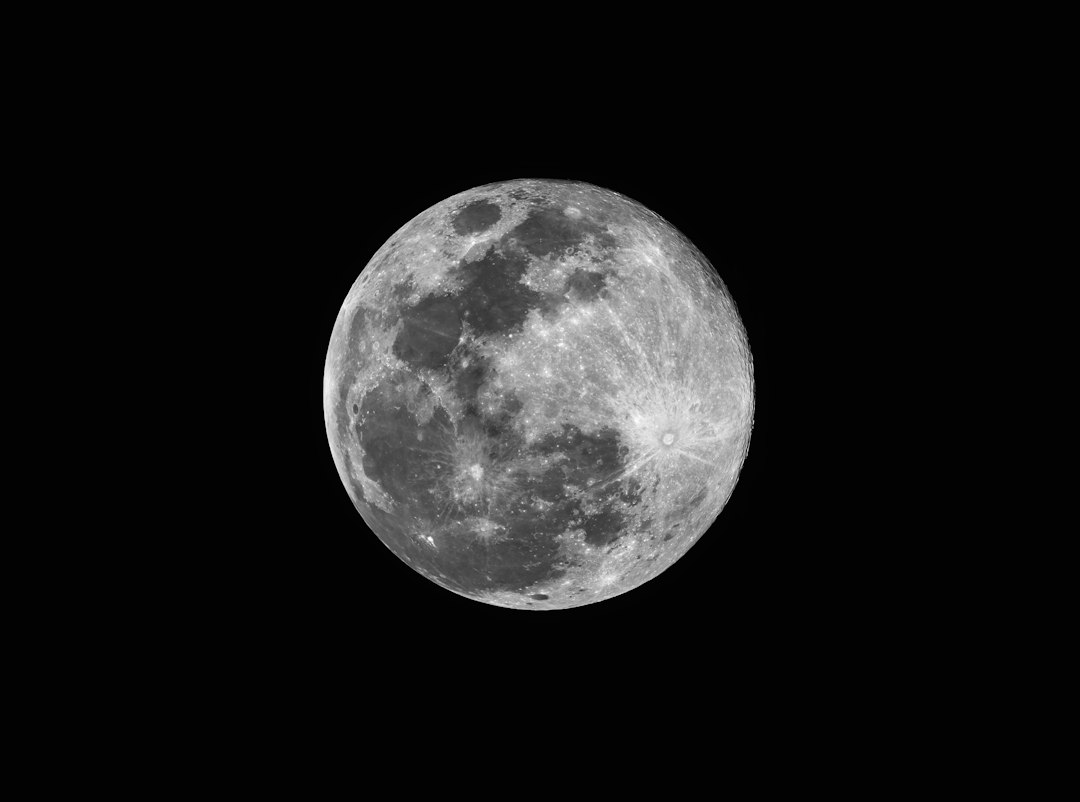
China Signals Its Intention to Land on Jupiter's Moon Callisto
In a bold declaration of its deepening ambitions in deep space exploration, the China National Space Administration (CNSA) has taken a significant step forward in its plans to explore the outer Solar System. The agency has formally announced a call for scientific instrument proposals for Tianwen-4, its flagship mission to the Jovian system — and buried within the technical language of that announcement lies a remarkable revelation: China intends to land a spacecraft on Callisto, one of Jupiter's four large Galilean moons. If successful, it would mark the first-ever soft landing on any moon of Jupiter, a feat that would represent one of the most ambitious achievements in the history of robotic space exploration.
The Tianwen-4 mission builds upon a rapidly accelerating Chinese planetary science program. The Chang'e 6 mission made headlines in 2024 when it became the first spacecraft in history to collect and return samples from the lunar far side — a technically demanding achievement that demonstrated China's growing mastery of complex, multi-phase space missions. Tianwen-4 will push those boundaries considerably further, targeting a destination nearly 800 million kilometers from Earth at its closest approach.
"The primary objectives of the Tianwen-4 mission are to achieve Jovian orbiting, as well as orbiting and landing exploration of Callisto, and to advance scientific research on the Jovian system." — CNSA official mission announcement
The CNSA's call for payload proposals — open to both domestic Chinese institutions and international partners — signals that the mission is maturing from a concept into a concrete engineering and science program. The scope of the mission is sweeping: a dedicated Jovian orbiter equipped with ten scientific instruments, and a separate Callisto lander carrying two specialized payloads designed to probe the moon's mysterious surface and potentially unlock secrets about its interior.
Why Callisto? The Science of an Overlooked World
To the casual observer, Callisto might seem like the least glamorous of Jupiter's four large moons. It lacks the explosive volcanic activity of Io, the intriguing subsurface ocean of Europa, or the complex geology of Ganymede — which is, notably, the target of the European Space Agency's JUICE mission, currently en route to the Jovian system. Yet Callisto is a scientifically compelling world in its own right, and for a first-ever landing mission to the Jovian system, it offers strategic and practical advantages that make it the most logical choice.
Callisto is the outermost of the four Galilean moons, discovered by Italian astronomer Galileo Galilei in 1610. With a diameter of approximately 4,820 kilometers, it is the third-largest moon in the Solar System and nearly the same size as the planet Mercury, though far less dense. Its surface is the most heavily cratered of any object in the Solar System, a testament to its ancient age — geologists estimate that parts of Callisto's surface are over 4 billion years old, essentially unchanged since the early days of the Solar System. This makes Callisto something of a frozen time capsule, preserving a record of conditions in the outer Solar System that other, more geologically active worlds have long since erased.
One of the most scientifically pressing questions about Callisto concerns its internal structure. Unlike its sibling moons Io, Europa, and Ganymede — which are strongly tidally heated by their gravitational interactions with Jupiter — Callisto sits far enough from the planet that tidal forces are much weaker. Nevertheless, data from NASA's Galileo spacecraft, which made multiple flybys of Callisto in the late 1990s and early 2000s, produced intriguing magnetometer readings suggesting the possible presence of a subsurface saltwater ocean. The evidence, however, remains ambiguous. Unlike Europa, where the case for a liquid water ocean is compelling and well-supported by multiple independent lines of evidence, Callisto's internal structure is poorly constrained. It appears to be only partially differentiated — meaning its rocky and icy components have not fully separated into distinct layers — which is puzzling given what planetary scientists know about how large icy worlds form and evolve.
- Surface composition: A heterogeneous mix of water ice patches, rocky material, and dark, carbon-rich regions of uncertain composition
- Internal structure: Possibly a partially differentiated interior with a rock-and-metal core, multiple ice layers, and a potential subsurface ocean
- Age: Among the most ancient and pristine surfaces in the Solar System, estimated at over 4 billion years
- Magnetic signature: Ambiguous magnetometer data that may hint at a subsurface conducting layer, possibly a saltwater ocean
- Radiation environment: Located outside Jupiter's most intense radiation belts, making it the most accessible Galilean moon for surface missions
The Science Payload: Raman Spectroscopy and Magnetometry
The Callisto Lander will carry two scientific instruments, each chosen for its ability to address fundamental questions about the moon's composition and interior. The first is the Callisto Surface Composition Analyzer, which will be built around a Raman spectrometer. This technique, which analyzes the inelastic scattering of laser light from a material's molecular bonds, has become an increasingly standard tool in planetary science precisely because it can identify minerals, ices, and organic compounds with high specificity without requiring physical contact or sample collection.
NASA's Perseverance rover on Mars carries an ultraviolet Raman spectrometer as part of its SHERLOC instrument, which has been used to detect complex organic molecules and map fine-scale mineralogy in Martian rocks. The ESA's Rosalind Franklin rover, planned for Mars, will carry a Raman spectrometer capable of detecting biosignatures. JAXA's Martian Moons Explorer (MMX) carries one on its IDEFIX rover, targeting the moons Phobos and Deimos. In all these cases, the instrument's ability to distinguish between different molecular structures — including whether carbon compounds are primordial or have been chemically altered by water — makes it invaluable for understanding planetary history.
On Callisto, the Raman spectrometer will face a particularly rich set of targets. The moon's surface is heterogeneous at fine scales, displaying small, bright patches that appear to be nearly pure water ice, intermediate regions that seem to be mixtures of ice and rocky material, and large, darker expanses rich in carbon-bearing compounds. The exact nature of this carbon — whether it is unprocessed primordial material from the early Solar System, or whether it has been chemically altered through interaction with liquid water — is a question of profound scientific importance. Aqueous alteration of surface minerals would constitute significant indirect evidence for the existence of a subsurface ocean, past or present, fundamentally changing our understanding of Callisto's geologic history.
The second instrument, the Callisto Lander Magnetometer, is designed to work in concert with a magnetometer aboard the Tianwen-4 orbiter. By simultaneously measuring the magnetic field at the surface and from orbit, scientists can mathematically separate the contributions of Jupiter's powerful background magnetic field, Callisto's ionospheric signals, and any induced magnetic field generated within the moon itself. An induced field — created when Jupiter's time-varying magnetic field drives electrical currents through a conducting layer, such as a salty liquid ocean — would be strong evidence for the existence of that ocean. This two-point measurement strategy is significantly more powerful than single-point measurements and could definitively resolve the ambiguity left by the Galileo mission's data.
The Orbiter: Mapping an Ancient World
The Tianwen-4 orbiter will serve as both a scientific platform in its own right and as a critical communications and support infrastructure for the Callisto lander. It will carry ten scientific instruments, including multiple cameras, spectrometers covering different wavelength ranges, a particle detector, and a magnetometer. Among the most significant of these is the Wide-Angle Camera (JWAC), dedicated to producing the most comprehensive and high-resolution maps of Callisto ever made.
The best existing images of Callisto come from NASA's Galileo spacecraft, which conducted its science operations in the Jovian system between 1995 and 2003. While Galileo made close approaches to within 138 kilometers of Callisto's surface, the mission was hampered by a faulty high-gain antenna that forced scientists to transmit data at a fraction of the intended bandwidth. As a result, only a small fraction of Callisto's surface was imaged at high resolution; most of the globe was mapped at coarse resolutions of kilometers per pixel. The proposed Tianwen-4 mapping orbit at 300 kilometers altitude — slightly higher than Galileo's closest passes — will nevertheless deliver images at approximately 90 meters per pixel across much of the surface, thanks to the enormous advances in camera sensor technology, data compression, and onboard processing that have occurred in the two decades since Galileo's mission ended.
This improved mapping will be essential for mission safety as well as science. Because Callisto has no atmosphere, there is no option for aerobraking to slow the lander during descent, and because the round-trip communication delay between Earth and Jupiter ranges from approximately 70 to 100 minutes, real-time human intervention during landing is impossible. The entire landing sequence must be executed autonomously, with the spacecraft's onboard computer making all critical decisions based on pre-loaded terrain maps and real-time sensor data. High-quality orbital imagery from the Tianwen-4 orbiter will be essential for identifying a safe landing zone free from large boulders, steep slopes, or deep craters.
The Radiation Environment: Callisto's Critical Advantage
One of the most decisive factors in choosing Callisto as the target for humanity's first Jovian moon landing is its location relative to Jupiter's ferocious radiation environment. Jupiter is surrounded by immense belts of high-energy charged particles — electrons and ions trapped by the planet's powerful magnetic field — that dwarf Earth's Van Allen belts in both size and intensity. These radiation belts are lethal to unshielded electronics and can degrade scientific instruments rapidly, posing one of the greatest engineering challenges for any mission to the inner Jovian moons.
NASA's Juno spacecraft, which has been orbiting Jupiter since 2016, is specifically designed to avoid prolonged exposure to these radiation belts by flying in a highly elongated polar orbit that makes only brief, targeted dives close to Jupiter before swinging back out to safer distances. Even with this precaution, Juno's most sensitive electronics are protected inside a titanium radiation vault. Europa Clipper, NASA's upcoming mission to Europa, faces an even more severe radiation challenge, since Europa orbits deep within the radiation belts; the spacecraft will conduct rapid flybys rather than entering a sustained Europa orbit for precisely this reason.
Callisto, orbiting at an average distance of approximately 1.88 million kilometers from Jupiter — roughly three times farther than Europa — sits almost entirely outside the most intense radiation belts. The radiation dose experienced by hardware on Callisto's surface is orders of magnitude lower than what would be encountered at Europa or Io. This not only extends the operational lifetime of the lander's electronics and scientific instruments, but also significantly reduces the mass and cost penalties associated with radiation shielding, leaving more of the spacecraft's mass budget available for science payload.
Mission Architecture and Deep Space Journey
The sheer distance involved in reaching Jupiter means that Tianwen-4 must be an extraordinarily well-engineered spacecraft, designed for a journey spanning nearly a decade from launch to Callisto landing. The current mission plan, first outlined by the CNSA in 2020 and likely subject to revision as the mission matures, envisions the following trajectory:
- September 2029: Launch from Earth
- April 2030: Gravity assist flyby of Venus, gaining velocity and adjusting trajectory
- 2031 and 2033: Two Earth gravity assist flybys, further accelerating the spacecraft toward the outer Solar System
- 2035: Arrival at Jupiter; orbital insertion around the gas giant, with flybys of irregular outer moons during this initial phase
- 2035–2038: Two gravity assist flybys of Callisto to shape the approach and slow the spacecraft for orbital capture
- February 2038: Entry into orbit around Callisto; surface mapping campaign begins
- Post-2038: Release of the Callisto Lander for descent to the surface
This complex, multi-flyby trajectory is a masterclass in celestial mechanics, using the gravitational fields of Venus, Earth, and Callisto itself as free sources of velocity change to compensate for the enormous energy cost of reaching Jupiter. Similar techniques were used by NASA's Cassini mission to Saturn and the Galileo mission to Jupiter itself, both of which employed Venus-Earth-Earth Gravity Assist (VEEGA) trajectories to reach their destinations without requiring impractically large rockets or fuel loads.
Callisto's Place in the Story of the Solar System
Beyond its intrinsic scientific interest, Callisto occupies a unique position in our understanding of how the Solar System formed and evolved. The four Galilean moons — Io, Europa, Ganymede, and Callisto — are believed to have formed in situ within a disk of gas and dust that surrounded Jupiter in the early Solar System, analogous to a miniature version of the solar nebula that gave rise to the planets. This makes them fundamentally different from many other moons in the Solar System, such as Neptune's large moon Triton, which is almost certainly a captured Kuiper Belt Object, or Mars's moons Phobos and Deimos, which may be captured asteroids.
Because the Galilean moons formed alongside Jupiter from similar primordial material, their compositions encode information about the chemical and physical conditions that prevailed in the outer Solar System some 4.5 billion years ago. Callisto, in particular, may be the least processed of the four — its partial differentiation and ancient, unaltered surface suggest that it has changed relatively little since its formation. Understanding Callisto's bulk composition and the nature of its surface materials is therefore a window into the primordial feedstock from which Jupiter and its moon system were built. As planetary scientists continue to refine models of giant planet formation and migration, in situ data from Callisto's surface could provide invaluable ground-truth constraints.
Looking Ahead: A New Era of Outer Solar System Exploration
The Tianwen-4 mission does not exist in isolation. The coming decades promise an unprecedented era of exploration at Jupiter and its moons. ESA's JUICE (Jupiter Icy Moons Explorer) mission, launched in 2023, will make flybys of Europa, Callisto, and Ganymede before entering orbit around Ganymede in 2034 — the first spacecraft ever to orbit a moon other than our own