Black Holes and Their Mysterious Bright Structures Explained
Astrophysical jets launched from black holes are among the most dramatic and powerful phenomena in the known Universe. They announce their presence with enormous blasts of energy that extend across millions — sometimes hundreds of millions — of light-years into the cosmos. As the most long-lasting and luminous sources of electromagnetic radiation in existence, these titanic structures have captivated astronomers for decades, yet many of their fundamental mysteries remain unsolved.
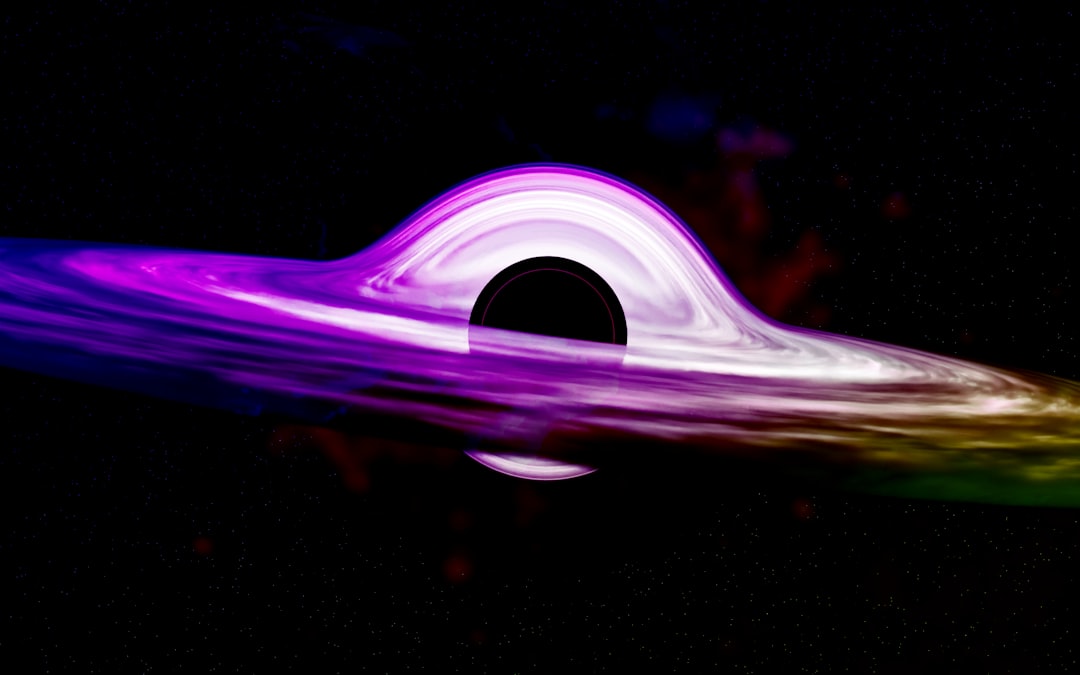
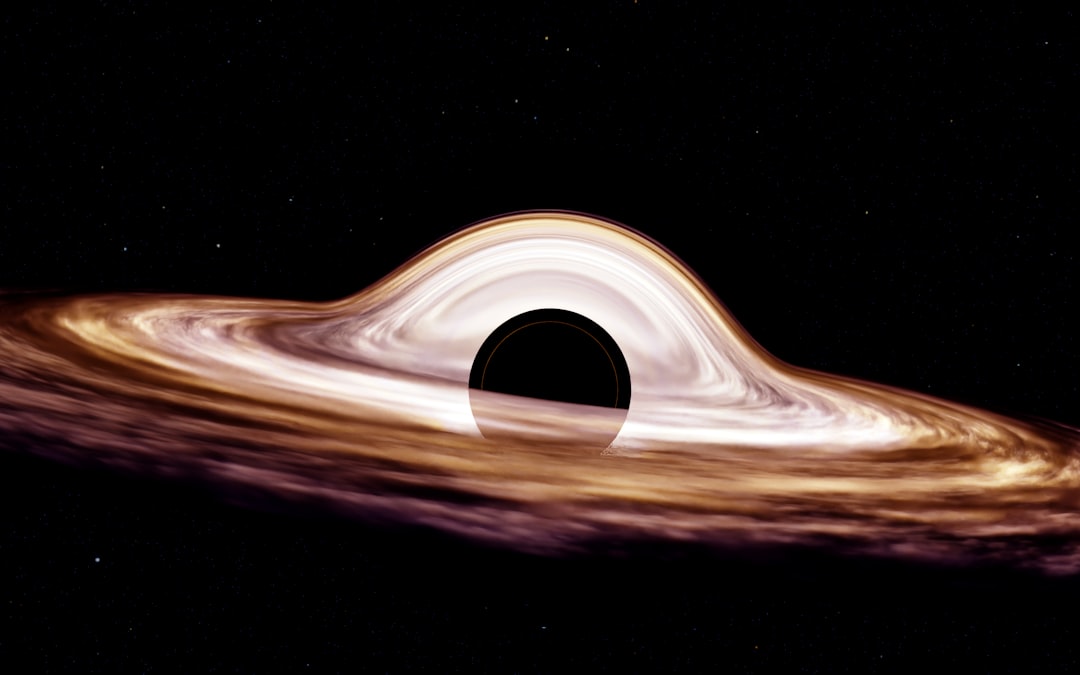
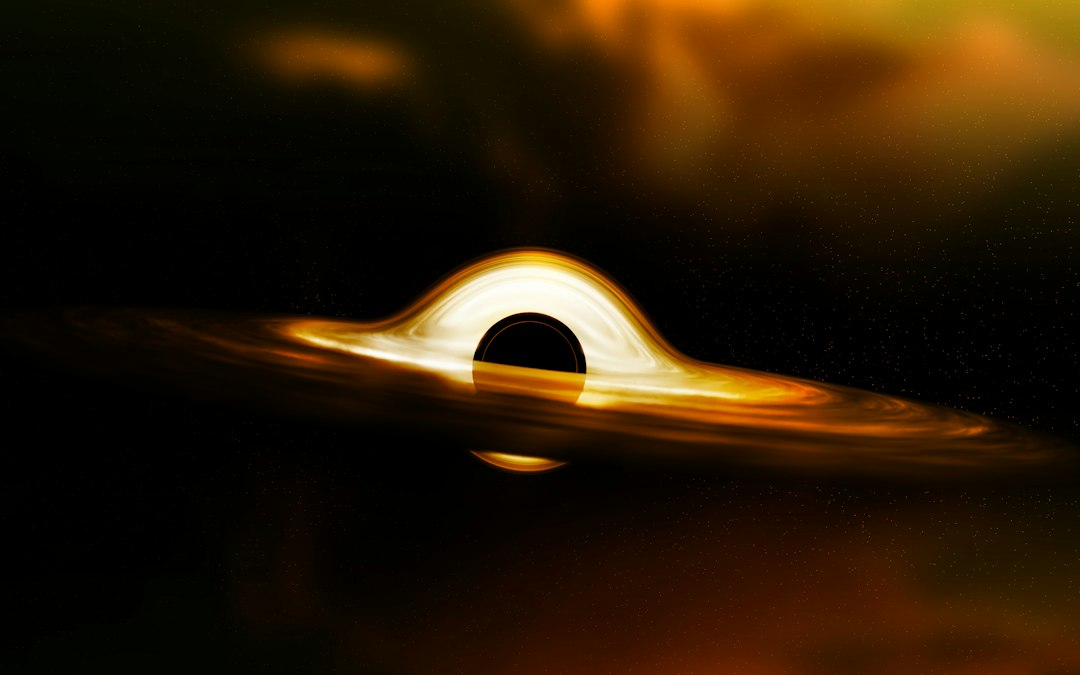
Supermassive black holes (SMBHs) — those colossal gravitational engines lurking at the centers of galaxies, containing masses equivalent to millions or even billions of our Sun — produce the largest and most energetic astrophysical jets known. These jets originate from active galactic nuclei (AGN), the intensely luminous central regions of galaxies where a SMBH is actively drawing in, or accreting, surrounding material. As gas and dust spiral inward, they form a rotating accretion disk that heats to temperatures of millions of degrees, glowing brilliantly across the electromagnetic spectrum. Through processes that physicists are still working to fully understand, a fraction of this infalling material is redirected and violently ejected outward along the poles of the black hole, forming the spectacular, narrow beams we call jets.
The Physics Powering Relativistic Jets
Astrophysicists have established several foundational truths about these extraordinary structures. The jets are powered primarily by the rotational energy of the spinning black hole itself — a mechanism described by the Blandford-Znajek process, in which the black hole's rotation twists magnetic field lines threading the accretion disk, effectively converting spin energy into jet kinetic energy. The jets travel at relativistic speeds, meaning velocities that represent a substantial fraction of the speed of light, and in some of the most extreme cases, the plasma within jets has been observed moving at apparent speeds that seem to exceed the speed of light — a purely geometrical illusion known as superluminal motion.
Beyond their spectacular appearance, these jets have profound consequences for galactic evolution. They inject gigantic quantities of energy into the intergalactic medium (IGM), the sparse gas that fills the vast spaces between galaxies. This energy heats the surrounding gas and introduces powerful turbulence — both effects that actively suppress star formation across entire galaxy clusters. Understanding jets is therefore not merely an academic exercise; it is essential to understanding how galaxies grow, evolve, and shape the large-scale structure of the Universe.
The Puzzle of Limb Brightening in Centaurus A
One of the most persistent and intriguing puzzles surrounding astrophysical jets is the question of brightness distribution. Intuition — and many simplified theoretical models — suggests that the central spine of a jet, where energy density is highest, should be the brightest region. Yet when researchers examine the jets with sufficient resolution, reality defies this expectation.
The clearest example of this discrepancy is found in Centaurus A (Cen A), the closest radio galaxy to Earth at a distance of approximately 13 million light-years, located in the southern constellation Centaurus. Because of its proximity and extraordinary brightness across multiple wavelengths, Cen A serves as an irreplaceable natural laboratory for extreme physics. Its jets have been scrutinized with virtually every major observatory, from radio telescopes to X-ray satellites. Observations accumulated over a decade with the Event Horizon Telescope (EHT) have provided stunning detail, revealing that Cen A's jets are consistently brighter at their edges than at their centers — a phenomenon known as limb brightening. The question of why has remained stubbornly unresolved — until now.
"Cen A is our closest window into the physics of relativistic jets. The fact that our plasma-informed model reproduces the observed edge brightening suggests that we are capturing an important piece of the underlying physics. These processes may not be unique to Cen A, but could be common in relativistic jets throughout the Universe." — Felix Glaser, Lead Author
New Research Proposes a Compelling Answer
A new study published in the prestigious journal Astronomy and Astrophysics, titled "Probing anisotropic particle acceleration and limb brightening in Centaurus A's jet," offers a detailed and physically grounded explanation. The lead author is Felix Glaser, a Master's student at the Chair of Astronomy at the University of Würzburg in Germany, working under the supervision of Dr. Christian Fromm, leader of the Computational Astrophysics Group.
Critically, the limb brightening phenomenon is not unique to Centaurus A. High-resolution Very Long Baseline Interferometric (VLBI) observations — a technique that links radio telescopes across vast distances to synthesize a virtual telescope the size of the Earth or beyond — have revealed the same edge-brightening in M 87, the giant elliptical galaxy whose black hole was famously imaged by the EHT in 2019, and in 3C 84, the radio galaxy at the heart of the Perseus cluster. The fact that three structurally distinct galaxies all display the same phenomenon strongly implies a shared underlying physical mechanism rather than a coincidence.
"Relativistic jets are among the most fascinating phenomena in the universe, and recent high-resolution very long baseline interferometric (VLBI) observations, including the Global mm-VLBI Array and the Event Horizon Telescope (EHT), are able to resolve their structure close to their launching site." — Glaser et al.
Magnetohydrodynamic Simulations: Modeling the Invisible
To investigate the origin of limb brightening, the research team performed sophisticated general relativistic magnetohydrodynamic (GRMHD) simulations — computational models that describe the behavior of electrically conducting plasma in the presence of strong magnetic fields, while also accounting for the extreme curvature of spacetime near a spinning black hole. These simulations are among the most computationally demanding in all of astrophysics, requiring the simultaneous solution of equations governing fluid dynamics, electromagnetism, and general relativity.
The team carefully tuned their simulation parameters — including the black hole mass and the viewing angle relative to Earth — to match the specific properties of Centaurus A. The result was a synthetic model that successfully reproduced the detailed EHT observations of Cen A's jets with remarkable fidelity, including the characteristic edge brightening.
Anisotropic Particle Distributions: The Key to the Mystery
The central finding of the study is that limb brightening arises from an anisotropic distribution of relativistic particles within the jet. In simpler terms, the high-energy electrons spiraling through the jet's magnetic field are not distributed uniformly in all directions — their trajectories are preferentially oriented in certain directions, an asymmetry described by the concept of pitch angle.
The pitch angle of a particle is defined as the angle between the particle's velocity vector and the local direction of the magnetic field. This seemingly small detail has enormous consequences for the radiation the jet produces. When a relativistic electron is forced to curve along a magnetic field line, it emits synchrotron radiation — a form of electromagnetic radiation produced across a broad spectrum from radio waves to X-rays. Crucially, the intensity and directionality of this synchrotron emission depends sensitively on the pitch angle of the emitting electron.
Because the electrons near the edges of the jet have pitch angles that result in synchrotron emission directed more favorably toward the observer, the edges appear significantly brighter than the central spine — even though the central region may contain more total energy. The apparent brightness is therefore a consequence of the geometry of particle motions at the microscopic level, not just the total energy content of different regions.
- Synchrotron radiation is produced when relativistic electrons spiral along magnetic field lines.
- The brightness of synchrotron emission depends strongly on the pitch angle between the electron's velocity and the magnetic field direction.
- An anisotropic (non-uniform) distribution of pitch angles across the jet cross-section creates the observed brightness asymmetry.
- This effect naturally produces brighter edges (limb brightening) without requiring more energy at the jet boundaries.
- The same physics likely applies to limb brightening observed in M 87 and 3C 84.
"What is truly amazing is that microscopic plasma effects can shape structures on vastly larger scales. Future observations will reveal even more of these plasma signatures, making it increasingly important to include realistic plasma physics in our models already today and to further investigate the highly nonlinear effects of relativistic plasma." — Dr. Christian Fromm, Leader of the Computational Astrophysics Group
A Multi-Scale Marvel: Connecting the Microscopic to the Cosmic
One of the most intellectually striking aspects of this research is the sheer range of physical scales it bridges. The plasma processes governing individual electron pitch angles operate at scales far smaller than a single atom's diameter in human-relevant terms, yet they dictate the visible structure of jets that stretch for millions of light-years — a scale difference of incomprehensible magnitude. This coupling between microphysics and macrophysics represents one of the deepest and most challenging frontiers in modern astrophysics.
The team's approach exemplifies the growing recognition that realistic plasma physics must be incorporated into jet simulations if models are to accurately reproduce observations. Earlier generations of simulations often treated the radiating particles in simplified ways, missing subtle but crucial effects like pitch angle anisotropy. As computational power continues to grow and theoretical understanding deepens, models are becoming increasingly realistic — and the match between simulation and observation is growing ever closer.
"By bringing together expertise in high-resolution observations, numerical simulations, and plasma physics, we are making progress toward understanding how black holes launch powerful jets and how these jets produce the radiation we observe. The new study is an excellent example of this approach." — Dr. Christian Fromm
Future Observations: The Next Generation of Radio Telescopes
The findings from this study will be tested and refined by a new generation of extraordinary observational facilities already on the horizon. The Square Kilometre Array (SKA), currently under construction in South Africa and Australia, will become the world's largest and highest-resolution radio telescope when it comes fully online around 2027. With its unprecedented sensitivity and angular resolution, the SKA will be able to probe jet structures in Centaurus A and other AGN with a level of detail that current telescopes cannot approach.
Planned upgrades to the iconic Very Large Array (VLA) in New Mexico — the next generation VLA (ngVLA) — are expected to be completed around 2031, further enhancing the community's ability to map jet structures across a wide range of radio frequencies. Combined with continued EHT observations and space-based X-ray and gamma-ray telescopes operated by NASA and the European Space Agency (ESA), these facilities will collectively enable a comprehensive, multi-wavelength assault on the remaining mysteries of astrophysical jets.
An Unexpected Connection: Black Holes and Fusion Energy
Perhaps the most surprising dimension of this research is the unexpected bridge it builds between cutting-edge astrophysics and one of humanity's most ambitious technological goals: nuclear fusion energy. At first glance, a supermassive black hole 13 million light-years away and a fusion reactor in a laboratory on Earth seem to have nothing in common. But at the level of fundamental plasma physics, the similarities are profound.
Fusion reactors — such as the ITER project currently being assembled in southern France, an international collaboration involving 35 nations — rely on extraordinarily powerful superconducting magnets to confine superhot plasma at temperatures exceeding 150 million degrees Celsius. The behavior of this confined plasma, including the complex ways in which particles distribute themselves in pitch angle and how magnetic field geometry influences radiation and energy loss, is governed by the same fundamental equations that describe plasma in astrophysical jets. Lessons learned by studying plasma under the extreme conditions near Centaurus A's black hole — conditions that cannot be replicated in any terrestrial laboratory — could therefore yield insights directly applicable to fusion reactor design.
"A black hole and a fusion reactor may sound like completely different worlds — but both are governed by the physics of plasma. At Centaurus A, we can study plasma under conditions that cannot be created on Earth. These insights not only help us understand the Universe, but may also contribute to the development of future fusion energy." — Professor Karl Mannheim, Chair of Astronomy, University of Würzburg
Conclusion: A New Chapter in Understanding Cosmic Jets
The work of Glaser, Fromm, Mannheim, and their colleagues represents a genuine step forward in one of astrophysics' longest-standing puzzles. By demonstrating that the limb brightening of Centaurus A's jets can be naturally explained through anisotropic electron pitch angle distributions — and by successfully reproducing EHT observations with a physically realistic GRMHD simulation — the team has not only solved a specific observational mystery but has also established a new methodological standard for how jet physics should be modeled.
The implication that this same mechanism likely operates in M 87, 3C 84, and perhaps all relativistic jets throughout the Universe elevates the finding from a local curiosity to a universal principle. As the next generation of radio telescopes comes online and computational models grow ever more sophisticated, the detailed plasma physics of black hole jets will come into sharper and sharper focus — revealing, one discovery at a time, how the most extreme objects in the cosmos shape the Universe we inhabit.
- Research published in Astronomy and Astrophysics by Glaser et al. (2026)
- Simulations used general relativistic magnetohydrodynamics (GRMHD) tuned to Centaurus A's properties
- Limb brightening explained by anisotropic pitch angle distributions in jet plasma
- Results likely applicable to jets in M 87 and 3C 84
- Plasma physics insights may inform nuclear fusion reactor development
- Future confirmation expected from the Square Kilometre Array (online ~2027) and ngVLA (~2031)