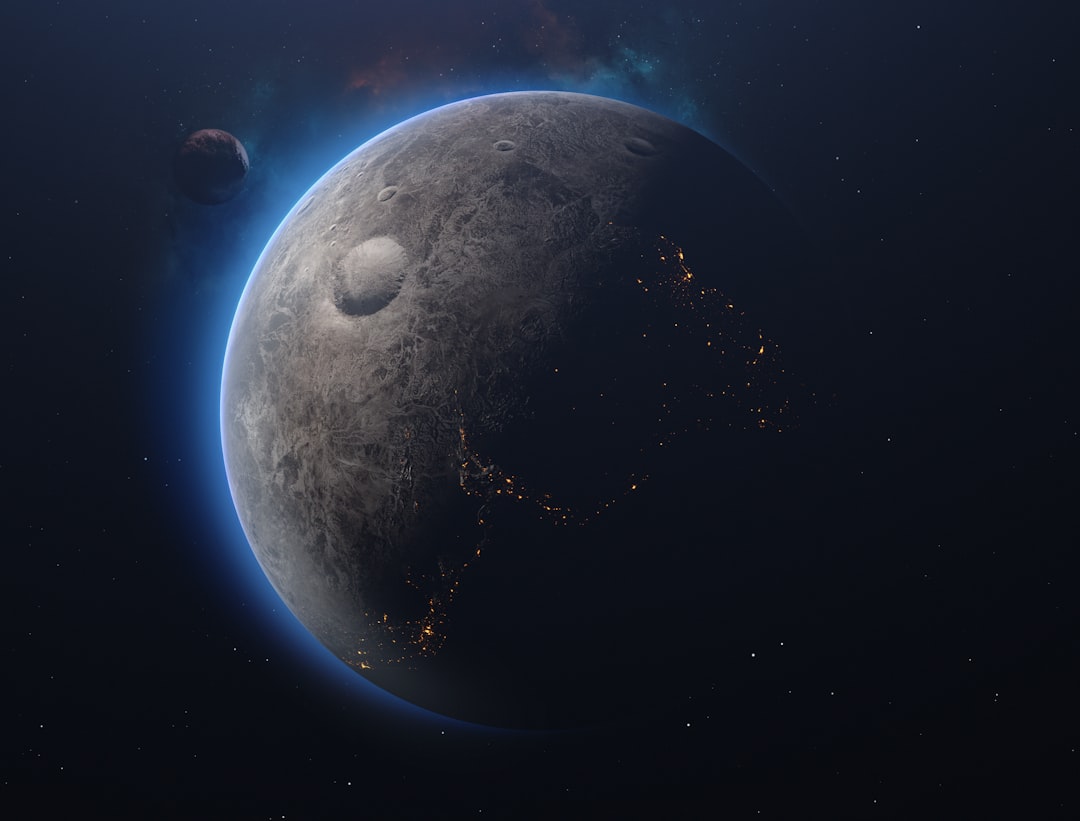
The dwarf planet Ceres, a celestial body that has captivated astronomers for more than two centuries, is revealing itself to be far more geologically intricate than scientists previously imagined. Recent findings presented at the 2026 European Geosciences Union General Assembly in Vienna have unveiled a surface characterized by dramatic topographical variations, extensive fracture networks, and puzzling brightness contrasts that challenge conventional approaches to identifying impact craters. These discoveries, derived from sophisticated reanalysis of data collected by NASA's Dawn mission, are fundamentally reshaping our understanding of this enigmatic world residing in the asteroid belt between Mars and Jupiter.
What makes these findings particularly compelling is that Ceres occupies a unique position in our solar system's taxonomy. Originally classified as an asteroid upon its discovery by Italian astronomer Giuseppe Piazzi in 1801, Ceres earned the distinction of being the first asteroid ever identified. However, its subsequent reclassification in 2006 as a dwarf planet reflected growing recognition of its exceptional characteristics—most notably its substantial size and differentiated internal structure featuring a distinct core, mantle, and crust. This internal complexity sets Ceres apart from typical asteroids and places it in the same category as Pluto, though the two worlds differ dramatically in composition and location.
The latest research focuses on features that suggest Ceres has experienced a remarkably dynamic geological history, one that may have included the presence of subsurface liquid water and possibly even conditions that could have supported primitive microbial life, though this remains highly speculative. With a diameter of approximately 960 kilometers—roughly one-quarter the size of Earth's Moon—Ceres may be modest in scale, but its scientific significance is anything but small.
Unraveling the Mystery of Occator Crater's Subsurface Anomaly
One of the most significant revelations from the new analysis centers on Occator Crater, a massive impact structure spanning 92 kilometers in width. During the final phases of the Dawn mission, researchers conducted a meticulous re-examination of gravitational field measurements in this region, leading to a startling discovery. According to Alicia Neesemann, a planetary scientist and remote sensing specialist at Freie Universität Berlin who presented the findings in Vienna, the team identified a pronounced gravity anomaly located approximately 50 kilometers beneath the crater's surface.
This gravitational signature indicates the presence of material with lower density than the surrounding rock—a finding that scientists interpret as evidence for a subsurface reservoir of brines, essentially pockets of salty water that have remained liquid despite the frigid conditions. The implications are profound: these brines likely migrated upward through an extensive network of subsurface fractures created by the catastrophic impact that formed Occator Crater, eventually erupting at the surface in what scientists call cryovolcanic activity.
"The exposure of these carbonate deposits such as the cryovolcano Cerealia Facula is the result of a young, large impact coinciding with a subsurface brine reservoir," explains Neesemann. "This unique convergence of factors has created some of the most scientifically valuable terrain in the asteroid belt."
The timing of the Occator impact event has been constrained to somewhere between a few million and 20 million years ago—making it, by a considerable margin, the youngest crater of its size on Ceres. This relative youth is crucial because it means the geological processes triggered by the impact may have occurred recently enough that their signatures remain well-preserved and accessible to scientific investigation.
The Brilliant Enigma of Cerealia and Vinalia Faculae
Among Occator Crater's most visually striking features are the bright surface deposits known as Cerealia Facula and Vinalia Facula. These brilliant white patches, which stand out dramatically against Ceres' otherwise dark, carbon-rich surface, represent the remnants of material that erupted from the subsurface brine reservoir. Composed primarily of sodium carbonate and other evaporite minerals, these deposits formed when briny water reached the surface and the water component evaporated or sublimated in the vacuum of space, leaving behind concentrated salt deposits.
As Neesemann and her colleagues note in their research, these bright deposits serve as "key indicators of recent endogenic activity, most likely linked to cryovolcanic and hydrothermal processes and the presence of subsurface brines." The term "endogenic" refers to geological processes originating from within a planetary body, as opposed to external forces like meteorite impacts. Understanding the absolute model age of these deposits—that is, determining precisely when they formed—is essential for reconstructing both Occator's geological evolution and Ceres' broader thermal history.
The presence of these deposits raises intriguing questions about Ceres' internal composition and thermal evolution. Scientists have determined that Ceres possesses a remarkably high water content of approximately 25 percent by mass—a proportion that exceeds that of many icy moons in the outer solar system. This abundance of water, combined with the evidence for subsurface brines, has led researchers to conclude that Ceres likely harbored a global subsurface ocean at some point in its past, though this ocean has since frozen or been incorporated into the dwarf planet's rocky interior.
Cryovolcanism: Ice and Salt Instead of Molten Rock
To fully appreciate the significance of the processes at work on Ceres, it's essential to understand how cryovolcanism differs fundamentally from the conventional volcanism we observe on Earth or other rocky planets. Traditional volcanic activity, such as that occurring in Hawaii or Iceland, involves molten rock (magma) heated to temperatures exceeding 1,000 degrees Celsius. This superheated material rises through the crust due to its buoyancy and erupts at the surface as lava.
Cryovolcanism, by contrast, operates at temperatures well below the freezing point of pure water—often at minus 50 degrees Celsius or colder. Instead of molten silicate rock, cryovolcanoes erupt mixtures of water, ammonia, methane, or other volatile compounds, often mixed with salts and other dissolved materials. On Ceres, the cryovolcanic material consists primarily of water and salt solutions, with the salt content playing a crucial role by depressing the freezing point of the mixture and allowing it to remain liquid at temperatures where pure water would be solid ice.
The mechanism driving cryovolcanism on Ceres involves the tremendous heat generated by large impacts. When a massive object slams into Ceres at cosmic velocities, the kinetic energy of the collision converts instantaneously into heat, creating what scientists call impact melt in the subsurface. This thermal pulse can persist for thousands or even millions of years, providing the energy necessary to mobilize subsurface brines and drive them upward through fractures in the crust. Research conducted using data from NASA's Dawn spacecraft has been instrumental in documenting this process.
The Complex Challenge of Crater Identification
The new findings also highlight significant challenges in accurately identifying and characterizing impact craters on Ceres' surface. Unlike the Moon or Mercury, which display relatively simple crater morphologies, Ceres presents researchers with a surface marked by steep slopes, extensive fracture systems, and dramatic variations in albedo (surface brightness). These factors combine to create what scientists call "false positives" and "false negatives" in crater detection algorithms.
A region with high albedo might be mistaken for the bright ejecta blanket surrounding a fresh crater, when in fact it represents a cryovolcanic deposit. Conversely, genuine impact craters might be overlooked if they've been partially filled or obscured by subsequent geological processes. This complexity necessitates more sophisticated analytical approaches that integrate multiple data types, including topography, spectroscopy, and gravitational field measurements.
The Astrobiological Question: Could Life Have Emerged on Ceres?
The discovery of subsurface brines and evidence for hydrothermal activity inevitably raises one of science's most compelling questions: could Ceres have harbored life? The presence of liquid water, organic compounds (which Dawn detected in abundance on Ceres' surface), and chemical energy sources represents what astrobiologists call the "ingredients for life." Some researchers have speculated that primitive microorganisms might have emerged in Ceres' subsurface ocean during the dwarf planet's early history, when internal heat from radioactive decay kept water liquid.
However, Neesemann urges caution regarding such scenarios. Even in the unlikely event that microorganisms had formed within the brine pocket at 50 kilometers depth, she notes, "I would expect them to have been mechanically destroyed or chemically altered beyond recognition during ascent and surface exposure." The violent process of cryovolcanic eruption, combined with exposure to the harsh radiation environment and vacuum conditions at Ceres' surface, would likely obliterate any biological signatures.
Moreover, Ceres' surface undergoes continuous modification through a process called impact gardening—the ongoing bombardment by smaller meteorites that pulverizes surface material into an increasingly fine-grained regolith, similar to the powdery dust covering the Moon's surface. This process, documented extensively by researchers at the Lunar and Planetary Institute, would further complicate any search for preserved biosignatures.
Future Exploration: A Sample Return Mission to Ceres
Despite these challenges, the scientific community's enthusiasm for further Ceres exploration remains strong. Neesemann is currently contributing to a topography working group developing concepts for a potential Ceres sample return mission at NASA's Jet Propulsion Laboratory. This ambitious endeavor would involve both an orbiter and a lander, representing a significant technological leap beyond the Dawn mission, which only observed Ceres from orbit.
The mission architecture calls for the orbiter to capture even higher resolution imagery than Dawn achieved, with particular attention to the bright deposit areas within Occator Crater. "We really need to know if it's safe to land on these bright deposit areas," Neesemann explains, noting that the terrain's exact physical properties—including bearing strength, slope stability, and boulder distribution—remain uncertain.
Fortunately, Ceres presents some advantages as a landing target compared to smaller asteroids. With a surface gravity 5.7 times weaker than the Moon's but significantly stronger than asteroids like Bennu or Ryugu (both of which have been successfully sampled by OSIRIS-REx and Hayabusa2 respectively), Ceres occupies a middle ground between planetary and small-body missions. As Neesemann notes, "Sampling Ceres would be more akin to a planetary mission than a typical asteroid sample-return mission," requiring different engineering approaches but building on proven technologies.
Key Scientific Takeaways and Broader Implications
The emerging picture of Ceres from this latest research reveals a world of unexpected complexity and dynamism:
- Geological Diversity: Ceres exhibits a far more varied and complex surface geology than previously recognized, with steep topography, extensive fracturing, and dramatic brightness variations that complicate straightforward geological interpretation.
- Subsurface Ocean Heritage: Strong evidence indicates Ceres once possessed a global subsurface ocean, with remnant brine pockets persisting to relatively recent geological times—possibly even to the present day in some locations.
- Active Cryovolcanism: The dwarf planet has experienced genuine volcanic activity driven not by molten rock but by water and salt mixtures, with eruptions occurring within the past few million years.
- Astrobiological Potential: While direct evidence for life remains absent, Ceres possessed many of the basic requirements for habitability, making it a valuable natural laboratory for understanding the limits of life in the solar system.
- Sample Return Feasibility: Future missions could successfully land on and sample Ceres, potentially returning material that preserves a record of early solar system chemistry and possibly even prebiotic organic synthesis.
Ceres in the Context of Planetary Science
These findings position Ceres as a crucial bridge between the rocky inner planets and the icy worlds of the outer solar system. Its composition—rich in both rock and water ice—provides insights into the transition zone in the early solar system where water could condense from the protoplanetary disk. Understanding Ceres' formation and evolution helps scientists reconstruct the conditions that prevailed during the solar system's first few million years, when planets were still assembling from smaller building blocks.
The research also has implications for understanding other ocean worlds in our solar system, including Jupiter's moon Europa and Saturn's moon Enceladus, both of which harbor subsurface oceans beneath icy shells. While these moons are much larger and more geologically active than Ceres, they share the fundamental characteristic of maintaining liquid water in contact with rocky material—conditions that could support life. Studies of Ceres' more accessible and less extreme environment can inform our approaches to exploring these more distant ocean worlds, as detailed in research published by the Europlanet Society.
As our understanding of Ceres continues to deepen through reanalysis of Dawn data and planning for future missions, this modest dwarf planet is proving that size isn't everything when it comes to planetary science. Its complex geology, evidence for recent activity, and potential connections to astrobiology ensure that Ceres will remain a priority target for solar system exploration in the decades ahead.