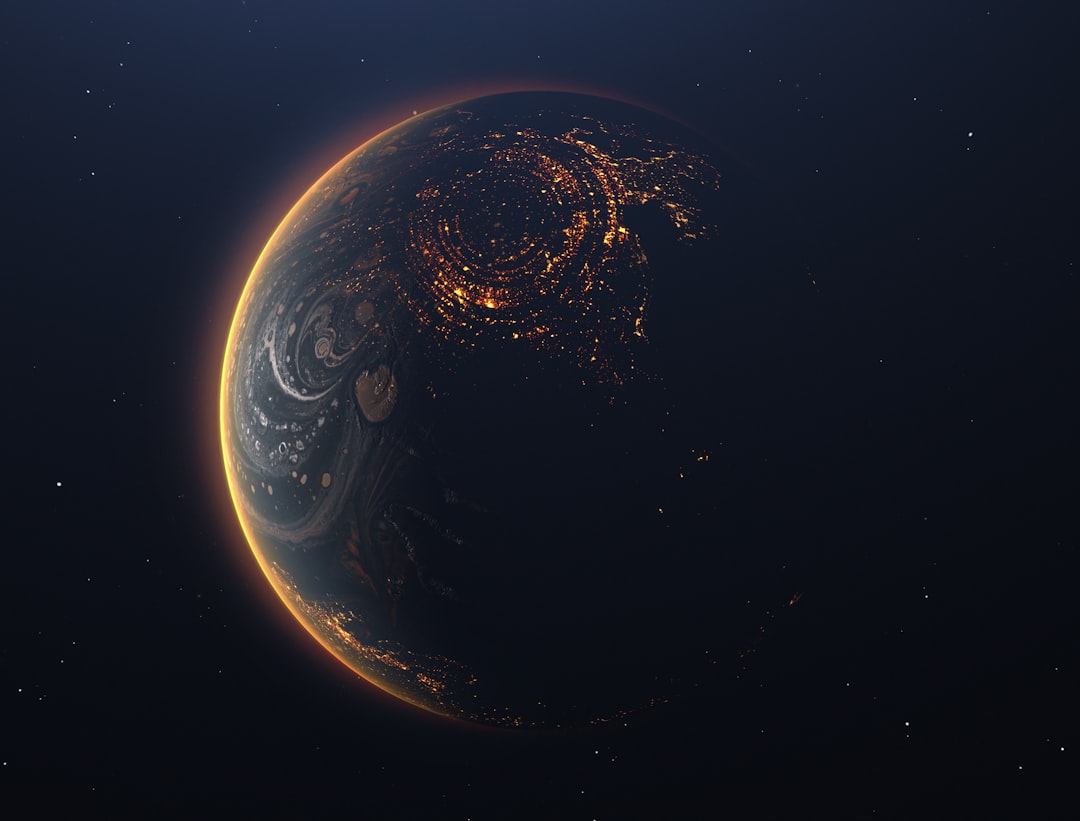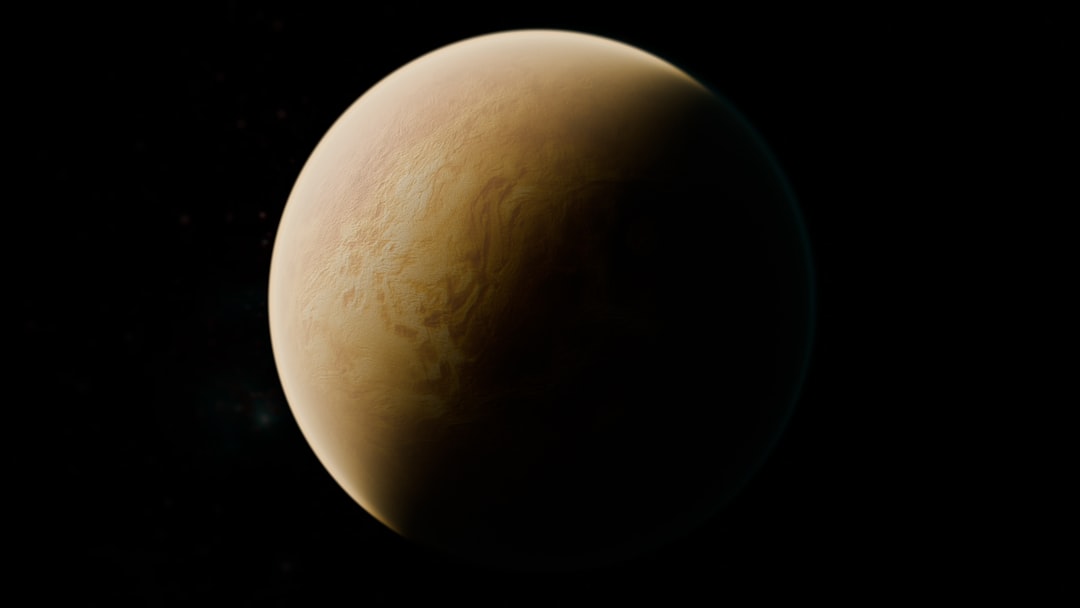
The cosmos may be far more crowded with wandering worlds than astronomers previously imagined. Free-floating planets (FFPs)—celestial bodies unbound from any star system—drift through the darkness of interstellar space in staggering numbers. Recent research suggests these cosmic nomads outnumber their gravitationally-bound cousins beyond the snow line by a factor of nineteen to one, raising a fundamental question: what cosmic mechanism is responsible for ejecting so many worlds into the void?
A groundbreaking study led by Xiaochen Zheng of the Beijing Planetarium, available as a pre-print on arXiv, proposes an elegant solution to this astronomical puzzle. The research reveals that close-orbiting planets—particularly Hot Jupiters and Super-Earths—act as celestial "bouncers," violently ejecting their distant planetary siblings into interstellar space through dramatic gravitational encounters. This discovery fundamentally reshapes our understanding of planetary system dynamics and the turbulent early lives of solar systems throughout the galaxy.
The Prevalence of Cosmic Wanderers
The term "rogue planet" evokes images of rare, lonely worlds adrift between the stars. However, modern astrophysical models and observational data paint a dramatically different picture. Free-floating planets represent one of the most common planetary populations in our galaxy, far exceeding earlier estimates. The NASA community has increasingly recognized that understanding FFP formation mechanisms is crucial to comprehending planetary system evolution as a whole.
The snow line—the critical distance from a star where volatile compounds like water, ammonia, and methane transition from gas to solid ice—serves as an important demarcation point in planetary system architecture. Planets forming beyond this boundary, in the cold outer reaches of their natal systems, face a precarious existence. While they may initially settle into stable orbits, the gravitational landscape of young stellar systems is far from tranquil, setting the stage for dramatic orbital upheavals.
Competing Theories of Rogue Planet Formation
Astronomers have proposed several mechanisms to explain the abundance of free-floating planets. One hypothesis suggests that isolated gas clouds might collapse directly into planetary-mass objects without ever forming a parent star—essentially creating orphaned worlds from birth. These objects, sometimes called sub-brown dwarfs or planetary-mass objects, would technically never have been "ejected" because they never belonged to a stellar system.
The alternative explanation involves dynamical ejection—violent gravitational interactions that literally throw planets out of their home systems. Early models focused on planet-planet scattering in chaotic young systems, where multiple massive worlds engage in a gravitational tug-of-war that inevitably results in one or more planets being flung into interstellar space. However, Zheng's research demonstrates that this process requires an additional catalyzing factor to achieve the observed ejection rates.
The Binary Star Connection
The key to understanding widespread planetary ejection lies in the prevalence of binary star systems. Observations from facilities like the European Southern Observatory reveal that many—perhaps most—stars form with stellar companions. These companion stars, orbiting at various distances from the primary star, exert profound gravitational influences on any planetary systems attempting to form around either star.
When a distant companion star perturbs a planetary system, it sets in motion a complex gravitational dance governed by the von Zeipel-Lidov-Kozai (vZLK) mechanism. This phenomenon, named after the scientists who described its mathematical properties, causes distant planets to experience dramatic changes in their orbital characteristics over timescales of millions of years. The planet's orbit gradually transforms from a roughly circular path into an increasingly eccentric ellipse—stretched into a long, plunging oval that brings the wayward world careening through the inner regions of its stellar system.
Cosmic Billiards: When Planetary Orbits Collide
The stage is now set for a dramatic encounter. As the perturbed outer planet swings through the inner system on its newly elongated orbit, it enters a region densely populated with close-orbiting planets—the Hot Jupiters and Super-Earths that crowd near their host stars. These inner worlds, having settled into stable short-period orbits, suddenly find themselves facing an intruder from the outer darkness.
"What we've discovered is essentially a cosmic ejection mechanism where inner planets act as gravitational gatekeepers, determining which outer worlds remain bound to their stars and which are cast into interstellar space," explains the research team in their analysis.
The resulting interactions resemble an astronomical game of billiards played at planetary scales. Contrary to what one might expect, direct collisions between planets are relatively rare—though they certainly occur. More commonly, the planets experience close gravitational encounters where they pass near each other without physical contact. During these flybys, the two worlds exchange orbital energy through gravitational interactions, fundamentally altering their trajectories.
The Effectiveness of Different Planetary Bouncers
Zheng's team conducted extensive numerical simulations to quantify the ejection efficiency of different types of inner planets. The results reveal striking differences in bouncer effectiveness:
- Hot Jupiters: These massive, close-orbiting gas giants prove to be exceptionally effective bouncers, ejecting Jupiter-mass intruders approximately 80% of the time during close encounters. Their substantial mass and stable inner orbits provide the perfect combination for imparting sufficient energy to break the intruder's gravitational bond with the host star.
- Super-Earths and Jupiter-mass planets: When Super-Earths encounter Jupiter-sized intruders, they manage to eject them only about 6.5% of the time, reflecting their lower mass and correspondingly weaker gravitational influence.
- Super-Earths and similar-mass planets: Interestingly, Super-Earths demonstrate much greater efficiency when encountering other Super-Earths from the outer system, successfully ejecting them 52% of the time—a testament to the importance of mass ratios in these gravitational exchanges.
Collateral Damage: The Fate of Inner Worlds
The inner planets that serve as cosmic bouncers don't emerge from these encounters unscathed. The gravitational interactions extract a heavy toll, fundamentally reshaping the architecture of the inner planetary system. In some cases, the exchange of angular momentum during the encounter robs the inner planet of so much orbital energy that it spirals inward toward its host star, ultimately being consumed in a fiery death plunge.
Even when inner planets survive these dramatic encounters, they bear permanent scars. Their once-orderly orbits become randomized, exhibiting characteristics that puzzle observers:
- Highly eccentric orbits that differ dramatically from their original near-circular paths
- Randomized orbital tilts relative to the stellar equatorial plane
- In extreme cases, completely inverted orbits where planets circle their stars in retrograde motion—opposite to the star's rotation
These orbital peculiarities, observed in many exoplanetary systems discovered by missions like NASA's TESS, provide observational evidence supporting the violent dynamical history proposed by Zheng's model.
Quantifying the Contribution to the Rogue Planet Population
While the planetary bouncer mechanism proves highly effective in individual encounters, how much does it contribute to the overall population of free-floating planets? The research team's calculations suggest that approximately 8% of all FFPs originate through these bouncer interactions. While this percentage might initially seem modest, the implications become staggering when considering the sheer abundance of rogue planets in our galaxy.
Current estimates suggest the Milky Way contains billions of free-floating planets—potentially outnumbering stars themselves. An 8% contribution from the bouncer mechanism translates to hundreds of millions of ejected worlds, highlighting the prevalence of these violent dynamical interactions during the formative epochs of planetary systems throughout cosmic history.
Implications for Planetary System Architecture
This research illuminates the chaotic, violent nature of early planetary system evolution. The orderly arrangements we observe in mature systems like our own Solar System represent the survivors of a tumultuous youth characterized by gravitational warfare. The presence of binary companions, combined with the formation of both inner and outer planets, creates conditions ripe for dramatic orbital reshuffling and planetary ejection.
Understanding these processes helps explain several puzzling observations in exoplanetary science, including the prevalence of hot Jupiters in extremely close orbits, the existence of planets in highly tilted or retrograde orbits, and the apparent deficit of massive planets in certain orbital configurations. Each of these phenomena may represent different outcomes of the same underlying dynamical processes that produce free-floating planets.
Future Observations and Verification
The coming decade promises unprecedented opportunities to test and refine these theoretical models. The Nancy Grace Roman Space Telescope, scheduled for launch in the mid-2020s, will conduct extensive surveys specifically designed to detect and characterize free-floating planets. Using gravitational microlensing techniques, Roman will identify these wandering worlds by observing the brief brightening of background stars as an FFP's gravity bends and magnifies the starlight.
These observations will provide crucial statistical data about the FFP population, including their mass distribution, abundance, and spatial distribution throughout the galaxy. By comparing observational results with predictions from models like Zheng's bouncer mechanism, astronomers can determine which formation pathways dominate and under what conditions.
Perhaps most exciting is the possibility of catching these ejection events in progress. While individual encounters occur on timescales far too short for direct observation, astronomers might identify young planetary systems in the midst of the long-term orbital evolution that precedes ejection. Observing planets on highly eccentric orbits in young systems with binary companions would provide smoking-gun evidence for the vZLK mechanism at work.
Broader Implications for Galactic Ecology
The abundance of free-floating planets fundamentally changes our perspective on the galaxy's planetary census. These worlds, though unbound from stars, remain astronomical bodies with their own geological and potentially atmospheric characteristics. Some may retain sufficient internal heat to maintain subsurface liquid water oceans, raising intriguing questions about the possibility of life existing independent of stellar energy.
Moreover, the ejection process itself may facilitate the transfer of organic materials and potentially even microbial life between stellar systems—a process known as lithopanspermia. Planets violently ejected from their birth systems might carry with them the chemical or biological signatures of their origins, potentially seeding new worlds as they occasionally encounter other stellar systems during their interstellar wanderings.
As our understanding of planetary system dynamics continues to evolve, the role of these cosmic bouncers reminds us that the universe operates on scales and through mechanisms far more dynamic and interconnected than early models suggested. The gentle, orderly view of planetary systems as stable, isolated entities has given way to a recognition of their violent births, chaotic youths, and the profound ways in which stellar multiplicity and planetary interactions shape the final architecture we observe today.