In a groundbreaking revelation that continues to challenge our understanding of cosmic evolution, the James Webb Space Telescope (JWST) has identified an unprecedented five-galaxy merger system occurring merely 800 million years after the Big Bang. This extraordinary discovery, formally designated as JWST's Quintet (JQ), represents one of the most complex galactic interactions ever observed in the early universe and arrives significantly earlier in cosmic history than theoretical models predicted. The finding, detailed in a comprehensive study published in Nature Astronomy, adds yet another paradigm-shifting observation to JWST's growing catalog of discoveries that are fundamentally reshaping our comprehension of how the universe evolved during its formative epochs.
Led by Dr. Weida Hu, a postdoctoral researcher at Texas A&M University, the international research team has documented what may be a crucial missing link in understanding how massive galaxies like our own Milky Way came into existence. The discovery is particularly significant because it demonstrates that complex multi-galaxy mergers were occurring far earlier than previously thought possible, during an era when the universe was still in its cosmic infancy and conventional wisdom suggested that galactic interactions should have been simpler and less frequent.
The implications of this discovery extend far beyond simply finding galaxies colliding in the early universe. The research reveals critical insights into how heavy elements were distributed throughout intergalactic space, how star formation rates were dramatically accelerated through galactic interactions, and potentially explains the mysterious existence of massive, quiescent galaxies that JWST has found at surprisingly early cosmic epochs.
Understanding Galaxy Mergers in Cosmic Evolution
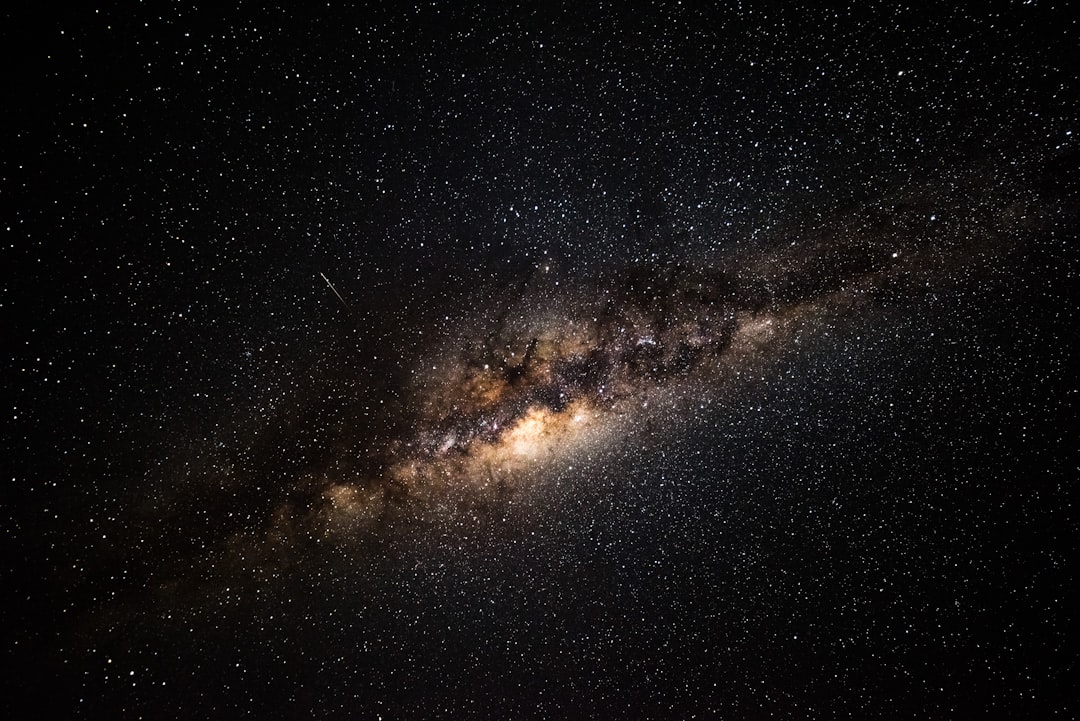
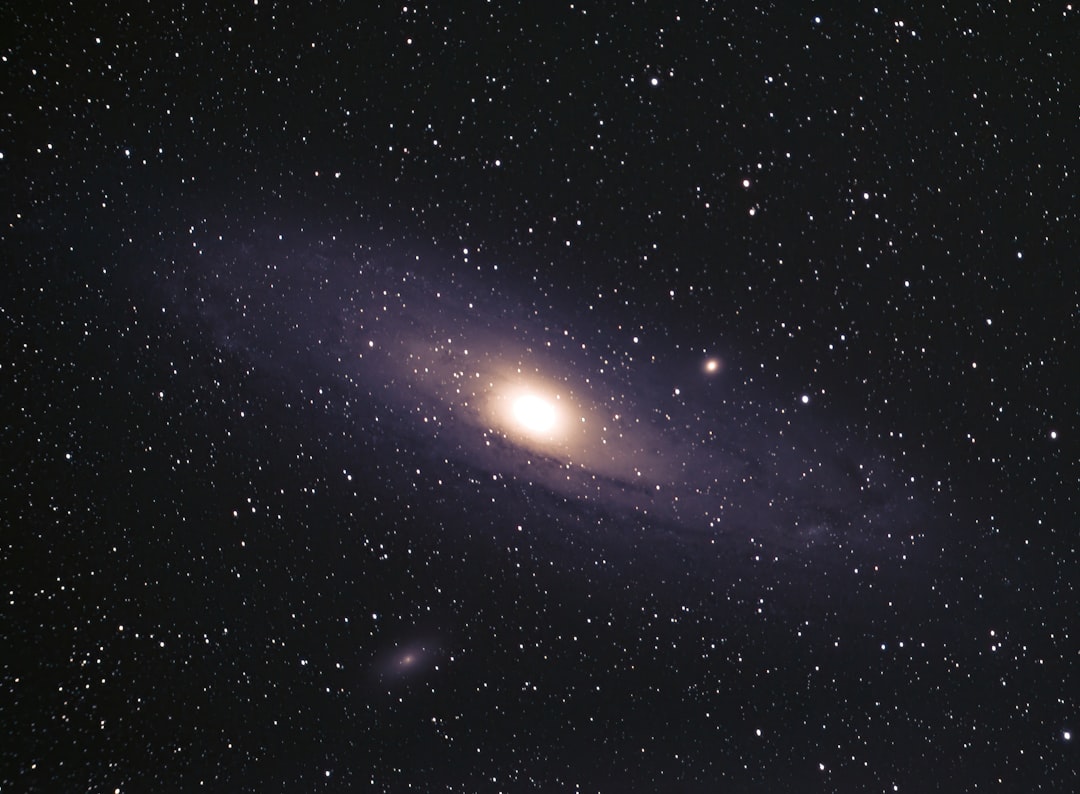
Galaxy mergers represent one of the most fundamental processes shaping the cosmic landscape we observe today. These violent, yet beautiful cosmic collisions are not merely astronomical curiosities—they are the primary mechanism through which galaxies grow, evolve, and transform over billions of years. Our own Milky Way galaxy, a majestic spiral containing hundreds of billions of stars, is itself the product of countless merger events throughout cosmic history, and it's currently on a collision course with the nearby Andromeda galaxy, scheduled to merge in approximately 4.5 billion years.
Prior to JWST's revolutionary observations, astronomers operating with data from earlier telescopes like the Hubble Space Telescope had constructed a timeline of galactic evolution that placed complex merger events primarily in the era beginning roughly one billion years after the Big Bang. This timeline seemed reasonable based on theoretical models of structure formation and the gradual assembly of matter under gravity's influence. However, JWST's unprecedented infrared sensitivity and resolution have repeatedly demonstrated that the early universe was far more dynamic, complex, and evolved than these models predicted.
The discovery of JQ at a redshift of 6.7—corresponding to just 800 million years post-Big Bang—shatters these previous assumptions. As Dr. Hu emphasized in the research announcement, "What makes this remarkable is that a merger involving such a large number of galaxies was not expected so early in the universe's history, when galaxy mergers were thought to be simpler and usually involve only two to three galaxies."
The Architecture of JWST's Quintet
The five galaxies comprising JQ present a fascinating study in early cosmic dynamics. While separated by tens of thousands of light-years—distances that seem vast by terrestrial standards—these galaxies are actually remarkably compact by galactic standards, creating what astronomers describe as a gravitationally bound system destined for eventual coalescence. The spatial configuration of these galaxies suggests they are in various stages of interaction, with gravitational forces already beginning to warp their structures and trigger intense bursts of star formation.
Perhaps most striking is the system's collective star formation rate (SFR) of approximately 250 solar masses per year. To put this in perspective, our Milky Way galaxy currently produces only about one to two solar masses worth of new stars annually. Even accounting for the fact that early universe galaxies generally exhibited higher star formation rates due to abundant pristine gas available for stellar birth, JQ's productivity is exceptional. This furious pace of star formation is being driven by the merger process itself, as gravitational interactions compress gas clouds, triggering the collapse that ignites new stellar nurseries.
The research team utilized JWST's Near Infrared Spectrograph (NIRSpec) and other advanced instruments to conduct detailed spectroscopic analysis of the system. These observations allowed them to map not only the galaxies themselves but also the complex web of gas and energy connecting them—revealing insights into the physical processes at work during these cosmic collisions.
Oxygen Enrichment and the Circumgalactic Medium
One of the most scientifically significant aspects of this discovery involves the detection of doubly-ionized oxygen ([O III]) and hydrogen-beta (Hβ) emission extending far beyond the individual galaxies into what astronomers call the circumgalactic medium (CGM). This finding provides crucial evidence for how heavy elements—those heavier than hydrogen and helium—were distributed throughout the early universe, a process known as chemical enrichment.
The presence of [O III] is particularly telling. Oxygen atoms stripped of two electrons require intense radiation fields or violent shock waves to achieve this ionization state. By analyzing the ratio of [O III] to hydrogen emissions, the research team determined that the ionization is most likely powered by shock heating generated by the galactic collisions themselves, rather than by radiation from active galactic nuclei or massive star formation alone.
"It is therefore more plausible that the [O III]+Hβ halo of JQ results from oxygen-enriched gas stripped out of the galaxies through interactions and tidal forces. The stripped gases are shock-heated in galaxy collisions and dispersed to large radii, leading to large hot gaseous halos," the researchers explain in their published findings.
This mechanism has profound implications for understanding cosmic chemical evolution. The oxygen and other heavy elements detected in JQ's extended halo were forged in the nuclear furnaces of stars and subsequently expelled through stellar winds and supernova explosions. The merger process is now redistributing these elements across vast cosmic distances, enriching the intergalactic medium and providing the raw materials for future generations of star and planet formation. Research from the European Southern Observatory has shown that understanding this enrichment process is crucial for comprehending how galaxies evolve chemically over cosmic time.
Solving the Mystery of Early Massive Quiescent Galaxies
Among the many surprises JWST has delivered, few have been more perplexing than the discovery of massive quiescent galaxies existing just 1 to 1.5 billion years after the Big Bang. These "red and dead" galaxies contain enormous numbers of stars but show little to no ongoing star formation—a state that seems impossible to achieve so early in cosmic history. The conventional understanding of galaxy evolution suggests that building up such massive stellar populations should require far more time than was available in the young universe.
The JQ system may provide the solution to this puzzle. The research team's analysis suggests that JQ could represent a precursor stage to these mysterious quiescent galaxies. With its exceptional mass and extraordinarily high star formation rate, JQ is rapidly building up a massive stellar population. The merger process itself may contain the seeds of its own termination—as the galaxies coalesce, their combined gravitational influence could eventually heat or expel the remaining gas reservoirs, effectively shutting down star formation and leaving behind a massive, quiescent galaxy.
The researchers write: "The high mass and star formation rate of JQ are consistent with the star formation history of those unexpected massive quiescent galaxies observed at redshift 4–5, offering a plausible evolutionary pathway for the formation of such galaxies." This evolutionary scenario provides a coherent narrative connecting JWST's various early universe discoveries into a more complete picture of how galaxies rapidly assembled and evolved during the universe's first billion years.
Technological Marvel: How JWST Enables These Discoveries
The detection and detailed characterization of JQ would have been impossible without JWST's revolutionary capabilities. Operating primarily in the infrared spectrum, JWST can peer through cosmic dust and observe light that has been stretched to infrared wavelengths by the universe's expansion—light originally emitted by objects in the early universe as visible or ultraviolet radiation. The telescope's suite of advanced instruments includes unprecedented sensitivity and spectroscopic capabilities that allow astronomers to not merely image distant galaxies but to analyze their chemical composition, star formation rates, and physical conditions in exquisite detail.
The 6.5-meter primary mirror—composed of 18 hexagonal segments coated in ultra-thin gold—collects infrared light with extraordinary efficiency. Combined with the telescope's position at the second Lagrange point (L2), approximately 1.5 million kilometers from Earth, JWST operates in a stable, cold environment ideal for infrared observations. These technical capabilities have enabled discoveries that are fundamentally reshaping our understanding of cosmic history.
Implications for Cosmological Theory and Future Research
The discovery of JQ exemplifies the healthy tension between observation and theory that drives scientific progress. As Dr. Casey Papovich, Professor of Physics and Astronomy at Texas A&M University and study co-author, noted: "By showing that a complex, merger-driven system exists so early, it tells us our theories of how galaxies assemble—and how quickly they do so—need to be updated to match reality."
This statement captures the essence of the scientific method in action. Theoretical models of galaxy formation are built upon our understanding of dark matter distribution, gas dynamics, star formation physics, and gravitational interactions. When observations contradict predictions, it signals that our models are incomplete or incorrect in some fundamental way. Far from being a failure, such contradictions represent opportunities for deeper understanding.
The implications extend across multiple areas of astrophysics:
- Structure Formation Models: Theories describing how matter clumped together under gravity to form galaxies may need revision to account for more rapid assembly in the early universe
- Star Formation History: Understanding of how and when stars formed throughout cosmic history requires adjustment to incorporate higher early formation rates
- Chemical Evolution: Models of how heavy elements were produced and distributed must account for efficient mixing through early mergers
- Galaxy Evolution Pathways: The connection between actively star-forming and quiescent galaxies needs reconsideration in light of rapid evolutionary timescales
- Dark Matter Distribution: The early formation of complex structures provides constraints on dark matter properties and distribution in the early universe
Future observations with JWST and complementary facilities like the Atacama Large Millimeter Array (ALMA) will be crucial for testing these revised models. Astronomers will search for additional examples of early multi-galaxy mergers, characterize their properties in greater detail, and trace their evolutionary outcomes across cosmic time.
A New Era of Discovery
The identification of JWST's Quintet represents more than just another remarkable discovery—it symbolizes a new era in observational astronomy where our most fundamental assumptions about the universe's history are being tested and refined with unprecedented observational power. Each surprise delivered by JWST, from impossibly early galaxies to complex merger systems like JQ, brings us closer to a more complete and accurate understanding of cosmic evolution.
As researchers continue to analyze JWST data and plan follow-up observations, the telescope's legacy continues to grow. The study of early galaxy mergers like JQ will remain a priority for astronomers seeking to understand how the universe transformed from a relatively smooth, simple state following the Big Bang into the rich tapestry of structures we observe today. With missions like the upcoming Nancy Grace Roman Space Telescope on the horizon, the next decade promises even more revolutionary insights into the cosmos.
The discovery of JQ reminds us that the universe is far more dynamic, complex, and surprising than we often imagine. It challenges us to remain humble in the face of cosmic mysteries while celebrating the human capacity for discovery and understanding. As we continue to probe deeper into space and further back in time, we can expect many more such revelations that will reshape our cosmic perspective and deepen our appreciation for the magnificent universe we inhabit.