Could Life Exist on Venus? New Research Shows Peptides Survive in Harsh Sulfuric Acid
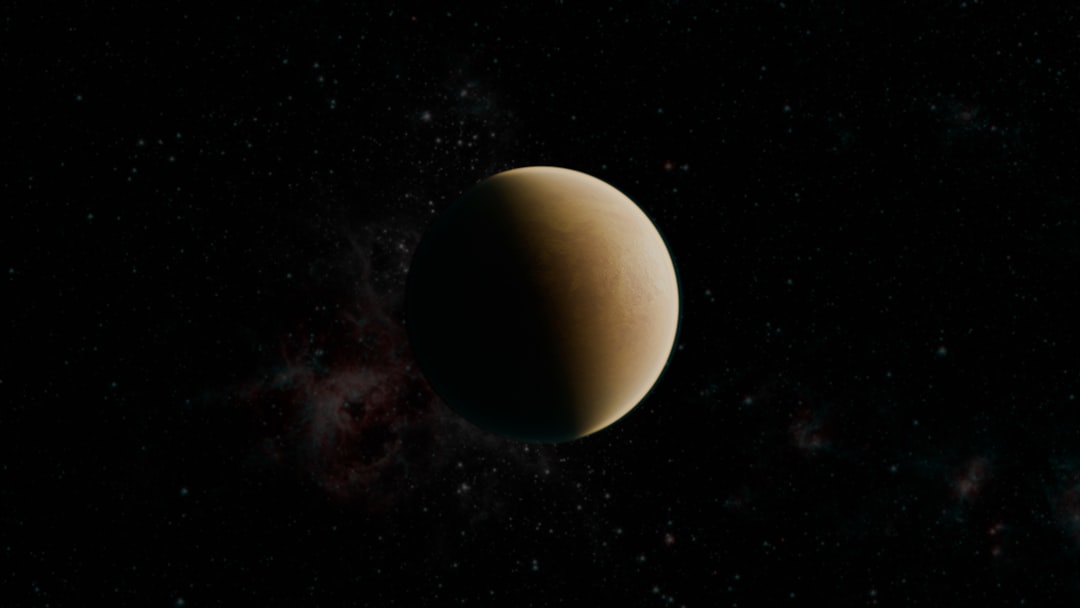
Venus is arguably the most enigmatic and deceptive planetary body in our solar system. Like Saturn's largest moon, Titan, Venus is shrouded in a thick, opaque atmosphere that renders optical telescopes ineffective for surface observation, requiring radar imaging to peer through its perpetual veil. Yet unlike Titan, whose hazy orange atmosphere appears relatively featureless from a distance, Venus presents observers with breathtaking, swirling cloud systems that have historically inspired the imagination — conjuring visions of lush, hidden landscapes beneath. The reality, however, is starkly different and far more extreme.
The surface of Venus is, by any measure, a hellish environment: surface temperatures averaging around 465°C (869°F) — hot enough to melt lead — combined with atmospheric pressures approximately 92 times greater than those at Earth's sea level. These conditions are driven by a runaway greenhouse effect, making Venus the hottest planet in the solar system despite being farther from the Sun than Mercury. And yet, paradoxically, the planet that so thoroughly crushes any romantic notion of surface habitability may harbor one of the most compelling cases for extraterrestrial life elsewhere in its layered, complex atmosphere.
The Venusian Atmosphere: An Unlikely Cradle of Life?
While Venus's surface remains inhospitable to any life as we know it, its cloud layers present a strikingly different set of conditions. At altitudes between approximately 48 and 60 kilometers (30 to 37 miles) above the planet's surface, temperatures range from roughly 0°C to 70°C (32°F to 158°F), and atmospheric pressures are comparable to those found at Earth's surface. These conditions are, in many respects, tantalizingly Earth-like — a fact that has captivated astrobiologists and planetary scientists for decades.
However, these same cloud layers present their own formidable challenge: they are composed primarily of concentrated sulfuric acid (H₂SO₄), with droplet concentrations reaching up to 98 percent sulfuric acid. For decades, the scientific consensus held that such a corrosive environment would be fundamentally incompatible with the complex organic chemistry required for life. A landmark new study is now challenging that assumption in a profound way.
"Life needs to have specially shaped proteins so that they have a specific target they can latch onto and perform their function. Before this, people thought that peptides couldn't survive in sulfuric acid, so showing peptides are not only stable, but also fold, is a really big deal." — Dr. Sara Seager, Professor of Planetary Science, MIT
Groundbreaking Research: Peptides Fold and Survive in Sulfuric Acid
An international team of researchers, led by scientists at the Massachusetts Institute of Technology (MIT), has published findings that may fundamentally reshape our understanding of where life can exist. The study, published in the prestigious journal Proceedings of the National Academy of Sciences (PNAS), demonstrates for the first time that certain peptides — short chains of amino acids that serve as the fundamental building blocks of proteins — can not only survive but also maintain functional molecular structures within concentrated sulfuric acid environments.
Peptides are critically important in the chemistry of life. They represent the intermediate stage between individual amino acids and fully formed proteins, and their ability to fold into specific three-dimensional configurations is essential for biological function. In Earth-based biology, these folding processes occur in water-rich environments. The conventional scientific wisdom held that sulfuric acid would rapidly hydrolyze and destroy the peptide bonds holding amino acid chains together — effectively precluding any peptide-based chemistry in the Venusian clouds.
To rigorously test this assumption, the research team conducted a series of carefully controlled laboratory experiments employing nuclear magnetic resonance (NMR) spectroscopy, an analytical technique that examines the molecular structure, composition, and dynamics of chemical compounds at the atomic level. NMR spectroscopy is particularly well-suited for this type of investigation because it can non-destructively probe molecular conformations in solution — allowing scientists to observe whether peptides maintain their structural integrity and folding behavior in real time.
The results were striking. The researchers observed three distinct peptides successfully forming folded structures and remaining stable for several weeks under conditions of 98 percent sulfuric acid concentration. The key to this surprising stability, the team concluded, lies in the near-total absence of water within the system. In aqueous (water-based) environments, water molecules actively participate in breaking apart peptide bonds — a process known as hydrolysis. In the water-free sulfuric acid environment, this destructive mechanism is effectively absent, allowing peptide bonds to persist and even enabling the complex folding behaviors essential for biological function.
- Three peptides were observed forming stable folded structures in 98% sulfuric acid.
- Stability was maintained for several weeks under these extreme conditions.
- The absence of water prevents hydrolysis — the primary mechanism by which peptide bonds are broken.
- Peptide folding is essential for the formation of functional proteins capable of catalyzing biological reactions.
- The findings suggest that non-aqueous solvents could potentially support biochemistry elsewhere in the universe.
Dr. Sara Seager and the Broader Astrobiological Context
Central to this research program is Dr. Sara Seager, a world-renowned planetary scientist and Professor of Planetary Science at MIT, who serves as a co-author on the study. Dr. Seager has been a pioneering advocate for expanding the traditional boundaries of astrobiology — the scientific discipline concerned with the origin, evolution, and distribution of life in the universe. Her work has increasingly focused on whether the fundamental chemical processes of life could operate in solvents and environments radically different from those found on Earth.
This latest study builds directly upon a foundational 2023 paper, also published in PNAS, for which Dr. Seager served as a key contributor. That earlier research initiated the systematic investigation of whether biological molecules could remain stable in acidic, non-aqueous environments — laying the groundwork for the peptide folding experiments described here. Together, these studies represent a coherent and growing body of evidence that life's chemical prerequisites may be far more flexible and robust than previously imagined.
Beyond her research contributions, Dr. Seager serves as the Principal Investigator for the Morning Star Missions to Venus — an ambitious series of privately funded spacecraft missions designed to directly investigate the habitability of Venus's atmosphere and cloud layers. These missions aim to collect in-situ data from the Venusian cloud decks, potentially searching for chemical biosignatures and further characterizing the physical and chemical environment in which life might conceivably exist. Learn more about ongoing Venus exploration efforts through NASA's Venus Exploration Program.
A Historical Perspective: 75 Years of Venusian Life Speculation
The notion that life might inhabit the clouds of Venus is, perhaps surprisingly, not a new one. The concept has a rich intellectual history stretching back more than 75 years. Heinz Haber, a German physicist and prolific science communicator, first formally proposed the possibility of life in the Venusian atmosphere in his 1950 paper titled "Epitome of Space Medicine" — a visionary work that anticipated many of the astrobiological discussions that would follow in subsequent decades.
This idea gained significant scientific credibility in 1967, when two towering figures in 20th-century science — astronomer and biophysicist Harold Morowitz and the legendary Carl Sagan — co-authored a paper published in the journal Nature explicitly examining the possibility of microbial life within the cloud layers of Venus. Sagan and Morowitz argued that, at the right altitudes, conditions could be sufficiently mild to permit the survival of microorganisms, even if the surface remained utterly inhospitable.
The discussion was reignited dramatically in September 2020, when a team of astronomers announced the tentative detection of phosphine (PH₃) in the Venusian atmosphere — a compound that, on Earth, is predominantly associated with biological processes. While subsequent analyses disputed the strength of that detection and the debate remains scientifically unresolved, the announcement catalyzed an extraordinary surge of interest in Venus habitability research and highlighted the urgent need for dedicated missions to investigate the planet's cloud chemistry directly. Details on this and other Venus science findings can be explored via the ESA Venus Express mission archive.
Rethinking the Criteria for Habitability
For decades, the search for extraterrestrial life has been guided by a single, powerful heuristic: follow the water. Liquid water is the universal solvent of Earth's biosphere, mediating virtually every biochemical reaction that sustains living organisms. This paradigm has shaped the selection of targets in the search for life beyond Earth, focusing attention on Mars's ancient riverbeds, the subsurface oceans of Jupiter's moon Europa, and the methane seas of Saturn's moon Titan.
The MIT-led peptide study challenges this paradigm in a fundamental way. By demonstrating that key biomolecular processes can occur in a non-aqueous, highly acidic solvent, the research opens the door to a dramatically expanded conception of potentially habitable environments — both within our solar system and across the cosmos. If peptides can fold and maintain stability in sulfuric acid, it raises profound questions: What other solvents might support prebiotic or even biotic chemistry? Could life, in some form, have arisen and persisted on Venus itself?
It is important to note, as the researchers themselves emphasize, that these findings do not constitute evidence of life on Venus. Rather, they demonstrate that a key chemical prerequisite for life — stable, folded peptide structures — is not categorically excluded by the harsh conditions of the Venusian cloud environment. The distinction is scientifically crucial, but the implications are nonetheless profound for the field of astrobiology and the broader philosophy of life detection. Researchers interested in following developments in this field can consult resources from the NASA Astrobiology Program.
What Comes Next: The Road to Venus
The coming years promise to be a transformative period for Venus science. In addition to Dr. Seager's privately funded Morning Star Missions, both NASA and ESA have committed to flagship Venus missions in the early 2030s. NASA's DAVINCI mission will send an atmospheric descent probe through Venus's cloud layers, directly sampling their chemical composition. NASA's VERITAS mission and ESA's EnVision mission will map the planet's surface and characterize its geological and atmospheric evolution in unprecedented detail. These missions have the potential to directly test the habitability hypotheses emerging from laboratory research like the peptide folding study.
Meanwhile, continued laboratory investigations into the chemistry of sulfuric acid environments — including the stability of nucleic acids, lipid membranes, and other biomolecular classes under Venusian cloud conditions — will be essential for building a comprehensive picture of whether life's chemistry could truly take hold in such an exotic milieu. The peptide research represents a compelling first step, but many fundamental questions remain unanswered: How might genetic information be encoded and replicated in a sulfuric acid solvent? What energy sources might drive metabolism in the cloud layers? Could life, once established, sustain itself against the dynamic and turbulent atmospheric circulation of Venus?
These are among the most exciting and consequential scientific questions of our era. The answer — whether it ultimately confirms or rules out life on Venus — will deepen our understanding of the universe's capacity for life in ways we are only beginning to imagine.
The discovery that peptides can fold stably in concentrated sulfuric acid doesn't just tell us something about Venus — it tells us something profound about the potential universality of life's chemistry, and challenges us to think far more creatively about where in the cosmos life might take hold.