In a remarkable demonstration of international space observation capabilities, the European Space Agency's XMM-Newton X-ray observatory has captured unprecedented data from the enigmatic interstellar visitor Comet C/2024 G3 (ATLAS), officially designated as 3I/ATLAS. The observations, conducted on December 3rd from approximately 283 million kilometers away, provide scientists with invaluable insights into the chemical composition and behavior of this ancient traveler from beyond our solar system. As the comet approaches its closest point to Earth on December 19th, researchers are racing to extract every possible piece of information from this rare cosmic visitor that may be older than our solar system itself.
Unlike typical cometary observations that rely on visible light or infrared wavelengths, XMM-Newton's sophisticated X-ray imaging capabilities reveal hidden aspects of the comet's composition that remain invisible to other instruments. The XMM-Newton mission, launched in 1999, has proven to be an indispensable tool for studying high-energy phenomena across the universe, and its application to cometary science represents a powerful cross-disciplinary approach to understanding these primitive solar system bodies.
Revolutionary X-Ray Observations Reveal Hidden Chemistry
The December 3rd imaging session utilized XMM-Newton's most sensitive instrument, the European Photon Imaging Camera (EPIC), which detected the comet's coma glowing in low-energy X-rays. This distinctive red glow in the processed images results from an intricate dance between the comet's outgassing materials and the solar wind—the continuous stream of charged particles emanating from our Sun. The interaction produces X-ray emissions as solar wind ions collide with neutral gas molecules surrounding the comet's nucleus, a process known as charge exchange.
What makes these X-ray observations particularly valuable is their ability to detect molecular species that are nearly invisible at other wavelengths. The emissions reveal the presence of carbon monoxide, carbon dioxide, and water vapor—fundamental building blocks that provide clues about the comet's formation environment billions of years ago. Even more significantly, X-ray observatories like XMM-Newton and NASA's XRISM mission possess unique sensitivity to diatomic hydrogen and nitrogen, molecules that remain elusive to ultraviolet and optical telescopes.
"X-ray observations are a powerful tool that allows scientists to detect and study gases that other instruments can't easily spot. This capability is transforming our understanding of cometary composition and the diversity of objects in our galaxy," according to the ESA's recent statement on the observations.
The seemingly simple black streak visible in the XMM-Newton image is actually a shadow cast by an internal support vane within the EPIC instrument itself—a minor artifact that doesn't diminish the scientific richness of the data captured. While the image may lack the aesthetic appeal of visible-light photographs, it contains layers of spectroscopic information that researchers will analyze for months to come.
A Multi-Wavelength Campaign Across the Solar System
The observation of 3I/ATLAS represents an unprecedented coordinated effort involving space-based and ground-based observatories across multiple wavelengths. Unlike the first confirmed interstellar object, 1I/'Oumuamua, which was discovered in October 2017 as it was already departing the inner solar system, 3I/ATLAS was identified in early July 2025—well before its October 29th perihelion passage. This early detection provided astronomers with a precious window of opportunity to mobilize observational resources worldwide.
The James Webb Space Telescope captured stunning infrared images revealing the comet's dust distribution and thermal characteristics, while NASA's SPHEREx mission observed it in early August, mapping its spectral signature across multiple infrared bands. The Hubble Space Telescope and ESA's JUICE mission contributed ultraviolet and optical observations, building a comprehensive multi-wavelength portrait of this interstellar wanderer.
Mars Missions Join the Observation Campaign
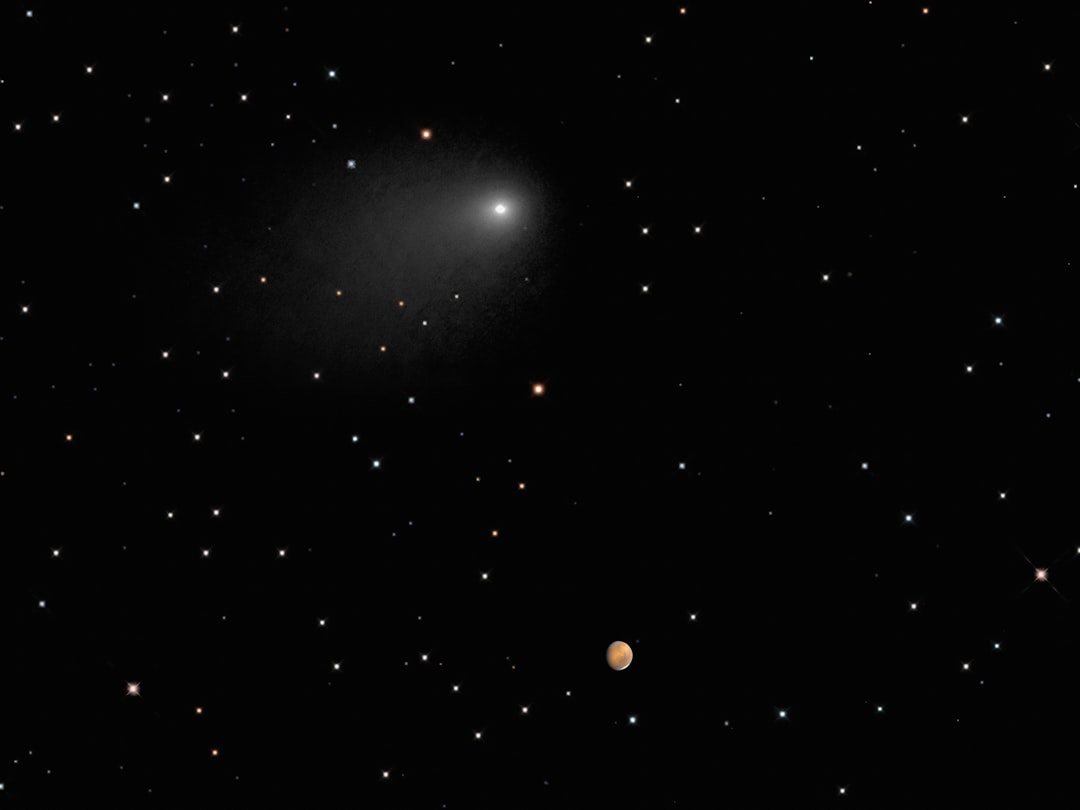
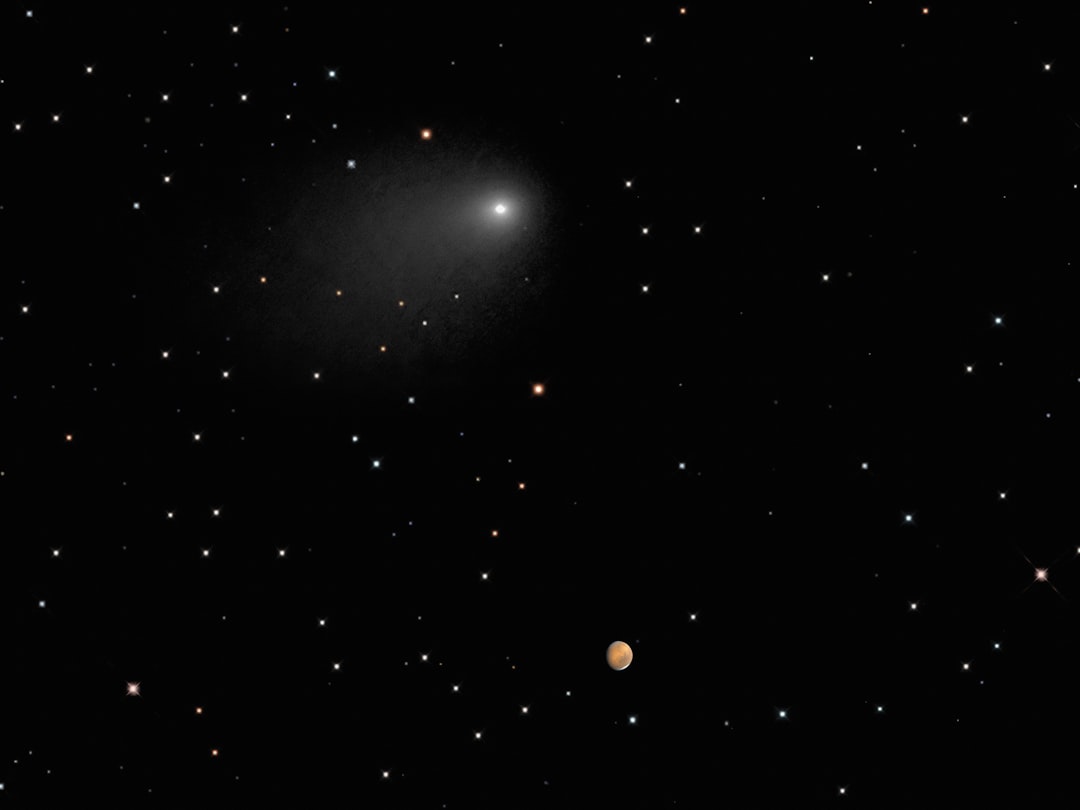
One of the most exciting aspects of the 3I/ATLAS campaign occurred on October 3rd, when the comet passed within 0.19 Astronomical Units of Mars—approximately 28.4 million kilometers from the Red Planet. This close approach transformed Mars into an impromptu observation platform, as orbiters including NASA's MAVEN, ESA's Mars Express, and the UAE's Hope probe all turned their instruments toward the passing comet. Even NASA's Perseverance rover on the Martian surface captured images of the distant visitor, marking a historic moment when surface-based planetary exploration intersected with interstellar object studies.
These Mars-based observations provided unique geometric perspectives and atmospheric interaction data that would be impossible to obtain from Earth-based facilities alone, demonstrating the value of our expanding presence throughout the solar system for opportunistic science.
An Ancient Traveler from the Galactic Thick Disk
Perhaps the most profound revelation about 3I/ATLAS concerns its extraordinary age. Orbital dynamics and compositional analysis suggest this comet originated in the galactic thick disk—a stellar population characterized by older stars with different chemical compositions than those in the galactic thin disk where our Sun resides. This places the comet's formation at least 7 billion years ago, and possibly much earlier, making it significantly older than our 4.6-billion-year-old solar system.
The implications are staggering: 3I/ATLAS may have formed around stars that existed before our Sun ignited, in regions of the galaxy with different metallicities and environmental conditions. The preserved ices and organic compounds within this ancient nucleus could provide a chemical snapshot of the early Milky Way, offering insights into galactic evolution that complement but differ from what we can learn from our own solar system's primitive bodies.
Non-Gravitational Forces and Cometary Activity
Astronomers have detected non-gravitational acceleration in 3I/ATLAS's trajectory—a phenomenon that sounds mysterious but is actually well-understood in cometary science. As the comet's nucleus absorbs solar radiation, subsurface ices sublimate and escape as gas jets. These jets act like tiny rocket engines, providing small but measurable thrust that alters the comet's orbit in ways that gravity alone cannot explain. This "rocket effect" is common among active comets and provides additional evidence of volatile-rich composition.
The detection of non-gravitational forces also allows researchers to estimate the comet's mass loss rate and activity level, parameters crucial for understanding its evolutionary state and predicting its future behavior as it travels through interstellar space.
Current Viewing Opportunities and Future Trajectory
Comet 3I/ATLAS reaches its closest approach to Earth on Friday, December 19th, 2025, at 6:02 Universal Time, passing at a distance of 1.8 Astronomical Units (269 million kilometers or 167 million miles). While this distance is far too great for spectacular naked-eye viewing—a common disappointment with cometary apparitions—dedicated amateur astronomers with moderate telescopes can locate the comet as a +12th magnitude object in the constellation Leo the Lion during the pre-dawn hours.
The comet's position in the dawn sky presents observational challenges, as twilight brightening limits the available viewing window. However, advanced amateur equipment, including electronically-assisted astronomy systems and smart telescopes, has democratized access to such faint objects. Throughout the remainder of 2025, patient observers can track 3I/ATLAS as it continues its journey through Leo, gradually fading as it recedes from both Earth and the Sun.
The Path Ahead: Departure and Discovery
During 2026, 3I/ATLAS will continue its outbound trajectory, tracking through the constellation Gemini the Twins in the direction of the star Zeta Geminorum. As it departs the inner solar system, the comet will gradually fade beyond the reach of all but the most powerful telescopes, eventually returning to the darkness of interstellar space from which it emerged. Unlike solar system comets that return on predictable orbits, 3I/ATLAS will never grace our skies again—its hyperbolic trajectory ensures a one-time passage through our cosmic neighborhood.
Implications for Future Interstellar Object Detection
The successful observation campaign for 3I/ATLAS has established protocols and demonstrated capabilities that will prove invaluable for future interstellar object studies. The Vera C. Rubin Observatory, which began operations in 2024, is expected to revolutionize our detection of these cosmic visitors. With its unprecedented survey speed and sensitivity, Rubin Observatory may reveal that interstellar objects pass through the inner solar system far more frequently than the mere handful detected to date would suggest.
Current estimates, based on the detection rate of 'Oumuamua, 2I/Borisov (discovered in 2019), and now 3I/ATLAS, suggest that several interstellar objects traverse the inner solar system each year. Most pass undetected due to their faintness, high velocities, or unfavorable viewing geometries. The Rubin Observatory's ability to scan the entire visible sky every few nights could increase detection rates by orders of magnitude, potentially identifying dozens of interstellar visitors annually.
Scientific Legacy and Broader Context
The study of 3I/ATLAS represents a convergence of multiple astronomical disciplines: cometary science, galactic astronomy, astrochemistry, and observational techniques spanning the electromagnetic spectrum. Each interstellar object detected adds a data point to our understanding of planetary system formation throughout the galaxy, the efficiency of gravitational ejection processes, and the survival of volatile materials during billions of years of interstellar travel.
- Chemical Diversity: Each interstellar comet provides a sample of material from a different stellar system, revealing the range of compositions produced under varying formation conditions throughout galactic history
- Dynamical Insights: The trajectories and velocities of interstellar objects constrain models of planetary system evolution and the efficiency with which young systems eject material into interstellar space
- Astrobiology Implications: The organic compounds and water detected in interstellar comets support the hypothesis that life's building blocks are distributed throughout the galaxy, potentially seeding habitable worlds with prebiotic chemistry
- Technological Advancement: Each interstellar object detection pushes observational capabilities forward, driving improvements in survey efficiency, rapid-response coordination, and multi-wavelength analysis techniques
As 3I/ATLAS fades from view, researchers will spend years analyzing the wealth of data collected during its brief passage through our solar system. The comet's X-ray spectrum, infrared signatures, optical light curves, and dynamical behavior will be compared with solar system comets and the few other interstellar objects observed to date, gradually building a statistical understanding of the population of objects drifting between the stars.
The success of the 3I/ATLAS observation campaign demonstrates humanity's growing capability to study the cosmos beyond our immediate neighborhood. As detection rates increase and observational techniques improve, we stand on the threshold of a new era in astronomy—one where interstellar visitors become regular subjects of study rather than rare curiosities, connecting our solar system to the broader galactic ecosystem in which it resides.