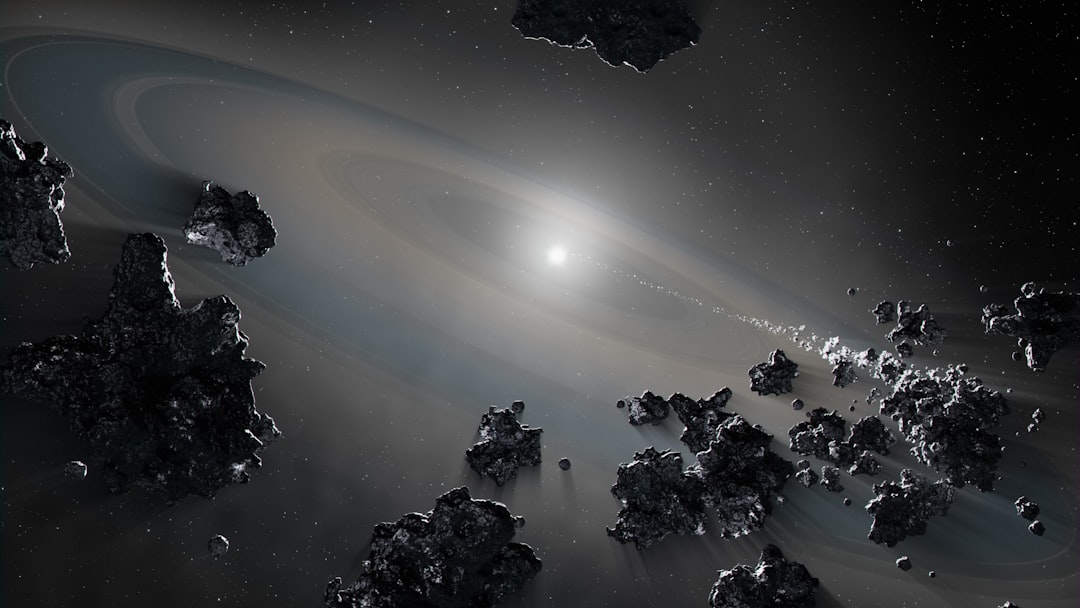
A groundbreaking experimental study has confirmed what scientists have long suspected: the Sun's intense radiation acts as a cosmic executioner for dark asteroids that venture too close to our star. Research conducted by Dr. Georgios Tsirvoulis of Luleå University of Technology in Sweden and his international team has provided the first direct experimental evidence that thermally-driven erosion causes near-Sun asteroids to literally explode and disintegrate. This phenomenon, published in a recent peer-reviewed study, explains a puzzling astronomical mystery—why so few dark asteroids exist in close solar orbits.
The research builds upon a decade of theoretical work and represents a significant advancement in our understanding of asteroid population dynamics in the inner solar system. Using a specialized facility that replicates the extreme conditions near the Sun, scientists watched in real-time as asteroid-like materials underwent catastrophic thermal breakdown, validating predictions made nearly ten years ago about how these ancient space rocks meet their fiery demise.
This discovery has profound implications not only for understanding the current distribution of asteroids in our solar system but also for identifying mysterious objects that blur the line between asteroids and comets. As researchers continue to observe potential candidates undergoing this process in real-time, we may be witnessing the final death throes of asteroids that have survived for billions of years, only to be destroyed by our Sun's relentless energy output.
The Mystery of Missing Dark Asteroids
For decades, astronomers have documented a conspicuous absence of asteroids in orbits close to the Sun, particularly those with low albedo—the darker varieties that reflect minimal sunlight. This observational gap has puzzled planetary scientists, prompting numerous theories about the fate of these objects. According to data from NASA's planetary defense surveys, the depletion of near-Sun asteroids follows a clear pattern, with darker objects being disproportionately scarce.
Traditional explanations for this phenomenon ranged from tidal disruption, where the Sun's immense gravitational forces gradually tear asteroids apart over millions of years, to simple orbital decay leading to solar impacts. Another proposed mechanism was sublimation—the gradual evaporation of asteroid material under intense solar radiation. However, these processes operate on geological timescales, requiring millions or even billions of years to completely destroy even moderately-sized asteroids.
The problem with these conventional theories was timing. Mathematical models suggested that the rate of asteroid destruction through these slow processes couldn't adequately explain the observed scarcity. Something more rapid and efficient had to be at work, particularly for the darker asteroids that seemed to vanish from near-Sun orbits at accelerated rates compared to their brighter counterparts.
Revolutionary Laboratory Experiments Reveal the Truth
In 2016, Dr. Mikael Granvik of the University of Helsinki proposed a radical alternative: asteroids near the Sun don't slowly erode—they explosively disintegrate through what he termed "instantaneous thermally-driven erosion." Nearly a decade later, Dr. Granvik and his colleagues have produced experimental validation of this theory using one of the world's most sophisticated solar simulation facilities.
The team utilized the Space and High-Irradiance Near-Sun Simulator (SHINeS) at Luleå University of Technology, a cutting-edge chamber specifically designed to recreate the extreme vacuum conditions and intense solar radiation found in the inner solar system. This facility can generate radiation levels equivalent to those experienced at various distances from the Sun, allowing researchers to subject materials to conditions impossible to replicate in conventional laboratories.
For their experiments, the scientists created pellets composed of CI carbonaceous chondrite simulants—materials that closely mimic the composition of dark, primitive asteroids found throughout the solar system. These samples represent some of the most ancient and unaltered materials in our planetary system, containing compounds that have remained largely unchanged since the solar system's formation 4.6 billion years ago.
The Three Phases of Asteroid Destruction
What the researchers observed was both spectacular and scientifically illuminating. The destruction process unfolded in three distinct phases, each captured by high-speed cameras:
- Initial Heating Phase: The asteroid sample begins absorbing intense solar radiation, causing surface temperatures to rise rapidly. During this stage, minor dust release occurs as volatile compounds begin to sublimate and small particles are liberated from the surface structure.
- Explosive Ejection Phase: As internal pressures build from differential heating, millimeter-sized fragments are violently expelled from the asteroid's surface. This phase represents the most dramatic visual evidence of the destructive process, with material being forcefully ejected at significant velocities.
- Subsurface Degradation: Heat penetrates deep into the asteroid's interior, causing thermal expansion and structural failure. The asteroid's internal matrix begins to crack and fragment, leading to complete structural collapse and disintegration of the remaining material.
The experimental results revealed striking distance-dependent effects. At approximately 0.22 astronomical units (AU) from the Sun—closer than Mercury's orbit—samples survived for several hours before succumbing to thermal stress. However, at just 0.1 AU, the destruction was nearly instantaneous, with samples undergoing rapid catastrophic failure within minutes of exposure to simulated solar radiation.
Why Dark Asteroids Are Particularly Vulnerable
The research provides compelling evidence for why low-albedo asteroids are especially susceptible to this destruction mechanism. Dark surfaces absorb significantly more solar energy than reflective ones, accelerating the heating process and intensifying thermal stress. This explains the observational data showing an even more pronounced deficit of dark asteroids in near-Sun orbits compared to brighter varieties.
"The darker the asteroid, the more efficiently it absorbs solar radiation, creating a feedback loop that accelerates its own destruction. It's a cosmic irony—the very property that helped these objects preserve ancient materials for billions of years becomes their downfall when they venture too close to the Sun," explains Dr. Tsirvoulis.
This finding aligns with broader understanding of thermal physics in space environments. According to research from the European Space Agency's asteroid studies, surface temperature variations on near-Sun objects can exceed 700 degrees Celsius, creating enormous thermal gradients that generate destructive internal stresses.
Real-World Examples: Watching Asteroids Die
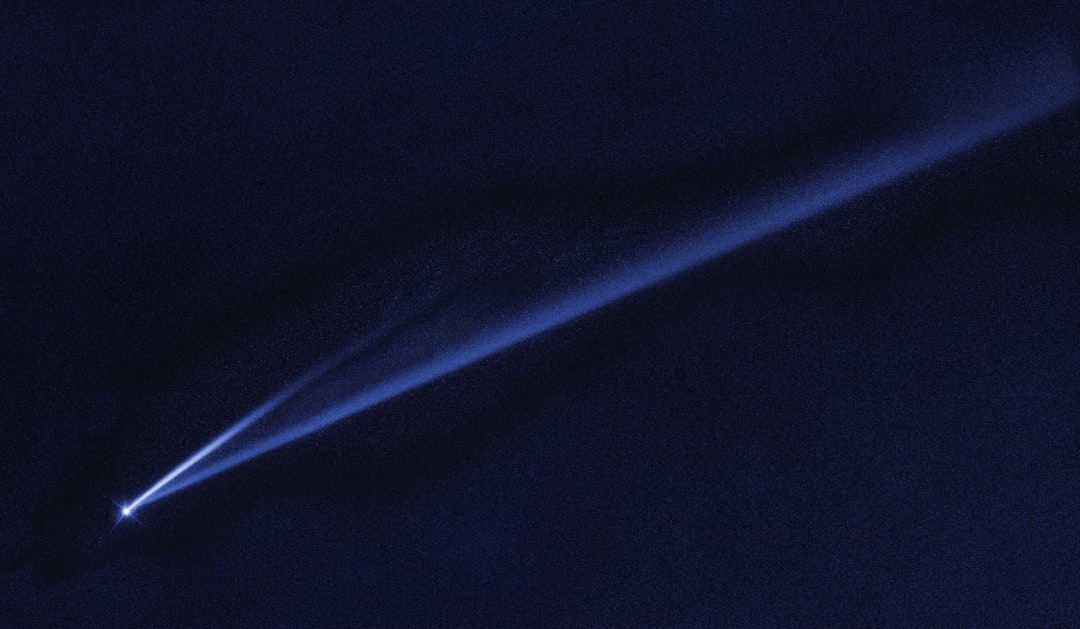
Perhaps most intriguingly, the research provides new interpretive frameworks for several mysterious objects that have long puzzled astronomers. 322P/SOHO 1, discovered by the Solar and Heliospheric Observatory, represents a particularly fascinating case study. This enigmatic object passes extremely close to the Sun at just 0.05 AU—well within the zone where the experimental samples underwent rapid disintegration.
Unlike typical comets, 322P/SOHO 1 lacks the characteristic tail but exhibits periodic brightening during its close solar approaches. The new research suggests this brightening may result from clouds of millimeter-sized dust particles being explosively ejected from its surface—precisely the behavior observed in the laboratory experiments. If confirmed, astronomers may be witnessing the real-time destruction of a dark asteroid, providing an unprecedented opportunity to validate theoretical models with direct observations.
The Curious Case of Phaethon
Another compelling example is 3200 Phaethon, the parent body of the annual Geminid meteor shower. This unusual object has long defied simple classification, exhibiting characteristics of both asteroids and comets. Phaethon follows an orbit that brings it within 0.14 AU of the Sun, subjecting it to intense thermal stress with each perihelion passage.
Interestingly, the laboratory samples eroded approximately 430,000 times faster than current estimates of Phaethon's mass loss rate. This dramatic discrepancy suggests that Phaethon may be composed of CY chondrite material that has been repeatedly "baked" during previous close solar encounters, creating a thermally-hardened surface layer resistant to rapid fragmentation. Alternatively, the gravitational field of the relatively large asteroid may be sufficient to retain most ejected particles, preventing the complete dispersal observed with smaller laboratory samples.
Research using NASA's Spitzer Space Telescope has revealed that Phaethon exhibits unusual spectral properties consistent with thermal processing, supporting the hypothesis that it represents an asteroid in an advanced stage of solar-induced modification.
Implications for Solar System Evolution and Planetary Defense
This research fundamentally reshapes our understanding of asteroid population dynamics in the inner solar system. The rapid destruction mechanism helps explain not only the current distribution of near-Sun asteroids but also provides insights into the long-term evolution of the asteroid belt and the delivery of materials to the inner planets during the solar system's early history.
From a planetary defense perspective, understanding this destruction mechanism is crucial for assessing potential impact risks. Asteroids on highly eccentric orbits that bring them close to the Sun may be structurally compromised by thermal stress, potentially affecting their trajectories and fragmentation behavior if they were to threaten Earth.
Future observations from facilities like the Vera C. Rubin Observatory, scheduled to begin operations soon, will provide unprecedented data on near-Sun asteroid populations. Combined with continued laboratory experiments and theoretical modeling, scientists expect to develop increasingly sophisticated models of how our Sun shapes the asteroid population through its deadly radiation.
Looking Forward: The Sun's Continuing Role as Cosmic Sculptor
The confirmation that the Sun acts as an efficient destroyer of nearby asteroids through thermally-driven explosive erosion represents a significant milestone in planetary science. This mechanism operates on timescales of hours to days rather than millions of years, fundamentally changing our understanding of how the inner solar system maintains its current configuration.
As observational technologies continue to advance, astronomers anticipate identifying additional candidates undergoing this destruction process. Each new example will provide valuable data for refining models and understanding the diverse factors that influence how different asteroid compositions respond to extreme solar radiation. The interplay between asteroid size, composition, spin rate, and orbital parameters creates a complex system that researchers are only beginning to fully characterize.
Ultimately, this research reminds us that our Sun, while essential for life on Earth, remains a powerful and destructive force in the cosmic neighborhood. For dark asteroids that venture too close, the Sun truly is, as the viral video memorably stated, "a deadly laser"—one that has been sculpting the inner solar system for billions of years and will continue to do so for billions more.