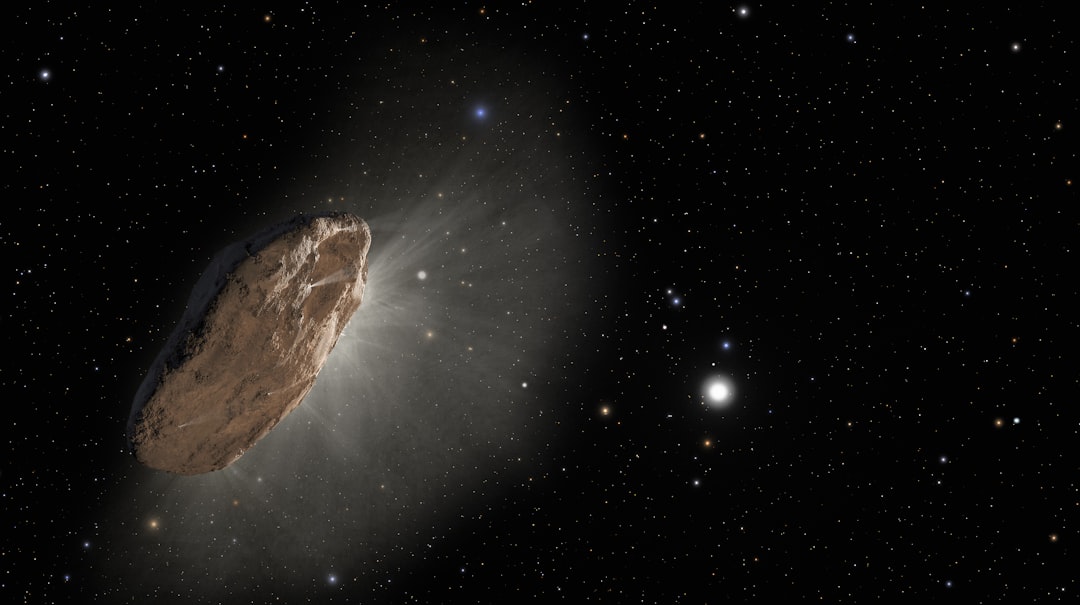
Happy Asteroid Day! Prize-Winning Plan Focuses on Space Infrastructure Defense
For decades, astronomers and policymakers have been working on increasingly sophisticated plans to protect our planet from potentially catastrophic asteroid strikes. But as humanity pushes deeper into the cosmos, a critical new frontier has emerged — one that demands an equally urgent and comprehensive response. The thousands of satellites now orbiting Earth, along with the fuel depots, lunar bases, and commercial outposts humanity is poised to build across the solar system, are profoundly vulnerable to the same cosmic threats that have shaped planetary surfaces for billions of years.
A bold new proposal to identify and systematically address these threats has earned two researchers from the University of Edinburgh this year's prestigious Schweickart Prize, awarded annually by the B612 Foundation and named in honor of Apollo 9 astronaut and planetary defense advocate Rusty Schweickart. The winning proposal calls for a sweeping international framework to monitor and mitigate risks posed not only by full-sized near-Earth asteroids, but also by the far more numerous — and frequently overlooked — hazards of meteoroid streams, microdebris, and cometary ejecta.
"As human activity and vital interests rapidly expand into regions beyond the protective shield of our atmosphere, the number of passing objects capable of causing serious damage to both life and critical infrastructure increases dramatically. Our Schweickart Prize winners this year have called for a comprehensive and systematic examination of this emerging reality." — Rusty Schweickart
The Schweickart Prize and Its Winners
The Schweickart Prize is a B612 Foundation program that invites graduate students to develop fresh, actionable ideas for defending Earth and its expanding infrastructure from near-Earth objects (NEOs). Winners receive a $10,000 cash award and a museum-quality trophy featuring an actual meteorite — a fitting symbol of the very threats the prize seeks to address.
This year's winners, Brian Murphy and Richard Cannon, are postgraduate researchers at the University of Edinburgh whose work sits at the intersection of planetary science, space policy, and engineering resilience. Murphy's research focuses on planetary defense mission design and the composition of comets, while Cannon brings complementary expertise to the partnership. The pair are scheduled to receive the prize at Lowell Observatory in Flagstaff, Arizona, on June 27, at an event timed to coincide with International Asteroid Day.
Past Schweickart Prize winners have tackled equally pressing challenges, including methods for spotting asteroids approaching from the difficult-to-monitor sunward direction and strategies for managing the legal and physical risks associated with asteroid mining. This year's proposal extends the field's ambitions significantly further.
The Threat Landscape: From Pebbles to Boulders
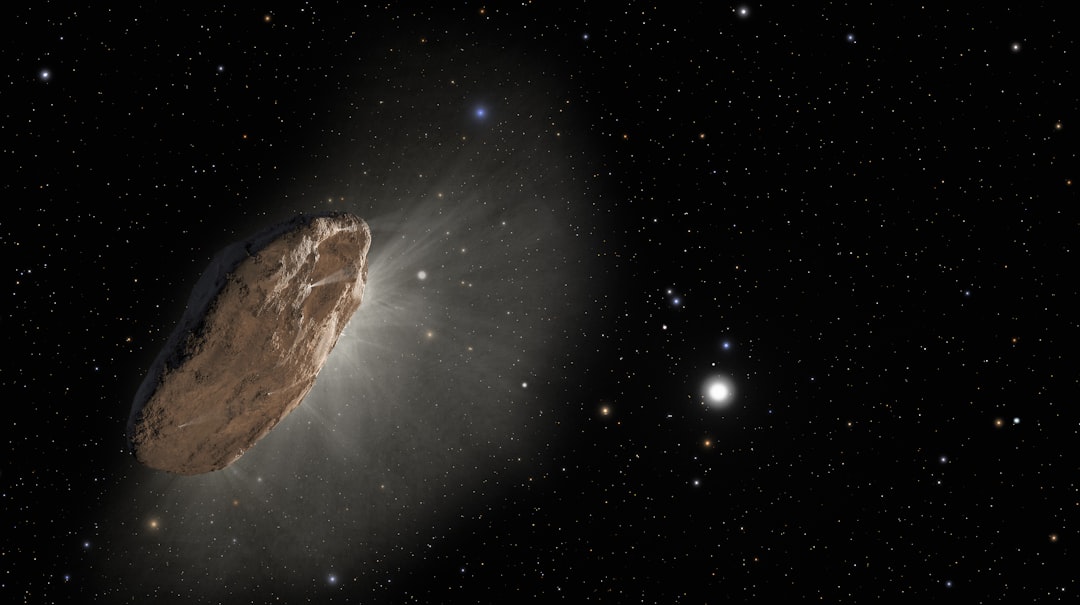
When most people think of asteroid threats, they picture city-killer rocks or extinction-level impactors. But in the vacuum of space, the danger spectrum extends to objects far smaller. Meteoroids — fragments ranging from dust grains to objects roughly a meter in diameter — pose a persistent and serious hazard to spacecraft. Unlike larger asteroids, they are extraordinarily difficult to track individually, and they arrive in concentrated streams associated with the orbital debris trails left by comets.
Earth's thick atmosphere provides an invisible shield, incinerating the vast majority of these objects long before they reach the surface. Spacecraft in orbit, on the Moon, or elsewhere in the solar system enjoy no such protection. Even a small meteoroid traveling at tens of kilometers per second carries enormous kinetic energy, and a direct strike can disable or destroy a satellite outright.
- Meteoroid streams are dense concentrations of cometary debris that Earth passes through at predictable intervals, giving rise to annual meteor showers such as the Perseids and Leonids.
- Sporadic meteoroids arrive unpredictably from all directions, representing a constant background flux of risk for all orbiting assets.
- Microdebris and ejecta — including material blasted off asteroid or lunar surfaces by prior impacts — can create secondary hazard clouds in cislunar space.
- Small NEOs (roughly 1–10 meters in diameter) are largely uncatalogued and can impact with little warning, posing threats to large facilities such as space stations or lunar outposts.
These hazards are not theoretical. In 1993, meteoroids associated with the Perseid meteor shower are strongly implicated in the loss of the European Space Agency's Olympus 1 communications satellite — a spacecraft that cost over a billion dollars and had years of operational life remaining. In 2009, scientists believe a Perseid meteoroid also struck and damaged the NASA/USGS Landsat 5 Earth observation satellite, disrupting data collection at a critical monitoring platform. These incidents serve as sobering reminders that the risk is real, quantifiable, and growing.
An Exponential Growth in Exposure
The scale of the problem has changed dramatically in just the past fifteen years. In 2009, fewer than 1,000 active satellites orbited our planet. Today, that figure has exploded to more than 17,000, driven predominantly by the rapid expansion of SpaceX's Starlink broadband constellation and other commercial mega-constellations. Plans already approved or in development by companies including Amazon's Project Kuiper, OneWeb, and others could push that number to tens or even hundreds of thousands of satellites over the coming decades.
Murphy and Cannon estimate that this surge in orbital assets has increased collective exposure to meteoroid strikes by a factor of 10 to 100 compared to 2009 — and that the risk will grow exponentially as new constellations are deployed. The financial stakes are staggering.
"Even when we had a hundredth of the assets in space, there was still damage that was in the $1.2 billion range. You can do the numbers for yourself there and say, all right, if we have 100 times that now, and potentially 1,000 times that in the next decade … this is going to be a big problem, and we need to start addressing that question now." — Brian Murphy
Some commercial operators are already taking precautionary steps. SpaceX equips its Starlink satellites with extra meteoroid shielding and has developed maneuver protocols to minimize surface exposure during predicted storm events by reorienting solar panels. Seattle-area startup Starcloud, which plans to launch tens of thousands of data center satellites into orbit, has acknowledged the issue as part of its long-term engineering roadmap. These are positive signs, but industry-wide coordination and monitoring infrastructure remain largely absent — precisely the gap that Murphy and Cannon's proposal seeks to fill.
Introducing WARDEN: A New Pillar of Planetary Defense
The centerpiece of Murphy and Cannon's proposal is the creation of a coordinating body they call WARDEN — the Warning Network for Asset Resilience From Dusts, Ejecta and NEOs. The name captures the system's broad mandate: monitoring and mitigating hazards ranging from fine cometary dust all the way up to multi-meter NEOs capable of destroying major space infrastructure.
The proposal envisions a two-stage implementation:
- First, the establishment of an International Commission on Space Infrastructure Resilience (ICSIR), which would conduct a comprehensive, systematic assessment of the threats facing current and future space assets in Earth orbit and beyond.
- Second, the creation of WARDEN itself as an operational coordinating body, drawing on existing planetary defense networks, space situational awareness programs, and commercial satellite operators to build a unified threat-response architecture.
Murphy and Cannon are explicit that WARDEN is not intended to replace the two existing international frameworks already tasked with asteroid monitoring — the International Asteroid Warning Network (IAWN) and the Space Mission Planning Advisory Group (SMPAG) — but to complement them. Where IAWN focuses on cataloguing and warning about NEOs that could strike Earth, and SMPAG coordinates potential deflection mission responses, WARDEN would focus specifically on protecting off-Earth infrastructure, filling a critical gap that neither existing body is designed to address.
"They all are checks and balances to each other, rather than two systems that could be at odds with planetary defense." — Brian Murphy
Murphy describes this complementary trio as a "trifecta of planetary defense" — a layered, redundant system appropriate to the complexity and scale of the challenge humanity now faces as it extends its permanent presence beyond Earth's atmosphere.
Upcoming Meteoroid Storm Events: A Window of Urgency
One of the most striking — and actionable — elements of Murphy and Cannon's proposal is their identification of specific near-term windows of elevated risk based on the known dynamics of cometary debris streams. This is not speculative concern; it is grounded in well-documented historical patterns.
- August 2028: An enhanced Perseid meteor storm is predicted, associated with debris trails laid down by Comet 109P/Swift-Tuttle. The Perseids are the same shower implicated in the 1993 Olympus 1 failure.
- November 2033 and 2034: Potential intense outbursts of the Leonid meteor shower, associated with debris from Comet 55P/Tempel-Tuttle. The Leonids produced some of the most spectacular and damaging meteor storms ever recorded, including extraordinary events in 1966 (with peak rates estimated at over 100,000 meteors per hour) and again in 1999 and 2001.
These dates provide a concrete planning horizon. If ICSIR is convened promptly, it could have actionable guidance and mitigation protocols in place well before the 2028 Perseid event — a timeline that is ambitious but achievable if international engagement begins now. The urgency is underscored by the fact that next-generation mega-constellations will likely be fully deployed by the late 2020s, dramatically increasing the number of assets at risk.
The Dream That Launched a Proposal
The origin story of this year's winning proposal is as compelling as the science behind it. Murphy, whose doctoral research focuses on planetary defense mission architecture and cometary science, described being jolted awake by an unusually vivid dream.
"I had a very vivid dream that there was this meteoroid storm impacting Earth, and I woke up in the morning and said, 'I need to check that out. Is this related to the Schweickart Prize? Could I submit this?'" — Brian Murphy
From that early-morning flash of inspiration, Murphy ran the calculations, assessed the literature on historical meteoroid storm impacts on spacecraft, and quickly recognized that the numbers told a sobering story. He reached out to Cannon, and the two researchers assembled a proposal that has now been recognized as the field's most promising new idea of the year.
Protecting Cislunar Space and Beyond
The scope of WARDEN extends well beyond Earth orbit. As humanity prepares for a sustained return to the Moon — with NASA's Artemis program targeting crewed lunar surface operations in the 2030s, alongside commercial and international partners — the question of how to protect lunar infrastructure from cosmic bombardment becomes increasingly pressing.
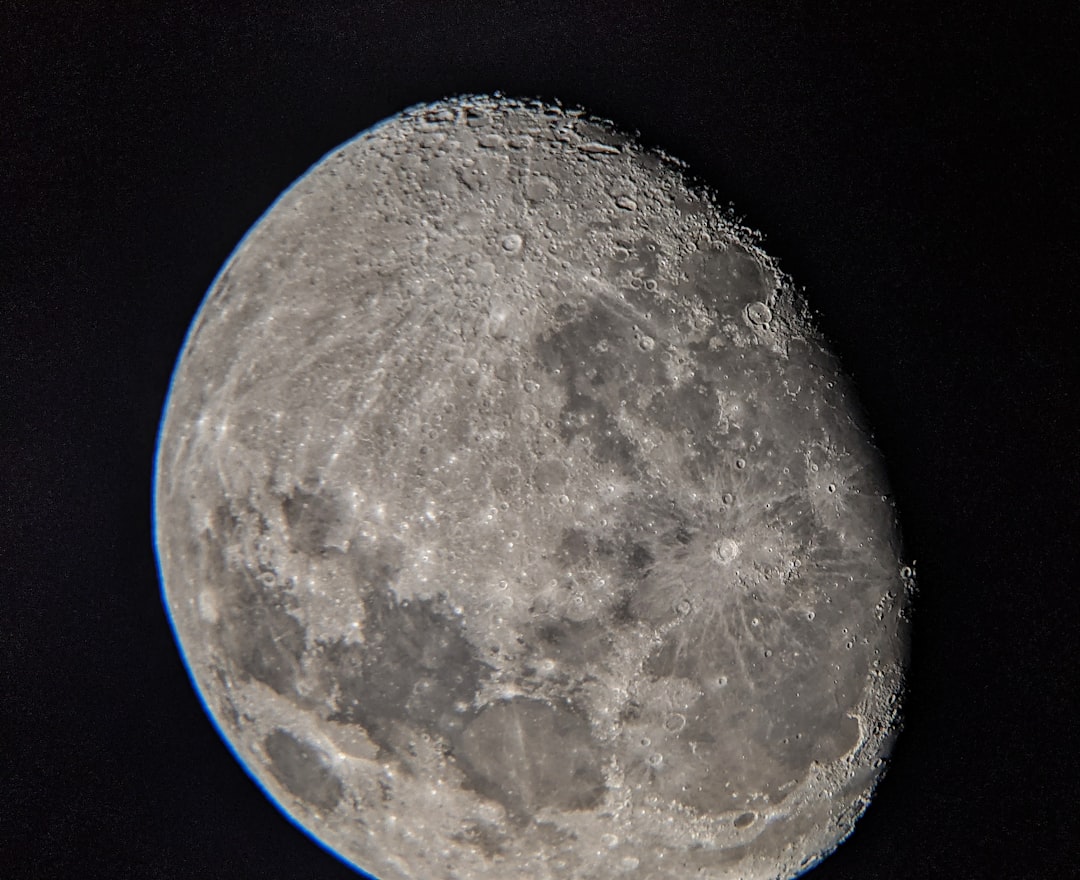
The Moon, lacking an atmosphere or magnetosphere, is completely unshielded from meteoroid impacts. Its surface is a geological record of billions of years of continuous bombardment, and that bombardment continues today. A habitat, power station, or mining facility on the lunar surface would be exposed to the same relentless flux of impactors that have scarred the lunar regolith for eons.
The issue was brought into sharp focus in early 2025, when NASA reported that a building-sized asteroid designated 2024 YR4 had a small but non-negligible probability of striking the Moon in 2032. Ed Lu, executive director of the B612 Foundation's Asteroid Institute, noted that such an impact would produce "a pretty big explosion" and excavate a 2-kilometer-wide crater — easily large enough to destroy any infrastructure in a wide surrounding area. NASA subsequently ruled out a lunar impact for 2024 YR4, but the episode crystallized the vulnerability of future lunar facilities to low-probability, high-consequence events.
Beyond the Moon, Murphy and Cannon's proposal also addresses threats to infrastructure in cislunar space broadly — including orbital fuel depots, transit vehicles, and the growing ecosystem of commercial stations planned for the Earth-Moon system. Future asteroid mining operations, themselves a possible economic cornerstone of the space economy, could generate significant additional debris clouds as excavation and processing activities eject material into space. WARDEN's mandate would encompass monitoring and mitigating these anthropogenic debris sources alongside natural ones.
From Prize to Policy: Next Steps for ICSIR
Murphy and Cannon are determined that their proposal should move rapidly from concept to institution. They plan to use their $10,000 prize award to fund the inaugural meeting of the International Commission on Space Infrastructure Resilience (ICSIR), to be held at the University of Edinburgh. Subsequent meetings are planned approximately every six months, with an online presence to maintain continuity and engagement between sessions.
The immediate priority is assembling the right expertise. Murphy plans to leverage his existing network within the small-body science community — the researchers who study asteroids, comets, and meteoroids professionally — alongside policymakers, satellite operators, and space agencies. The long-term goal is a self-sustaining international body with the credibility and technical depth to provide actionable guidance to governments, space agencies, and commercial operators worldwide.
Honorable Mentions: Other Innovative Proposals
Three additional Schweickart Prize proposals earned honorable mentions this year, reflecting the breadth of creative thinking being applied to planetary defense:
- "Like Streaks Passing in the Night: A Novel One-Tracklet Earth Impactor Detection Pipeline for LSST" — proposed by Ian Chow of the University of Washington, addressing the challenge of identifying Earth-impacting asteroids from single-pass telescope observations using the upcoming Vera C. Rubin Observatory.
- "The Incremental Benefits of Eccentric Collisions in Asteroid Kinetic Deflection Missions" — proposed by Kinthong Lee of Tsinghua University, exploring how off-center kinetic impactor strikes might be leveraged to maximize deflection efficiency.
- "Project Pathfinder" — proposed by Finn McGeever, James Beioley, Jack Campbell, Yogesh Andiyappan, Sergio Sanoja Hernandez, and Pau Costa Aura of