A decade after humanity first detected the ripples in spacetime predicted by Albert Einstein, scientists have captured what may be the most pristine gravitational wave signal ever recorded. The detection, made on January 14, 2025, is providing physicists with an unprecedented opportunity to probe the fundamental structure of reality itself and test whether Einstein's century-old theory of general relativity remains valid under the most extreme conditions in the universe.
The signal, officially catalogued as GW250114, traveled across vast cosmic distances to reach the twin detectors of the Laser Interferometer Gravitational-Wave Observatory (LIGO) in the United States. What distinguishes this detection from the dozens of gravitational wave events recorded since 2015 is its exceptional clarity—a quality that transforms it from a mere confirmation of known physics into a powerful tool for discovering new ones.
This remarkable signal emerged from the catastrophic merger of two black holes in deep space, their collision sending ripples through the fabric of spacetime itself. According to Cornell University physicist Keefe Mitman, who has been analyzing the data, the extraordinary signal-to-noise ratio of this detection has opened entirely new experimental windows into testing the limits of our understanding of gravity.
The Physics of Colliding Black Holes: Nature's Ultimate Laboratory
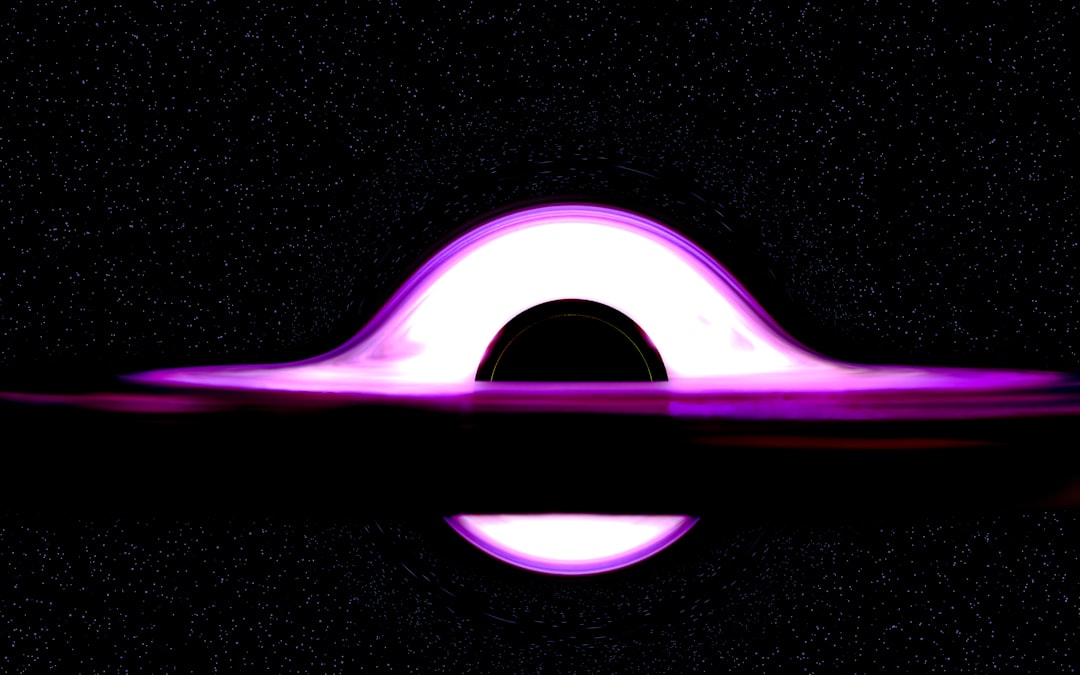
When two black holes spiral into each other and merge, they create one of the most violent events in the universe. The collision doesn't simply end with the formation of a larger black hole—instead, the newly formed object undergoes a process physicists call "ringdown," analogous to the way a bell resonates after being struck. This cosmic ringing produces gravitational waves at specific frequencies that gradually decay over milliseconds.
These gravitational waves are literal distortions in spacetime, stretching and compressing the distance between objects as they pass through. The NASA Chandra X-ray Observatory and other instruments have helped scientists understand the electromagnetic signatures of such mergers, but gravitational waves provide a completely different perspective—one that allows us to "hear" the collision directly.
Each ringdown tone is characterized by two critical parameters: its oscillation frequency (how fast it vibrates) and its damping time (how quickly the signal fades away). These parameters are not random—according to general relativity, they are precisely determined by just two properties of the final black hole: its mass and its spin rate.
A Revolutionary Testing Method: The Multi-Tone Analysis
The breakthrough enabled by GW250114 lies in its exceptional quality, which allowed researchers to clearly measure not just one, but multiple overtones from the ringdown phase. This capability transforms gravitational wave astronomy into a precision testing ground for fundamental physics in a way that wasn't previously possible.
Here's the elegant logic behind the test: If you measure just a single tone from a black hole merger, you can calculate the mass and spin of the resulting black hole based on that tone's frequency and damping rate. But if you can measure two different tones from the same event, you're effectively getting two independent measurements of that same black hole's properties.
"If those two measurements agree with one another, you are effectively verifying general relativity," explains Mitman. "But if you measure two tones that don't match up with the same mass and spin combination, you can start to probe how much you've deviated away from general relativity's predictions."
For GW250114, the research team successfully measured two tones with high confidence and constrained a third. The results? All three measurements agree perfectly with Einstein's predictions, providing one of the most stringent tests of general relativity in the strong-field regime—the extreme gravitational environments near black holes where spacetime curvature reaches its maximum.
Why This Test Matters: The Search for New Physics
The perfect agreement with Einstein's theory might seem like a null result, but physicists view it quite differently. Each increasingly precise test that confirms general relativity actually narrows down where new physics must be hiding, if it exists at all.
Scientists have compelling reasons to believe that general relativity cannot be the final word on gravity. The theory famously fails to account for several of the universe's most profound mysteries:
- Dark Matter: The invisible substance that comprises approximately 85% of all matter in the universe has no explanation within general relativity's framework
- Dark Energy: The mysterious force accelerating the universe's expansion remains unexplained by Einstein's equations
- Quantum Gravity: General relativity and quantum mechanics—our two most successful physical theories—are fundamentally incompatible, and the mathematics breaks down when physicists attempt to describe gravity at quantum scales
- Singularities: The theory predicts its own breakdown at the centers of black holes and at the Big Bang, suggesting something deeper must underlie these extreme conditions
A Decade of Gravitational Wave Astronomy: From First Light to Precision Science
The detection of GW250114 arrives at a symbolic moment—exactly ten years after LIGO's first gravitational wave detection on September 14, 2015, which confirmed a century-old prediction and opened an entirely new window on the universe. That first detection, designated GW150914, announced humanity's entry into the era of gravitational wave astronomy.
Since that historic first detection, the field has evolved from simply confirming that gravitational waves exist to using them as precision instruments for probing fundamental physics. The Virgo detector in Italy joined the network, and together these observatories have detected dozens of black hole mergers, neutron star collisions, and other cosmic cataclysms.
Each new detection has refined our understanding of how black holes form, how often they merge, and what the population of black holes throughout the universe looks like. But GW250114 represents something more: the maturation of gravitational wave astronomy into a tool for testing the very laws of physics themselves.
The Technology Behind the Discovery
LIGO's ability to detect gravitational waves borders on the miraculous. The observatories must measure changes in distance smaller than one-thousandth the diameter of a proton across their 4-kilometer-long arms. This requires some of the most sophisticated technology ever developed, including:
- Ultra-stable lasers: Precisely calibrated light sources that can detect infinitesimal changes in distance
- Seismic isolation: Complex suspension systems that isolate the mirrors from ground vibrations
- Quantum squeezing: Advanced quantum techniques that reduce uncertainty in the measurements
- Coordinated detection: Multiple observatories working in concert to confirm signals and triangulate their source
Recent upgrades to LIGO's sensitivity have dramatically improved its ability to detect fainter signals and resolve finer details in the gravitational waveforms. These improvements directly enabled the exceptional quality of the GW250114 detection.
Looking Forward: The Future of Gravitational Wave Science
The success with GW250114 points toward an exciting future for gravitational wave astronomy. As detectors become even more sensitive and new observatories come online, scientists expect to observe thousands of black hole mergers with ever-increasing precision.
The upcoming LISA (Laser Interferometer Space Antenna) mission, a joint project between NASA and the European Space Agency planned for the 2030s, will take gravitational wave astronomy to space. Operating in the vacuum of space with detector arms millions of kilometers long, LISA will be sensitive to lower-frequency gravitational waves from supermassive black hole mergers—events millions of times more massive than those LIGO can detect.
Japan's KAGRA detector, located underground to reduce seismic noise, is also joining the global network, which will improve the ability to localize gravitational wave sources and may enable the detection of even more subtle deviations from general relativity.
The Philosophical Implications: Einstein's Enduring Legacy
There's a profound irony in the current state of gravitational wave science. Every test that confirms general relativity simultaneously demonstrates Einstein's genius and frustrates physicists' search for new physics. As Mitman and his colleagues continue analyzing GW250114 and future detections, they walk a fine line between validation and discovery.
Yet far from being disappointed by general relativity's continued success, physicists recognize that each precise confirmation helps map the boundaries of where the theory works and, by elimination, where it must eventually fail. When that failure is finally detected—whether in gravitational wave signals, particle physics experiments, or cosmological observations—it will mark the beginning of a revolution in physics as profound as Einstein's own overthrow of Newtonian gravity more than a century ago.
For now, GW250114 stands as a testament to both human ingenuity and the robustness of Einstein's vision. The signal represents the most pristine glimpse yet into the fundamental nature of spacetime, gravity, and the extreme physics of black holes. It confirms that even in the most violent and extreme environments the universe can produce, Einstein's equations continue to describe reality with stunning accuracy.
As gravitational wave detectors continue to improve and new observatories join the global network, scientists are optimistic that the tools to finally probe beyond general relativity are within reach. The universe has already surprised us once by allowing us to detect gravitational waves at all. The next surprise—the discovery of where Einstein's theory finally breaks down—may be just around the corner, hidden in the cosmic symphony of colliding black holes waiting to be heard.