As humanity stands on the precipice of interplanetary exploration, with NASA and the China National Space Agency (CNSA) targeting crewed missions to Mars within the next decade, scientists are racing to understand the profound physiological challenges awaiting our first Martian explorers. Among the myriad concerns facing mission planners—from cosmic radiation exposure to the psychological toll of isolation—one critical question looms large: How will the Red Planet's reduced gravitational environment, approximately 38% of Earth's gravity, affect the human body's most abundant tissue?
An international consortium of researchers has conducted groundbreaking experiments aboard the International Space Station to investigate this crucial question, focusing specifically on skeletal muscle tissue. This tissue, which comprises more than 40% of total human body mass, serves as the foundation for movement, metabolic regulation, and overall physical health. The findings, published in the prestigious journal Science Advances, reveal both concerning challenges and promising solutions for maintaining astronaut health during extended missions to Mars and beyond.
The Critical Importance of Skeletal Muscle in Space Exploration
Understanding the behavior of skeletal muscle in reduced gravity environments represents far more than an academic exercise—it's a matter of mission success or failure. Unlike cardiac or smooth muscle, skeletal muscle is voluntary tissue that responds dynamically to mechanical loading and gravitational forces. On Earth, our muscles constantly work against gravity to maintain posture, enable movement, and regulate metabolism. Remove or reduce that gravitational stimulus, and the consequences can be severe and rapid.
Previous research on astronauts returning from extended stays aboard the International Space Station has documented alarming rates of muscle atrophy, with some crew members losing up to 20% of muscle mass during six-month missions in microgravity. This degradation affects not only muscle size but also strength, endurance, and the intricate biochemical pathways that regulate glucose metabolism and insulin sensitivity. For a mission to Mars—requiring approximately seven months of transit each way, plus extended surface operations—the cumulative effects could be catastrophic without effective countermeasures.
Revolutionary Research Methodology Using the MARS Centrifuge
The research team, comprising scientists from Japan's University of Tsukuba, the Japan Aerospace Exploration Agency (JAXA), Harvard Medical School affiliates including Beth Israel Deaconess Medical Center and Brigham and Women's Hospital, and the University of Rhode Island, designed an ingenious experiment to test muscle response across a spectrum of gravitational conditions. Their approach utilized JAXA's Kibo experimental module aboard the ISS, equipped with a specially developed centrifuge system called the Multiple Artificial-gravity Research System (MARS).
Twenty-four mice served as test subjects for this 28-day investigation, divided into four experimental groups exposed to different gravitational loads: microgravity (essentially 0 g), 0.33 g (closely approximating Martian gravity at 0.38 g), 0.67 g (representing two-thirds of Earth's gravity), and 1 g (Earth-normal gravity as a control). This methodical approach allowed researchers to map the dose-response relationship between gravitational force and muscle preservation with unprecedented precision.
"While we can simulate spaceflight on Earth in humans, it's extremely complicated and costly. We have centrifuges that can be used to temporarily expose humans to certain gravity levels, but it is not homogeneous nor constant," explained Professor Marie Mortreux, who leads the Metabolism and Muscle Biology Lab at the University of Rhode Island. "We used gravity levels that were equally separated, to have a better picture of the dose-response of each system to gravity. The test group that was exposed to 0.33g was extremely close to Martian gravity. Our findings for that group can be translated into actions to enable Mars exploration."
Groundbreaking Findings: The 0.67 g Threshold
The results of this meticulously designed experiment revealed a critical discovery with profound implications for future space missions. Analysis of the mice following their return to NASA's Kennedy Space Center demonstrated that exposure to 0.33 g significantly mitigated spaceflight-induced muscle atrophy, while 0.67 g provided complete prevention of muscle tissue loss. This finding establishes what researchers term a "critical gravitational threshold"—a minimum level of artificial gravity necessary to maintain muscle health during extended spaceflight.
The research team employed sophisticated analytical techniques to assess multiple dimensions of muscle health:
- Muscle Mass Measurements: Direct weighing and volumetric analysis of muscle tissue samples revealed progressive preservation of muscle mass as gravitational force increased, with optimal protection at 0.67 g
- Grip Strength Testing: Forelimb grip strength assessments demonstrated that muscle performance—not just size—was maintained at the 0.67 g threshold
- Electrical Impedance Myography (EIM): This advanced non-invasive technique measured muscle electrical properties, confirming that tissue quality and function remained intact at higher artificial gravity levels
- Metabolomic Analysis: Blood plasma examination identified 11 specific metabolites showing gravity-dependent changes, potentially serving as biomarkers for monitoring astronaut physiological adaptation
Molecular and Cellular Insights
Beyond the macroscopic observations of muscle size and strength, the research delved into the molecular mechanisms underlying muscle adaptation to varying gravity levels. The team's analysis revealed that exposure to partial gravity environments triggers complex cellular signaling pathways involving protein synthesis, mitochondrial function, and inflammatory responses. At the 0.67 g threshold, these pathways maintained homeostasis similar to Earth-normal conditions, suggesting that this level of gravitational stimulus provides sufficient mechanical loading to preserve normal cellular function.
The identification of gravity-responsive metabolites represents a particularly exciting development for space medicine. These biochemical markers could enable mission medical officers to monitor astronaut health in real-time during long-duration missions, detecting early signs of muscle degradation before clinical symptoms appear. This predictive capability could allow for timely intervention through adjusted exercise protocols or other countermeasures.
Implications for Mars Mission Architecture
The study's findings carry profound implications for the design of future Mars missions and deep-space exploration vehicles. While the results suggest that Martian surface gravity (0.38 g) may provide substantial protection against muscle atrophy compared to microgravity, the seven-month transit phases present a more significant challenge. During these prolonged periods in zero gravity, astronauts would face severe muscle degradation without effective countermeasures.
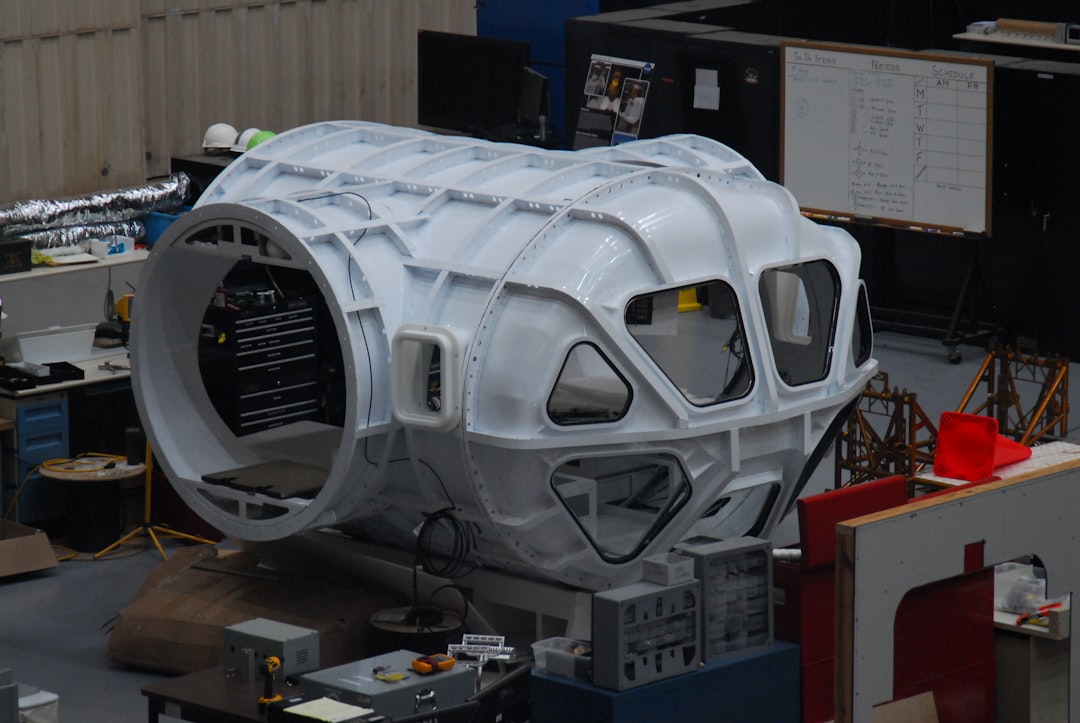
This research provides compelling evidence for incorporating artificial gravity systems into spacecraft design. NASA's conceptual Non-Atmospheric Universal Transport Intended for Lengthy United States Exploration (NAUTILUS-X) spacecraft, which features a rotating habitat module, exemplifies this approach. By spinning a section of the spacecraft, engineers can generate centrifugal force that simulates gravity, potentially maintaining crew health during the long journey to Mars.
The 0.67 g threshold identified in this study offers specific design parameters for such systems. Engineers now have a concrete target: artificial gravity systems must generate at least two-thirds of Earth's gravitational force to fully protect against muscle atrophy. This information allows for optimization of rotation rates, habitat radius, and other engineering parameters in spacecraft design.
Building on Decades of Gravitational Research
This ISS-based investigation represents the culmination of years of ground-based research into partial gravity effects. Professor Mortreux's collaboration with Dr. Mary Bouxsein at Harvard Medical School laid crucial groundwork for this space-based study. Dr. Bouxsein pioneered ground-based mouse models of partial gravity in the early 2010s, while Mortreux extended this work by developing rat models of reduced gravity environments.
"Since this mission aimed to assess gravity as a continuum, we were perfectly positioned to see if our ground-based results had similar outcomes when reduced mechanical loading was applied in orbit," Mortreux noted. "Working with an international team was challenging and exciting. I think my experience working in Italy, France, and the United States prepared me for those big-scale collaborations."
The convergence of ground-based analog studies with actual spaceflight experiments provides robust validation of research methodologies and strengthens confidence in translating these findings to human spaceflight applications.
Future Directions and Broader Applications
While this study focused on skeletal muscle, the implications extend to other physiological systems affected by reduced gravity, including bone density, cardiovascular function, and neurological health. Future research will likely expand to investigate how the 0.67 g threshold applies to these other critical body systems. The European Space Agency and other international partners are already planning follow-up studies to explore these questions.
Beyond Mars exploration, these findings have relevance for potential missions to other destinations in our solar system. The Moon's gravity (0.165 g) falls below the protective threshold identified in this study, suggesting that lunar habitats for extended stays might also benefit from artificial gravity supplementation. Similarly, missions to asteroids or the outer planets would require artificial gravity systems for crew health maintenance.
The identified metabolic biomarkers also open new avenues for personalized space medicine. By monitoring these markers, medical teams could tailor exercise and nutrition protocols to individual astronauts based on their specific physiological responses to reduced gravity. This precision medicine approach could optimize crew health while minimizing the time burden of exercise countermeasures.
Challenges and Next Steps Toward Human Application
While these results provide crucial insights, significant work remains before these findings can be fully translated to human spaceflight. Mice, despite being excellent model organisms, differ from humans in important ways, including muscle fiber composition, metabolic rates, and responses to mechanical loading. Human validation studies, potentially using bed rest protocols with centrifuge-generated artificial gravity, will be necessary to confirm these thresholds apply to astronauts.
Engineering challenges also loom large. Implementing artificial gravity systems in spacecraft requires addressing issues of mass, power consumption, crew adaptation to rotating environments, and the complexities of transitioning between rotating and non-rotating sections of the vehicle. However, the clear health benefits demonstrated by this research strengthen the case for investing in these technologies.
As we stand at the threshold of becoming a multi-planetary species, research like this transforms abstract dreams of Mars exploration into concrete engineering requirements and medical protocols. The path to the Red Planet requires not just powerful rockets and advanced life support systems, but a deep understanding of how the human body adapts to alien environments—and how we can support that adaptation to ensure our explorers remain healthy, capable, and ready for the extraordinary challenges that await them on Mars.