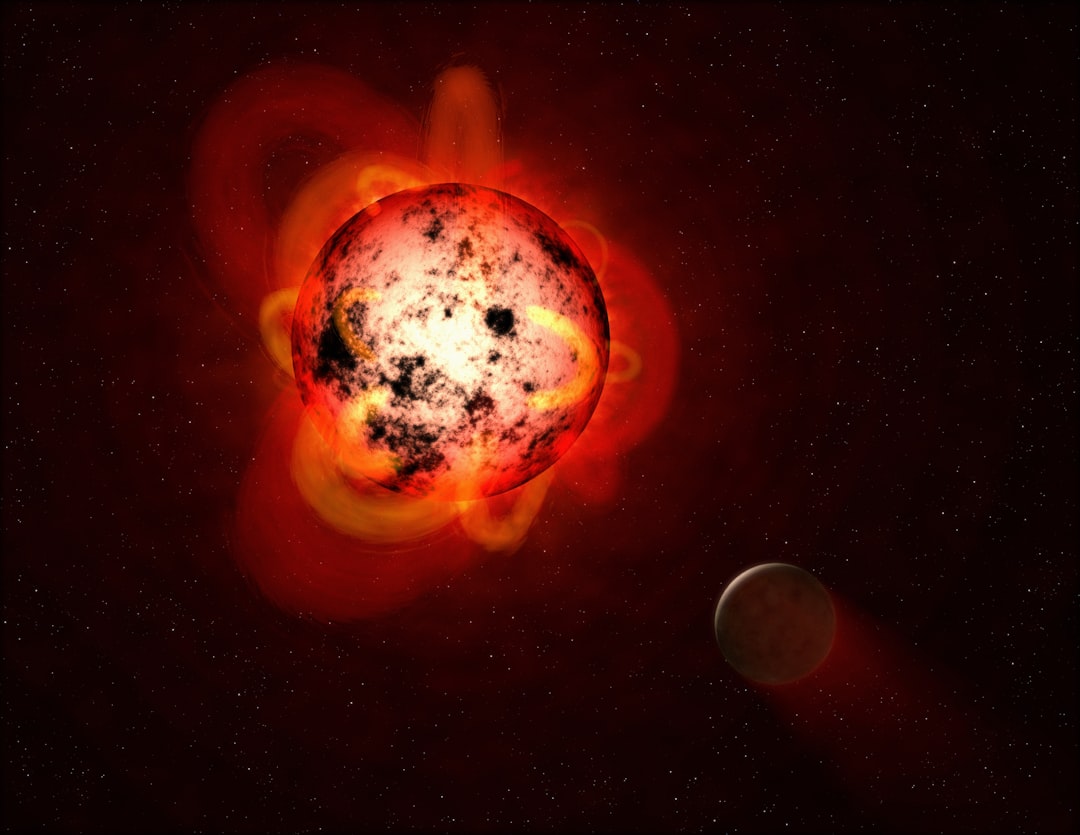
The Sun's most persistent and magnetically active regions represent some of the most powerful and dangerous sources of space weather affecting Earth—yet solar physicists still struggle to understand why these long-lived active regions (LLARs) produce such dramatically higher rates of solar flares and coronal mass ejections compared to their shorter-lived counterparts. A groundbreaking new study published in The Astrophysical Journal by researchers Emily Mason and Kara Kniezewski has shed light on these enigmatic solar phenomena, revealing that while LLARs constitute only about 13% of all identified active regions, they are responsible for a disproportionately large number of the most powerful solar storms that can disrupt satellites, power grids, and communications systems here on Earth.
Understanding these massive flare factories has been complicated by a fundamental tracking problem in how scientists monitor solar activity. The current numbering system, while functional for most purposes, creates significant challenges when attempting to follow the same active region as it rotates around the Sun's far side and reappears weeks later. This research not only addresses these tracking difficulties but also uncovers fascinating characteristics that distinguish LLARs from typical active regions—findings that could prove crucial for improving our ability to predict potentially devastating space weather events before they impact our increasingly technology-dependent civilization.
The Challenge of Tracking Solar Active Regions Across Multiple Rotations
Since 1972, the National Oceanic and Atmospheric Administration (NOAA) has maintained a systematic approach to cataloging sunspots and active regions, assigning each one a sequential five-digit identification number as it appears on the Earth-facing side of the Sun. While this system has served the solar physics community well for basic monitoring purposes, it contains a fundamental flaw when it comes to tracking the most persistent active regions: it treats the same active region as a completely new entity each time it rotates back into view.
This tracking problem stems from the Sun's unique rotational characteristics. Unlike Earth, which rotates as a solid body, the Sun is composed of plasma and exhibits differential rotation—a phenomenon where the equatorial regions complete a rotation in approximately 25 days while the polar regions take closer to 35 days. This process, known as Carrington rotation after the British astronomer Richard Carrington who first documented it in the 1850s, means that active regions don't simply disappear when they rotate out of view on the Sun's western limb.
The most robust active regions can survive their journey across the Sun's far side, remaining active for weeks or even months as they traverse the hemisphere we cannot directly observe from Earth. Solar physicists have developed sophisticated techniques to track these regions during their far-side transit, utilizing extreme ultraviolet (EUV) imaging and helioseismic data—measurements of sound waves propagating through the Sun's interior that can reveal the presence of active regions on the far side. However, when these persistent regions rotate back into Earth's view on the eastern limb, the NOAA system assigns them an entirely new identification number, treating them as fresh active regions rather than the continuation of previously observed phenomena.
As any data scientist or database administrator can attest, tracking the same entity across multiple identifiers creates enormous complications for analysis and research. Mason and Kniezewski tackled this challenge head-on, undertaking the painstaking manual work of correlating 1,611 unique NOAA active region designations observed between 2011 and 2019—a period spanning most of Solar Cycle 24. Through careful analysis of magnetic field configurations, spatial locations, and temporal evolution patterns, they identified 101 distinct long-lived active regions that collectively accounted for 214 individual NOAA numbers—meaning the average LLAR received more than two separate identification numbers during its lifetime.
Physical Characteristics That Set Long-Lived Active Regions Apart
The research revealed several distinctive physical properties that differentiate LLARs from their shorter-lived counterparts. Perhaps most significantly, these persistent regions are physically larger and contain substantially more concentrated magnetic flux—the measure of magnetic field strength passing through a given area. This enhanced magnetic flux density provides these regions with greater structural stability and energy reserves, allowing them to persist through multiple solar rotations while continuously generating powerful flares and eruptions.
Interestingly, when analyzed using the Mt. Wilson magnetic classification scheme—a system that categorizes active regions based on the complexity of their magnetic field configurations as revealed in magnetograms—LLARs showed approximately the same distribution of magnetic complexity as typical active regions. This finding was somewhat unexpected, as researchers had hypothesized that the extreme longevity and high flare productivity of LLARs might correlate with more complex magnetic topologies.
"The fact that long-lived active regions don't show significantly different magnetic complexity classifications, yet produce dramatically higher flare rates, suggests that other factors beyond simple magnetic configuration play crucial roles in determining flare productivity," the researchers noted in their analysis.
The frequency of LLARs varies in accordance with the 11-year solar cycle, mirroring the patterns observed in shorter-lived active regions. During solar maximum—the period of peak solar activity—both LLARs and typical active regions appear more frequently, while during solar minimum their numbers decline substantially. This cyclical behavior reinforces the understanding that LLARs are not a fundamentally different class of solar phenomena, but rather represent the extreme end of a continuous spectrum of active region lifetimes and intensities.
The Extraordinary Flare Productivity of Persistent Active Regions
Perhaps the most striking and consequential finding of this research concerns the dramatically elevated flare production rates associated with LLARs. The data reveals a clear and alarming pattern: these long-lived regions are disproportionately responsible for the most powerful solar flares that pose the greatest risks to Earth's technological infrastructure.
The numbers are sobering. Compared to typical active regions, LLARs are:
- Four times more likely to produce C-class flares—moderate-intensity events that can cause brief radio blackouts in polar regions
- Five times more likely to generate M-class flares—powerful eruptions capable of causing radio blackouts affecting high-frequency communications and minor radiation storms
- Six times more likely to unleash X-class flares—the most intense classification of solar flares, which can trigger widespread radio blackouts, long-lasting radiation storms, and potentially catastrophic damage to satellites and power grids
This escalating pattern, where the probability increase grows with flare intensity, suggests that LLARs possess some fundamental characteristic that not only makes them more flare-productive overall, but specifically enhances their ability to generate the most energetic and dangerous events. Given that a single X-class flare from a well-positioned active region can cause billions of dollars in damage and potentially endanger astronauts in space, understanding what drives this enhanced productivity is not merely an academic question—it's a critical priority for space weather forecasting and risk mitigation.
Theoretical Models and the Deep-Rooted Flux Hypothesis
Mason and Kniezewski propose a compelling theoretical explanation for both the longevity and exceptional flare productivity of LLARs: these regions may originate from stronger magnetic flux concentrations rooted deeper within the Sun's convective zone—the churning outer layer of the Sun where heat is transported primarily through the physical motion of plasma rather than radiation.
This deep-rooted flux hypothesis suggests that LLARs are anchored by magnetic field structures that extend far below the Sun's visible surface, the photosphere. Magnetic fields emerging from greater depths would naturally be stronger and more stable, as they would be less susceptible to the disruptive effects of turbulent convective motions near the surface. These deeper roots would provide both the structural foundation for extended lifetimes and the enormous energy reservoirs necessary to power the intense and frequent flaring activity observed in LLARs.
The theory draws support from observations from NASA's Solar Dynamics Observatory and other helioseismic studies that have revealed complex magnetic structures extending deep into the solar interior beneath long-lived active regions. However, as the researchers acknowledge, this remains a theoretical framework that requires extensive observational validation. Confirming the deep-rooted nature of LLARs would require detailed helioseismic tomography and potentially new observational techniques capable of probing the three-dimensional magnetic field structure beneath the photosphere.
The Solar Active Region Spotters Experiment: Citizen Science Meets Complex Data
In an innovative attempt to accelerate the labor-intensive process of tracking and categorizing active regions, the research team initially planned to leverage citizen science through a project called "Solar Active Region Spotters" hosted on the Zooniverse platform. This ambitious experiment sought to determine whether trained volunteers could accurately track the evolution and reappearance of active regions across multiple solar rotations.
The project required participants to interpret highly technical data products including magnetograms (maps showing the strength and polarity of magnetic fields at the Sun's surface), extreme ultraviolet images revealing the hot plasma in the solar corona, and coronal loops—the arc-shaped structures of plasma following magnetic field lines above active regions. While volunteers received training materials and guidance, the complexity of these tasks proved challenging even for motivated participants with strong scientific backgrounds.
The results showed that volunteer accuracy in actively tracking active regions across rotations reached only about 64%—insufficient for inclusion in the final scientific analysis, which requires much higher precision to draw reliable conclusions. However, the researchers emphasized that the project succeeded admirably as an outreach and educational tool, engaging thousands of people worldwide in real solar physics research and helping them understand the complexities of monitoring our nearest star. This experience highlights both the potential and limitations of citizen science for highly technical astronomical research, suggesting that such projects work best when tasks can be simplified without sacrificing scientific rigor, or when they focus primarily on pattern recognition rather than expert interpretation.
Implications for Space Weather Forecasting and Future Research
The findings of this research carry significant implications for our ability to predict and prepare for dangerous space weather events. Knowing that a relatively small subset of active regions—just 13% of the total—is responsible for a disproportionate share of the most powerful flares provides forecasters with valuable information for risk assessment. When a LLAR appears on the Sun's eastern limb, space weather prediction centers can anticipate an elevated probability of significant solar storms over the coming weeks as the region transits across the Earth-facing hemisphere.
However, fully leveraging this knowledge requires addressing the fundamental tracking problem identified in the study. The current NOAA numbering system, while adequate for basic monitoring, creates unnecessary complications for researchers and forecasters attempting to analyze the long-term behavior and evolution of persistent active regions. Implementing a more sophisticated tracking system that maintains consistent identifiers across multiple rotations would require substantial computational resources and algorithmic development—investments that may be difficult to secure given current governmental budget constraints affecting scientific agencies.
Future research directions include investigating the subsurface magnetic structure of LLARs using advanced helioseismic techniques, analyzing their formation mechanisms to determine why certain flux emergence events produce long-lived regions while others quickly dissipate, and developing predictive models that can forecast which newly emerged active regions are likely to become persistent flare producers. The upcoming Solar Orbiter mission, a collaborative effort between ESA and NASA, may provide crucial new observations from unique vantage points that could help resolve some of these questions.
As our civilization becomes increasingly dependent on vulnerable space-based infrastructure—from GPS satellites and communication networks to power grids susceptible to geomagnetically induced currents—the stakes for improving space weather forecasting continue to rise. Understanding the nature and behavior of long-lived active regions represents a critical piece of this puzzle. While we've made significant progress in monitoring space weather, the transition from mere observation to reliable prediction will require both continued research into the fundamental physics of solar activity and investment in the observational and computational infrastructure necessary to track and analyze these powerful phenomena. The Sun's most persistent active regions may constitute a small fraction of total solar activity, but their outsize impact on Earth's technological systems demands our continued attention and scientific scrutiny.