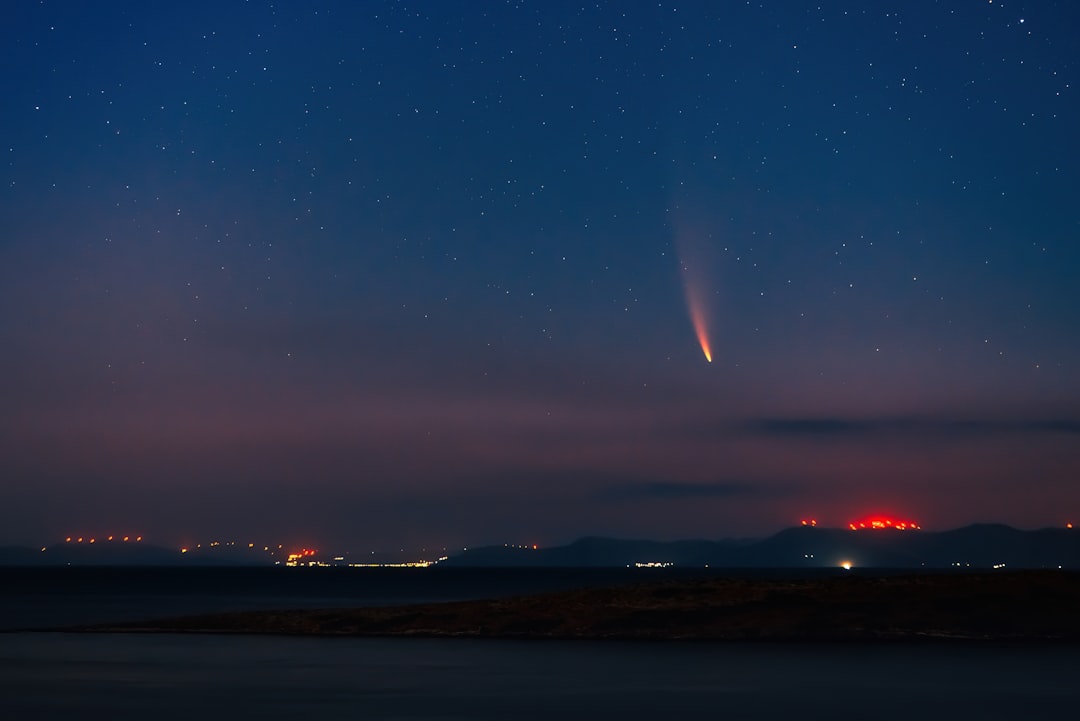
As dawn approaches in early May, skywatchers around the world prepare for one of astronomy's most spectacular yet challenging annual events: the Eta Aquariid meteor shower. This celestial display, spawned by the most famous comet in human history, offers a breathtaking show of swift, brilliant meteors that streak across the pre-dawn sky at velocities exceeding 65 kilometers per second. Yet despite its impressive pedigree and potential for producing over 100 meteors per hour during peak activity, this shower remains frustratingly elusive for observers in the Northern Hemisphere, earning it an almost legendary status among meteor enthusiasts.
The Eta Aquariids represent a fascinating astronomical phenomenon that connects us directly to Comet 1P/Halley, the celestial wanderer that has captivated humanity for millennia. Active from April 19th through May 28th annually, with peak activity occurring on the night of May 5th into the morning of May 6th, this meteor shower ranks as the third most prolific annual display, trailing only the renowned Perseids of August and the Geminids of December in terms of sheer meteor production.
Understanding the Eta Aquariid Phenomenon
The Eta Aquariid meteor shower derives its name from its apparent point of origin—the radiant—located near the star Eta Aquarii within the distinctive Y-shaped asterism known as the Water Jar in the constellation Aquarius. This radiant sits at approximately one degree of declination, positioning it just below the celestial equator. The shower's meteors are particularly notable for their exceptional speed, traveling at 65.4 kilometers per second (approximately 146,000 miles per hour), which often results in the formation of glowing, persistent trains that can linger in the sky for several seconds after the meteor itself has vanished.
What makes these meteors particularly special is their origin story. Every particle that burns up in our atmosphere during the Eta Aquariid shower was once part of Halley's Comet, deposited along the comet's orbital path during passages through the inner solar system thousands of years ago. This ancient debris field, spread across space like cosmic breadcrumbs, intersects Earth's orbit twice annually—once in May, producing the Eta Aquariids, and again in October, generating the Orionid meteor shower.
The Northern Hemisphere Challenge
Despite their impressive credentials, the Eta Aquariids face what might be described as a significant "public relations problem" among Northern Hemisphere observers. The shower's radiant position creates a challenging observing scenario for anyone north of the equator. The radiant doesn't rise above the horizon until approximately 2:00 AM local time, and reaches its highest point—transiting the meridian—around 8:00 AM, well after sunrise has washed out the sky.
This timing issue is further compounded by the shower's occurrence in early May, just over a month before the June solstice. At this time of year, nights are already growing shorter in the Northern Hemisphere, providing only a narrow window of true darkness for meteor observation. Northern observers typically have just two to three hours of dark sky before dawn begins to brighten the eastern horizon, significantly limiting their opportunity to witness the shower's full potential.
"For Southern Hemisphere observers, the Eta Aquariids represent one of the premier meteor showers of the year, with the radiant riding high overhead during the optimal pre-dawn hours. It's a stark reminder that celestial geography matters as much as timing when it comes to meteor observation."
A Southern Hemisphere Spectacle
The situation reverses dramatically south of the equator. As autumn transitions into winter in the Southern Hemisphere during May, observers in countries like Australia, New Zealand, South Africa, and Chile enjoy ideal conditions for viewing the Eta Aquariids. The radiant climbs high in the northern sky during the pre-dawn hours, and the longer nights of the approaching winter season provide extended periods of darkness for observation.
Australian meteor observers frequently report that the Eta Aquariids rival or exceed the performance of more famous Northern Hemisphere showers. With the radiant positioned favorably overhead, Southern Hemisphere skywatchers can observe meteors radiating from all directions across the sky, rather than primarily from the horizon as Northern observers must contend with. This geometric advantage can effectively double or triple the number of visible meteors during peak activity.
The disparity highlights an interesting astronomical curiosity: of the 13 major annual meteor showers recognized by the International Meteor Organization, only two feature radiants in the Southern Hemisphere—the Eta Aquariids and the Delta Aquariids, which also occur in Aquarius during August. This distribution appears to be purely coincidental, though it has led to the Northern Hemisphere enjoying a disproportionate share of easily observable major meteor showers.
The 2026 Viewing Forecast
For the 2026 apparition of the Eta Aquariids, observers face mixed conditions. Historical data suggests typical rates hover around 50 meteors per hour during peak activity, though the shower has demonstrated surprising variability. The year 2013 provided a memorable example, when rates exceeded 140 meteors per hour—more than double the typical maximum. Some years witness Zenithal Hourly Rates (ZHR) between 60 and 100, while others prove more modest.
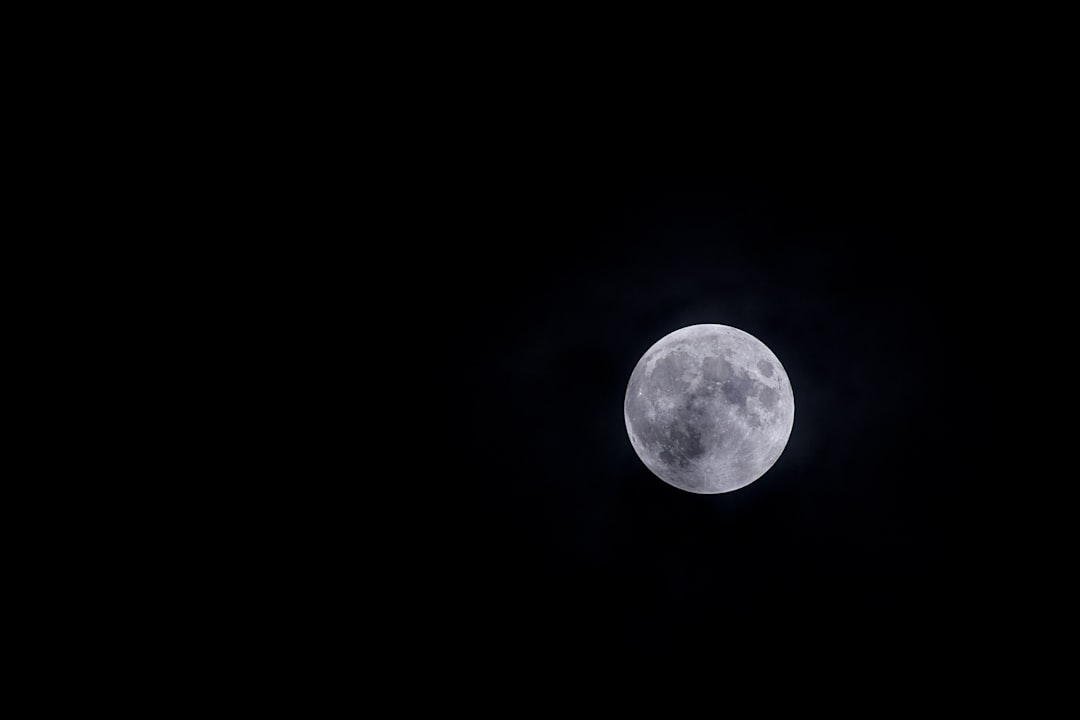
Unfortunately, 2026 presents a significant challenge in the form of lunar interference. The Moon will be in a waning gibbous phase, approximately 84% illuminated and just four days past full during the shower's peak. This bright moonlight will significantly reduce the number of visible meteors, as only the brightest will be visible against the moon-washed sky.
Strategies for Optimal Viewing
- Moon blocking: Position yourself so that a building, hill, or tree line physically blocks the Moon from your field of view, reducing light pollution while keeping the sky overhead dark
- Timing optimization: Observe during the hours between moonset and dawn, when the sky is darkest and the radiant is highest above the horizon
- Dark sky locations: Travel away from urban light pollution to sites with minimal artificial lighting, which becomes even more critical when competing with bright moonlight
- Extended observation: Plan for at least two hours of observation time, as meteor showers often show variable activity with periodic surges in meteor rates
- Multiple nights: The Eta Aquariids feature a broad peak spanning several days, so observing on nights adjacent to the predicted maximum may yield better results if weather or Moon position proves unfavorable on the peak night
The Halley's Comet Connection
The parent body of the Eta Aquariids, Comet 1P/Halley, follows a highly elliptical 74.7-year orbit that carries it from the inner solar system out beyond the orbit of Neptune. The comet last graced our skies in 1986 and won't return until 2061. Currently, Halley's Comet is in the distant reaches of its orbit, having reached aphelion—its farthest point from the Sun—at a distance of 35 Astronomical Units on December 9th, 2023.
The debris we observe during the Eta Aquariid and Orionid meteor showers was deposited along the comet's orbital path during previous passages through the inner solar system, potentially thousands of years ago. Historical records suggest that Halley's Comet experienced more frequent and intense outbursts during the 5th and 10th centuries AD, which may have enriched certain portions of its debris stream. These ancient particles now provide us with an ongoing connection to one of history's most celebrated celestial objects.
The fact that a single comet can produce two distinct major meteor showers speaks to the extensive nature of its debris trail. As Earth intersects different portions of this trail at different angles and relative velocities throughout the year, we experience these two very different meteor shower events, each with its own characteristics and optimal viewing conditions.
Scientific Value and Future Observations
Beyond their aesthetic appeal, meteor showers like the Eta Aquariids provide valuable scientific data about cometary composition and the evolution of debris streams in the solar system. By analyzing the spectral characteristics of meteor trails, researchers can determine the chemical composition of the parent comet. High-speed cameras and radar systems operated by organizations like NASA's All-Sky Fireball Network continuously monitor meteor activity, building detailed models of how these ancient debris streams evolve over time.
The broad peak of the Eta Aquariids, spanning nearly a week of enhanced activity, suggests a well-dispersed debris stream that Earth takes several days to traverse. This characteristic differs from some meteor showers that feature sharp, concentrated peaks lasting only hours, indicating more recently deposited or gravitationally focused debris streams.
As we observe the Eta Aquariids in 2026 and beyond, we're not merely watching a beautiful celestial display—we're witnessing the ongoing story of Halley's Comet, experiencing particles that may have been shed from its nucleus during historical apparitions witnessed by our ancestors. Though the comet itself remains decades away from its next return, these silent streaks of light across the pre-dawn sky maintain an enduring connection between past, present, and future, reminding us of our place within the dynamic, ever-changing solar system.