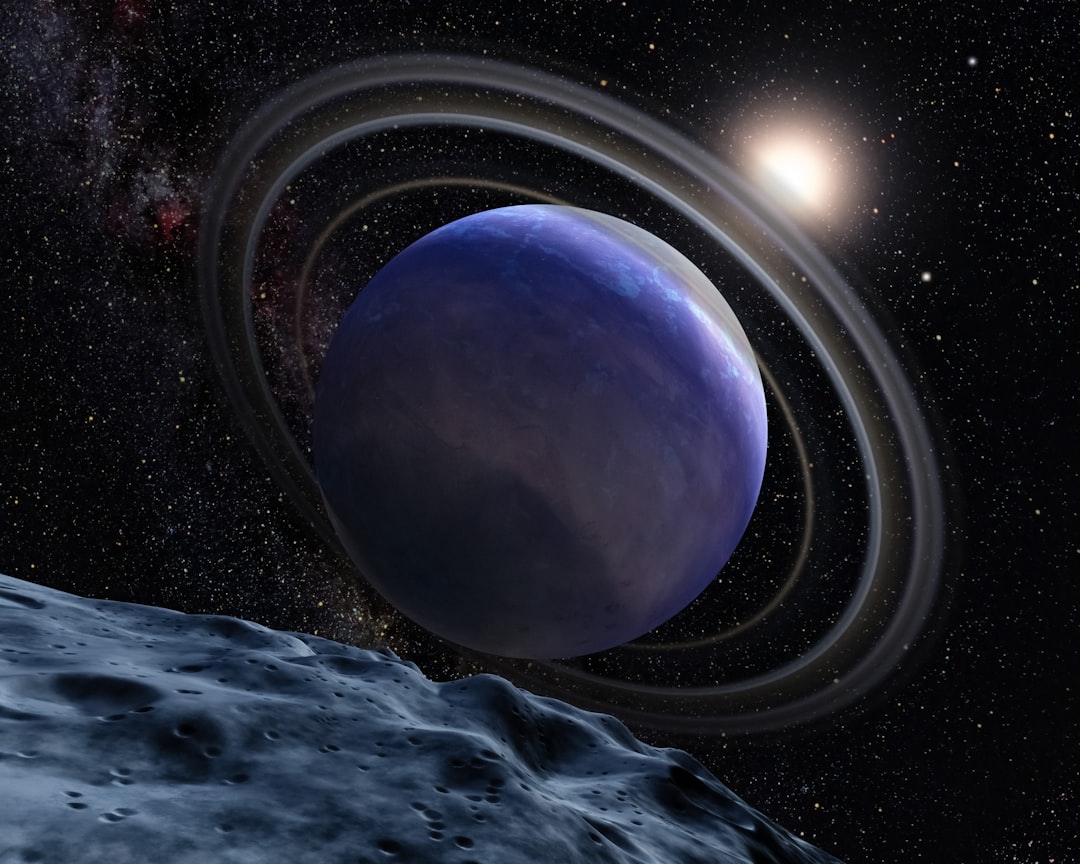
The quest to discover worlds beyond our solar system has entered an exciting new phase, with astronomers shifting their focus from merely cataloging distant planets to understanding their fundamental characteristics. With over 6,200 confirmed exoplanets and nearly 20,000 candidates awaiting verification, the astronomical community now faces a sophisticated challenge: identifying truly Earth-like worlds orbiting Sun-like stars. This task has proven remarkably difficult due to the overwhelming interference from stellar activity that masks the subtle signals of rocky planets in habitable zones.
To address this critical challenge, an international collaboration of astronomers has unveiled a groundbreaking facility that promises to revolutionize our approach to exoplanet detection. The Paranal solar ESPRESSO Telescope (PoET) represents an ingenious solution to one of astronomy's most persistent problems: distinguishing genuine planetary signals from the complex "noise" generated by host stars. By studying our own Sun in unprecedented detail, this innovative instrument will help scientists develop sophisticated filtering techniques to isolate the signatures of potentially habitable worlds around distant stars.
This cutting-edge facility, now operational at the European Southern Observatory's Paranal site in Chile, channels sunlight directly into the Echelle SPectrograph for Rocky Exoplanets and Stable Spectroscopic Observations (ESPRESSO) mounted on the Very Large Telescope. The system has already completed its initial test observations and achieved "first light," marking a significant milestone in the field of exoplanet characterization.
Understanding the Stellar Interference Challenge
The dramatic acceleration in exoplanet discoveries—surpassing 5,000 confirmed worlds in early 2023 and exceeding 6,000 by September 2025—has revealed a sobering reality about the composition of our cosmic census. Of these thousands of confirmed exoplanets, only 223 are terrestrial rocky planets similar in composition to Earth, Mars, or Venus. Even more striking, virtually none of these rocky worlds orbit G-type main-sequence stars like our Sun, which astronomers consider the most promising hosts for life as we know it.
Instead, most discovered rocky planets orbit M-type red dwarf stars, including the famous TRAPPIST-1 system with its seven Earth-sized worlds and Proxima b, our nearest exoplanetary neighbor. While these discoveries are scientifically valuable, red dwarfs present their own habitability challenges, including intense stellar flares and tidal locking effects that may sterilize planetary surfaces.
The scarcity of detected Earth-like planets around Sun-like stars stems from a fundamental observational challenge: stellar variability creates interference patterns that overwhelm the subtle signals from small rocky planets. This astrophysical noise originates from multiple sources within the star itself, including sunspots that create dark regions on the stellar surface, convective plasma motions that generate turbulent patterns, oscillations that cause the star to pulse rhythmically, and complex magnetic activity that varies over days, months, and years-long cycles.
The Radial Velocity Conundrum
When astronomers employ the Radial Velocity Method—which detects planets by measuring the tiny wobble they induce in their host star—these stellar phenomena create false signals that can easily be mistaken for planetary signatures. The situation becomes particularly acute when searching for Earth-mass planets in habitable zones around Sun-like stars, where the gravitational pull exerted by the planet on its star is extraordinarily small, producing velocity changes of mere centimeters per second.
Stellar granulation, the convective pattern of hot plasma rising and cooler plasma sinking on a star's surface, generates spectral variations that can persist for hours to days. These variations produce line profile asymmetries and spectral shifts that mimic or completely mask the periodic signals astronomers seek from orbiting planets. Current modeling approaches have proven inadequate for correcting these distortions with sufficient precision to reliably detect Earth-analog planets.
Revolutionary Design and Technical Capabilities
The research team, led by Nuno C. Santos from the Institute of Astrophysics and Space Sciences (CAUP) at the University of Porto, recognized that solving the stellar noise problem requires intimate knowledge of our nearest star. The Sun provides an unparalleled laboratory for studying stellar variability because it's the only star we can observe with sufficient spatial resolution to distinguish individual features like sunspots, granules, and active regions.
Previous solar observation instruments, including the High Accuracy Radial velocity Planet Searcher North (HARPS-N) solar telescope, have made valuable contributions by observing the Sun as an unresolved point source—mimicking how we observe distant stars. However, these "disc-integrated" observations lack the spatial detail necessary to understand how individual stellar features contribute to the overall noise signal.
PoET addresses this limitation through three critical capabilities that set it apart from previous solar observation systems:
- Spatially Resolved Spectroscopy: The ability to observe specific regions of the solar disc independently, from individual granules measuring just hundreds of kilometers across to larger sunspot groups, while maintaining exceptional wavelength stability necessary for detecting minute Doppler shifts
- Ultra-High Spectral Resolution: ESPRESSO's resolving power exceeds 190,000, enabling astronomers to detect and characterize the subtle asymmetries in photospheric absorption lines that reveal the complex velocity fields within the solar atmosphere
- Comprehensive Wavelength Coverage: Simultaneous observation across a broad spectral range from 380 to 788 nanometers, encompassing thousands of spectral lines that probe different layers of the solar atmosphere and respond differently to various physical processes
Sophisticated Multi-Telescope Architecture
The PoET system employs an elegant three-telescope configuration designed and built by Officina Stellare, an Italian company specializing in advanced astronomical instrumentation. The main telescope (MT) utilizes a Gregorian optical design—the standard configuration for solar observations—featuring a 40-centimeter primary mirror that can focus on areas as small as individual solar granules or observe the entire solar disc.
Two auxiliary telescopes work in concert with the main instrument: a "science" refractor and an "imaging" refractor serve as the pointing telescope (PT), mounted piggyback-style on the main telescope structure. These auxiliary instruments ensure precise targeting and tracking of solar features as they rotate across the solar disc due to the Sun's 25-day equatorial rotation period.
A custom-designed instrument called SHABAR (SHAdow BAnd Range) provides crucial atmospheric monitoring. This device measures scintillation—the random fluctuations in light caused by turbulence in Earth's atmosphere—allowing the system to compensate for seeing conditions and atmospheric refraction that could compromise measurement precision. The entire facility operates autonomously under control of sophisticated software that manages targeting, tracking, data acquisition, and calibration procedures.
Bridging Day and Night Observations
One of PoET's most elegant features is how it maximizes the scientific return from ESPRESSO, one of the world's most advanced astronomical spectrographs. By observing the Sun during daylight hours and switching to nighttime observations of distant stars, the system achieves nearly continuous operation of this valuable instrument. Optical fibers carry sunlight from PoET's dome directly to ESPRESSO, located one floor below in the VLT facility, following the same light path used for stellar observations.
"It is a great advantage to have ESPRESSO working in this way. By switching from the VLT at night to PoET during the day, we maximize the usage of this instrument to help us find and characterize exoplanets. Thanks to the exceptional location of the Paranal Observatory, the number of available days when weather conditions are suitable for observations of the Sun is expected to be very similar to that for nighttime observations," explained Alain Smette, VLT Operations Staff Astronomer and co-author of the proposal.
The Paranal Observatory's location in Chile's Atacama Desert provides nearly ideal conditions for solar observations, with over 320 clear days per year and exceptionally stable atmospheric conditions. This high observing efficiency ensures that PoET can accumulate the extensive datasets required to characterize solar variability across multiple timescales, from minutes to years.
First Light Success and Scientific Promise
In April, PoET achieved a critical milestone by completing its commissioning observations and acquiring "first light" spectra. These initial observations successfully demonstrated the system's ability to obtain high-quality spectra of both the integrated solar disc and specific regions of interest, including active regions containing sunspots and quiet Sun areas dominated by granulation.
The commissioning data revealed that the system meets its demanding performance specifications, delivering the wavelength stability and spectral resolution necessary for detecting velocity signals at the level of tens of centimeters per second—approaching the sensitivity required to detect Earth-mass planets in habitable zones around Sun-like stars. Over subsequent weeks, the team conducted optimization procedures to fine-tune the system's performance before beginning regular scientific observations.
Transformative Impact on Exoplanet Science
The scientific potential of PoET extends far beyond simply cataloging solar noise sources. By observing how different solar features—from quiet granulation to active regions with strong magnetic fields—contribute to spectral variations, astronomers will develop sophisticated noise models that can be applied to observations of distant Sun-like stars. These models will enable the detection of smaller planets in longer-period orbits, particularly in the habitable zones where liquid water could exist on planetary surfaces.
The facility will also contribute to our understanding of stellar physics more broadly. Detailed spectroscopic observations of solar features will reveal how convection, magnetism, and rotation interact to produce the complex patterns of stellar variability observed in Kepler and TESS photometric data. This knowledge will improve our ability to characterize stars hosting exoplanets, providing better constraints on planetary properties derived from transit and radial velocity measurements.
Future Horizons in Exoplanet Characterization
PoET's operational debut comes at a pivotal moment in exoplanet science. Next-generation facilities, including the Extremely Large Telescope (ELT) currently under construction, will possess the light-gathering power and instrumental precision to detect and characterize truly Earth-like planets around nearby Sun-like stars. However, realizing this potential requires the ability to distinguish genuine planetary signals from stellar noise—precisely the capability that PoET is designed to provide.
The combination of PoET's detailed solar observations with ESPRESSO's exquisite spectroscopic capabilities creates a powerful feedback loop. Solar observations inform noise mitigation strategies for stellar observations, while stellar observations reveal which solar features are most relevant for understanding distant stars. This synergy promises to accelerate progress toward one of astronomy's most profound goals: discovering whether Earth-like worlds orbiting Sun-like stars are common or rare in our galaxy.
As the exoplanet census continues its rapid growth and observational techniques become increasingly sophisticated, facilities like PoET represent essential infrastructure for the next phase of discovery. By turning our most powerful instruments toward our nearest star during daylight hours, astronomers are developing the knowledge and techniques necessary to find and characterize potentially habitable worlds light-years away—worlds that might harbor the conditions necessary for life as we know it.