A groundbreaking new study may have found the key to resolving the perplexing Hubble tension, a discrepancy between different measurements of the Universe's expansion rate. The findings, published in the Monthly Notices of the Royal Astronomical Society, suggest that accounting for the age of host galaxies in supernova data could bring conflicting Hubble constant values into alignment. This discovery has the potential to reshape our understanding of the standard cosmological model and the nature of dark energy.
The Hubble tension arises from the fact that different methods for measuring the Hubble constant, which describes the rate of cosmic expansion, have yielded inconsistent results. Observations of distant supernovae indicate a higher expansion rate of H0 = 71 – 75 (km/s)/Mpc, while measurements based on the cosmic microwave background (CMB) and Baryon Acoustic Oscillations (BAO) suggest lower values of H0 = 67 – 68 (km/s)/Mpc and H0 = 66 – 69 (km/s)/Mpc, respectively. This discrepancy has puzzled astronomers for years, calling into question the accuracy of the ΛCDM model, the standard model of cosmology.
The Role of Supernova Standard Candles
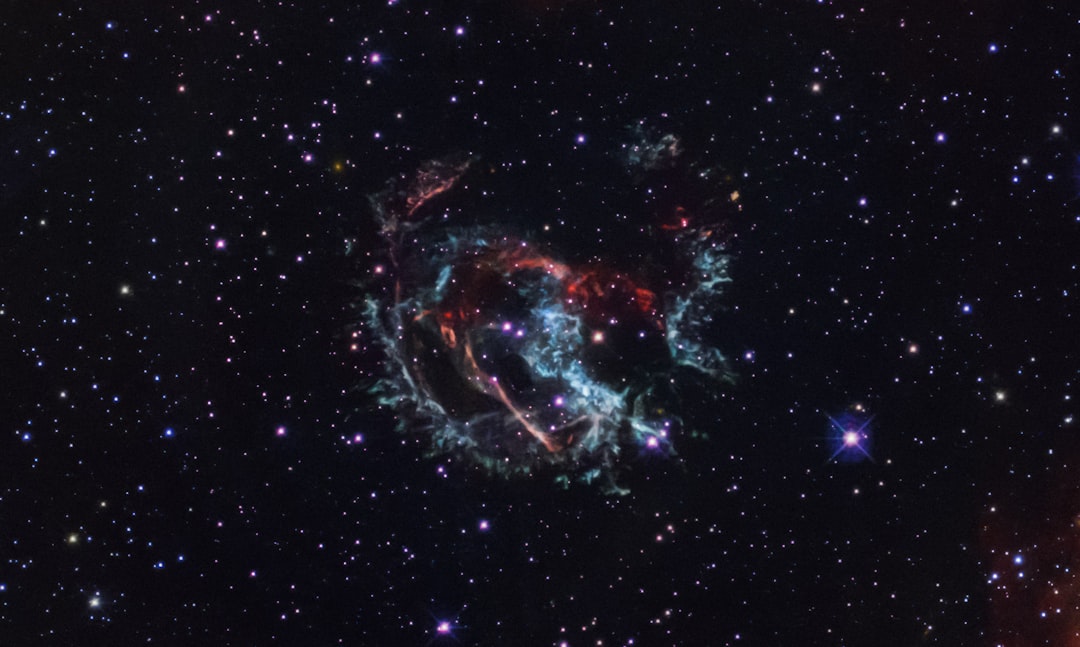
Type Ia supernovae, which occur when a white dwarf star explodes, have long been used as "standard candles" for measuring cosmic distances. Because these supernovae have a consistent intrinsic brightness, astronomers can calculate their distance based on how dim they appear from Earth. This method has been crucial in measuring the expansion rate of the Universe and providing evidence for the existence of dark energy.
However, the new study by Son et al. suggests that the age of the host galaxies in which these supernovae occur may have a significant impact on the resulting Hubble constant measurements. By analyzing a sample of about 300 distant galaxies with both observed supernovae and spectra that allow for age determination, the researchers found that accounting for galactic age shifts the supernova-based Hubble constant closer to the values derived from the CMB and BAO.
"Our findings indicate that the age of the host galaxy plays a crucial role in supernova cosmology and may hold the key to resolving the Hubble tension." - Junhyuk Son, lead author of the study
Implications for the Standard Cosmological Model
If confirmed by further research, these results could have significant implications for our understanding of the Universe's expansion and the nature of dark energy. The ΛCDM model, which assumes a cosmological constant (Λ) as the source of dark energy, has been the prevailing cosmological model for decades. However, the Hubble tension has raised doubts about its accuracy.
The new findings suggest that if the age bias in supernova data is accounted for, the Hubble tension may be largely resolved, bringing the supernova-based measurements in line with those from the CMB and BAO. This could potentially eliminate the need for alternative explanations, such as modified gravity theories or new types of dark energy.
Future Research Directions
While the results of this study are compelling, the authors acknowledge that their findings are based on a relatively small sample size of about 300 galaxies. To confirm the relationship between host galaxy age and supernova-based Hubble constant measurements, a larger dataset is needed.
- Rubin Observatory: The upcoming Vera C. Rubin Observatory, set to begin operations later this year, will play a crucial role in expanding this research. With its ability to survey thousands of distant galaxies, the Rubin Observatory will provide a wealth of data to further test the findings of Son et al.
- Spectroscopic Surveys: Combining supernova observations with spectroscopic surveys of host galaxies will be essential in determining the ages of a large number of galaxies across a wide range of redshifts. This will allow researchers to better understand the relationship between galactic age and supernova properties.
As more data becomes available in the coming years, astronomers will be able to determine whether accounting for host galaxy age in supernova cosmology is indeed the solution to the Hubble tension. If so, it could mark a significant shift in our understanding of the Universe's expansion and the nature of dark energy.
Conclusion
The Hubble tension has been a persistent problem in cosmology, challenging the accuracy of the standard ΛCDM model. The new findings by Son et al. offer a potential resolution by suggesting that the age of host galaxies must be taken into account when using Type Ia supernovae as standard candles for measuring the Universe's expansion rate. If confirmed by future research, this discovery could have far-reaching implications for our understanding of cosmology and the nature of dark energy.
As the scientific community eagerly awaits the data from the Rubin Observatory and other upcoming surveys, the results of this study provide a promising new direction for resolving one of the most pressing issues in modern cosmology. The coming years may see a significant shift in our understanding of the Universe's expansion and the role of dark energy in shaping its evolution.