In the vast expanse of the cosmos, humanity has developed the remarkable capability to detect individual high-energy particles traveling across unimaginable distances—and then trace their origins back through space and time. While such cosmic detective work may seem esoteric to many, the detection of an extraordinarily energetic neutrino in 2023 has sparked intense scientific debate that could reshape our understanding of the universe's most fundamental mysteries. This single particle, designated KM3-230213A, may hold the key to connecting three of cosmology's greatest enigmas: primordial black holes, ultra-high-energy neutrinos, and the elusive nature of dark matter.
The discovery was made by the Cubic Kilometre Neutrino Telescope (KM3NeT), an ambitious detector array positioned on the Mediterranean seafloor. At an astounding 220 petaelectronvolts (PeV), this neutrino carried more energy than anything humanity has ever produced in our most powerful particle accelerator, the Large Hadron Collider. To put this in perspective, this single subatomic particle possessed energy levels one billion times greater than the average neutrino streaming from our Sun—a truly extraordinary cosmic messenger.
The Mystery of Ultra-High-Energy Cosmic Neutrinos
Neutrinos are among the most abundant yet enigmatic particles in the universe. Every second, trillions of these ghostly particles pass through your body without interaction, making them notoriously difficult to detect. The Sun continuously emits solar neutrinos through nuclear fusion processes, but these are relatively low-energy particles compared to their high-energy cosmic cousins. The detection of KM3-230213A represents something fundamentally different—a neutrino so energetic that it challenges our current understanding of astrophysical particle acceleration.
The scientific community faces a profound puzzle: what natural phenomenon could possibly accelerate a neutrino to such extreme energies? The list of potential cosmic accelerators is remarkably short, and troublingly, none of the well-understood astrophysical processes can adequately explain this observation. Proposed sources have included pulsar-powered optical transients, gamma-ray bursts, active galactic nuclei, black hole mergers, and various mechanisms involving dark matter decay. Each hypothesis carries its own set of challenges and predictions, yet none has emerged as a definitive explanation.
Primordial Black Holes: Relics from the Cosmic Dawn
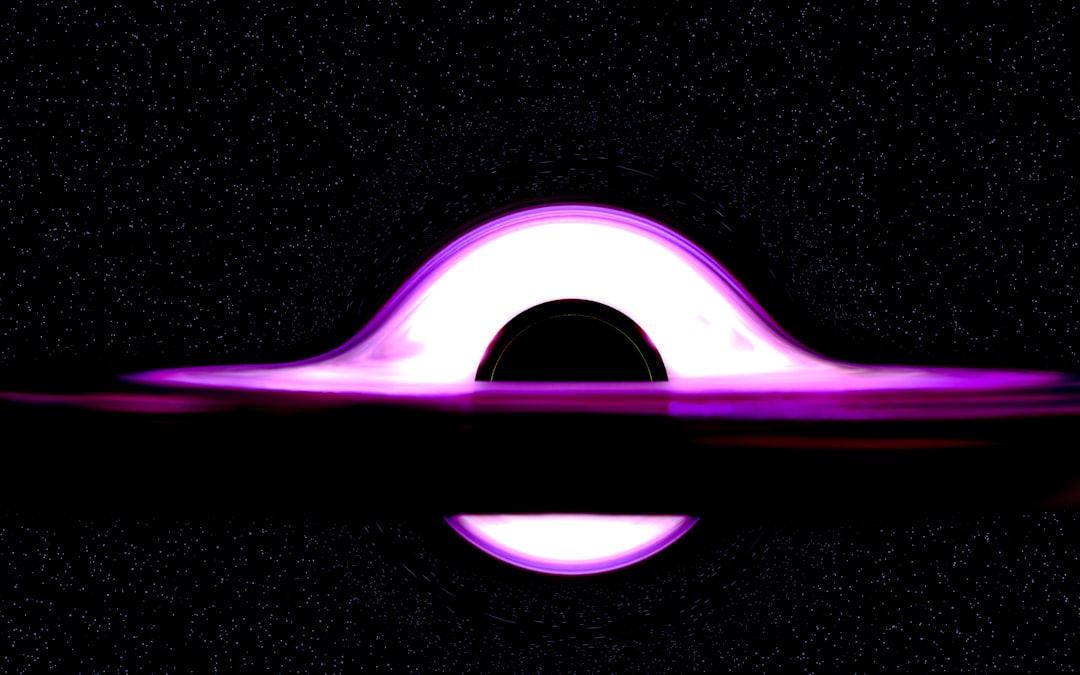
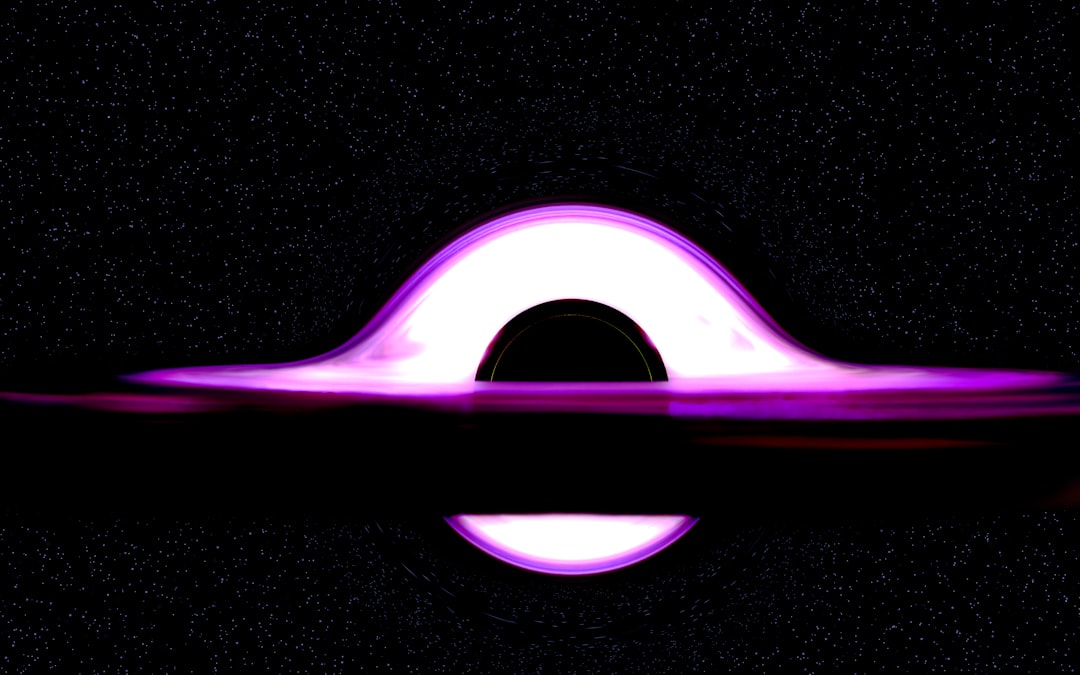
Enter one of theoretical physics' most intriguing concepts: primordial black holes (PBHs). Unlike their stellar-mass cousins that form from the collapse of massive stars, primordial black holes are hypothesized to have emerged during the first fraction of a second after the Big Bang. In those earliest moments, when the universe was an incredibly dense, hot soup of fundamental particles, quantum fluctuations could have created regions of such extreme density that they collapsed directly into black holes—no star required.
Recent research published in Physical Review Letters, led by Michael Baker, an assistant professor of physics at the University of Massachusetts, Amherst, proposes that these primordial black holes might be the source of ultra-high-energy neutrinos. The paper, titled "Explaining the PeV neutrino fluxes at KM3NeT and IceCube with quasiextremal primordial black holes," presents a sophisticated model that could simultaneously address multiple cosmic mysteries.
"The KM3NeT experiment has recently observed a neutrino with an energy around 100 PeV, and IceCube has detected five neutrinos with energies above 1 PeV. While there are no known astrophysical sources, exploding primordial black holes could have produced these high-energy neutrinos."
Hawking Radiation and the Death of Black Holes
The key to understanding how primordial black holes might produce these energetic neutrinos lies in a phenomenon predicted by legendary physicist Stephen Hawking: Hawking radiation. This theoretical process suggests that black holes aren't entirely black—they actually emit radiation due to quantum effects near their event horizons. Over immense timescales, this radiation causes black holes to gradually lose mass in a process often described as "evaporation."
For stellar-mass black holes, Hawking radiation is so incredibly weak that it remains far below any detection threshold, even for our most sensitive instruments. However, the situation transforms dramatically for much smaller primordial black holes. As Andrea Thamm, co-author and assistant professor of physics at UMass Amherst, explains in the research team's announcement: "The lighter a black hole is, the hotter it should be and the more particles it will emit. As PBHs evaporate, they become ever lighter, and so hotter, emitting even more radiation in a runaway process until explosion. It's that Hawking radiation that our telescopes can detect."
This runaway process culminates in a spectacular finale. In their final second of existence, primordial black holes become extraordinarily hot and undergo explosive evaporation. This terminal burst could theoretically produce a complete spectrum of subatomic particles—not only familiar particles like electrons and quarks, but potentially hypothesized particles beyond the Standard Model of particle physics, and perhaps even completely unknown particle species.
The Frequency and Detectability of PBH Explosions
According to the research team's calculations, if primordial black holes exist in sufficient numbers, these explosive evaporation events might occur approximately once per decade within detectable range of Earth-based neutrino observatories. Each explosion would release an enormous burst of high-energy particles, including the ultra-energetic neutrinos that have puzzled scientists. This frequency aligns intriguingly with the rare detection of such extreme-energy neutrinos, suggesting that KM3-230213A might represent direct evidence of a primordial black hole's final moments.
The IceCube Puzzle: Why Different Detectors See Different Things
However, a significant challenge confronts this elegant hypothesis. The IceCube Neutrino Observatory, positioned deep within Antarctic ice and operational for two decades, has never detected a neutrino approaching the extreme energy of KM3-230213A. If primordial black hole explosions occur roughly once per decade, why hasn't IceCube observed at least one such event during its extended observation period?
The research team proposes an innovative solution involving an exotic type of primordial black hole they call "quasi-extremal PBHs". These theoretical objects possess what physicists term a "dark charge"—essentially a hypothetical heavy cousin of the electron, sometimes called a "dark electron." As Joaquim Iguaz Juan, a postdoctoral researcher in physics at UMass Amherst and study co-author, explains: "We think that PBHs with a 'dark charge'—what we call quasi-extremal PBHs—are the missing link."
These quasi-extremal primordial black holes spend most of their existence in a state where they're nearly at their maximum possible charge-to-mass ratio. This unusual configuration has profound implications for their Hawking radiation emission spectrum. Crucially, the neutrino emission at lower energies (around 1 PeV, within IceCube's detection range) may be significantly suppressed compared to emission at much higher energies (around 100 PeV, where KM3NeT is sensitive).
Complementary Detection Capabilities
The key lies in understanding that IceCube and KM3NeT are optimized for different energy ranges. IceCube's sensitivity peaks at energies up to approximately 10 PeV, while KM3NeT can detect the ultra-high-energy neutrinos at 100 PeV and beyond. According to the researchers' model, quasi-extremal PBHs would produce fewer detectable events in IceCube's energy range while generating observable signals in KM3NeT's higher-energy window. As the authors note in their paper: "The neutrino emission at 1 PeV may be more suppressed than at 100 PeV. The burst rates implied by the KM3NeT and IceCube observations and the indirect constraints can then all be consistent at 1σ."
Implications for Dark Matter and Beyond-Standard-Model Physics
Perhaps the most tantalizing aspect of this research extends beyond explaining a single anomalous neutrino detection. If quasi-extremal primordial black holes exist, they could potentially solve one of cosmology's greatest mysteries: the nature of dark matter. Astronomical observations consistently indicate that approximately 85% of the universe's matter is "dark"—it doesn't emit, absorb, or reflect light, yet its gravitational effects are unmistakable in galaxy rotation curves, gravitational lensing, and cosmic structure formation.
Despite decades of intensive searching, scientists have yet to directly detect dark matter particles. Primordial black holes have emerged as an increasingly attractive dark matter candidate because they would produce all the observed gravitational effects without requiring exotic new particles. As Iguaz Juan notes: "If our hypothesized dark charge is true, then we believe there could be a significant population of PBHs, which would be consistent with other astrophysical observations, and account for all the missing dark matter in the universe."
A Window into Physics Beyond the Standard Model
The implications extend even further into fundamental physics. The Standard Model of particle physics, while remarkably successful, is known to be incomplete. It cannot explain dark matter, dark energy, neutrino masses, or the matter-antimatter asymmetry of the universe. The detection of particles from primordial black hole evaporation could provide experimental evidence for beyond-Standard-Model physics—new particles and interactions that extend our current theoretical framework.
Michael Baker emphasizes the model's sophistication: "There are other, simpler models of PBHs out there. Our dark-charge model is more complex, which means it may provide a more accurate model of reality. What's so cool is to see that our model can explain this otherwise unexplainable phenomenon."
Future Prospects and Experimental Verification
The scientific community now faces the exciting challenge of testing these predictions. Several approaches could provide confirming or refuting evidence:
- Continued Neutrino Monitoring: Extended observations by KM3NeT, IceCube, and other neutrino detectors could reveal additional ultra-high-energy events with the predicted frequency and energy distribution
- Multi-Messenger Astronomy: Primordial black hole explosions should produce not only neutrinos but also gamma rays and potentially gravitational waves, creating a distinctive multi-messenger signature
- Gravitational Wave Searches: Future gravitational wave observatories might detect signals from primordial black hole populations, providing independent evidence for their existence
- Particle Physics Experiments: The predicted spectrum of particles from PBH evaporation could be compared against observations, potentially revealing new particle species
- Cosmological Constraints: Observations of the cosmic microwave background and large-scale structure can constrain the abundance and properties of primordial black holes
Andrea Thamm underscores the model's explanatory power: "A PBH with a dark charge has unique properties and behaves in ways that are different from other, simpler PBH models. We have shown that this can provide an explanation of all of the seemingly inconsistent experimental data."
The Broader Context: Cosmic Messengers and Universal Understanding
To observers outside the scientific community, the world of particle physics might seem bewilderingly abstract—a realm populated by exotic particles with strange properties, traveling impossible distances from mysterious sources. Yet these particles are the fundamental building blocks of everything we observe in the cosmos. Understanding their origins, interactions, and properties is essential to comprehending the universe's past, present, and future.
The detection of KM3-230213A exemplifies how a single observation can catalyze profound theoretical developments. This one neutrino has prompted physicists to develop increasingly sophisticated models that connect primordial cosmology, quantum gravity, particle physics, and dark matter—demonstrating the deep interconnectedness of seemingly disparate cosmic phenomena.
As Baker reflects on the discovery's significance: "Observing the high-energy neutrino was an incredible event. It gave us a new window on the universe. But we could now be on the cusp of experimentally verifying Hawking radiation, obtaining evidence for both primordial black holes and new particles beyond the Standard Model, and explaining the mystery of dark matter."
The Road Ahead
Whether this particular model proves correct remains to be determined through continued observation and experimental testing. The scientific method demands that hypotheses face rigorous scrutiny, and alternative explanations for ultra-high-energy neutrinos continue to be explored. However, the quasi-extremal primordial black hole hypothesis represents a compelling framework that elegantly addresses multiple outstanding questions in fundamental physics and cosmology.
The coming years promise exciting developments as neutrino observatories accumulate more data, gravitational wave detectors increase their sensitivity, and theoretical models become increasingly refined. Each new detection of an ultra-high-energy neutrino will either strengthen or challenge the primordial black hole hypothesis, gradually revealing whether these ancient cosmic objects truly exist and whether they hold the key to understanding dark matter.
In the meantime, scientists continue their patient vigil, monitoring the cosmos for more messages from the deep universe. Each detected particle carries information encoded in its energy, direction, and timing—cosmic telegrams that, properly decoded, reveal the universe's deepest secrets. The story of KM3-230213A reminds us that sometimes the most profound discoveries begin with a single particle, arriving after an unimaginable journey through space and time, waiting for humanity to unravel its meaning.