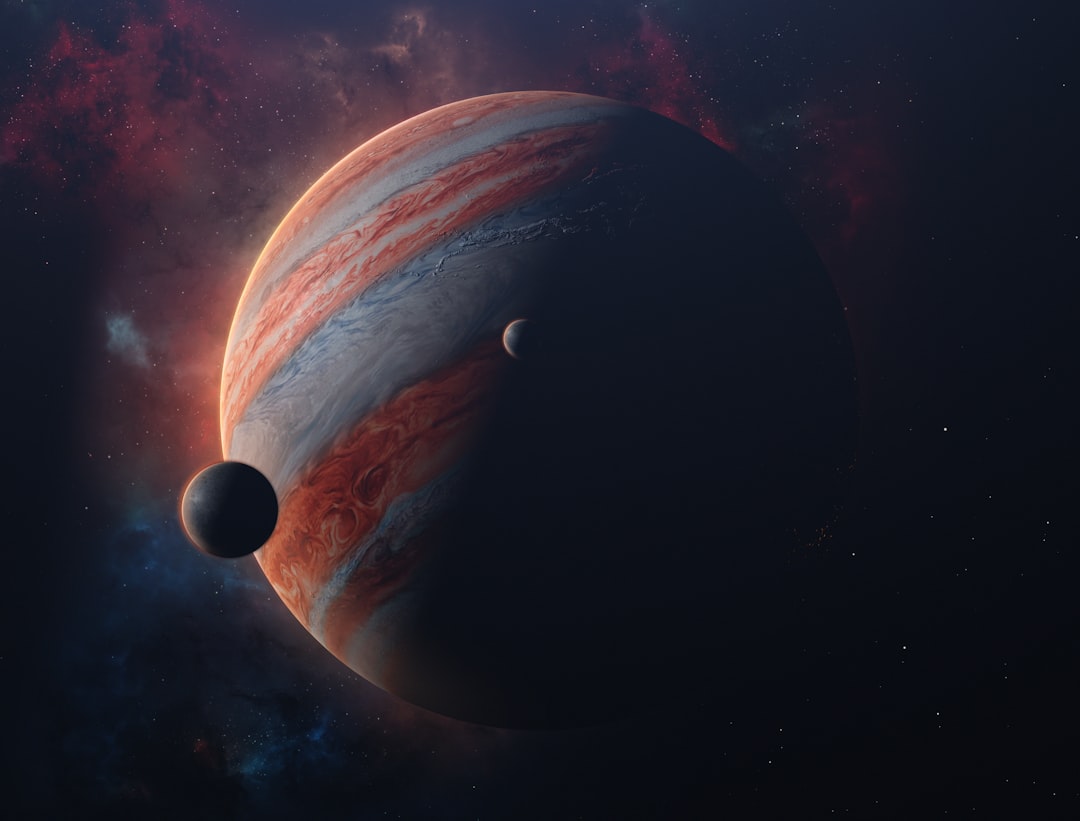
Jupiter's enigmatic moon Europa has long captivated planetary scientists with its bewildering landscape—a frozen world whose surface tells a story of violent upheaval and constant renewal. Unlike the serene, crater-pocked faces of geologically dead moons, Europa's icy shell bears the unmistakable marks of an active world: chaotic terrain patches, intersecting ridge systems, and fractured regions that hint at powerful forces churning beneath. For decades, researchers have theorized that a global subsurface ocean, kept liquid by the relentless gravitational tides from Jupiter's massive presence, lies hidden beneath kilometers of ice. Now, groundbreaking observations from the James Webb Space Telescope are providing the most detailed chemical map of Europa's surface yet, revealing patterns that could fundamentally reshape our understanding of this ocean world and its potential to harbor life.
The latest research, spearheaded by Gideon Yoffe and an international team of planetary scientists, represents a quantum leap in our ability to decode the chemical signatures written across Europa's frozen face. By employing spectral decomposition techniques—essentially breaking down light into its component wavelengths to identify specific molecular fingerprints—the team has created an unprecedented map showing not just what chemicals exist on Europa, but precisely where they concentrate and what that distribution might reveal about the moon's hidden ocean below.
Decoding Europa's Chemical Landscape Through Advanced Spectroscopy
The methodology behind this discovery represents some of the most sophisticated remote sensing work ever applied to a planetary body. Spectral decomposition works on a deceptively simple principle: every molecule interacts with light in unique ways, absorbing certain wavelengths while reflecting others. When JWST's sensitive instruments observe Europa, they're essentially collecting thousands of individual measurements across different wavelengths, each one providing clues about the chemical composition at specific locations on the surface.
The research team analyzed nine distinct spectral bands, focusing on signatures associated with water ice in various crystalline states, carbon dioxide, and other volatile compounds. This isn't merely taking a picture—it's more akin to conducting a detailed chemical assay of an entire hemisphere from hundreds of millions of kilometers away. The Galileo spacecraft provided our first close-up views of Europa in the 1990s, but JWST's infrared capabilities and spectroscopic resolution allow scientists to see chemical details that were simply impossible to detect with earlier technology.
What makes this approach particularly powerful is its ability to distinguish between different forms of the same compound. Carbon dioxide ice, for instance, can exist in multiple states on Europa's surface—some trapped within the water ice matrix, some existing as pure deposits, and some chemically bound to other materials. Each form has a slightly different spectral signature, and by carefully analyzing these subtle differences, the research team could map not just where carbon dioxide exists, but in what form and potentially how it got there.
The Tara Regio Mystery and Beyond: A Wider Distribution Than Expected
Previous observations had identified Tara Regio—a region of particularly disrupted and chaotic terrain—as a hotspot for carbon dioxide concentration. This geological feature, named after a Celtic goddess, represents one of Europa's most intriguing surface formations: an area where the normal patterns of ridges and fractures have been completely disrupted, replaced by a jumbled landscape of ice blocks that appear to have been broken apart, rotated, and refrozen in place. The prevailing hypothesis suggested that this chaos terrain formed when warmer, possibly liquid material from below broke through the ice shell, bringing with it chemicals from the subsurface ocean.
However, the new JWST analysis reveals something unexpected and scientifically significant: the carbon dioxide enrichment extends far beyond Tara Regio. Rather than being confined to a single geological feature, the distribution forms a broad, lens-shaped pattern that encompasses multiple regions of chaos terrain across Europa's leading hemisphere. This is the side of Europa that faces forward in its orbit around Jupiter, constantly bombarded by radiation and charged particles trapped in Jupiter's powerful magnetosphere.
"The spatial correlation between carbon dioxide deposits and chaos terrain is striking and consistent across multiple regions. This isn't a coincidence—it's telling us something fundamental about how material moves between Europa's ocean and its surface," explains Dr. Samantha Trumbo, a planetary scientist at Cornell University who has studied Europa's surface composition.
What makes this distribution pattern particularly intriguing is its association with anomalous ice textures. Wherever carbon dioxide concentrations peak, the spectral signatures indicate that the water ice itself has unusual physical properties—different grain sizes, altered crystalline structure, or modified surface roughness compared to surrounding areas. This textural variation suggests that the ice in these regions has experienced different thermal or mechanical processing, consistent with material being brought up from depth and deposited on the surface through geological processes.
Surface-Ocean Exchange: Reading the Chemical Communication
The implications of these findings extend well beyond simple surface mapping. The pattern revealed by JWST suggests that Europa's ice shell and subsurface ocean are in active chemical communication, exchanging materials through processes that remain poorly understood but appear to be ongoing. The concentration of carbon dioxide in geologically young chaos terrain—areas where the surface has been recently disrupted and reformed—strongly implies that this carbon is being delivered from below, possibly directly from the subsurface ocean.
This interpretation is bolstered by several lines of evidence. First, the amount and distribution of carbon dioxide cannot be easily explained by external sources. While Europa's surface is constantly bombarded by radiation that can create some carbon compounds from simpler molecules, the specific patterns observed—particularly the strong association with chaos terrain—point to an internal origin. Second, laboratory experiments simulating Europa's conditions suggest that carbon dioxide rising from a subsurface ocean would preferentially accumulate in exactly the types of disrupted terrain where JWST is detecting it.
The research also reveals something subtle but potentially crucial: the ice microstructure itself may determine what gets retained and where. Not all of Europa's surface is equally capable of holding onto volatile compounds like carbon dioxide. Areas with certain ice textures, grain sizes, or crystalline structures may act like chemical traps, preferentially retaining materials while other regions allow them to escape back into space or become buried by subsequent geological activity. This creates a more complex and physically rich picture than simple models where carbon dioxide is deposited and remains static.
The Astrobiological Significance: Carbon and the Search for Life
Carbon dioxide's presence on Europa carries profound implications for astrobiology—the study of life's potential beyond Earth. Carbon is one of the six essential elements required for life as we know it, joining hydrogen, nitrogen, oxygen, phosphorus, and sulfur in the fundamental toolkit of biochemistry. The detection of carbon-bearing compounds on Europa's surface, particularly if they originate from the subsurface ocean, suggests that this hidden water world contains at least one of the key ingredients necessary for life.
But the significance goes deeper than mere presence. The fact that carbon dioxide appears to be actively cycling between the ocean and surface indicates dynamic chemical processes that could create the kind of chemical complexity and energy gradients that life requires. On Earth, the most productive ecosystems often exist at interfaces where different chemical environments meet and interact—hydrothermal vents on the ocean floor, for instance, where hot, mineral-rich fluids mix with cold seawater. Europa's chaos terrain may represent similar interfaces, places where ocean chemistry meets the surface environment.
The Europa Clipper mission, currently en route to the Jovian system, will carry a sophisticated suite of instruments specifically designed to investigate these questions. When it begins its series of close flybys in 2031, the spacecraft will use ice-penetrating radar to probe the thickness of Europa's ice shell, mass spectrometers to analyze the composition of any plumes erupting from the surface, and high-resolution cameras to map geological features in unprecedented detail.
Key Scientific Findings and Their Implications
- Widespread Carbon Dioxide Distribution: Rather than being confined to isolated features, carbon dioxide deposits extend across multiple chaos terrain regions in a lens-shaped pattern, suggesting systematic processes rather than random events.
- Correlation with Ice Texture: Areas of highest carbon dioxide concentration show distinctive ice microstructure properties, indicating that surface retention depends on ice physical characteristics and not just chemical delivery mechanisms.
- Subsurface Ocean Origin: The strong association between carbon dioxide and geologically young, disrupted terrain supports the hypothesis that this carbon originates from Europa's hidden ocean, implying active ocean-surface exchange.
- Chemical Complexity: The presence of carbon compounds from the subsurface ocean adds to the growing evidence that Europa's ocean contains the chemical ingredients potentially necessary for life.
- Targeting Future Missions: The detailed chemical maps from JWST provide crucial targeting information for Europa Clipper, identifying specific regions where subsurface material may be most accessible for study.
Future Exploration and Unanswered Questions
While JWST's observations represent a major advance, they also highlight how much remains unknown about Europa. The telescope can map surface chemistry with exquisite precision, but it cannot directly sample the subsurface ocean or determine the exact mechanisms by which material moves from ocean to surface. Key questions remain: How thick is the ice shell above the ocean? Are there active plumes or geysers that might allow direct sampling of ocean material? What other organic compounds might exist alongside carbon dioxide? And perhaps most tantalizingly, could any of these chemicals be biosignatures—evidence of biological processes occurring in the hidden ocean below?
Europa Clipper will address many of these questions, but it represents just one step in a longer exploration campaign. Future missions under consideration include a Europa lander that could conduct detailed chemical analysis of surface materials, and eventually, a probe capable of melting through the ice shell to directly explore the ocean—a technological challenge that pushes the boundaries of current engineering capabilities but remains within the realm of possibility for future decades.
The European Space Agency's JUICE mission (Jupiter Icy Moons Explorer) will also contribute to our understanding of Europa, though its primary focus is Ganymede. Together, these missions will provide a comprehensive view of Jupiter's ocean worlds, comparing and contrasting their characteristics to understand what makes each unique and which might be most promising for harboring life.
A New Era of Ocean World Science
The JWST observations of Europa represent more than just another data point in planetary science—they exemplify a new era in how we study ocean worlds throughout the solar system and potentially beyond. The techniques pioneered in this research can be applied to other icy moons like Enceladus, which orbits Saturn and also shows evidence of a subsurface ocean, or to the characterization of exoplanets where we might search for similar signatures of active geology and potential habitability.
What makes this moment particularly exciting is the convergence of multiple lines of evidence. Magnetic field measurements from the Galileo mission suggested a conductive layer beneath Europa's ice—consistent with a salty ocean. Surface features photographed by Galileo showed evidence of recent geological activity. Now, JWST's chemical mapping reveals the fingerprints of that ocean written across the surface in carbon dioxide deposits. Each piece of evidence strengthens the overall picture and raises the probability that Europa harbors a vast, dynamic ocean that has persisted for billions of years.
The research, published in a recent study using spectral decomposition techniques, provides the most detailed chemical roadmap of Europa's surface to date. As the planetary science community continues to analyze this data and prepare for Europa Clipper's arrival, the excitement is palpable. We stand on the threshold of potentially discovering whether life exists beyond Earth, and Europa—with its hidden ocean, active geology, and complex chemistry—remains one of the most promising places to search.
The chemical fingerprints are there, written in carbon dioxide across Europa's fractured face. Soon, we'll have the tools to read them in even greater detail, and perhaps, to answer one of humanity's most profound questions: Are we alone in the universe?