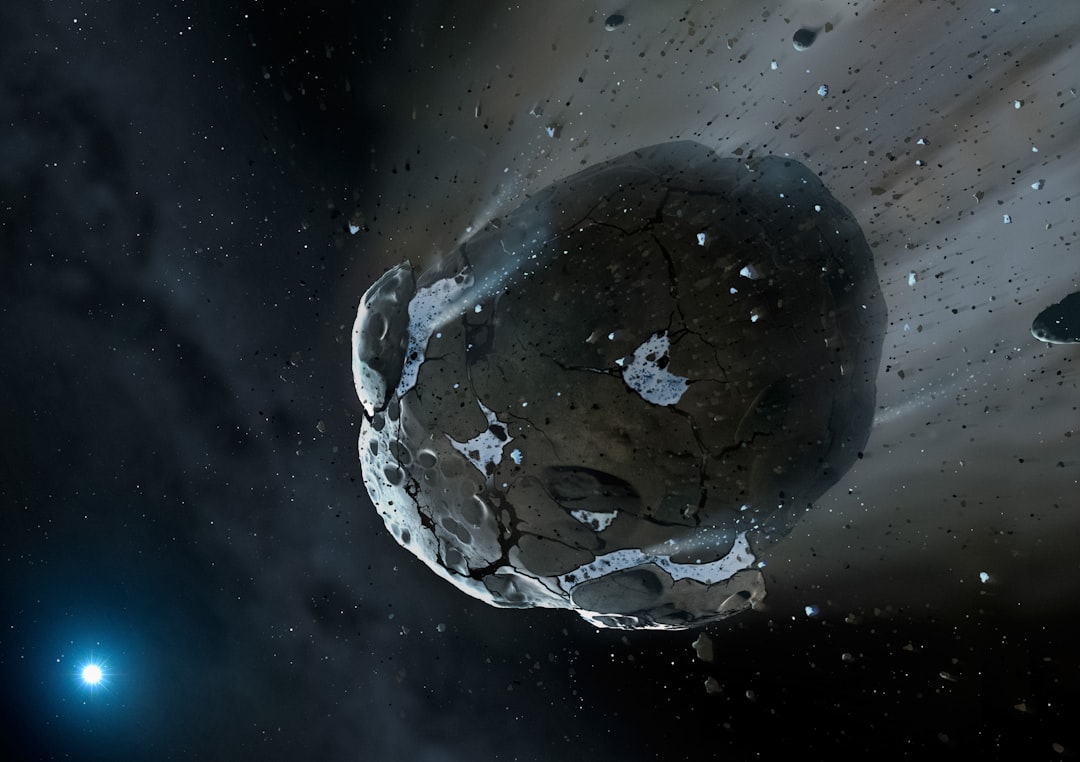
The Laser Interferometer Space Antenna (LISA), humanity's ambitious gravitational wave observatory scheduled for launch in 2035, may have an unexpected secondary capability that could revolutionize our understanding of near-Earth asteroids. According to groundbreaking research by Sara Marques of the University of Bern and Oliver Jennrich of the European Space Agency, this multi-billion dollar mission could provide unprecedented accuracy in measuring asteroid masses—a critical parameter that has eluded astronomers for decades. What mission designers initially considered an unwanted interference signal could become a valuable scientific tool, offering mass measurements with uncertainties as low as 20% for asteroids that pass within range of the observatory.
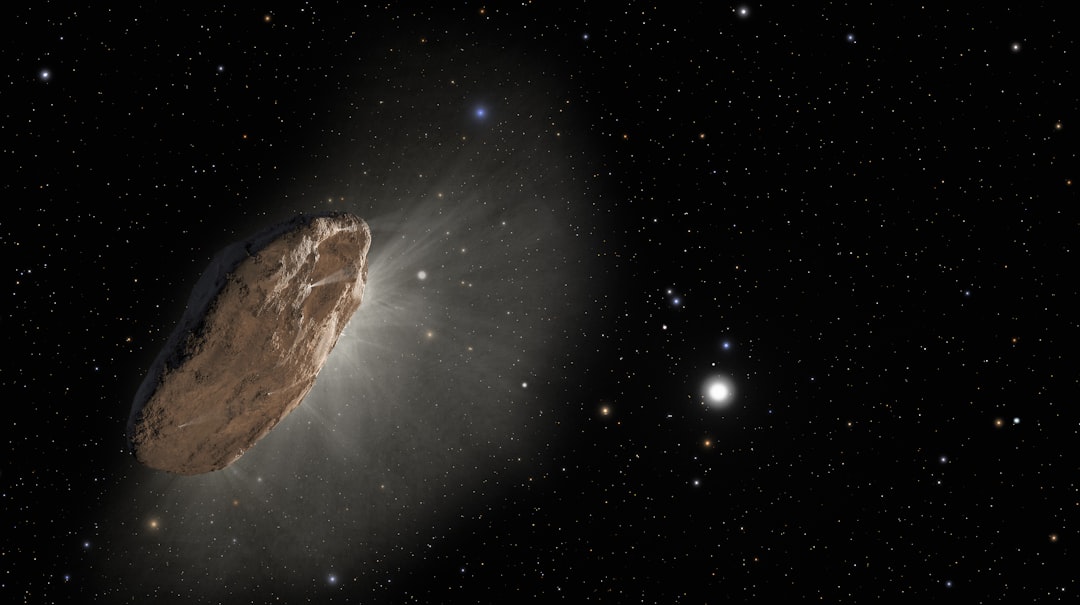
Understanding an asteroid's mass is fundamentally important for both planetary defense and future space resource utilization. The mass determines the kinetic energy an asteroid would release upon impact with Earth, directly affecting our ability to predict and mitigate potential threats. Similarly, for the emerging space mining industry, accurate mass measurements translate to better estimates of available resources. Yet despite tracking over 41,000 known near-Earth asteroids (NEAs), astronomers can only estimate masses within 10% uncertainty for fewer than 35% of these objects—a troubling gap in our knowledge that LISA might help bridge.
The Challenge of Measuring Asteroid Masses
Current methods for determining asteroid masses rely heavily on optical observations combined with educated guesses about density based on spectral analysis. When astronomers observe an asteroid's reflected sunlight, they can identify surface composition through spectroscopy, which reveals the presence of various minerals and compounds. However, translating this surface composition into an accurate bulk density estimate remains problematic, as asteroids can have highly variable internal structures, from solid monoliths to loosely bound rubble piles.
The most reliable mass measurements come from studying binary asteroid systems, where two asteroids orbit their common center of mass. By applying Kepler's laws of orbital mechanics, scientists can calculate precise masses for both components. Similarly, when an asteroid passes close enough to a planet or moon to experience measurable gravitational perturbations, these interactions provide valuable mass data. The OSIRIS-REx mission to asteroid Bennu demonstrated that spacecraft visits yield the most accurate measurements, but at a cost of hundreds of millions of dollars per mission—clearly unsustainable for surveying tens of thousands of asteroids.
LISA's Primary Mission and Exquisite Sensitivity
LISA represents a revolutionary approach to observing the universe through gravitational waves—ripples in spacetime itself caused by accelerating massive objects. The mission will consist of three spacecraft flying in a precise triangular formation, separated by 2.5 million kilometers, trailing Earth by approximately 50 million kilometers in a heliocentric orbit. Each spacecraft will house free-falling test masses, essentially perfect reference points unaffected by external forces except gravity itself.
The observatory's laser interferometry system can detect displacements of these test masses at the picometer scale—roughly one-trillionth of a meter, or about one-hundredth the diameter of a hydrogen atom. This extraordinary sensitivity allows LISA to detect gravitational waves from merging supermassive black holes billions of light-years away, events that the ground-based LIGO observatory cannot observe due to seismic noise and size constraints.
"What we initially viewed as noise—the gravitational pull of nearby asteroids—could actually provide valuable scientific data without any modifications to LISA's hardware or primary mission objectives," explains the research team in their analysis of the mission's dual capabilities.
From Bug to Feature: Turning Noise into Science
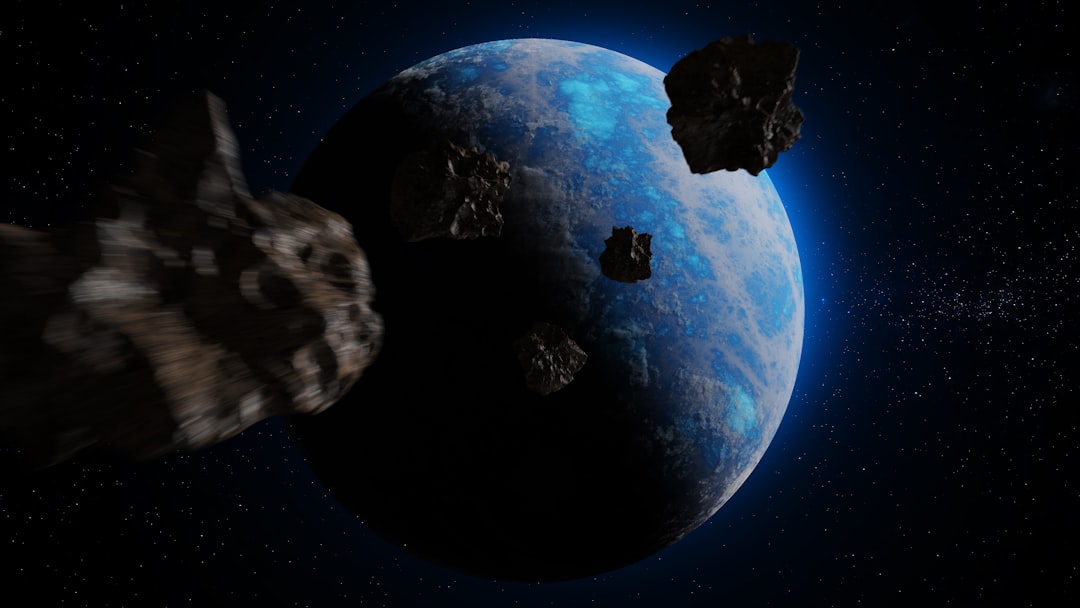
Mission designers originally worried that gravitational influences from passing asteroids would contaminate LISA's gravitational wave observations. Any mass passing within the Minimum Orbital Intersection Distance (MOID) would exert a Newtonian gravitational pull on LISA's test masses, inducing tiny velocity changes that could obscure the far more subtle gravitational wave signals the mission seeks to detect.
However, Marques and Jennrich recognized that this "contamination" could be precisely characterized and separated from gravitational wave signals using advanced signal processing techniques. Their research employed Time-Delay Interferometry (TDI), a sophisticated mathematical approach that synthesizes an equal-arm interferometer configuration. This technique effectively cancels out laser frequency noise while preserving both gravitational wave signals and the distinct signatures of asteroid encounters.
Methodology and Expected Performance
The researchers conducted extensive simulations modeling various asteroid encounter scenarios with LISA's constellation. Their analysis considered multiple factors including asteroid size, composition, trajectory, and closest approach distance. The simulations revealed that LISA could determine an asteroid's mass with maximum uncertainties of approximately 20%—a significant improvement over the current state of knowledge for most NEAs.
The key requirements for successful mass determination include:
- Close approach distance: The asteroid must pass within LISA's gravitational sensitivity range, typically within a few million kilometers of one or more spacecraft
- Sufficient observation time: The gravitational perturbation must be detectable over a period long enough to distinguish it from other noise sources
- Known trajectory: Accurate orbital data for the asteroid allows researchers to predict the encounter geometry and separate the signal from background variations
- Signal processing: Advanced TDI algorithms must successfully isolate the asteroid's gravitational signature from the primary gravitational wave observations
Statistical Predictions and Serendipitous Discoveries
Based on current catalogs of known NEAs and their orbital distributions, the research team estimates that LISA will encounter approximately three asteroids during its planned 10-year operational lifetime that pass close enough for accurate mass determination. While this might seem modest, it represents valuable data for objects that would otherwise require dedicated, expensive spacecraft missions to characterize.
However, this estimate comes with significant caveats. Current surveys have identified only about 38% of NEAs larger than 140 meters in diameter—the size threshold considered potentially hazardous. The NASA Center for Near-Earth Object Studies continues to discover hundreds of new asteroids annually, suggesting that LISA's actual encounter rate could exceed predictions. The observatory's position 50 million kilometers behind Earth in a heliocentric orbit provides a unique vantage point that may reveal asteroids not yet detected from Earth-based observatories.
Implications for Planetary Defense and Resource Utilization
The potential for LISA to provide accurate asteroid mass measurements carries significant implications for planetary defense strategies. When assessing the threat posed by a potentially hazardous asteroid, uncertainty in mass translates directly to uncertainty in impact energy. A 20% mass uncertainty might mean the difference between planning for a regional catastrophe versus a global extinction event. More accurate mass data enables better-informed decisions about deflection missions, including the optimal timing and energy requirements for gravitational tractors or kinetic impactors similar to NASA's successful DART mission.
For the emerging space resources industry, accurate mass measurements inform economic feasibility assessments. A metallic asteroid's value depends critically on its total mass, as this determines the quantity of extractable platinum-group metals, nickel, and iron. Current mass uncertainties of 50-90% for most asteroids make business planning extremely challenging. Even LISA's modest contribution of three well-characterized asteroids could provide valuable calibration data for improving mass estimates across the broader asteroid population.
Technical Challenges and Mission Timeline
Despite its promise, LISA faces substantial technical challenges before it can begin operations. The mission requires unprecedented precision alignment of three spacecraft separated by millions of kilometers, maintaining their triangular formation while measuring distances with picometer accuracy. The commissioning phase alone will likely span several months to a year as engineers fine-tune the laser links and verify the interferometry system's performance.
The current timeline projects a July 2035 launch aboard an Ariane 6 rocket, with science operations beginning in 2036. The mission's primary objective remains gravitational wave astronomy, particularly detecting signals from supermassive black hole mergers, extreme mass ratio inspirals, and potentially even stochastic gravitational wave backgrounds from the early universe. Asteroid mass measurements will occur opportunistically, requiring no changes to operational procedures or hardware configurations.
Broader Scientific Context and Future Prospects
LISA's dual capability exemplifies the principle of scientific serendipity—extracting additional value from expensive space missions by recognizing secondary applications of their primary instruments. This approach maximizes the scientific return on investment while maintaining focus on core mission objectives. Similar examples include using planetary spacecraft for relativity tests during solar conjunctions or employing space telescope calibration observations for stellar science.
As LISA moves from design to construction and eventual launch, the asteroid mass measurement capability may inspire additional creative applications. The mission's exquisite sensitivity to gravitational perturbations could potentially detect other phenomena, from distant Kuiper Belt objects to subtle variations in the solar system's mass distribution. Each additional capability enhances LISA's scientific legacy beyond its already groundbreaking primary mission.
The convergence of gravitational wave astronomy and asteroid science through LISA demonstrates how modern space missions increasingly serve multiple scientific communities. While we await the observatory's launch and commissioning in the next decade, researchers continue refining their models and predictions, ensuring that when those serendipitous asteroid encounters occur, the scientific community will be ready to extract maximum value from these rare observational opportunities.