Little Red Dots Could Be Ancient Globular Clusters, Each Dominated by a Super-Massive Star
Nobody knows with certainty where the phrase "kill two birds with one stone" originated. But the fact that it — or a phrase very similar to it — appears across multiple cultures throughout history speaks to its widespread utility. After all, who wouldn't want to solve two problems with a single elegant action? That principle now appears to be at work in a remarkable new corner of astrophysics, where a single theoretical framework may simultaneously explain two of the most compelling astronomical puzzles of our time.
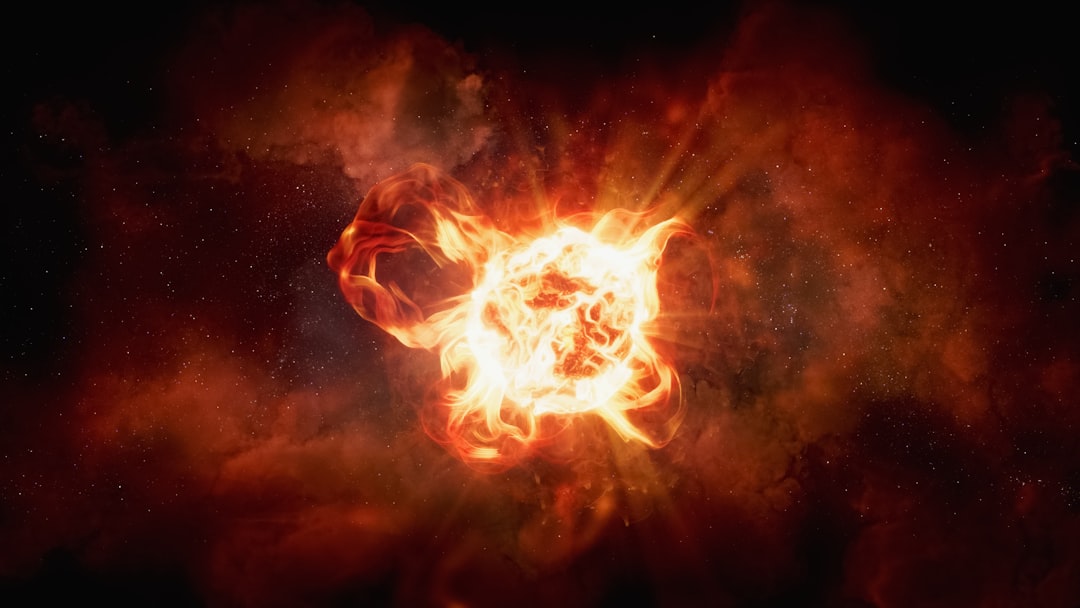
New research published in The Astrophysical Journal Letters proposes that the James Webb Space Telescope's (JWST) enigmatic "Little Red Dots" (LRDs) — mysterious, intensely glowing objects detected in the very early Universe — may in fact be globular clusters (GCs) caught in the act of formation, each one anchored by a titanic supermassive star (SMS). If confirmed, the finding would simultaneously illuminate the origin of some of the Universe's oldest stellar systems and explain one of the JWST's most baffling discoveries.
The study, titled "Little Red Dots as Globular Clusters in Formation," is led by John Chisholm, an astronomer at the University of Texas at Austin, alongside co-authors Danielle Berg and Mike Boylan-Kolchin, also of UT Austin.
Two Mysteries, One Proposed Solution
To appreciate the elegance of this hypothesis, it helps to understand each mystery individually before exploring how they might be intertwined.
The Mystery of Globular Clusters
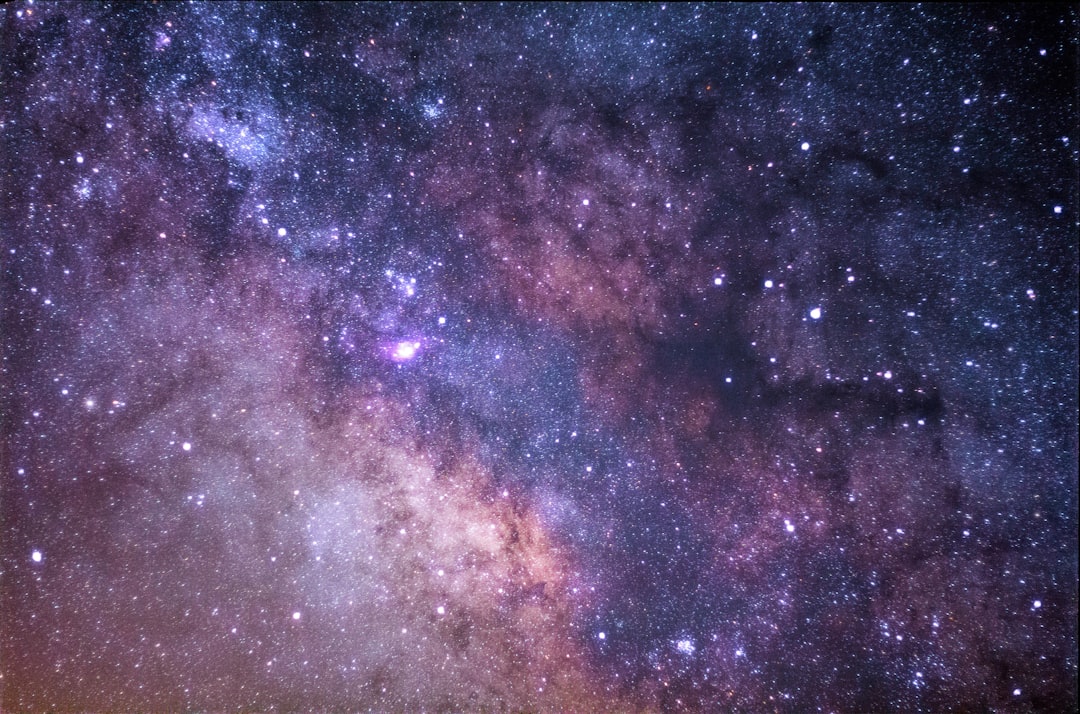
Globular clusters are dense, spherical collections of stars bound together by gravity. A single GC can contain anywhere from tens of thousands to several million stars, all packed into a region typically only a few dozen light-years across. They are among the oldest structures in the Universe — many GCs in the Milky Way's galactic halo are estimated to be between 10 and 13 billion years old — and are found in virtually every large galaxy ever studied. Our own galaxy hosts at least 150 known globular clusters, and the true count may be higher when obscured regions of the galactic plane are considered.
While GCs are well-catalogued, their formation remains poorly understood. One of the most vexing clues lies in their stellar chemistry. Because all stars in a GC formed at roughly the same time from the same gas cloud, one might expect them to share uniform chemical compositions — what astronomers call metallicity. Yet detailed spectroscopic studies have repeatedly revealed striking anomalies: elevated abundances of helium, nitrogen, sodium, and aluminum, alongside deficiencies of carbon, oxygen, and magnesium. This is not the signature of standard stellar nucleosynthesis. Something extraordinary must have been occurring in these nascent clusters to produce such an unusual chemical fingerprint.
The challenge is compounded by time. As co-author Danielle Berg explains:
"We usually see them after billions of years of evolution, at a time when their massive stars are gone, their gas has been cleared out, and dynamical processes have changed their masses and structures. That makes it very hard to reconstruct the original conditions they formed in."
In short, GCs are like crime scenes that have been thoroughly cleaned up — the evidence of their chaotic birth is largely obscured by the vast passage of time. Astronomers have long sought a way to observe GCs while they were still forming, in their raw, primordial state.
The Mystery of Little Red Dots
Enter the James Webb Space Telescope. Since beginning science operations in 2022, the JWST has revolutionized our understanding of the early Universe, detecting galaxies and structures at redshifts that were previously beyond reach. Among its most confounding discoveries has been a population of extremely compact, luminous objects first reported in 2024 and dubbed "Little Red Dots."
LRDs are defined in part by their distinctive V-shaped spectral morphology — a characteristic dip in their light profile that sets them apart from other high-redshift objects. They appear in large numbers approximately 600 million years after the Big Bang, then decline rapidly by around 1.5 billion years after the Big Bang, a temporal arc that itself demands explanation. In their research letter, the authors describe LRDs as "enigmatic high-redshift discoveries" that existed between roughly 13.2 and 12.2 billion years ago.
What are they? Proposed explanations have ranged widely: active galactic nuclei (AGN) powered by accreting supermassive black holes, exotic primordial galaxies undergoing furious star formation, or perhaps entirely novel types of astrophysical objects. Their compactness and luminosity make them difficult to fit neatly into any existing category. The JWST, having revealed their existence, has thus far left astronomers puzzling over their nature.
You can explore the JWST's ongoing discoveries, including LRDs, through the Webb Space Telescope official site.
Supermassive Stars: The Missing Link
The key to connecting these two mysteries, the new research argues, lies in an extraordinary class of theoretical objects: supermassive stars (SMSs). Unlike ordinary massive stars — which might be 50 to 100 times the mass of our Sun — supermassive stars are hypothesized to reach masses of thousands of solar masses, possibly even tens of thousands. They would be extraordinarily luminous, burning at temperatures far exceeding those found in the cores of even the most massive conventional stars, and would have lifetimes measured in mere millions of years — brief flickers on cosmological timescales.
It is precisely these extreme conditions that resolve the chemical enigma of globular clusters. Co-author Mike Boylan-Kolchin explains the connection:
"This specific pattern indicates nuclear fusion at very high temperatures, much higher than in the cores of even massive normal stars. A supermassive star is precisely the kind of environment that could produce this combination."
At such extreme temperatures, nuclear reactions proceed along unusual pathways — specifically the hot CNO (carbon-nitrogen-oxygen) cycle and related processes — that preferentially synthesize nitrogen, sodium, aluminum, and helium while depleting carbon, oxygen, and magnesium. This is a near-perfect match for the anomalous abundance patterns long observed in globular cluster stars, providing a compelling physical mechanism that had previously lacked a specific stellar source.
A supermassive star of this nature would not have formed through the same process as our Sun, which coalesced from a collapsing molecular cloud in a single event. Instead, an SMS would likely have grown through a series of runaway stellar mergers at the dynamically dense center of a forming star cluster — a process theoretically plausible in the extreme stellar densities of early-Universe environments. Once formed, the SMS would sit at the gravitational heart of the proto-globular cluster, dominating its luminosity and irradiating the surrounding gas and young stars.
But its reign would be brief. Danielle Berg describes the aftermath:
"When they die, they would blow that material back out, seeding the next generation of stars with the chemical fingerprints we still see in globular clusters today."
In other words, the SMS is both the sculptor and the ghost of the globular cluster — shaping the chemical composition of all subsequent stellar generations before vanishing, leaving only its elemental legacy behind.
The Spectral Smoking Gun
The most direct line of evidence connecting LRDs to forming globular clusters comes from spectral analysis. The team's modelling demonstrates that the combination of a supermassive star and a surrounding young star cluster can reproduce the characteristic V-shaped spectral profile that defines LRDs.
In their paper, the authors state plainly: "LRDs are commonly defined by their V-shaped spectral morphology. An SMS combined with a star cluster can plausibly reproduce the observed V-shaped spectral profile." When the model spectrum of an SMS is combined with the spectrum of a young star cluster and compared to an observed LRD — specifically a particularly bright example designated A2744-45924 — the match is remarkably close. Neither component alone reproduces the profile; it is the combination that works.
This spectral fit is significant because it offers a physically motivated explanation for a morphological feature that other LRD models have struggled to account for. It suggests that the unusual redness of these objects, which has sometimes been attributed to dust or AGN activity, might instead arise from the extraordinary luminosity of a central supermassive star embedded within a dense stellar nursery.
Matching the Numbers: Mass Functions Across 13 Billion Years
A compelling theory must do more than explain what objects look like — it must also account for how many of them exist. The researchers tackled this challenge by comparing the mass functions of LRDs and modern globular clusters. A mass function describes how the number of objects in a population is distributed as a function of mass, and it serves as a powerful statistical fingerprint of a class of astrophysical objects.
If LRDs are truly proto-globular clusters, then their population — accounting for the physical processes that would have reshaped them over the intervening ~13 billion years — should evolve into the population of GCs we observe today. The researchers modelled this evolution carefully, incorporating:
- Stellar evolution and mass loss, as the most massive stars in each cluster die over time
- Tidal stripping, in which gravitational interactions with the host galaxy gradually peel stars away from the outer edges of a cluster
- Dynamical evaporation, a slower process by which stars gradually escape a cluster's gravitational potential through internal interactions
- Quenching of star formation, after the initial burst of activity that forms the cluster
Using well-characterized GC data from three key reference systems — the Milky Way, the Andromeda Galaxy (M31), and the galaxies of the Virgo Cluster — the team calculated the present-day number density of GCs and compared it to the evolved LRD population.
The result was striking. As the authors report: "We estimate the total present-day number density of LRDs formed across all redshifts to be ≈0.3 Mpc⁻³, similar within uncertainties to local globular clusters." The mass function of the evolved LRD population aligns with that of observed GC populations in these well-studied nearby systems, adding a crucial quantitative dimension to the qualitative spectral argument.
Furthermore, the timing of LRD appearance in the early Universe coincides precisely with when globular cluster formation must have occurred, based on the ages of the oldest GC stars inferred from stellar evolution models. The LRDs peak and then fade at exactly the epoch when GC formation was likely concluding — consistent with the brief lifetimes of the supermassive stars whose luminosity made the proto-clusters visible as LRDs in the first place. As John Chisholm explains:
"In our model, the supermassive star that helps make the object look like a Little Red Dot would live for only a short time. Once that star dies, the object may no longer look like a Little Red Dot, even if the cluster itself survives billions of years."
Broader Implications for Cosmic History
If the LRD-GC connection is confirmed, the implications extend well beyond resolving two isolated puzzles. It would mean that the JWST has given us a direct observational window into one of the most fundamental events in galactic history: the formation of globular clusters, objects that have served as laboratories for stellar physics and tracers of galaxy assembly for decades of astronomical research.
Globular clusters, by virtue of their age and ubiquity, are deeply embedded in our understanding of galaxy formation and evolution. They are thought to have formed preferentially during the most intense episodes of star formation in the early Universe, possibly within the gravitational potential wells of young dark matter halos, or as a byproduct of violent galaxy mergers. Understanding how they formed would shed light on all of these processes. You can explore the broader context of early universe galaxy formation through HubbleSite, which features extensive resources on galaxy evolution research.
Moreover, the role of supermassive stars in early cosmic history has been a subject of intense theoretical interest. SMSs have been proposed as potential progenitors of the supermassive black holes observed at the centers of massive galaxies — objects whose masses in the billions of solar masses remain difficult to explain through conventional black hole growth mechanisms in the time available after the Big Bang. If LRDs host SMSs, and those SMSs eventually collapse, they could seed the black holes that grow to cosmic proportions by later epochs.
The European Space Agency's Webb mission page provides additional context on how JWST is reshaping our understanding of the early universe, including high-redshift objects like LRDs.
Caution and the Path Forward
The researchers are careful to frame their findings as a compelling hypothesis rather than a confirmed theory. As they note in their paper: "While the scenario remains plausible, no definitive conclusion can be currently made and we outline several observations to stress test this hypothesis."
Mike Boylan-Kolchin echoes this measured tone:
"There's no single smoking gun at this point that says Little Red Dots are globular clusters, but it would explain a lot of diverse and surprising observations."
And John Chisholm emphasizes the importance of keeping alternative explanations in play:
"Little Red Dots could be galaxies, they could involve black holes, or they could be something even more unexpected. Our work shows that forming globular clusters with supermassive stars should be part of that conversation."
The team has identified several key observational tests that could strengthen or falsify their hypothesis. These include:
- Deeper spectroscopic observations of LRDs to search for the specific chemical abundance patterns predicted by SMS nucleosynthesis models
- Searches for spatial clustering of LRDs consistent with their formation in early proto-galactic environments
- Monitoring of LRD populations to characterize their variability — AGN-driven LRDs would be expected to vary in ways that SMS-driven ones would not
- Comparative studies of LRD host environments to determine whether they reside in regions consistent with proto-halo environments expected for GC formation
- Searches for LRDs at even higher redshifts, which would probe the first generations of stars and potentially reveal precursor populations
Quick answers to common questions about this article
Frequently Asked Questions
1
What are Little Red Dots and why are astronomers so puzzled by them?
2
What is a globular cluster and how old are they?
3
How could one theory explain both Little Red Dots and globular cluster formation?
4
What is a supermassive star and how is it different from a regular star?
5
Why do stars inside globular clusters have surprisingly different chemical makeups?
6
How many globular clusters does the Milky Way have?
Related Articles