A Distant Primordial Object May Be a Newborn Little Red Dot
The universe's earliest chapters remain among the most tantalizing mysteries in modern astrophysics. Now, the James Webb Space Telescope (JWST) — with its unparalleled infrared sensitivity — is peeling back billions of years of cosmic history, revealing enigmatic structures that challenge our understanding of how galaxies, stars, and black holes first came to be. Among the most puzzling of these discoveries are compact, distant objects known as "Little Red Dots" (LRDs), a population of primordial cosmic objects that may hold the key to understanding the Universe's formative epoch.
What Are Little Red Dots?
Since their discovery in early 2024, JWST has identified more than 300 Little Red Dots during its deep infrared surveys of the high-redshift Universe — the term astronomers use to describe objects so distant that their light has been stretched into longer, redder wavelengths by the expansion of space itself. Their appearance in observations is precisely what their nickname implies: small, compact, and strikingly red against the cosmic background.
What makes LRDs particularly compelling is their temporal window of existence. These objects appear to cluster within a specific epoch of cosmic time, roughly 600 million to 1.6 billion years after the Big Bang — a period when the first galaxies were beginning to coalesce from primordial clouds of hydrogen and helium gas. After approximately 1.5 billion years post-Big Bang, LRDs appear to rapidly decline in number, suggesting a brief but spectacular phase in cosmic evolution.
"Little Red Dots represent a fleeting but transformative moment in cosmic history — a window into the Universe's adolescence when the first massive structures were assembling themselves from the raw materials of creation."
Their red color in JWST's near-infrared imaging is thought to arise from a combination of factors: extreme redshift, dusty star-forming environments, or the energetic signatures of accreting black holes — or possibly all three simultaneously. Distinguishing between these possibilities is at the heart of the ongoing scientific debate surrounding LRDs.
Competing Theories: What Could LRDs Be?
Astronomers have proposed several leading hypotheses to explain what Little Red Dots actually are. Each theory carries profound implications for our understanding of early cosmic evolution:
Active Galactic Nuclei and Supermassive Black Holes
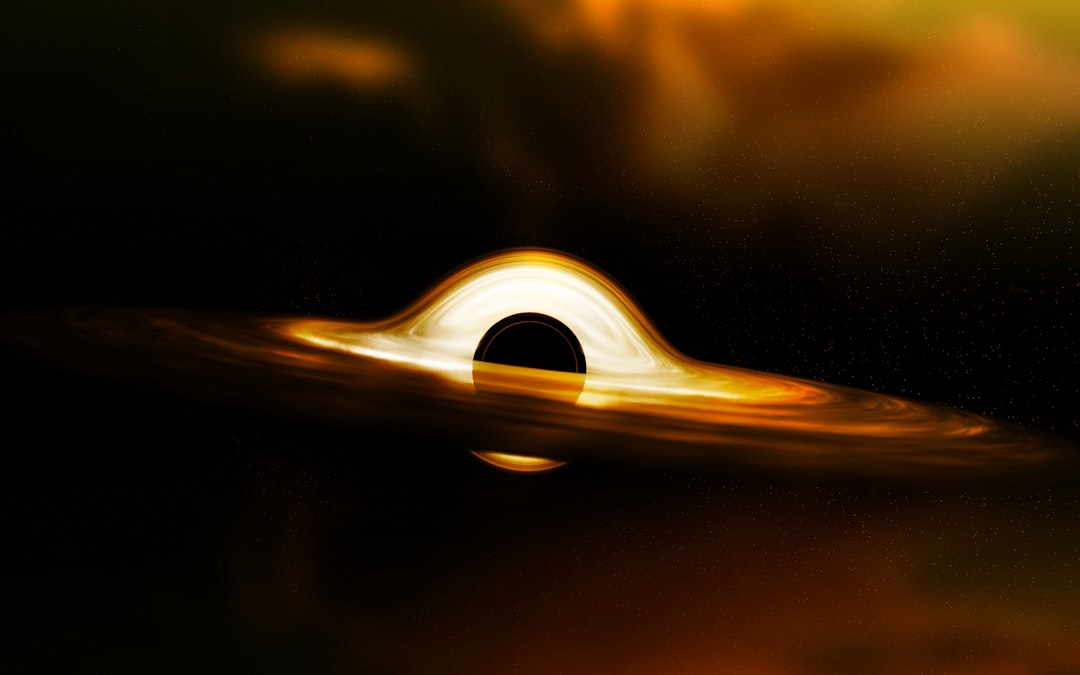
The most widely discussed explanation is that LRDs are early active galactic nuclei (AGN) — the luminous cores of nascent galaxies powered by supermassive black holes actively consuming surrounding material. Spectroscopic data from the Red Unknowns: Bright Infrared Extragalactic Survey (RUBIES) lend credence to this interpretation, with emission-line signatures consistent with accreting black holes.
However, this explanation raises a profound paradox. Supermassive black holes — those containing millions to billions of solar masses — are thought to require enormous timescales to grow through the gradual accumulation of matter. The existence of such objects within the first billion years of cosmic time forces astronomers to reconsider standard models of black hole formation and growth, potentially requiring exotic mechanisms such as direct collapse black holes — the immediate formation of massive black holes from collapsing primordial gas clouds, bypassing the typical stellar evolutionary pathway entirely.
Supermassive Early Stars
A second compelling hypothesis proposes that LRDs may be individual supermassive primordial stars with masses potentially reaching up to one million times that of our Sun. The Universe's first stars, known as Population III stars, are theorized to have been far more massive than anything that forms today, having been born from pristine, metal-free gas clouds with no heavy elements to fragment the collapsing material into smaller clumps.
If LRDs are indeed such cosmic behemoths caught in the twilight of their lives, astronomers may be witnessing the final epochs before catastrophic supernova explosions — events of extraordinary power that would:
- Scatter heavy elements synthesized in stellar cores across the surrounding intergalactic medium
- Forge the first generation of stellar-mass black holes
- Trigger successive mergers of these remnant black holes in dense stellar environments
- Potentially seed the growth of the supermassive black holes we observe in mature galaxies today
- Begin the chemical enrichment of the Universe that makes complex chemistry — and ultimately life — possible
Ancient Globular Clusters and Dense Ionized Cocoons
Other recent JWST investigations suggest that some LRDs may be exceptionally ancient globular clusters — dense, gravitationally bound collections of stars — dominated by at least one extraordinarily massive central star. Still another possibility is that LRDs represent black holes enshrouded in dense cocoons of ionized gas, their energetic radiation trapped and reprocessed by surrounding material, explaining their peculiar red appearance without requiring extreme dust extinction. Each of these scenarios ultimately circles back to the same fundamental question: how did massive black holes arise so rapidly in the early Universe?
Astronomers Spot a Primordial Target
Against this backdrop of theoretical uncertainty, a remarkable discovery by Dr. Karina Caputi of the University of Groningen and her international team of astronomers has provided what may be the first direct observational glimpse of an LRD in the very act of formation. Using JWST's powerful near- and mid-infrared instruments, the team identified a remarkable object designated Pseudo-LRD-NOM.
This object is a compact starburst galaxy located approximately 12 billion light-years from Earth, observed as it existed when the Universe was less than two billion years old. Crucially, it appears to be caught within its first ten million years of existence — a cosmic eyeblink — making it one of the youngest galaxy-scale structures ever studied. Ten million years may sound vast by human standards, but in astronomical terms, it represents barely a heartbeat in a Universe now 13.8 billion years old.
The faint light from Pseudo-LRD-NOM reaches JWST's detectors only thanks to the phenomenon of gravitational lensing — the bending and magnification of light by the immense gravity of the intervening Abell 370 galaxy cluster, which sits approximately 5 billion light-years from Earth. This natural cosmic magnifying glass, predicted by Einstein's General Theory of Relativity, amplifies the galaxy's otherwise undetectable signal, granting astronomers a rare window into the primordial Universe that would otherwise remain beyond reach.
What sets Pseudo-LRD-NOM apart is its extraordinarily metal-poor composition. In astronomical terminology, "metals" refers to any element heavier than hydrogen and helium — the two elements produced in the first minutes after the Big Bang. The near-total absence of these heavier elements in this galaxy's spectrum indicates it is a truly primordial structure, largely uncontaminated by previous generations of stellar nucleosynthesis. Yet paradoxically, it is forming stars at a vigorous rate — a starburst that is already beginning to chemically enrich its environment with each new stellar generation.
A Black Hole Born Before Its Galaxy
Perhaps most remarkably, the spectroscopic analysis of Pseudo-LRD-NOM suggests the presence of an active black hole at its center that may have formed before the surrounding star-forming galaxy itself — a finding with sweeping implications. This would imply that the black hole did not grow gradually alongside its host galaxy, as conventional models suggest, but rather preceded and potentially triggered the galaxy's formation.
In this scenario, the subsequent starburst activity feeds the black hole's growth: intense star formation drives turbulent gas dynamics, funneling material from the galaxy's outer regions — and from the dark matter halo surrounding it — inward toward the central black hole. This creates a co-evolutionary feedback loop between the black hole and its host galaxy that astronomers see operating in mature galaxies today, but have rarely been able to study at such early cosmic epochs.
"The Pseudo-LRD-NOM finding represents a fundamental step to understanding the formation of Little Red Dots — evidence for an active black hole located in a high-density, dusty starburst galaxy that is actively being chemically enriched by stellar activity." — Dr. Karina Caputi and colleagues
Why Studying LRDs Matters
The scientific stakes of understanding Little Red Dots extend far beyond curiosity about exotic early-Universe objects. LRDs may represent the direct progenitors of the galaxies we observe throughout the cosmos today, including our own Milky Way. The processes unfolding within these primordial structures — the birth of the first stars, the chemical enrichment of the intergalactic medium, and the seeding of supermassive black holes — are the foundational events of all subsequent cosmic evolution.
Caputi and her team noted that while most distant star-forming galaxies studied with JWST display spectra rich in metal emission lines, the extraordinary rarity of a metal-poor starburst galaxy at this cosmic epoch is what made Pseudo-LRD-NOM stand out so dramatically. Metal lines typically appear rapidly once star formation begins, because stars synthesize and expel heavy elements efficiently. Their near-absence here is a powerful indicator of an object caught at the very beginning of this enrichment process.
Studying LRDs and their precursors yields multiple layers of scientific insight:
- Galaxy formation: LRDs may represent the first gravitationally bound baryonic structures — understanding them helps trace how diffuse gas became the complex, structured galaxies of today
- Chemical evolution: As LRD stellar populations age, they chart the progression from metal-free Population III stars to chemically enriched later generations
- Black hole demographics: LRD observations probe the origins and early growth of supermassive black holes, which are now known to reside at the centers of virtually every large galaxy
- Reionization history: The energetic radiation from LRD black holes and star-forming regions may have contributed to the Epoch of Reionization — the period when the Universe transitioned from opaque neutral gas to the transparent ionized medium of today
- Cosmological models: The mere existence of LRDs tests the limits of the standard Lambda Cold Dark Matter (ΛCDM) cosmological model and may demand new theoretical frameworks
The Road Ahead: Unlocking the Secrets of LRDs
While the discovery of Pseudo-LRD-NOM is a landmark achievement, it represents only the beginning of a new era of investigation. Future spectroscopic observations with JWST — particularly using its Near Infrared Spectrograph (NIRSpec) and Mid-Infrared Instrument (MIRI) — will be essential for characterizing the full population of LRDs with the precision necessary to definitively distinguish between competing formation models.
Complementary observations from ground-based observatories such as the forthcoming Extremely Large Telescope (ELT) and the Giant Magellan Telescope (GMT) will provide additional high-resolution spectroscopic leverage, while future space missions may push even further back toward the cosmic dawn. Each new LRD spectrum is a piece of a vast puzzle — and Pseudo-LRD-NOM has shown that the most revealing pieces may be those that capture these extraordinary objects at the very instant of their birth.
As the catalog of studied LRDs grows and theoretical models mature to incorporate these findings, astronomers are poised to rewrite our understanding of how the Universe bootstrapped itself from a nearly featureless hot plasma into the rich, complex cosmic web of galaxies, stars, and black holes that surrounds us today. The Little Red Dots, for all their diminutive name, may turn out to be among the biggest players in the history of the cosmos.