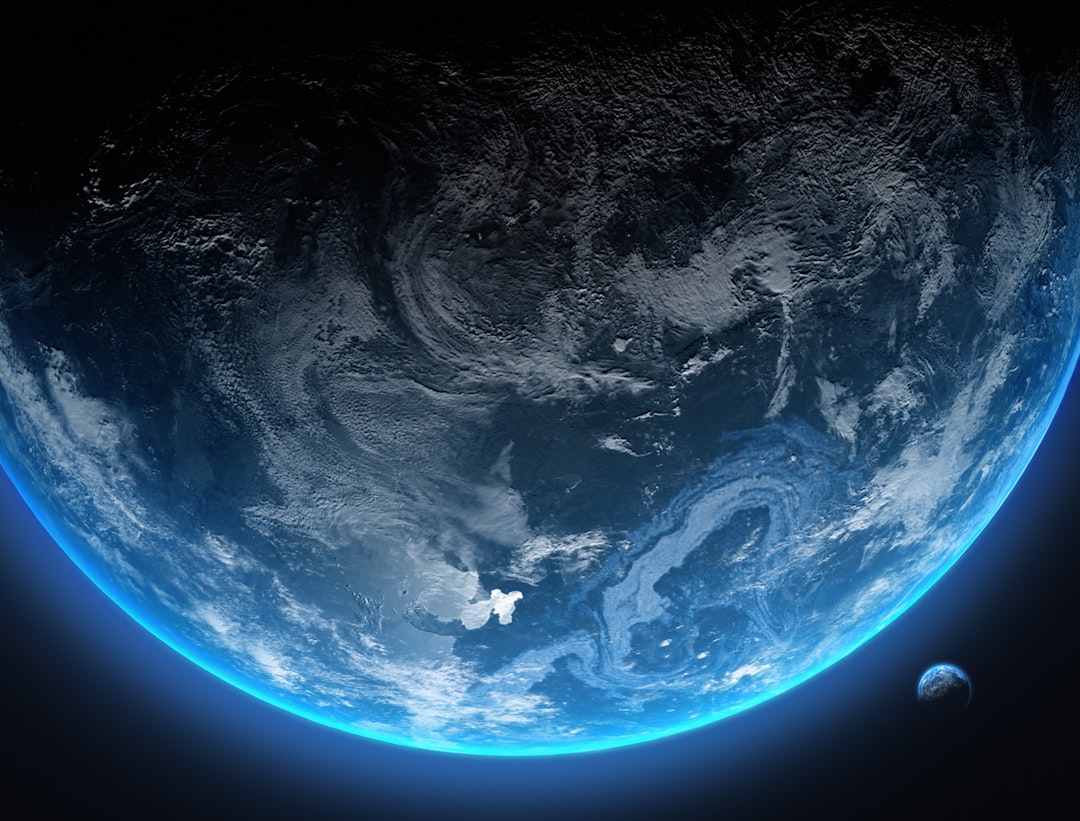
In a groundbreaking discovery that pushes the boundaries of exoplanet detection, astronomers have identified two remarkable gas giant worlds orbiting a young star system 311 light-years from Earth. These planets, designated HD 114082 b and HD 114082 c, have shattered records as the longest-period transiting exoplanets ever discovered around such a youthful stellar system. The findings, detailed in a recent publication in The Astrophysical Journal Letters, offer unprecedented insights into planetary formation and migration during the earliest stages of stellar system evolution.
What makes these worlds particularly extraordinary is not just their extended orbital periods of approximately 225 days and 314 days respectively, but the fact that they can be observed using the transit method despite their considerable distance from their host star. This achievement represents a significant technical milestone, as detecting long-period transiting planets has historically proven exceptionally challenging for astronomers. The HD 114082 system, with its star being merely 15 million years old—a cosmic infant compared to our 4.5-billion-year-old Sun—provides a rare window into the dynamic processes that shape planetary systems during their formative years.
The discovery carries profound implications for our understanding of planetary migration theories and the early evolution of gas giant worlds. Both planets exhibit unusually low densities, earning them the classification of "puffy" exoplanets, with the outer planet possessing a mean density more than 7.5 times less than water. This characteristic, combined with their youth and orbital configuration, makes them invaluable laboratories for testing models of planetary formation and atmospheric evolution in nascent stellar systems.
Breaking Records: The Challenge of Long-Period Transit Detection
The transit method has revolutionized exoplanet discovery since its inception, enabling astronomers to detect thousands of worlds beyond our solar system. This technique works by measuring the minute dimming of starlight that occurs when a planet passes directly between its host star and Earth-based observers. However, the method has inherent limitations that make it particularly effective for detecting short-period planets discovered by missions like NASA's Kepler, which orbit their stars in mere hours or days.
For longer-period planets like HD 114082 b and HD 114082 c, the challenge intensifies dramatically. The greater the orbital distance, the smaller the apparent size of the star as seen from the planet, resulting in a shallower transit depth and a much lower probability of alignment that would produce observable transits from Earth. Additionally, astronomers must wait months or even years between transits to confirm the periodicity and gather sufficient data for characterization.
The research team overcame these obstacles through an innovative multi-instrument approach, combining observations from space-based and ground-based facilities operated by NASA, the European Space Agency, academic institutions, and international consortiums. This coordinated effort allowed them to capture multiple transits and refine the orbital parameters with unprecedented precision, though the outer planet's orbital period still carries a margin of error of approximately 9 percent.
A Gravitational Dance: Orbital Resonance and Planetary Interactions
One of the most intriguing aspects of the HD 114082 system is the orbital resonance between its two giant planets. This phenomenon occurs when the orbital periods of two bodies share a simple mathematical relationship, causing them to exert periodic gravitational influences on each other. In this case, the planets engage in what researchers describe as a cosmic "gravitational tug-of-war," with their mutual interactions helping to stabilize their orbits over astronomical timescales.
Orbital resonances are not uncommon in planetary systems—indeed, several moons in our own solar system exhibit similar relationships. Jupiter's moons Io, Europa, and Ganymede, for instance, maintain a 4:2:1 resonance discovered through observations by NASA missions. However, finding such configurations in young exoplanetary systems provides crucial evidence about the migration history and dynamical evolution of these worlds.
"We have identified a strange pair of giant exoplanets," explained Dr. Carlos del Burgo Díaz, a Beatriz Galindo Senior distinguished researcher at the Universidad de La Laguna (ULL) and Instituto de Astrofísica de Canarias (IAC), who led the study. "They stand out among the youngest detected by passing in front of their star because they take longer to complete an orbit. The inner planet, 20% closer to its star than Earth is to the Sun, has the Jupiter's size. The outer planet is at the same orbital distance as Earth, and has a radius 36% larger than that of Jupiter and a mean density more than 7.5 times less than that of water, so it would float on it."
The Puffy Planet Phenomenon: Atmospheric Mysteries of Young Worlds
The characterization of both planets as "puffy" exoplanets raises fascinating questions about atmospheric composition and thermal evolution in young gas giants. Despite being approximately the size of Jupiter or larger, these worlds possess remarkably low densities, suggesting atmospheres that are significantly inflated compared to mature gas giants in our solar system.
Several mechanisms could explain this puffiness. Young planets retain substantial heat from their formation, causing their atmospheres to expand. Additionally, the intense radiation from their youthful, more luminous host star could be driving atmospheric heating and expansion. The outer planet's extraordinarily low density—capable of floating on water if such an ocean existed—indicates an atmosphere dominated by light elements like hydrogen and helium, possibly with minimal heavy element enrichment.
Understanding these atmospheric properties is crucial for modeling planetary evolution. As these worlds age and cool over millions of years, their atmospheres should contract, increasing their overall density. By studying them in their current inflated state, astronomers can test theoretical models of atmospheric evolution and thermal history that are difficult to verify with older, more settled planetary systems.
Formation and Migration: Tracing Planetary Journeys
Despite their current orbital positions—with the inner planet located 20% closer to its star than Earth is to the Sun, and the outer planet at approximately Earth's orbital distance—researchers hypothesize that both worlds formed much farther out in the protoplanetary disk of gas and dust surrounding their young star. This conclusion stems from theoretical models of giant planet formation, which suggest that such massive worlds typically coalesce in the colder outer regions of stellar systems where ice and gas are more abundant.
The migration inward from their formation locations likely occurred through interactions with the protoplanetary disk itself, a process known as Type II migration. As massive planets orbit within a gas disk, they create gravitational perturbations that clear gaps in the disk material. The resulting asymmetric distribution of gas exerts torques on the planet, causing it to spiral inward or outward depending on the disk's properties and the planet's mass.
This migration scenario has profound implications for understanding planetary system architecture as studied by missions like ESA's CHEOPS. The HD 114082 system serves as a valuable analog for investigating how planetary systems evolve from their chaotic birth environments into the more stable configurations we observe in mature systems like our own solar system.
Key Scientific Findings and Measurements
- Orbital Periods: HD 114082 b completes one orbit every 225 days, while HD 114082 c requires approximately 314 days (with a 9% uncertainty margin), making them the longest-period transiting exoplanets discovered around such a young star
- Stellar Age: The host star is merely 15 million years old, providing a rare opportunity to study planetary systems in their infancy, compared to our 4.5-billion-year-old solar system
- Planetary Sizes: The inner planet matches Jupiter's size, while the outer planet boasts a radius 36% larger than Jupiter despite its remarkably low density
- Density Characteristics: The outer planet's mean density is more than 7.5 times less than water, classifying it as an extremely "puffy" exoplanet with a highly inflated atmosphere
- Orbital Configuration: Both planets are locked in orbital resonance, creating periodic gravitational interactions that influence their long-term orbital stability
- Discovery Timeline: While HD 114082 b was initially identified in 2022, this study marks the discovery of HD 114082 c and provides refined characterization of both worlds
Future Research Directions and JWST Observations
The discovery of the HD 114082 system opens numerous avenues for future investigation. Researchers have outlined several priority objectives that will deepen our understanding of these remarkable worlds and young planetary systems in general.
First among these goals is obtaining a more precise measurement of HD 114082 c's orbital period. Reducing the current 9% uncertainty will require additional transit observations over multiple orbital cycles, but the payoff will be a much better understanding of the system's dynamical architecture and the strength of the resonant interactions between the two planets.
Perhaps most exciting is the prospect of atmospheric characterization using the James Webb Space Telescope (JWST). JWST's unprecedented infrared sensitivity and spectroscopic capabilities make it ideally suited for analyzing the chemical composition of exoplanet atmospheres, particularly for large, puffy worlds like those in the HD 114082 system. By observing starlight filtering through these planets' atmospheres during transit, astronomers can identify the spectral signatures of various molecules, including water vapor, methane, carbon dioxide, and potentially more exotic species.
Such observations would provide crucial constraints on the planets' formation histories. The ratio of heavy elements to hydrogen and helium, for instance, can reveal whether these worlds formed through core accretion (building up a solid core before accreting gas) or gravitational instability (rapid collapse of dense regions in the protoplanetary disk). The presence or absence of certain molecules can also indicate the temperature and pressure conditions within the atmospheres and shed light on ongoing chemical processes.
Studying the Gravitational Tug-of-War
Long-term monitoring of the system will also allow astronomers to map out the details of the planets' gravitational interactions with unprecedented precision. By measuring tiny variations in transit timing—deviations from perfectly periodic transits caused by the mutual gravitational pulls between the planets—researchers can refine estimates of the planets' masses and internal structures without relying solely on radial velocity measurements.
These transit timing variations (TTVs) serve as a powerful diagnostic tool for understanding the three-dimensional architecture of multi-planet systems. In the case of HD 114082, the resonant configuration should produce characteristic TTV patterns that can be compared against theoretical predictions, testing our models of orbital dynamics in young planetary systems.
Implications for Planetary Science and System Evolution
The HD 114082 system represents more than just a record-breaking discovery; it provides a crucial data point for understanding how planetary systems evolve from their turbulent origins into the diverse configurations we observe throughout our galaxy. Young systems like this one allow astronomers to witness processes that occurred in our own solar system billions of years ago, offering insights that cannot be obtained by studying mature systems alone.
The combination of long orbital periods, extreme youth, and observable transits makes these planets particularly valuable for testing theories of planetary migration and atmospheric evolution. As more such systems are discovered and characterized, astronomers will be able to construct a more complete picture of the typical pathways that planetary systems follow during their first tens of millions of years.
Furthermore, the success in detecting these long-period transiting planets demonstrates the power of coordinated, multi-instrument observational campaigns. As next-generation facilities come online—including the European Southern Observatory's Extremely Large Telescope and other ground-based observatories—the techniques refined in this study will enable the discovery and characterization of even more challenging targets, potentially including Earth-sized planets in habitable-zone orbits around young stars.
The discovery of HD 114082 b and HD 114082 c marks a significant milestone in exoplanet science, demonstrating that even after decades of intensive searching, the universe still has surprises in store. As observational techniques continue to improve and our theoretical understanding deepens, each new discovery brings us closer to answering fundamental questions about how planetary systems—including our own—form, evolve, and diversify across the cosmos. The coming years and decades promise to reveal even more about these fascinating worlds and their countless siblings orbiting distant stars, continuously expanding our cosmic perspective and understanding of our place in the universe.