In a groundbreaking study that pushes the boundaries of exoplanetary science, astronomers have unveiled the harsh reality of a distant world that challenges our understanding of rocky planet evolution. Located approximately 48 light-years from Earth, the super-Earth designated LHS 3844 b—affectionately nicknamed "Kua'kua" after the Bribri word for butterfly—presents a scorching, atmosphere-free landscape that may mirror the early conditions of terrestrial planets throughout the galaxy. Using the unprecedented capabilities of the James Webb Space Telescope, researchers have peered into the surface composition of this alien world, revealing insights that fundamentally reshape our understanding of planetary geology beyond our solar system.
This remarkable achievement represents a milestone in observational astronomy: the first detailed surface composition analysis of a rocky exoplanet using direct thermal emission spectroscopy. Unlike previous studies that relied on indirect methods or atmospheric characterization, this research demonstrates JWST's extraordinary ability to detect and analyze infrared radiation emanating directly from the surface of a world orbiting another star. The findings, led by Sebastian Zieba, a PhD student at the Harvard-Smithsonian Center for Astrophysics, and Dr. Laura Kreidberg from the Max Planck Institute for Astronomy in Heidelberg, provide our first glimpse into the geological diversity that exists among the galaxy's rocky planets.
The discovery carries profound implications for our search for habitable worlds and our understanding of how planets like Earth develop their unique characteristics. By studying worlds that differ dramatically from our own, scientists can better constrain the conditions necessary for atmospheric retention, geological activity, and ultimately, the potential for life.
A World of Extremes: Kua'kua's Hostile Environment
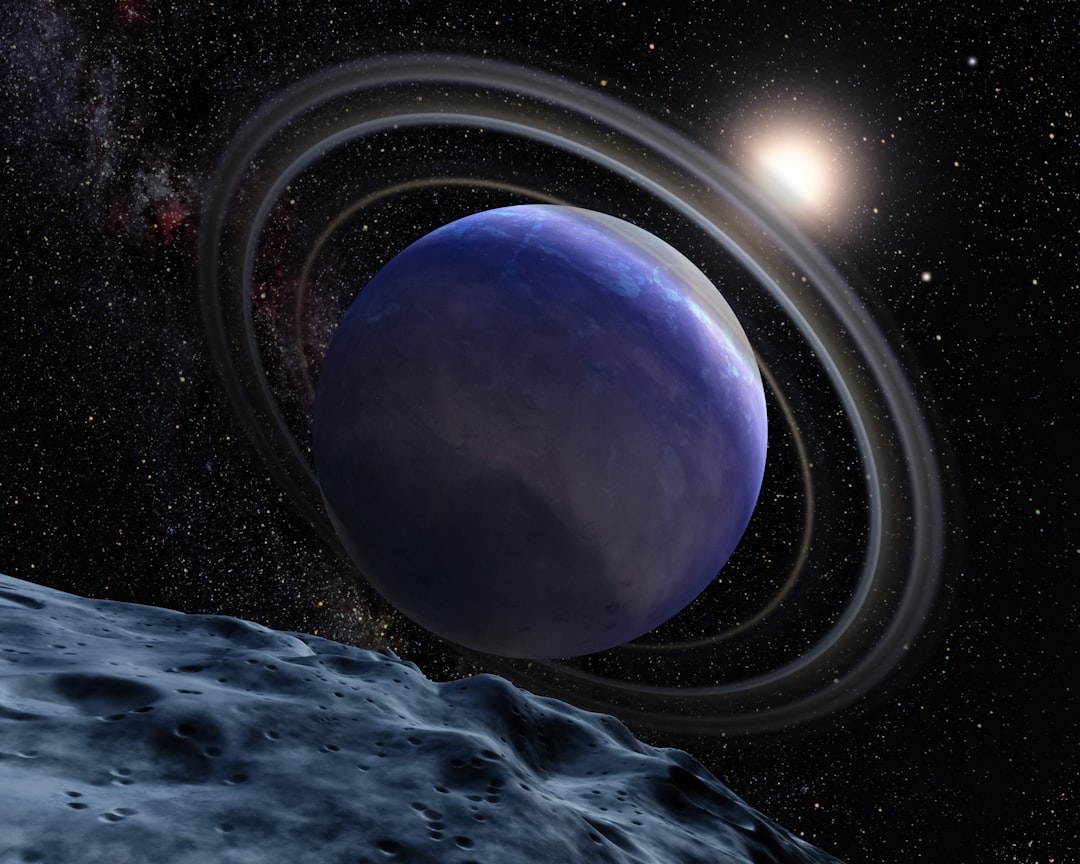
Kua'kua exists in conditions that would seem almost unimaginable to anyone familiar with Earth's temperate climate. Orbiting its red dwarf host star—named Batsu in the same Bribri linguistic tradition—this super-Earth completes a full revolution in a mere 11 hours. This breakneck orbital period places the planet so close to its star that it has become tidally locked, a gravitational phenomenon also observed in our own Moon's relationship with Earth. One hemisphere perpetually faces the star, baking under relentless radiation, while the opposite side remains shrouded in eternal darkness.
The planet's dimensions are equally impressive: with a radius approximately 30 percent larger than Earth's, Kua'kua firmly falls into the super-Earth category—a class of exoplanets that have no direct analog in our solar system. These worlds, with masses between Earth and Neptune, represent one of the most common planetary types discovered by surveys like the Transiting Exoplanet Survey Satellite (TESS), which first identified LHS 3844 b in 2018 through the transit method, detecting the slight dimming of starlight as the planet crossed in front of its host star.
The dayside temperature of approximately 1000 Kelvin (727°C or 1340°F) creates an environment more reminiscent of Mercury than Earth, though on a significantly larger scale. This extreme heat, combined with the planet's proximity to its star and lack of atmospheric protection, subjects the surface to intense stellar radiation and creates conditions fundamentally different from those that allowed Earth to develop its rich biosphere.
Revolutionary Observational Techniques Reveal Surface Secrets
The research team's approach represents a triumph of modern astronomical instrumentation and analytical methodology. Using JWST's Mid-Infrared Instrument (MIRI), the scientists collected detailed spectroscopic data from the planet's scorching dayside. MIRI, designed to observe the universe in wavelengths between 5 and 28 micrometers, proved ideally suited for detecting the thermal emission from Kua'kua's surface—radiation that carries the fingerprints of the minerals and rocks that comprise the planetary crust.
"Thanks to the amazing sensitivity of JWST, we can detect light coming directly from the surface of this distant rocky planet. We see a dark, hot, barren rock, devoid of any atmosphere," explained Dr. Laura Kreidberg, emphasizing the unprecedented nature of these observations.
The analytical process involved comparing the observed infrared spectrum with extensive template libraries containing spectral signatures of rocks and minerals from Earth, the Moon, and Mars. This comparative approach, while computationally intensive, allows researchers to identify compositional matches by examining how different materials emit and absorb infrared radiation at specific wavelengths. The team's models confidently ruled out compositions similar to Earth's continental crust, which is predominantly composed of silicate-rich rocks like granite.
Data from both JWST and the earlier Spitzer Space Telescope converged on a consistent picture: Kua'kua's surface more closely resembles mantle material or solidified lava, rich in magnesium and iron, similar to terrestrial or lunar basalt. This finding suggests a geological history markedly different from Earth's complex crustal evolution.
Geological Implications: A Planet Frozen in Time
The absence of an Earth-like silicate crust on Kua'kua tells a compelling story about the planet's geological evolution—or rather, the lack thereof. On Earth, the formation of continental crust represents billions of years of plate tectonic activity, a process that requires several critical ingredients. The repeated melting, solidification, and mixing of crustal material with the mantle gradually concentrates lighter minerals at the surface, creating the granitic rocks that form our continents. Crucially, this process typically requires water as a lubricant to facilitate the movement of tectonic plates.
As Sebastian Zieba noted in the study, "Since LHS 3844 b lacks such a silicate crust, one may conclude that Earth-like plate tectonics does not apply to this planet, or it is ineffective. This planet likely only contains little water." This observation has profound implications for understanding the diversity of geological processes operating on rocky planets throughout the galaxy. It suggests that Earth's active geology may be more exceptional than previously thought, dependent on a specific set of conditions that includes adequate water content and appropriate thermal conditions.
The complete absence of an atmosphere provides additional evidence for Kua'kua's geological quiescence. On geologically active worlds like Earth, volcanic outgassing continuously replenishes atmospheric gases, even as some are lost to space. The fact that Kua'kua lacks even a tenuous atmosphere suggests that volcanic activity ceased long ago, or perhaps never occurred on the scale necessary to build up a substantial gas envelope. This stands in stark contrast to planets like Venus, where ongoing volcanic activity may contribute to the planet's thick, toxic atmosphere.
Imagining the Alien Landscape: Surface Characteristics and Space Weathering
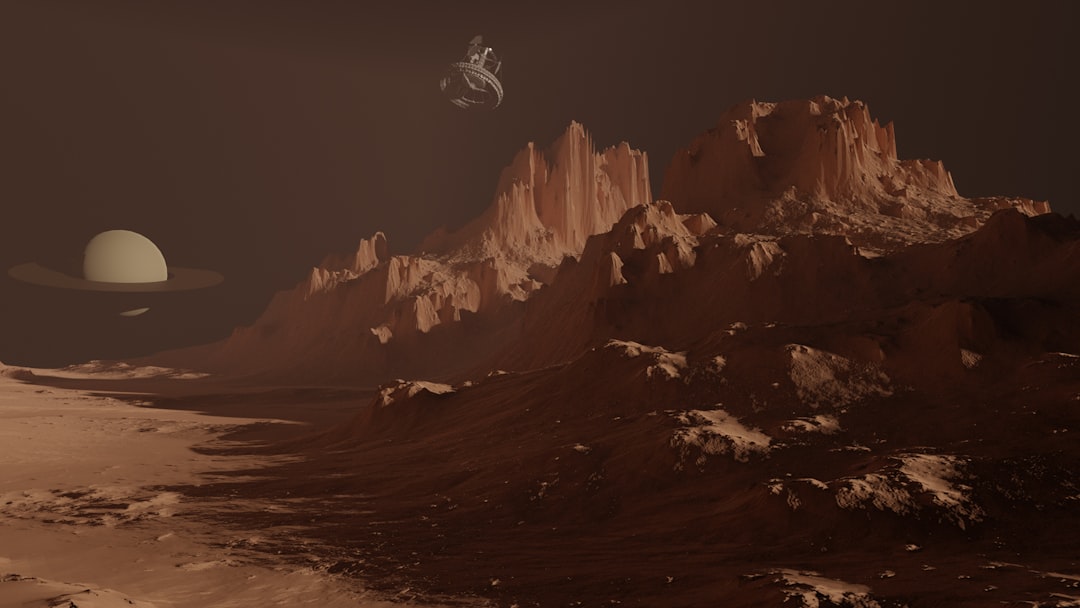
Constructing a mental picture of Kua'kua's surface requires synthesizing multiple lines of evidence from the spectroscopic data. The current best interpretation suggests a landscape dominated by basaltic rock—the same dark, volcanic material that forms the lunar maria and much of Earth's oceanic crust. The surface likely consists of either solid rock formations or broken, crushed material including rocks and gravel, similar to the rocky deserts found in Earth's most barren regions.
Interestingly, the observations appear inconsistent with the presence of fine powders or sand-like materials, at least in their pristine form. Such fine-grained materials typically appear brighter in infrared observations than what JWST detected. However, this is where the complex process of space weathering enters the picture. Without an atmosphere to shield it, Kua'kua's surface endures constant bombardment from high-energy radiation from its host star and impacts from meteorites of varying sizes.
Space weathering doesn't simply erode rocks—it fundamentally transforms them. As Zieba explained, "These processes not only slowly dissolve hard rocks into regolith, a layer of fine grains or powder as found on the Moon. They also darken the layer by adding iron and carbon, making the regolith's properties more consistent with the observations." This darkening effect, well-documented on the Moon and asteroids in our solar system, occurs as micrometeorite impacts and radiation exposure alter the optical properties of surface materials, creating a layer that appears darker in both visible and infrared light.
This understanding leads to two plausible scenarios for Kua'kua's current surface state:
- Recent Volcanic Resurfacing: The surface could be covered by dark, solid basaltic rock deposited relatively recently by volcanic activity. Since space weathering brightening effects appear quickly on geological timescales, a dark surface would suggest recent emplacement of fresh material, indicating some level of ongoing geological activity.
- Ancient, Weathered Surface: Alternatively, the surface might consist of ancient rocks that have undergone extensive space weathering over billions of years, creating darkened regolith layers similar to those covering the Moon's ancient highlands. This scenario would support the hypothesis of a geologically dead world that hasn't experienced significant volcanic activity for eons.
- Hybrid Landscape: The surface might display regional variations, with some areas showing relatively fresh basaltic flows while others are covered in ancient, weathered regolith—a complexity that would only be revealed through higher-resolution observations or different viewing geometries.
Future Observations and Broader Scientific Context
The research team's work on Kua'kua represents just the beginning of a new era in exoplanetary surface characterization. Additional JWST observations are already planned to help distinguish between the competing hypotheses about the planet's surface state. By observing the same regions at different times and viewing angles, scientists can exploit the way surface roughness and texture affect thermal emission patterns. This technique, successfully applied to asteroids within our solar system by missions like ESA's Rosetta, can reveal whether surfaces are smooth and solid or rough and regolith-covered.
The implications of this research extend far beyond a single exoplanet. Understanding the diversity of rocky planet surfaces helps astronomers refine their models of planetary formation and evolution. It provides crucial context for interpreting observations of other exoplanets and helps establish which planetary characteristics are common and which are exceptional. For instance, the apparent rarity of Earth-like plate tectonics suggested by Kua'kua's composition may indicate that our planet's geological activity is a special circumstance, potentially linked to the conditions necessary for life.
Furthermore, this work demonstrates the feasibility of conducting detailed surface studies of rocky exoplanets—a capability that seemed impossible just a decade ago. As JWST continues its mission and future observatories like the Habitable Worlds Observatory come online, astronomers will be able to characterize an increasingly diverse array of rocky worlds, building a comprehensive understanding of terrestrial planet diversity throughout the galaxy.
Connecting to the Search for Habitable Worlds
While Kua'kua itself is far too hot and airless to support life as we know it, studying such extreme worlds provides essential context for the search for habitable planets. By understanding which factors lead to atmospheric loss, geological quiescence, and surface conditions incompatible with life, scientists can better identify the characteristics that make a planet potentially habitable. The presence or absence of plate tectonics, for instance, may play a crucial role in regulating a planet's climate over geological timescales through the carbon-silicate cycle—a process that helps stabilize Earth's temperature.
The research also highlights the importance of studying planets around red dwarf stars, which comprise approximately 75% of all stars in our galaxy. While these cool, small stars offer the advantage of placing rocky planets in close orbits that are easier to study, they also subject nearby planets to intense radiation and tidal forces that may strip away atmospheres and lock planets in synchronous rotation. Understanding how these factors affect planetary habitability is crucial for directing future searches for life beyond Earth.
As Dr. Kreidberg noted, "We are confident the same technique will allow us to clarify the nature of LHS 3844 b's crust and, in the future, other rocky exoplanets." This confidence is well-founded, as each new observation refines our understanding and demonstrates the power of combining cutting-edge instrumentation with sophisticated analytical techniques.
The study of LHS 3844 b—Kua'kua, the butterfly world—reminds us that the universe contains a stunning diversity of planetary environments. While this particular world may be a dark, scorching wasteland devoid of the conditions necessary for life, it serves as an invaluable laboratory for understanding the full spectrum of rocky planet evolution. As we continue to explore these distant worlds with increasingly powerful telescopes, each discovery brings us closer to answering humanity's most profound question: Are we alone in the universe?