Mars's Interior Is 400°C Hotter Beneath the Southern Hemisphere — And Scientists Are Taking Notice
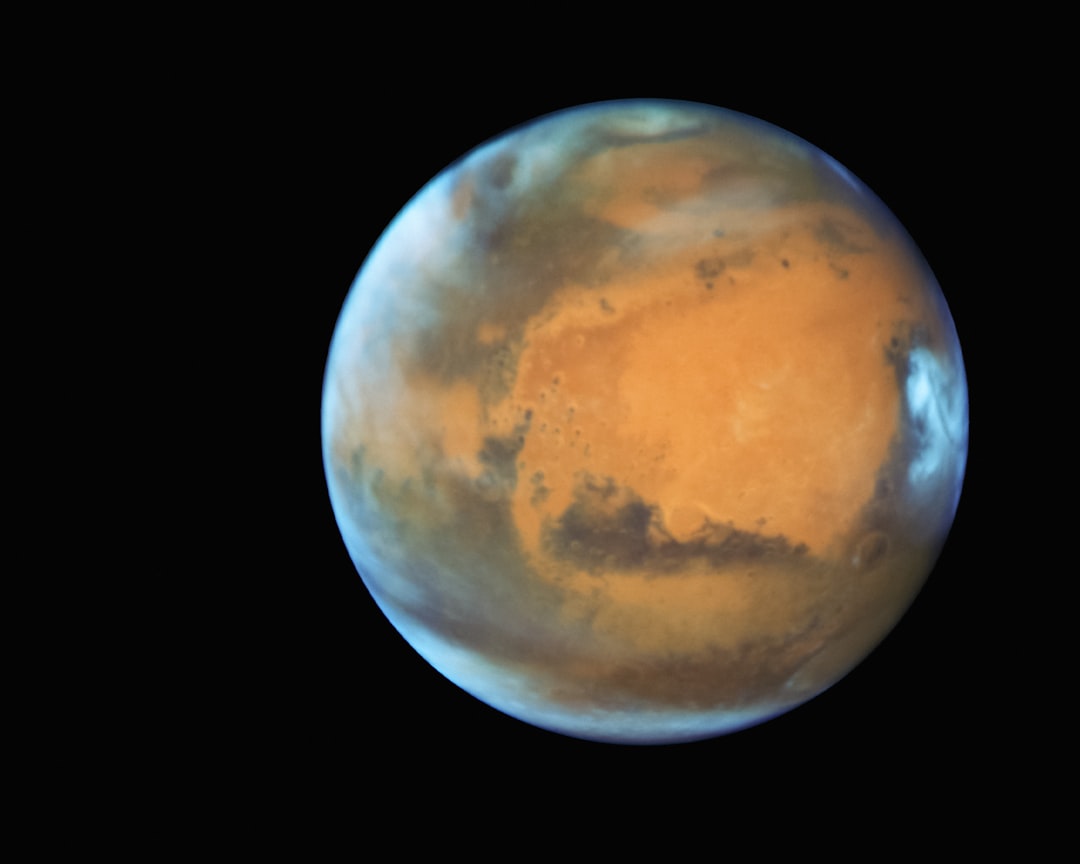
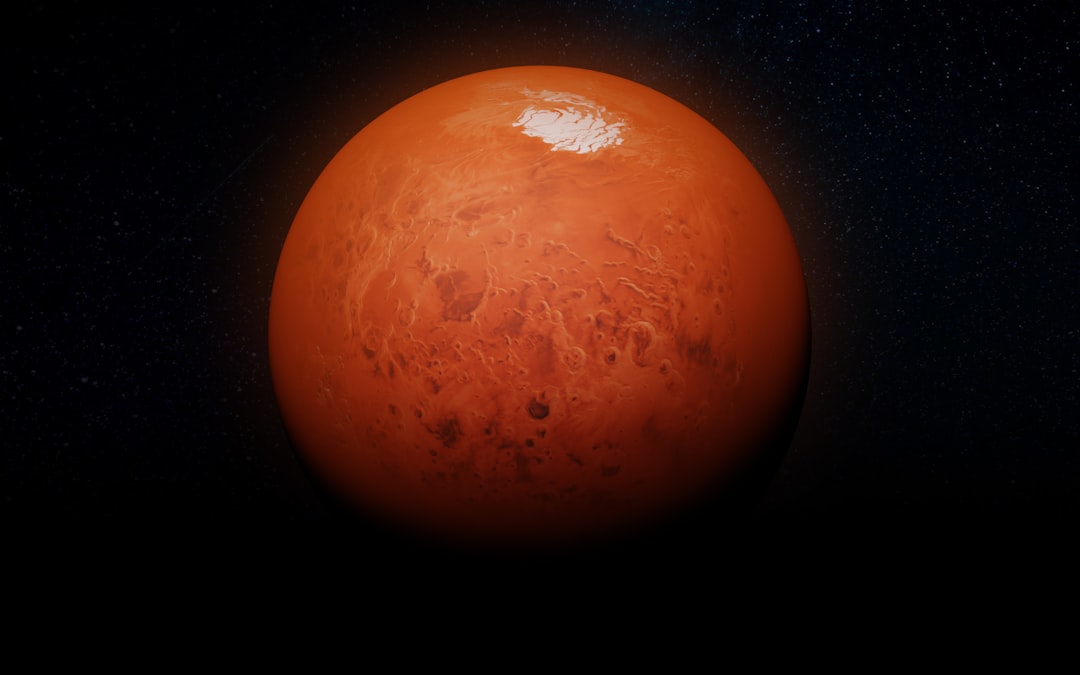
Mars is a cold, arid world that today bears little resemblance to the dynamic planet it once was. Billions of years ago, the Red Planet was a geologically vibrant body with a warm interior that sustained active volcanism, a protective global magnetic field, and a surface graced by flowing liquid water. Over geological timescales, however, Mars's relatively small size — roughly half the diameter of Earth — caused its interior to lose heat far more rapidly than our own planet. The consequences were profound: volcanism faded, the magnetic field collapsed to near-zero, and every drop of surface liquid water either evaporated into space or became locked in subsurface ice. For decades, scientists have largely assumed that whatever heat remained in the Martian interior was distributed relatively uniformly. Groundbreaking new research now challenges that assumption in a striking way.
A New Window Into the Martian Interior
An international team of researchers has unveiled compelling evidence that the interior heat of Mars is far from evenly distributed. Their findings, recently published in the journal Nature, suggest that the southern hemisphere of Mars harbors an interior that is dramatically warmer than its northern counterpart — a discovery with wide-ranging implications for our understanding of planetary evolution, volcanism, and even the potential habitability of Mars in the ancient past.
To reach these conclusions, the team analyzed archival data collected by three of NASA's Mars-orbiting spacecraft: the Mars Global Surveyor (MGS), which operated from 1997 until the end of its mission in 2006; Mars Odyssey, which has been in orbit since 2001 and continues to operate today; and the Mars Reconnaissance Orbiter (MRO), which has been returning high-resolution data since 2006. Together, these spacecraft have accumulated an extraordinarily rich dataset of gravitational measurements spanning more than two decades of observation.
This orbital data was then combined with well-established knowledge of Mars's orbital eccentricity and axial tilt — two parameters that are notably more extreme than Earth's equivalents. Orbital eccentricity, measured on a scale from 0 (a perfect circle) to 1 (a parabolic trajectory), sits at a modest 0.017 for Earth, while Mars's eccentricity reaches 0.093, giving its orbit a more pronounced oval shape. Similarly, while Earth's current axial tilt is 23.44 degrees, Mars tilts at 25.19 degrees. These orbital characteristics cause Mars to experience measurable gravitational and tidal forces that subtly affect the velocities of spacecraft orbiting the planet — and it is precisely these minute velocity changes that the researchers exploited to peer deep beneath the Martian surface.
Tidal Tomography: Reading a Planet From the Outside In
The analytical technique at the heart of this research is known as tidal tomography — a method that uses the way a planet flexes and deforms in response to gravitational tidal forces to infer the properties of its interior. Just as seismologists use earthquake waves to image Earth's interior layers, planetary scientists can use tidal responses recorded by orbiting spacecraft to construct three-dimensional models of a planet's internal structure, including its temperature distribution.
By carefully tracking the subtle shifts in spacecraft velocities caused by variations in Mars's gravitational field — themselves a product of internal temperature and density differences — the team was able to build a remarkably detailed gravitational model of the Martian interior. This approach is particularly powerful because it is sensitive to variations that static models based purely on surface geology would entirely miss.
"Scientists usually assume that the interiors of planetary bodies are generally spherically symmetric, but this is not necessarily true. As we get more gravity data, we can determine the three-dimensional intricacies of a planet's interior structure. These inferences in turn give us a blueprint for designing future missions and scientific exploration of these worlds. Understanding the interior structure of planetary bodies helps us unravel the processes that shaped their formation and evolution."
— Dr. Alexander Berne, Postdoctoral Associate, University of Arizona, and Lead Author of the Study
A 400°C Difference: The Results in Detail
The results are striking. The team found that the southern hemisphere of Mars has an interior temperature that is approximately 200 to 400 degrees Celsius (392 to 752 degrees Fahrenheit) higher than the interior of the northern hemisphere. This is not a marginal difference — it represents a fundamental asymmetry in the thermal state of an entire planet, one that scientists had not previously been able to quantify with this level of precision.
Crucially, these findings are consistent with — and help to explain — earlier observations from NASA's InSight lander, which operated on the Martian surface from 2018 until its mission concluded in late 2022. InSight's seismometers detected marsquakes whose seismic waves behaved differently depending on whether they traveled through the southern or northern hemisphere's interior. Waves passing through the southern interior were found to dissipate — or attenuate — more quickly than those traveling through the northern interior. This is a classic signature of a hotter, more fluid or partially molten region, as higher temperatures cause rock to absorb seismic energy more readily.
The convergence of two entirely independent lines of evidence — orbital gravity measurements and seismic wave behavior — lends considerable credibility to the conclusion that Mars's interior is genuinely warmer beneath its southern hemisphere.
Why the South? Understanding Mars's Hemispheric Dichotomy
The thermal asymmetry uncovered by the new study maps intriguingly onto one of the most visually striking and scientifically puzzling features of the Martian surface: the so-called Martian dichotomy. Mars's surface is split into two remarkably different hemispheres, a division that has fascinated planetary scientists for decades and remains only partially explained.
- The Northern Lowlands: The northern hemisphere of Mars is dominated by vast, relatively flat plains sitting at lower elevations. These smooth terrains, sometimes called the Vastitas Borealis, are believed by many researchers to be the remnants of an ancient ocean floor, suggesting that enormous volumes of liquid water once covered this region.
- The Southern Highlands: By contrast, the southern hemisphere is covered by ancient, heavily cratered terrain sitting at significantly higher elevations — in places several kilometers above the mean Martian surface level. This ancient crust is among the oldest preserved rock on Mars, dating back more than 4 billion years.
- Hellas Basin: A notable exception to the southern highlands' elevated terrain is Hellas Planitia, a massive impact basin roughly 2,300 kilometers in diameter and more than 7 kilometers deep. At its floor, Hellas sits thousands of meters below even the average elevation of the northern lowlands, making it the lowest point on Mars and one of the largest confirmed impact structures in the entire Solar System.
- Crustal Thickness: The crust beneath the southern highlands is substantially thicker than that beneath the northern lowlands — a factor that the researchers suggest could be central to explaining the observed thermal asymmetry.
The team's leading hypothesis for the temperature difference centers on the insulating properties of Mars's thicker southern crust. Because crustal rock is a poor conductor of heat, a thicker crust acts like a geological blanket, trapping heat in the mantle below and slowing the rate at which it escapes to the surface. While the northern hemisphere's thinner crust allowed heat to radiate away more efficiently over billions of years, the southern hemisphere's thicker crust may have preserved a reservoir of primordial heat — warmth left over from the planet's formation and early differentiation — that persists to this day.
This mechanism is consistent with what planetary scientists know about the relationship between crustal thickness and heat flow on other rocky bodies, including the Moon and Mercury. It also raises fascinating questions about the history of volcanic activity on Mars: if the southern interior has remained significantly warmer for billions of years, it may have sustained volcanic processes — and potentially liquid water in the subsurface — long after the rest of the planet had gone geologically cold.
Implications for Martian Volcanism and Potential Habitability
The discovery has significant implications beyond simply mapping Mars's thermal structure. Volcanic activity on Mars is intimately connected to the planet's habitability — both in the ancient past and, potentially, in the more recent geological record. The southern hemisphere of Mars is home to several ancient volcanic provinces, and some researchers have speculated that low-level volcanic activity may have continued in isolated regions far more recently than the planet's cold, dead surface suggests.
If the southern mantle is genuinely hundreds of degrees warmer than the north, it could help explain why evidence of geologically recent volcanism — including lava flows estimated to be only a few million years old in the Elysium Planitia region, not far from where InSight landed — continues to emerge from Martian orbital data. A warmer southern interior would also be more conducive to the long-term persistence of subsurface liquid water, which remains one of the most actively debated topics in Mars science and has direct relevance to the search for past or even present microbial life.
The findings also reinforce the importance of considering planetary interiors as three-dimensional, heterogeneous structures rather than idealized, spherically symmetric bodies. This has practical implications for the design and scientific objectives of future Mars missions. ESA's ExoMars program and NASA's long-term Mars exploration strategy both stand to benefit from this more nuanced picture of the planet's interior.
What Comes Next?
The research team emphasizes that while their results are compelling, they represent a first detailed look at a phenomenon that will require further investigation to fully characterize. More precise gravity measurements from future orbiters, combined with additional seismic data — ideally from a network of landers distributed across both hemispheres — would allow scientists to refine their thermal models and better constrain the depth, extent, and origin of the warm southern anomaly.
Future missions such as NASA's proposed Mars Life Explorer and various geophysical network concepts currently under study could provide exactly this kind of data. As Dr. Berne noted, understanding the three-dimensional interior structure of Mars is not merely an academic exercise — it is a fundamental prerequisite for designing the next generation of Mars missions and for answering some of the most profound questions in planetary science: How do rocky planets form and evolve? What processes determine whether a world can sustain liquid water and, by extension, life? And could Mars — even today — harbor environments warm enough to be of astrobiological interest?
The story of Mars's interior heat is far from fully told. But with each new dataset, each new modeling technique, and each new generation of spacecraft, scientists are assembling a richer, more detailed portrait of a world that continues to surprise us — one degree at a time.
Key Takeaways
- Mars's southern hemisphere interior is 200–400°C warmer than the northern hemisphere interior, according to new research published in Nature.
- The findings were derived using tidal tomography applied to archival data from NASA's Mars Global Surveyor, Mars Odyssey, and Mars Reconnaissance Orbiter.
- The results are consistent with independent seismic observations from NASA's InSight lander, which found that seismic waves attenuate more quickly in the southern interior.
- The thicker crust of the southern highlands is believed to have insulated the underlying mantle from cooling over billions of years.
- The discovery has significant implications for understanding Mars's volcanic history, the potential persistence of subsurface liquid water, and the design of future Mars missions.
- Lead author Dr. Alexander Berne of the University of Arizona conducted the research as a PhD student at Caltech.