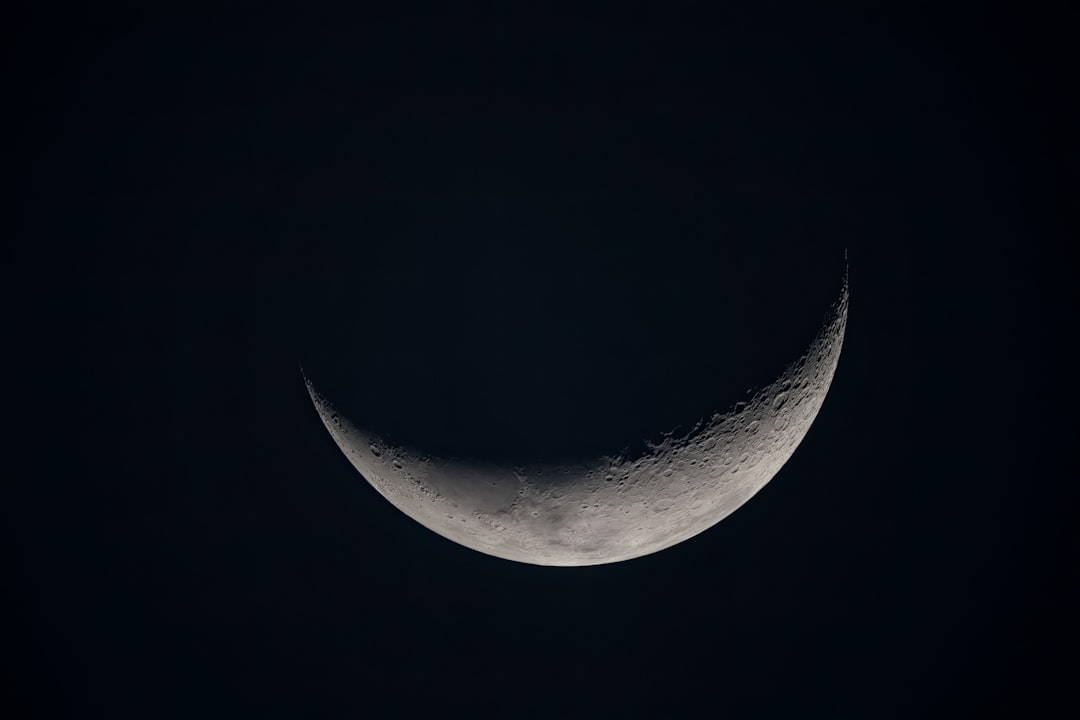
More than five decades have elapsed since the final Apollo mission departed from the lunar surface, yet the fundamental questions surrounding Earth's natural satellite continue to perplex planetary scientists. The Moon's origin story—one of the most dramatic events in our planet's history—remains shrouded in scientific uncertainty, despite decades of research, sophisticated computer modeling, and the invaluable treasure trove of lunar samples returned by astronauts between 1969 and 1972.
What scientists do know with reasonable confidence is that our Moon was born from violence: a catastrophic collision between the primordial Earth and a Mars-sized protoplanet that researchers have named Theia, after the Greek Titaness who gave birth to the Moon goddess Selene. This cataclysmic impact, which occurred approximately 4.51 billion years ago, fundamentally reshaped our planet's destiny and set the stage for the eventual emergence of life. Yet the precise details of this cosmic collision—the size of the impactor, the angle of impact, and the subsequent formation process—remain subjects of intense scientific debate.
According to NASA's Apollo mission archives, the lunar samples brought back to Earth have provided crucial clues, but they've also deepened the mystery by revealing unexpected chemical similarities between Earth and Moon rocks that challenge traditional impact models.
The Giant Impact Hypothesis: A Violent Birth
The prevailing theory for lunar formation, known as the Giant Impact Hypothesis, posits that Theia struck Earth during the final stages of planetary formation in our early solar system. However, recent advances in hydrodynamic modeling have forced scientists to reconsider fundamental assumptions about this ancient collision. The estimated size of Theia has become increasingly uncertain, with current models suggesting it could have ranged from a relatively modest Mercury-sized object to a massive body comprising nearly half of Earth's present mass.
"Earth was hugely affected by this massive impact; it really reset the history of our planet," explains Wim van Westrenen, a distinguished lunar and planetary scientist at Vrije Universiteit Amsterdam, during an extensive discussion about lunar formation theories. His research group has been at the forefront of experimental studies attempting to recreate the extreme conditions that existed during and after the Moon's formation.
The latest computational models, which incorporate more sophisticated physics and higher resolution simulations than their predecessors, increasingly favor a larger impactor scenario. This preference stems from a critical observation: the chemical composition of Apollo moon rocks bears a striking resemblance to olivine-rich volcanic basalts found on Earth—a similarity that smaller impactor models struggle to explain adequately.
From Magma Ocean to Solid Surface: The Moon's Cooling Process
Immediately following the titanic collision, the nascent Moon existed in a state almost unimaginable to us today. Rather than the cold, grey world we observe through telescopes, the early Moon was an incandescent sphere of molten rock—a global magma ocean with surface temperatures reaching several thousand degrees Celsius.
"In a giant impact, the initial Moon was just a glowing ball of magma, thousands of degrees in temperature. It's not even rock yet, so it must cool down before you can form minerals which we tried to date," van Westrenen explains. "The real question is how much time did it take post-impact to form those minerals?"
This question of timing remains one of the most challenging aspects of lunar science. The cooling and crystallization process wasn't instantaneous—it likely took millions of years for the magma ocean to solidify sufficiently to form the mineral crystals that geologists now study in Apollo samples. Understanding this timeline is crucial for accurately dating the Moon's formation and, by extension, comprehending the early evolution of the Earth-Moon system.
The Genesis Rock and the Plagioclase Mystery
Among the most scientifically valuable samples returned from the Moon is specimen 15415, colloquially known as the Genesis Rock. Collected by Apollo 15 astronauts David Scott and James Irwin in 1971 near Hadley Rille, this ancient stone has been dated to approximately 4.46 billion years old, making it one of the oldest lunar samples in human possession. What makes this rock particularly intriguing is its composition: it consists almost entirely of plagioclase feldspar, a lightweight, white mineral that tells a remarkable story about the Moon's early history.
"You need a huge amount of magma to make a lot of the white stuff, and then that needs to all flow to the top, because now it sits on the surface," van Westrenen notes. The process he describes is called magmatic differentiation—as the lunar magma ocean cooled, denser minerals sank toward the interior while lighter plagioclase crystals floated upward, eventually forming the Moon's distinctive bright highlands that we can observe even with the naked eye.
This phenomenon has profound implications for our understanding of lunar structure. The widespread presence of plagioclase on the lunar surface suggests that scientists are essentially looking at the "ceiling" of an ancient, Moon-spanning ocean of molten rock. According to research published in Nature's planetary science section, this global magma ocean may have extended to depths of approximately 1,700 kilometers—nearly halfway to the Moon's center.
Experimental Recreation: Bringing the Moon into the Laboratory
Van Westrenen's laboratory at Vrije Universiteit Amsterdam represents the cutting edge of experimental planetary science. Using specialized equipment capable of generating extreme pressures and temperatures, his research team can recreate the conditions that existed deep within the early Moon, providing invaluable empirical data to complement theoretical models.
The laboratory's high-pressure apparatus employs resistive heating technology, passing electrical current through graphite to heat tiny samples—just a few cubic millimeters—to temperatures exceeding 1,700 degrees Celsius. To put this in perspective, that's approximately five times hotter than a conventional kitchen oven and comparable to the temperatures found in volcanic lava flows. Simultaneously, the equipment can generate pressures reaching 250,000 Earth atmospheres, far exceeding the maximum internal pressure within the Moon itself, estimated at around 50,000 atmospheres.
"Our group was the first ever to provide a full experimental study of what happens when a deep magma ocean on the Moon solidifies and what minerals form at which point," van Westrenen states with evident pride. "We think that the whole moon was actually molten; 1,700 kilometers of magma all the way down to the center."
These experiments allow researchers to observe mineral crystallization sequences, determine which minerals form under specific pressure-temperature conditions, and understand how the Moon's internal structure evolved during its cooling phase. The data generated in these laboratory studies provides crucial constraints for computational models and helps interpret the geological record preserved in lunar samples.
The Chemical Composition Conundrum
Despite significant advances in both observational data and computational capabilities, a fundamental puzzle continues to challenge lunar formation theories: the chemical similarity between Earth and Moon. This similarity poses a serious problem for classical giant impact models, which predict that the Moon should have formed primarily from material ejected from Theia, not from Earth itself.
"All the classical simulations predict that the Moon should have a very different chemical composition from what we see," van Westrenen emphasizes. "The Moon rocks are far more Earth-like than they should be." This observation, based on detailed isotopic analysis of lunar samples conducted at facilities like NASA's Lunar Sample Laboratory, has forced scientists to reconsider fundamental aspects of the impact scenario.
In traditional models, Theia would have struck Earth at a glancing angle—imagine two billiard balls colliding obliquely rather than head-on. In this scenario, approximately half of Theia would have crashed into Earth's side while the other half would have missed, swinging past into orbit where it would gradually coalesce to form the Moon. The problem is that this mechanism should produce a Moon composed predominantly of Theia material, which, having formed elsewhere in the solar system, should have a distinctly different chemical signature from Earth.
Reconciling Models with Reality: New Theoretical Approaches
To resolve this discrepancy, planetary scientists have proposed several modified scenarios, each with its own strengths and challenges:
- The High-Energy, Small-Impactor Model: This scenario suggests Earth was nearly fully formed when struck by a relatively small, Mercury-sized object traveling at extremely high velocity and at a steep angle. The tremendous kinetic energy would have thoroughly mixed and vaporized material from both bodies, potentially explaining the chemical similarities.
- The Co-Formation Model: An alternative hypothesis proposes that Earth was only about half its current size at the time of impact. In this scenario, Theia would have been approximately equal in mass to proto-Earth, and the collision would have completely merged the two bodies. The Moon would then have formed from a small amount of thoroughly mixed debris left in orbit around the newly enlarged Earth.
- The Synestia Hypothesis: Recent theoretical work has introduced the concept of a "synestia"—a donut-shaped cloud of vaporized rock that could have formed after an extremely energetic collision. Within this structure, material from both Earth and Theia would have been completely mixed before condensing to form both the modern Earth and Moon, naturally explaining their chemical similarity.
Research teams using supercomputers at institutions worldwide, including studies supported by ESA's lunar exploration program, continue to refine these models, incorporating increasingly sophisticated physics and higher resolution to better match observational constraints.
The Iron Core Question and Density Distribution
Another piece of the lunar formation puzzle involves understanding how material differentiated following the impact. The prevailing view holds that after the collision, lighter silicate materials—rich in silicon, oxygen, aluminum, and other elements—preferentially formed the Moon, while denser iron-rich material sank to create or augment Earth's substantial metallic core.
"That's still correct, but these same classic 25-year-old models predict that most of the silicate rocks originated from Theia, not from Earth," van Westrenen clarifies. This creates yet another layer of complexity: not only must models explain the Moon's Earth-like chemistry, but they must also account for the efficient separation of dense and light materials in the chaotic aftermath of a planet-scale collision.
The Moon's relatively small iron core—comprising only about 1-2% of its mass compared to Earth's 32%—provides additional constraints. This observation suggests that either Theia had already differentiated into a core and mantle before the impact (with its iron core subsequently merging with Earth's), or that the collision dynamics somehow preferentially delivered silicate material to lunar orbit while retaining most iron-rich material on Earth.
Implications for Planetary Formation Throughout the Universe
Understanding the Moon's formation extends far beyond satisfying scientific curiosity about our celestial neighbor. The processes that created the Earth-Moon system likely represent a common occurrence during planetary system formation throughout the universe. Giant impacts appear to be a normal, perhaps even necessary, stage in the growth of terrestrial planets.
The Moon has profoundly influenced Earth's evolution in numerous ways: stabilizing our planet's axial tilt and thereby moderating climate variations, driving ocean tides that may have played a role in the transition of life from water to land, and possibly even providing a protective shield by gravitationally deflecting some asteroids that might otherwise have struck Earth. Understanding how such a consequential satellite formed helps us appreciate the delicate chain of circumstances that made Earth habitable.
Furthermore, as astronomers discover and characterize exoplanetary systems around other stars, understanding giant impacts and their consequences becomes crucial for assessing the potential habitability of distant worlds. Planets with large moons might enjoy similar stabilizing benefits to those Earth has experienced, potentially making them more promising targets in the search for extraterrestrial life.
Future Directions: New Missions and Technologies
The quest to fully understand lunar formation continues to drive both theoretical and observational research. Several promising avenues may help resolve remaining uncertainties:
- Advanced Isotopic Analysis: Next-generation mass spectrometry techniques applied to existing Apollo samples may reveal subtle chemical variations that current methods cannot detect, potentially providing new constraints on impact models.
- Future Lunar Missions: Planned missions under NASA's Artemis program and international lunar exploration efforts will collect samples from previously unexplored regions, particularly the lunar South Pole, potentially revealing new information about the Moon's formation and early evolution.
- Improved Computational Models: As computing power continues to increase, scientists will be able to run higher-resolution simulations that more accurately capture the complex physics of giant impacts, including detailed treatment of material mixing, vaporization, and subsequent condensation.
- Laboratory Experiments: Continued experimental work, like that conducted in van Westrenen's laboratory, will provide essential empirical data on mineral behavior under extreme conditions, helping to ground theoretical models in physical reality.
Conclusion: An Ongoing Scientific Journey
The story of how Earth acquired its Moon remains one of planetary science's most compelling unsolved mysteries. Despite the wealth of data from Apollo missions, sophisticated computer simulations, and cutting-edge laboratory experiments, scientists continue to grapple with fundamental questions about the size of the impactor, the dynamics of the collision, and the subsequent processes that shaped both Earth and Moon.
"How the Moon formed is still not totally resolved, even though humans walked on its surface decades ago," van Westrenen reflects. "Every human can see the Moon, but not everyone realizes that its formation is directly linked to our own planet's history."
This connection between lunar science and Earth's history underscores why understanding the Moon's origin matters. The giant impact that created our satellite was not merely a dramatic event in astronomical history—it was a defining moment that shaped the planet we call home, influencing everything from the length of our days to the stability of our climate. As research continues and new data emerges, scientists move incrementally closer to reconstructing this ancient cosmic collision, piecing together the violent birth of the serene object that has illuminated Earth's night sky for more than four billion years.
The Moon's formation may have occurred in the distant past, but its study remains vibrantly alive in the present, driving innovation in experimental techniques, computational methods, and space exploration. Each new discovery, whether from a laboratory in Amsterdam or a future mission to the lunar surface, brings us closer to understanding not just how the Moon formed, but how planetary systems evolve and what makes a world suitable for life.