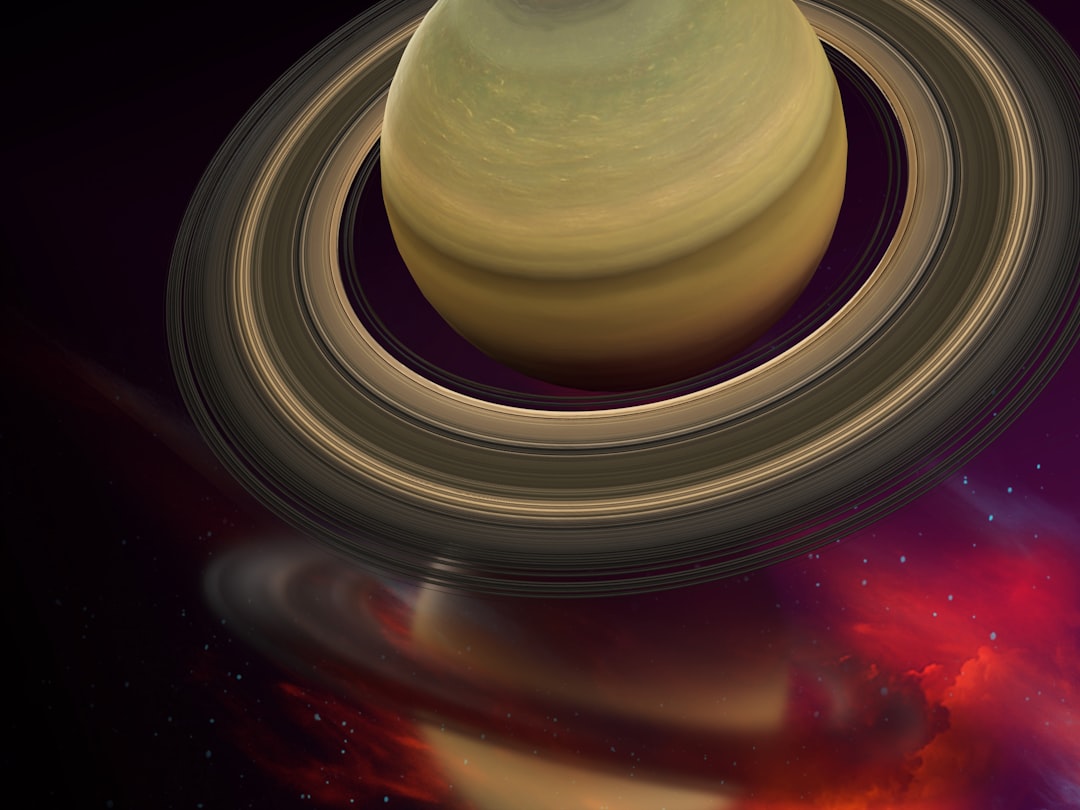
In a stunning display of collaborative astronomical observation, NASA's two flagship space telescopes have captured Saturn in complementary wavelengths, offering scientists an unprecedented dual perspective of the ringed gas giant. The James Webb Space Telescope (JWST) and the venerable Hubble Space Telescope have delivered breathtaking imagery that reveals the planet's atmospheric dynamics in ways that neither instrument could achieve alone. These observations, captured during the latter half of 2024 and released in early 2025, represent a masterclass in multi-wavelength astronomy and demonstrate how different observational techniques can unlock the secrets of planetary atmospheres.
The complementary nature of these observations—one in near-infrared wavelengths and the other in visible light—provides researchers with a comprehensive toolkit for understanding Saturn's complex atmospheric processes. While Hubble's visible-light imagery shows the planet much as human eyes would perceive it, Webb's infrared capabilities penetrate deeper into the atmosphere, revealing structures and phenomena that remain hidden in optical wavelengths. This dual approach is particularly valuable for studying the dynamic weather patterns and atmospheric composition of the Solar System's second-largest planet.
Contrasting Views: Infrared Versus Visible Light Observations
The fundamental difference between these two observations lies in their respective wavelength ranges and what those wavelengths can reveal. Hubble's image, produced as part of the Outer Planet Atmospheres Legacy (OPAL) program—a comprehensive 12-year monitoring initiative—captures Saturn in visible light wavelengths between approximately 400 and 700 nanometers. This range corresponds to what the human eye can detect, presenting Saturn's characteristic banded cloud structures in their natural colors: creamy yellows, subtle oranges, and muted browns created by complex hydrocarbon chemistry in the planet's upper atmosphere.
In stark contrast, JWST's near-infrared observations, utilizing wavelengths around 4.3 microns, peer through atmospheric haze that obscures visible-light observations. At these longer wavelengths, different atmospheric features become prominent. Water ice in Saturn's rings reflects infrared light with remarkable efficiency, causing the rings to appear dramatically brighter in Webb's view compared to Hubble's imagery. Meanwhile, atmospheric methane absorbs strongly at these wavelengths, causing deeper cloud layers to appear darker and making high-altitude features stand out with exceptional clarity.
Atmospheric Phenomena Revealed Through Dual Observation
One of the most striking features visible in JWST's infrared imagery is the "Ribbon Wave"—a persistent jet stream phenomenon located at Saturn's northern mid-latitudes. This atmospheric feature, which has captivated planetary scientists since its discovery, represents a long-lived wave pattern in Saturn's jet streams that appears to be remarkably stable over time. The wave's visibility in infrared wavelengths suggests it involves high-altitude atmospheric structures, possibly related to temperature variations or aerosol distributions at different atmospheric levels.
Just south of the Ribbon Wave, researchers have identified a whitish marking that represents the lingering remnant of the "Great Springtime Storm"—a massive atmospheric disturbance that erupted in December 2010 and persisted through much of 2012. This storm was one of the largest convective events ever observed on Saturn, producing a lightning storm that encircled the entire planet at northern mid-latitudes. The fact that evidence of this storm remains visible more than a decade later speaks to the long-term atmospheric memory of gas giant planets, where major disturbances can leave persistent traces in the form of altered aerosol distributions or temperature anomalies.
"The combination of Hubble and Webb observations allows us to track both the visible cloud features and the underlying atmospheric dynamics that drive them. It's like having both a weather satellite and a temperature probe for an alien world," explains Dr. Amy Simon, planetary atmospheres scientist at NASA's Goddard Space Flight Center.
The southern hemisphere displays its own collection of atmospheric disturbances, appearing as pockmark-like features scattered across the cloud bands. These smaller storms represent ongoing convective activity—the Saturnian equivalent of terrestrial thunderstorms, though operating on vastly different scales and timescales. Unlike Earth's storms, which are powered by water vapor condensation, Saturn's storms derive their energy from the condensation of various compounds including ammonia and water ice at different atmospheric depths.
Polar Mysteries and Atmospheric Composition
Perhaps one of the most intriguing aspects of JWST's infrared observations is the distinctive gray-green appearance of Saturn's polar regions in the color-coded imagery. This unusual coloration, which represents enhanced light emission at 4.3-micron wavelengths, has prompted scientific debate about its underlying cause. NASA researchers have proposed two primary hypotheses to explain this phenomenon.
The first explanation involves high-altitude aerosol layers at polar latitudes that scatter and reflect infrared light differently than aerosols at equatorial regions. Saturn's atmospheric circulation patterns create distinct zones where different types of aerosol particles—likely complex organic compounds called tholins—accumulate at various altitudes. The polar regions may harbor a unique aerosol composition or distribution that preferentially reflects 4.3-micron radiation.
Alternatively, the enhanced polar emissions could be attributed to auroral activity—the Saturnian equivalent of Earth's northern and southern lights. Saturn possesses a powerful magnetic field that channels charged particles from the solar wind toward the polar regions, where they collide with atmospheric molecules and cause them to emit light. These Saturnian auroras have been extensively studied by previous missions, including the Cassini spacecraft, which observed ultraviolet auroral emissions during its 13-year orbital mission.
The Ring System in Multiple Wavelengths
Saturn's iconic ring system presents dramatically different appearances in the two telescope views, offering insights into the composition and structure of these ancient debris fields. In JWST's infrared observations, the rings shine with exceptional brightness due to the high reflectivity of water ice at near-infrared wavelengths. This enhanced visibility allows scientists to study fine details in ring structure and composition that are more subtle in visible light.
The F ring—Saturn's outermost main ring—provides a particularly striking example of this wavelength-dependent visibility. In Hubble's visible-light imagery, this narrow, braided ring appears as a faint feature, barely distinguishing itself from the background. However, in Webb's infrared view, the F ring glows prominently, its water ice particles efficiently reflecting the longer wavelengths. This ring is particularly interesting to planetary scientists because of its dynamic and evolving structure, influenced by the gravitational perturbations of nearby shepherd moons.
A Retinue of Moons Revealed
Both telescope observations captured several of Saturn's extensive family of more than 250 known moons, each appearing as small points of light against the cosmic backdrop. JWST's wider field of view managed to capture six major satellites: Titan, Saturn's largest moon and the only satellite in the Solar System with a substantial atmosphere; Dione, with its distinctive trailing hemisphere bright terrain; Enceladus, the geologically active ice moon that harbors a subsurface ocean; Mimas, the "Death Star moon" with its enormous Herschel crater; Tethys, scarred by the massive Odysseus impact basin; and Janus, one of Saturn's co-orbital moons.
Hubble's more zoomed-in perspective captured a different selection of moons: Janus, Epimetheus (Janus's co-orbital companion), and Mimas, along with Mimas's shadow cast upon Saturn's cloud tops. These Saturnian satellites represent a diverse collection of worlds, ranging from tiny irregular fragments likely captured from the asteroid belt to substantial spherical bodies that have undergone significant geological evolution.
Seasonal Changes and Future Observations
The timing of these observations holds particular significance in the context of Saturn's seasonal cycles. Saturn's axis is tilted approximately 26.7 degrees relative to its orbital plane—similar to Earth's 23.5-degree tilt—which means the planet experiences distinct seasons as it orbits the Sun. However, because Saturn's orbital period spans 29.5 Earth years, each Saturnian season lasts more than seven Earth years.
These 2024 observations captured Saturn as it approached its southern hemisphere equinox, a moment when the Sun appears directly above the planet's equator. As Saturn continues its orbital journey into the 2030s, the southern hemisphere will progress through spring and into summer, receiving increasingly direct sunlight. This changing solar illumination drives dramatic atmospheric changes, including shifts in cloud patterns, storm activity, and the distribution of atmospheric gases.
"As Saturn transitions into southern spring, and later southern summer in the 2030s, Hubble and Webb will have progressively better views of that hemisphere. We'll be able to watch seasonal changes unfold in unprecedented detail across multiple wavelengths," according to NASA's imaging advisory.
The long-term monitoring strategy represented by programs like OPAL, combined with periodic JWST observations, will enable scientists to construct a comprehensive picture of how Saturn's atmosphere responds to seasonal forcing. This understanding has implications beyond Saturn itself, informing models of atmospheric dynamics on exoplanets—worlds orbiting other stars—where seasonal variations may play crucial roles in habitability and climate.
Technical Achievements and Scientific Legacy
These observations represent a triumph of space telescope technology spanning multiple generations. The Hubble Space Telescope, launched in 1990 and repeatedly serviced by Space Shuttle missions, continues to deliver exceptional visible-light observations more than three decades into its mission. Its longevity and consistent performance have made possible long-term monitoring programs that track changes in planetary atmospheres across years and decades—temporal scales essential for understanding slowly evolving atmospheric phenomena.
Meanwhile, JWST—launched in December 2021 and positioned at the second Lagrange point (L2) approximately 1.5 million kilometers from Earth—brings unprecedented infrared sensitivity to planetary science. Its 6.5-meter primary mirror and suite of advanced infrared instruments enable observations that were simply impossible with previous facilities. The telescope's location at L2, where its sunshield can simultaneously block light from the Sun, Earth, and Moon, provides the ultra-cold operating environment necessary for sensitive infrared detection.
The collaboration between these two observatories exemplifies the principle of multi-wavelength astronomy—the recognition that cosmic objects reveal different aspects of their nature when observed at different wavelengths. Just as a medical CT scan combines X-ray images taken from multiple angles to create a three-dimensional picture, combining visible and infrared observations of Saturn creates a more complete understanding of its atmospheric structure and dynamics than either wavelength could provide alone.
Implications for Planetary Science
Beyond their immediate aesthetic appeal, these observations contribute to fundamental questions in planetary atmospheric science. Understanding how gas giant atmospheres work—how they transport energy from the interior to space, how they generate and maintain jet streams, how they produce storms and other weather phenomena—helps scientists interpret observations of exoplanets, where we can often measure only a planet's bulk properties and atmospheric composition.
Saturn serves as a natural laboratory for studying atmospheric dynamics under conditions very different from Earth's. Its rapid rotation (a Saturnian day lasts only about 10.7 hours), its lack of a solid surface, its internal heat source (Saturn radiates more energy than it receives from the Sun), and its different atmospheric composition all combine to create a weather system that operates under fundamentally different rules than Earth's atmosphere. Yet the underlying physics—fluid dynamics, thermodynamics, radiative transfer—remains the same, allowing scientists to test and refine theoretical models.
The ongoing monitoring of Saturn by both Hubble and Webb will continue to yield insights into long-term atmospheric variability, seasonal changes, and the fundamental processes that drive weather on giant planets. As these observations accumulate over the coming years and decades, they will form an increasingly detailed picture of how a gas giant planet's atmosphere evolves and responds to changing conditions—knowledge that will prove invaluable as humanity continues to explore the diverse worlds of our Solar System and beyond.