New Research Resolves the Mystery Behind Van Gogh's The Starry Night
The Starry Night, the iconic 1889 oil painting by legendary Post-Impressionist Vincent van Gogh, has inspired passionate debate among art historians and astronomers for well over a century. Was the painting a spontaneous, emotionally charged creation born of Van Gogh's turbulent imagination during his time at the Saint-Paul-de-Mausole asylum in Saint-Rémy-de-Provence, or did it represent a faithful — if stylistically interpreted — depiction of the actual night sky he observed from his window? According to a landmark new study conducted jointly by South Korean telescope manufacturer SLLAB and the School of Space Research at Kyung Hee University, the answer is firmly the latter.
The research, published in Scientific Reports, a peer-reviewed journal in the prestigious Nature portfolio, applies rigorous observational geometry and statistical shape analysis to one of the most celebrated canvases in Western art. The findings not only reframe our understanding of Van Gogh's working methods but also open an exciting new frontier at the intersection of astronomy and art history.
A Century of Scholarly Debate
For more than 150 years following Van Gogh's death in 1890, scholars focused primarily on the religious, symbolic, and psychological interpretations of The Starry Night. The painting's swirling, turbulent sky — rendered with Van Gogh's signature impasto technique — was widely regarded as an expressionistic outpouring of inner emotion rather than a literal celestial record.
It was not until the mid-1980s that serious academic inquiry turned to the painting's astronomical aspects. Albert Boime, an art historian at UCLA, published a groundbreaking analysis in 1984 suggesting specific celestial correspondences within the painting. Two years later, in 1986, Charles Whitney, a Harvard astronomer, independently examined the canvas and proposed constellation identifications based on a mid-June observational date. However, the two scholars reached fundamentally conflicting conclusions — Boime and Whitney disagreed on which star groupings Van Gogh had depicted — and no subsequent studies attempted to resolve the discrepancy using the tools of modern observational astronomy.
"To an observational astronomer, the cluster of stars in The Starry Night is the Hyades in Taurus. But the moment I read the earlier studies explaining it as Aries, I heard the painting calling to me." — Elijah Jeong-hyun Kim, lead author and CEO of SLLAB
This gap in the literature — a lack of quantitative, geometry-based analysis — is precisely what the new study set out to fill.
The New Study: Precision Astronomy Meets Art History
The study's first author, Elijah Jeong-hyun Kim, CEO of SLLAB and a Ph.D. candidate at Kyung Hee University's School of Space Research, brought a uniquely practical perspective to the problem. Having spent years building telescopes and observing the night sky professionally, Kim was ideally positioned to apply the rigorous standards of observational astronomy to a centuries-old artistic puzzle. The research also builds upon Kim's previous book on the subject, released in 2025, and was preceded by two dedicated field trips to France in 2019 to gather on-site photographic evidence and quantitative data.
Rather than relying solely on artistic interpretation or historical correspondence, the team employed a technique known as observational geometry — analyzing the painting's celestial objects in terms of their actual angular positions, sizes, and spatial relationships as they would have appeared from a specific vantage point on Earth at a specific date and time. The key celestial objects of interest were three that appear in close proximity within the painting: a crescent Moon, the planet Venus, and the Hyades star cluster, the nearest open star cluster to our Solar System and the anchor of the Taurus constellation.
The Hyades: Van Gogh's Hidden Star Cluster
The Hyades cluster, located approximately 153 light-years from Earth, is one of the most well-studied stellar groupings in the night sky. It forms the distinctive V-shaped "face" of the Taurus constellation and has been recognized by skywatchers since antiquity. The cluster contains hundreds of stars, though only a handful are bright enough to be visible to the naked eye under normal conditions. Its proximity to Earth makes it a cornerstone of the cosmic distance ladder — the sequence of astronomical methods used to measure distances across the universe — and it has been extensively studied by missions such as ESA's Hipparcos satellite.
Previous researchers had proposed that the prominent star cluster in The Starry Night represented the constellation Aries, but Kim and his colleagues found this identification inconsistent with the painting's geometry. The characteristic V-shaped pattern of the Hyades, they argued, was far more consistent with what Van Gogh depicted.
Narrowing the Date: July 22nd, 1889
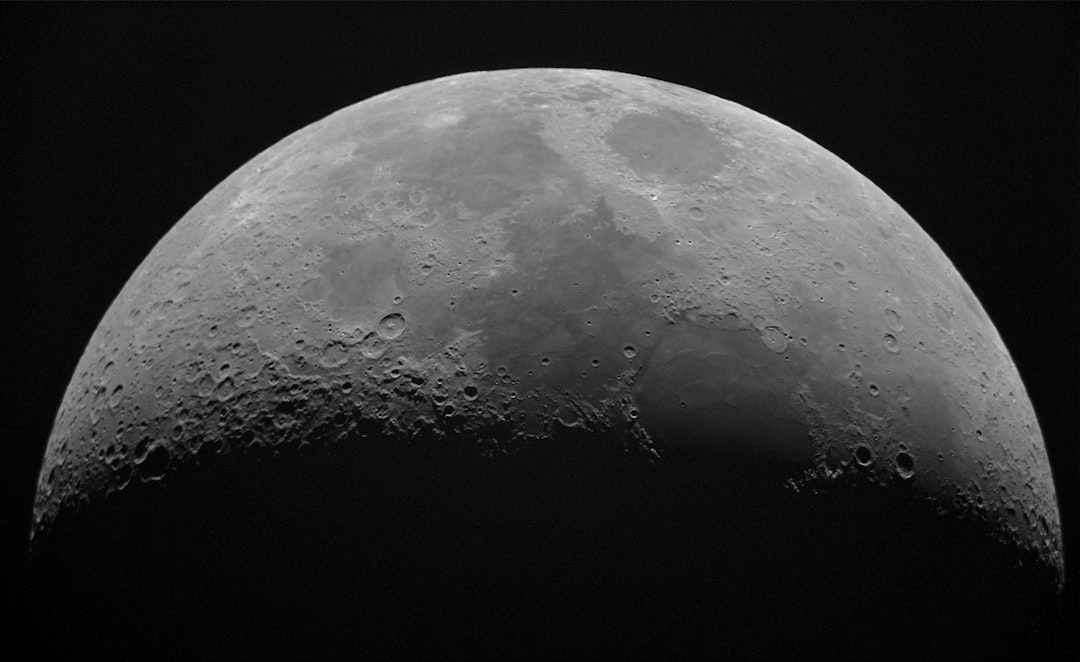
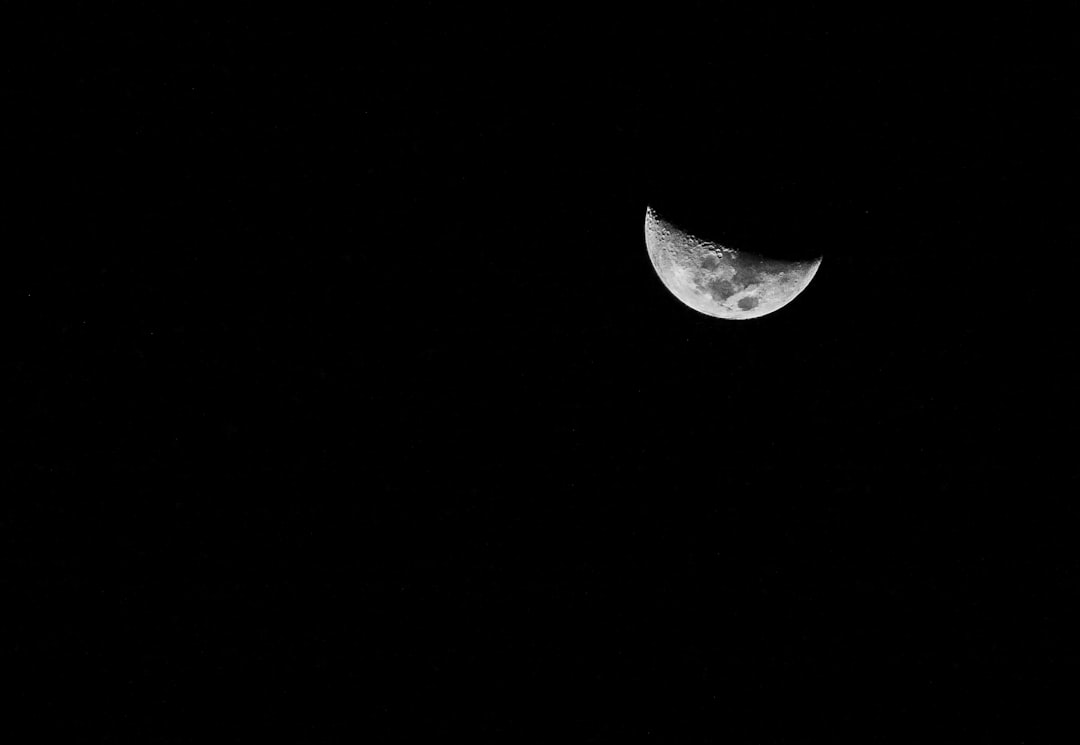
Traditionally, The Starry Night was dated to June 18th, 1889, based on a letter Van Gogh wrote to his brother — widely believed to be Theo van Gogh (though the original article refers to the recipient as "Leo," a likely transcription variant). However, the team immediately identified a critical problem with this date: on June 18th, 1889, the Moon was in its waning gibbous phase, appearing as a large, nearly full disk — completely inconsistent with the delicate, slender crescent prominently featured in the painting.
Using historical astronomical data and planetarium software capable of reconstructing the precise appearance of the night sky from any location on Earth at any point in history — tools similar to those used by NASA's skywatching resources — the team systematically searched for dates on which a crescent Moon, Venus, and the Hyades cluster would have appeared together within Van Gogh's observable field of view from his asylum window.
The answer pointed clearly to July 22nd, 1889. On that date:
- The Moon was in the correct crescent phase, with a slim, elegant arc matching the painting.
- The planet Venus was positioned in proximity to the Moon, consistent with the bright object depicted alongside it.
- The Hyades cluster was rising in the east, embedded in the constellation Taurus, consistent with the painting's orientation and the cluster's depicted position.
A potential obstacle to this date was the historical assumption that Van Gogh suffered one of his well-documented epileptic seizures on or around July 22nd — an episode that would presumably have prevented him from making careful astronomical observations. However, the team undertook a meticulous cross-analysis of Van Gogh's original French and Dutch correspondence, examining details mentioned across multiple letters. Their analysis suggests that the seizure in question more likely began in late July, leaving July 22nd open as a plausible observational date.
Field Investigations: Reconstructing Van Gogh's Vantage Point
A particularly compelling element of the study was the team's methodical on-site fieldwork. Using photographs taken in Arles — a city Van Gogh was intimately associated with and had previously used as a base — the team verified and reconstructed his observable field of view overlooking the Rhône River, cross-referencing this with earlier works he produced there.
The team then traveled to Saint-Rémy-de-Provence, where they identified the precise location from which Van Gogh is believed to have sketched the landscape that serves as the lower portion of The Starry Night. This kind of forensic art-geography has precedents in the study of other historical works and aligns with a broader movement in archaeoastronomy — the study of how ancient and historical peoples understood and depicted celestial phenomena.
With the vantage point established, the researchers employed a statistical shape analysis — a quantitative mathematical technique used to compare geometric configurations — to determine whether the five central stars depicted in the painting corresponded to the Hyades cluster. The match was statistically significant. Notably, the correspondence was even stronger when applied to the pen drawing Van Gogh produced after completing the oil painting, suggesting he was working from a clear visual memory of a specific observed configuration, rather than freely improvising.
Implications for Art History and Astronomy
The implications of this research extend well beyond a single painting. By demonstrating that Van Gogh's sky in The Starry Night was grounded in direct astronomical observation — even if rendered through his distinctive expressive style — the study challenges the purely psychological and emotional narratives that have dominated interpretations of the work for generations. Van Gogh emerges not merely as an artist driven by madness or inspiration, but as a careful and attentive observer of the natural world, even during one of the most turbulent periods of his life.
Furthermore, the team's methods offer a powerful new toolkit for researchers working across disciplines. The same combination of historical astronomical reconstruction, observational geometry, and statistical shape analysis could be applied to a wide range of historical night paintings, astronomical maps, and literary descriptions of the sky. As the researchers note, such work could stimulate rich new collaborations between professional astronomers and art historians — a field that might aptly be called astronomical art forensics.
As a proof of concept, the team has already applied their methodology to another of Van Gogh's celebrated star-filled works: Café Terrace at Night, painted in Arles in 1888. Their analysis found a compelling match between the stars depicted in that painting and the Summer Triangle — the prominent asterism formed by the bright stars Vega, Deneb, and Altair, which dominates northern hemisphere skies during the warmer months. This finding further supports the idea that Van Gogh consistently painted from direct observation of the actual night sky, and that his works may function as an inadvertent astronomical diary of his time in southern France.
For those interested in exploring the night sky that Van Gogh observed, resources such as the HubbleSite and the ESA Space Science portal offer rich visual and educational material on the stellar objects — including the Hyades cluster and the Summer Triangle — that may have captured the artist's eye.
Looking Ahead: Van Gogh's Celestial Diary
The research team has made clear that this study represents the beginning of a larger ongoing project, not a conclusion. Van Gogh produced numerous paintings during his time in Saint-Rémy and Arles that feature the night sky, and the team intends to apply their methodology systematically to this broader body of work.
"I hope this work prompts a renewed, multidisciplinary look at the sequence and working methods of the Saint-Rémy paintings, and at Van Gogh's movements that summer. Our conversation with Van Gogh's other skies is still ongoing. We plan to tell those stories one by one." — Elijah Jeong-hyun Kim
This ambition underscores the broader significance of the project. If Van Gogh's night skies can be reliably dated and localized through astronomical analysis, they may offer new biographical data — a kind of celestial timeline of the artist's movements, mental states, and working habits during the final years of his life. The result could be a profound synthesis of science and art that enriches our understanding of both.
In a deeper sense, the research reminds us that the boundary between scientific observation and artistic expression is far more porous than we often assume. Van Gogh looked at the same stars that astronomers study today — the same Hyades cluster anchoring Taurus, the same Venus blazing at dawn — and rendered them in swirling paint with a fidelity that persisted through 135 years of scholarly uncertainty, waiting patiently for the right combination of methods and minds to recognize what he had seen.
Key Takeaways
- The Starry Night was most likely painted based on observations made on July 22nd, 1889, not the previously assumed June 18th date.
- The prominent star cluster in the painting has been identified as the Hyades cluster in the constellation Taurus, not Aries as previously proposed.
- A crescent Moon and the planet Venus were in the correct positions relative to the Hyades on the July 22nd date, matching the painting's composition.
- On-site fieldwork in Arles and Saint-Rémy confirmed Van Gogh's precise vantage point and field of view.
- The same methodology was successfully applied to Café Terrace at Night (1888), finding a match with the Summer Triangle asterism.
- The study opens new possibilities for multidisciplinary collaboration between astronomers and art historians.
The full study is available in Scientific Reports. Additional coverage can be found via EurekAlert!, the leading science news aggregator.