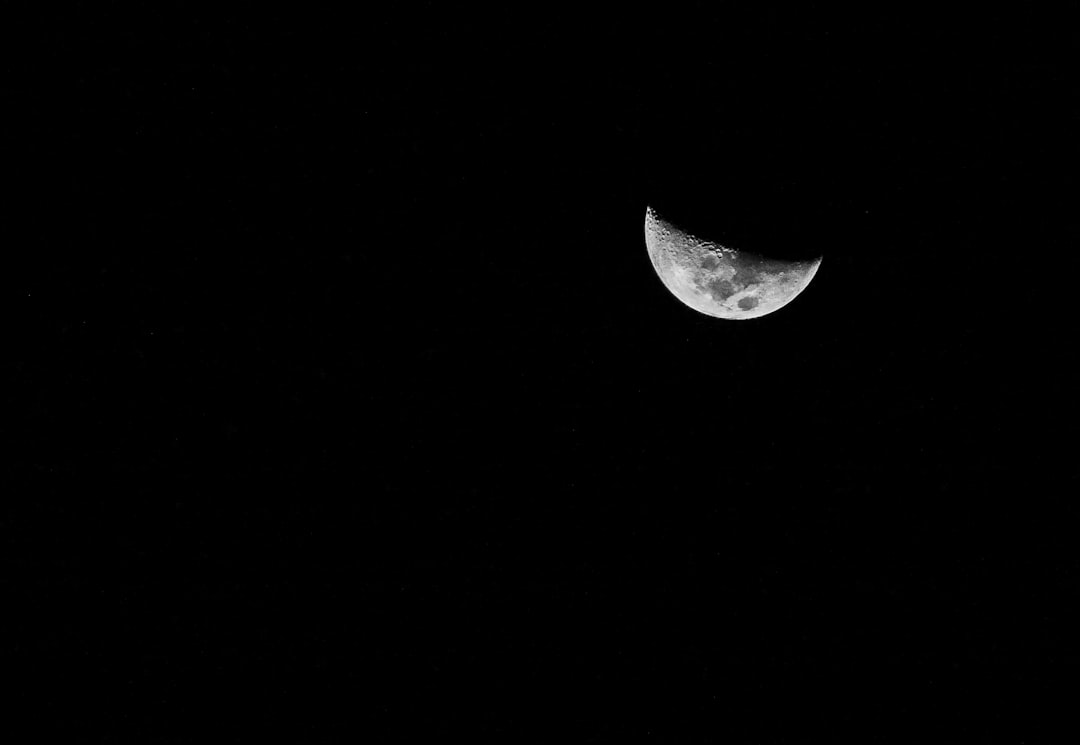
Skygazers across the Western Hemisphere are in for a spectacular celestial treat this weekend as the waxing gibbous Moon passes directly in front of Regulus, the brightest star in the constellation Leo. This lunar occultation—a phenomenon where the Moon blocks our view of a background celestial object—will be visible across much of North and South America on the evening of Saturday, April 25th, making it one of the most accessible and impressive stellar occultations of 2026. For observers equipped with nothing more than clear skies and perhaps a pair of binoculars, this event offers a rare opportunity to witness the dynamic ballet of our cosmic neighborhood in real-time.
The beauty of lunar occultations lies in their accessibility. Unlike many astronomical phenomena that require sophisticated equipment or travel to remote locations, this event can be observed with the naked eye from your own backyard. As the 70% illuminated Moon glides across the sky, it will temporarily extinguish the light from Regulus, a first-magnitude star located approximately 77 light-years from Earth. The timing and visibility of this occultation vary significantly depending on your location, with observers in the eastern United States, Caribbean, and northeastern South America enjoying the most favorable viewing conditions.
Understanding the Celestial Mechanics Behind Lunar Occultations
To fully appreciate Saturday night's event, it's essential to understand the orbital dynamics that make lunar occultations possible. The Moon follows an elliptical path around Earth, completing one orbit approximately every 27.3 days. As it travels along this path, which lies close to the ecliptic plane—the apparent path of the Sun across our sky—the Moon occasionally passes in front of background stars and planets. These occultations occur because, despite the Moon's relatively small size compared to celestial distances, it appears large enough in our sky (about half a degree in angular diameter) to block the light from distant objects.
Regulus holds a special place in the pantheon of occultation targets. As the 21st brightest star in our night sky and the lucida (brightest star) of Leo, Regulus lies almost directly on the ecliptic plane, making it a frequent target for lunar occultations. According to the International Occultation Timing Association (IOTA), the Moon visits Regulus on a roughly nine-year cycle, with the current series of occultations running through December 28th, 2026. This predictable pattern has made Regulus occultations valuable astronomical events throughout history, serving as precise chronological markers for historians and astronomers alike.
Optimal Viewing Strategies and Regional Visibility
The success of your observation depends heavily on your geographic location within the Americas. For observers in the eastern United States, particularly those along the Atlantic coast from Florida to Maine, conditions will be nearly ideal. In these regions, Regulus will disappear behind the Moon's dark leading edge shortly after sunset, creating a dramatic moment against the deepening twilight sky. The star will then reemerge from behind the bright limb of the Moon, providing a second spectacular moment to observe.
The Caribbean islands and northeastern South America enjoy even better viewing conditions, as the entire event will unfold under completely dark skies. Observers in these tropical locations will witness both the ingress (disappearance) and egress (reappearance) of Regulus with the Moon high in the sky and free from the complications of twilight interference. The event officially occurs around 1:19 Universal Time on April 26th, which translates to evening hours across the Americas on April 25th.
"Lunar occultations represent one of the most accessible yet scientifically valuable phenomena in amateur astronomy. The instantaneous disappearance of a star behind the Moon's limb serves as a reminder of the constant motion of celestial bodies and provides precise data about the Moon's position and profile," notes Dr. David Dunham, president emeritus of IOTA.
For observers situated between the East Coast and the Mississippi River, the viewing experience becomes more challenging but still worthwhile. In this zone, Regulus will slip behind the Moon before sunset, making the disappearance difficult or impossible to observe. However, the star's reappearance during twilight should still be visible, particularly with optical aid. West of the Mississippi River, the entire occultation occurs during daylight hours, presenting a unique challenge for experienced observers with telescopes.
The Graze Line: Where Astronomy Gets Dramatic
Perhaps the most exciting viewing location for any lunar occultation is along the graze line—the narrow geographic band where the Moon's limb just barely covers the star. For Saturday's event, this line crosses diagonally through upstate New York, from Lake Ontario to Long Island. Observers positioned along this line will witness Regulus winking on and off in rapid succession as lunar mountains and valleys alternately block and reveal the starlight. This phenomenon, known as a grazing occultation, can occur multiple times within seconds, creating a mesmerizing light show.
Grazing occultations serve an important scientific purpose beyond their visual appeal. By carefully timing each disappearance and reappearance, astronomers can map the lunar limb profile with remarkable precision. These observations, when combined with data from NASA's Lunar Reconnaissance Orbiter, help refine our understanding of the Moon's topography and improve predictions for future occultation events.
The Science of Stellar Companions and Occultation Research
Beyond their aesthetic appeal, lunar occultations provide valuable scientific data, particularly for detecting close stellar companions. When a star system consists of multiple stars orbiting close together, an occultation can reveal their presence through a step-wise dimming pattern as each component disappears behind the Moon. In the case of Regulus, astronomers suspect the presence of a white dwarf companion orbiting the main-sequence primary star at a distance of just 0.35 astronomical units (AU)—closer than Mercury's orbit around our Sun.
This suspected companion completes an orbit every 40 days and lies a mere 0.015 arcseconds from Regulus—far too close to resolve visually even with the most powerful telescopes. During Saturday's occultation, careful observers with precise timing equipment might detect a subtle double-step in the star's disappearance, potentially confirming the companion's existence. Such observations contribute to our understanding of stellar evolution and the frequency of multiple star systems in our galaxy.
Attempting the Daytime Challenge
For observers west of the Mississippi River or those simply seeking an additional challenge, attempting to spot Regulus in daylight presents a fascinating test of observational skill. First-magnitude stars like Regulus sit right at the threshold of daytime visibility, requiring exceptional atmospheric conditions and optical aid to detect. The presence of the nearby Moon actually helps this endeavor, providing a reference point to aim your binoculars or telescope.
Success in daytime star observation requires several factors: a deep blue sky free from haze or clouds, quality optics with excellent contrast, and most importantly, precise knowledge of where to look. Modern planetarium software can provide exact coordinates, allowing you to position your telescope accurately. According to research published by amateur astronomers and documented by EarthSky, the key is to start observing before sunrise or continue after sunset, gradually tracking the star into brighter conditions as your eyes adapt to using optical aid.
Historical Context and Cultural Significance
Observations of lunar occultations stretch back to antiquity, with ancient astronomers using these events to refine their understanding of celestial motions. The predictable nature of occultations made them valuable for testing astronomical theories and improving lunar orbit calculations. Historical records of occultations have even helped modern historians date ancient events with precision, as the exact timing of these phenomena can be calculated backward through time.
The visual pairing of a crescent Moon with a bright star has inspired cultural symbolism across civilizations, appearing on the flags of numerous nations and in religious iconography. These star and crescent configurations, often created by the Moon approaching bright stars like Regulus, Aldebaran, or Spica, have captured human imagination for millennia.
Interestingly, the list of bright stars that the Moon can occult changes over time due to celestial precession and the proper motion of stars. Pollux, one of the twin stars in Gemini, was once occulted by the Moon until 117 AD, after which the star's motion carried it out of the Moon's path. Conversely, stars may enter the occultation zone as the centuries pass, ensuring that future generations will witness different stellar occultations than we observe today.
Observing Tips and Recording Your Observations
Successfully observing and recording Saturday's occultation requires minimal equipment but benefits from some preparation. Here are the essential elements for a successful observation:
- Location scouting: Find a viewing site with a clear western horizon, free from light pollution and obstructions. The Moon will be relatively high in the sky, but eliminating foreground lights improves contrast significantly.
- Timing precision: Consult IOTA's predictions for your specific location to know exactly when to watch. The disappearance happens instantaneously, so knowing the predicted time within a few minutes is crucial.
- Optical equipment: While visible to the naked eye in dark locations, binoculars or a small telescope greatly enhance the view and make timing observations more precise. A stable mount or tripod eliminates shake and allows for comfortable extended viewing.
- Recording methods: Consider video recording the event using a smartphone or camera attached to your telescope. Even simple recordings contribute to scientific databases and create lasting memories of the observation.
- Weather monitoring: Check local forecasts and satellite imagery throughout the day. Cloud cover can develop quickly, so having backup locations identified increases your chances of success.
Looking Ahead: The Moon's Continuing Journey
Saturday's occultation represents just one moment in the Moon's continuous orbital dance. Following this event, our natural satellite will continue waxing toward Full Moon on May 1st, creating a relatively rare "Blue Moon" scenario—the second Full Moon within a single calendar month. This particular definition of Blue Moon, based on calendar months rather than seasonal considerations, occurs roughly every 2.7 years when the timing of lunar phases aligns appropriately.
The current series of Regulus occultations will continue through late 2026, offering multiple opportunities for observers in different parts of the world to witness this celestial alignment. Each occultation occurs at a slightly different angle and time, as the Moon's orbit processes gradually. Future missions and observations, including data from ESA's space science programs, will continue to refine our predictions and understanding of these elegant celestial mechanics.
As we observe Saturday's occultation, we join an unbroken chain of astronomers stretching back thousands of years, all watching the same cosmic dance play out across the sky. Whether you're a seasoned observer or witnessing your first occultation, this event offers a direct, visceral connection to the motions that govern our solar system—a reminder that the universe is always in motion, always revealing new wonders to those who take the time to look up.