Martian Polar Crater Ice Shifts with Seasonal Frost: New Insights into the Red Planet's Climate
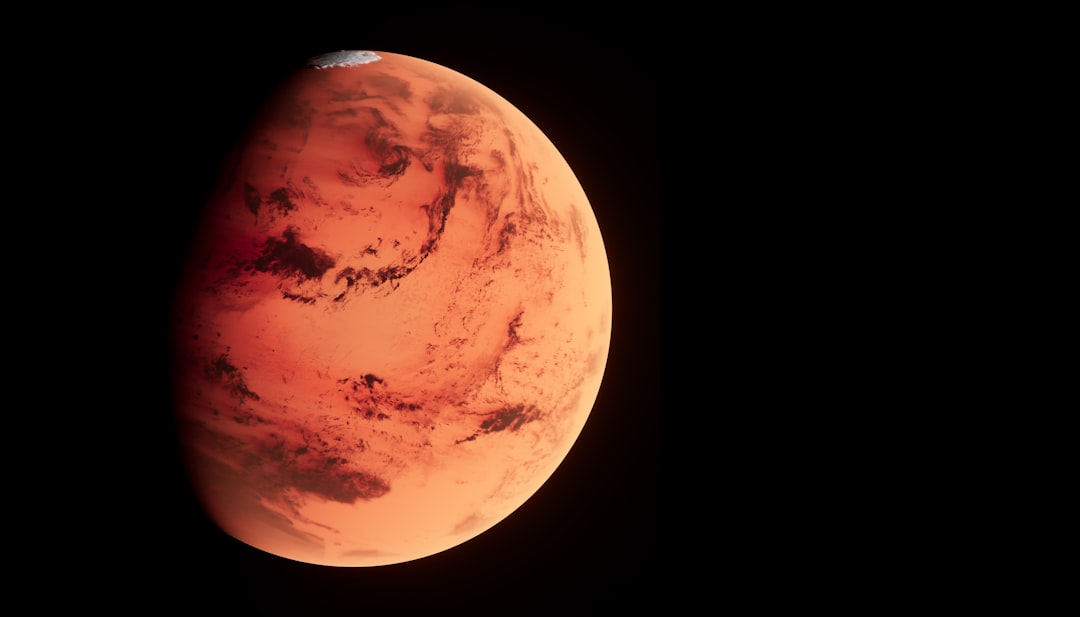
Of all the worlds in our solar system, Mars stands out as Earth's most compelling twin — a planet that shares an uncanny number of geological and meteorological characteristics with our own. From towering shield volcanoes and sprawling canyon systems to raging dust storms and delicate dust devils, Mars mirrors Earth in ways that have captivated scientists and the public alike for centuries. Among the most striking of these shared features are polar ice caps — vast, gleaming reservoirs of frozen material that crown each planet's poles and play a fundamental role in shaping planetary climate systems.
Yet the similarities between Earth's and Mars' polar ice caps only go so far. On Earth, both the Arctic and Antarctic ice caps are composed primarily of water ice. On Mars, however, the two polar caps tell a more complex and scientifically intriguing story. The north polar ice cap of Mars — formally known as the Planum Boreum — is composed predominantly of water ice, while the south polar ice cap, or Planum Australe, is dominated by frozen carbon dioxide, commonly known as dry ice, with only a thin residual layer of water ice beneath. These compositional differences are largely driven by differences in altitude, atmospheric pressure, and seasonal temperature cycles between the two hemispheres.
Because of its water ice composition, Mars' northern polar region has long been a priority target for scientific study. Understanding how water behaves at the Martian poles — how it freezes, sublimates, migrates, and accumulates over time — is crucial not only for understanding Mars' current climate but also for reconstructing its ancient climate history, including the possibility that Mars once harbored liquid water on its surface. Now, a new international study has added an important and nuanced chapter to this ongoing scientific narrative.
A Longstanding Knowledge Gap
Despite decades of orbital observations, a significant gap has persisted in our understanding of how seasonal ice deposits behave at the microscale within Mars' northern polar region — particularly inside craters. Craters are uniquely valuable scientific targets in this context because their enclosed geometry creates distinct microclimatic environments that can trap frost, shadow interior surfaces, and channel water vapor in ways that differ markedly from the surrounding open terrain.
An international team of researchers set out to address this knowledge gap in a study published in the Journal of Geophysical Research: Planets, one of the most respected peer-reviewed journals in planetary science. Their central aim was to systematically document how polar ice deposits on crater floors change with the Martian seasons, and to determine what those changes can reveal about localized climate dynamics on the Red Planet.
"Not all craters exhibit changes in frost coverage from one Mars year to the next. For a given Mars year, only a subset of craters show altered frost conditions relative to previous years, while others maintain similar or nearly identical frost extents. This spatial heterogeneity suggests that seasonal frost cycles and interannual mass balance are localized processes rather than cap-wide phenomena."
— Study published in the Journal of Geophysical Research: Planets
The Study: Nearly Two Decades of High-Resolution Observation
To conduct their analysis, the researchers examined high-resolution images of 36 craters located within Mars' northern polar ice cap region. All imagery was sourced from the NASA Mars Reconnaissance Orbiter (MRO), which has been in orbit around Mars since 2006 and continues to be one of the most scientifically productive spacecraft ever sent to another planet.
Specifically, the team used data from MRO's High Resolution Imaging Science Experiment (HiRISE) camera — an instrument capable of resolving surface features as small as 25 centimeters from an orbital altitude of roughly 300 kilometers. HiRISE's extraordinary resolving power makes it the ideal tool for tracking subtle changes in surface brightness that can indicate the presence, expansion, or retreat of frost and ice deposits.
The dataset spanned the period from 2006 to 2025, encompassing what planetary scientists refer to as Mars Years (MY) 28 through 38. This notation accounts for the fact that one Martian year is equivalent to approximately 668 Earth days, meaning the study effectively captured nearly a decade's worth of Martian seasonal cycles — a remarkably comprehensive observational baseline. Key aspects of the study's methodology included:
- Systematic imaging of 36 northern polar craters across multiple Martian years
- Analysis of surface brightness changes to identify frost and ice deposit dynamics
- Comparison of crater-floor ice behavior across different seasons and years
- Assessment of how crater geometry and local topography influence ice accumulation
- Evaluation of interannual variability to distinguish seasonal patterns from longer-term trends
Key Findings: Ice That Breathes with the Seasons
The results were both illuminating and, in some ways, surprising. Of the 36 craters analyzed, 32 — roughly 89 percent — exhibited clear changes in surface brightness consistent with the seasonal expansion and contraction of ice deposits. During Martian winter, frost accumulates on crater floors and walls as temperatures plummet and water vapor freezes out of the thin Martian atmosphere. As spring and summer arrive and temperatures rise, that frost sublimates back into vapor, causing the bright deposits to shrink or disappear entirely.
The remaining four craters showed no detectable brightness changes, suggesting that their ice deposits remain relatively stable across seasons — possibly indicating deeper, more persistent ice that is less sensitive to short-term temperature fluctuations, or that local shadowing effects buffer these craters from seasonal temperature swings.
Crucially, the researchers found that the seasonal frost deposits visible on the outer rims and flanks of each crater appear to play a significant role in driving the brightness changes observed on the crater floors. This suggests a complex interplay between exterior frost accumulation and interior ice dynamics — a relationship that will require dedicated climate modeling to fully understand.
Localized Climate, Not Global: A Critical Distinction
Perhaps the most scientifically significant finding of the study is its demonstration that the ice changes observed in these polar craters are driven primarily by local microclimatic conditions rather than by cap-wide or global atmospheric phenomena. This is a nuanced but important distinction with far-reaching implications for how scientists model and interpret Martian climate data.
The study's authors note that factors such as crater geometry, local topography, and microclimatic energy balance all play roles in determining how a given crater responds to broader seasonal forcing. A deep, steep-walled crater, for instance, may receive far less solar radiation on its floor than a shallow, wide crater — leading to different frost accumulation and sublimation patterns even when both craters sit in the same general region of the polar cap.
This finding has particular relevance given the broader context of Martian climate variability. Unlike Earth, where the planet's axial tilt — currently about 23.5 degrees — varies only modestly over time, Mars experiences dramatic swings in its obliquity, ranging from near zero to as high as 60 degrees over millions of years. These oscillations, driven by gravitational interactions with Jupiter and other planets, have profound effects on Martian climate, periodically redistributing water ice from the poles to lower latitudes and back again. Understanding how local microclimates respond to these large-scale changes is an essential piece of the puzzle for reconstructing Mars' paleoclimate history.
Why This Matters: Mars' Climate History and the Search for Habitability
The implications of this research extend well beyond academic curiosity. Scientists have long hypothesized that Mars underwent dramatic climate transitions in its past — transitioning from a warmer, wetter world capable of supporting liquid water on its surface to the cold, arid desert planet we observe today. The polar ice caps serve as one of the planet's most important climate archives, with layered deposits of ice and dust — known as the Polar Layered Deposits (PLDs) — recording millions of years of climate history in their stratigraphy, much like ice cores drilled from Earth's Greenland or Antarctic ice sheets.
By documenting how ice deposits in polar craters respond to present-day seasonal cycles, this study provides a crucial observational baseline that can be used to calibrate climate models of both modern and ancient Mars. Better models, in turn, can help scientists answer some of the most compelling questions in planetary science: How much water does Mars currently hold in its polar ice caps? How has that water inventory changed over millions of years? And could Mars' poles have ever provided a stable environment for microbial life?
For those interested in exploring the broader context of Mars polar science, the NASA Mars Exploration Program and the ESA Mars Express mission have both contributed extensively to our understanding of Martian polar regions. The HiRISE imaging archive at the University of Arizona also provides publicly accessible data for researchers and citizen scientists alike.
The Road Ahead: Modeling, Missions, and More
The authors of the study are explicit that their observational findings are intended to serve as a springboard for the next generation of climate modeling work. Numerical models capable of simulating the energy balance, vapor transport, and frost dynamics within individual polar craters will be essential for translating these observational snapshots into a deeper mechanistic understanding of Martian microclimates.
Future missions could also play a transformative role. Proposed lander and rover missions to Mars' polar regions — along with continued orbital observations from MRO and ESA's ExoMars Trace Gas Orbiter — promise to deliver ever-more-detailed data about the composition, structure, and dynamics of polar ice deposits. Ground-penetrating radar instruments, such as MRO's SHARAD (Shallow Radar) sounder, will continue to probe the subsurface layering of the polar caps, adding a third dimension to what has historically been a largely surface-level view of polar ice behavior.
As this study elegantly demonstrates, even within a single region of Mars — the northern polar ice cap — the story of ice is one of remarkable complexity and spatial heterogeneity. Each crater tells its own story, shaped by the subtle interplay of sunlight, shadow, gravity, and atmosphere. Piecing together those individual stories into a coherent planetary narrative is the ongoing and endlessly fascinating work of Mars climate science.
Conclusion
The discovery that seasonal frost cycles and interannual ice dynamics in Mars' northern polar craters are governed by local microclimatic conditions — rather than solely by cap-wide or global atmospheric changes — represents an important conceptual advance in our understanding of Martian polar science. By leveraging nearly two decades of HiRISE imagery, the research team has produced a rich observational dataset that will inform climate modeling efforts and help guide the scientific priorities of future Mars missions.
Mars continues to reveal itself as a world of extraordinary complexity — a planet that, despite its apparent desolation, harbors dynamic, evolving systems that continue to surprise and challenge our scientific models. In every frost-covered crater floor and every sublimating ice deposit, there lies a clue to the Red Planet's past — and perhaps, one day, a guide to its future exploration by human visitors who will look up at those gleaming polar caps with their own eyes.