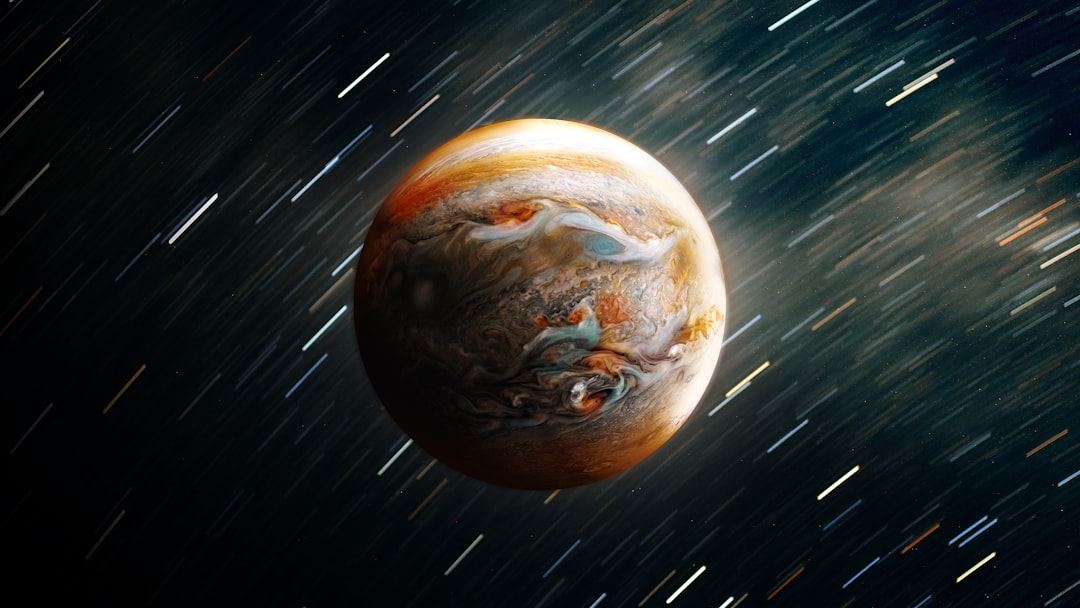
Penultimate Lunar Occultations Inbound for Jupiter, Venus and More in September 2026
The Moon has a remarkably full dance card along the ecliptic this month, treating skywatchers around the globe to a spectacular series of celestial conjunctions and occultations. Coming off a dramatic eclipse season in August, our natural satellite visits no fewer than two planets, two bright stars, and one iconic open cluster in September, as it heads toward the Full Harvest Moon on September 26th. No matter where on Earth you happen to be observing from this month, chances are there is an occultation of a bright celestial object by the Moon coming to a sky near you.
What Is a Lunar Occultation?
Despite its somewhat esoteric-sounding name, an occultation is simply an astronomical term for one celestial body passing in front of another, temporarily blocking it from view. Historically, astronomers have used occultations as powerful scientific tools — precise measurements of the moment a star disappears behind the Moon's limb can reveal fine details about the Moon's topography and, in some cases, allow scientists to determine the angular diameter of distant stars with extraordinary precision.
Usually, the occulting foreground body is markedly larger in apparent diameter than the background object, which is why we do not generally refer to a solar eclipse as an occultation of the Sun by the Moon, though technically the mechanics are identical. In a slow-moving Universe, occultations provide us with a sudden, split-second event of cosmic theater — the Moon, in particular, carves out a roughly half-degree-wide path across the sky as it bobs above and below the ecliptic plane on its monthly trek around the celestial sphere.
"Occultations offer astronomers a rare chance to study celestial bodies with a precision that no telescope alone can match — the Moon becomes a natural, razor-sharp occulting edge moving against the distant sky." — International Occultation Timing Association (IOTA)
Even observing sites located outside of a particular occultation's ground track have a meaningful opportunity: the Moon paired visually with a nearby planet or star creates an exceptionally photogenic conjunction, ideal for astrophotography. You may even have a shot at daytime planet-spotting during several of the upcoming events, using the nearby Moon as a convenient guide in the blue sky. Remember that the dark nighttime limb of the Moon leads the way when it is waxing, and trails behind it when it is waning — an important detail for timing your observations.
The Moon's Orbital Geometry and the Ecliptic
The Moon's orbit is inclined roughly 5.1 degrees relative to the ecliptic — the apparent annual path of the Sun across the sky. Because the planets and most bright stars near the ecliptic are confined to a relatively narrow band, the Moon regularly sweeps past them during its 27.3-day sidereal orbital period. This geometry, combined with the Moon's apparent angular diameter of about 30 arcminutes (half a degree), creates a natural "occulting disk" that can temporarily hide stars, planets, and even entire star clusters from view.
The 18.6-year Metonic-adjacent lunar nodal cycle governs which objects the Moon can occult during a given era. As the Moon's orbital nodes precess, the range of ecliptic latitudes the Moon can reach shifts over time, meaning that occultations of specific stars such as Regulus, Antares, Aldebaran, and Spica — the four bright first-magnitude stars the Moon can occult in the current epoch — occur in multi-year cycles before ceasing for years or decades at a time.
September's Celestial Lineup: Event by Event
September 8th: The Moon Occults Jupiter
First up, the waning crescent Moon (just 7% illuminated) occults Jupiter on the morning of September 8th. Northeastern Asia will see this event transpire in the early dawn sky, while eastern North America will witness the cover-up occur in the daytime, well after sunrise. Alaska and western Canada will observe this event in the late morning sky, while eastern Canada and the contiguous United States will have the more challenging task of spotting the Moon and Jupiter in the early afternoon glare.
At magnitude -1.8, Jupiter is an easy target with binoculars or a small telescope, even against the bright blue daytime sky when positioned near the limb of the Moon. This is also a strategically important "penultimate event" — a final warm-up before the highly anticipated lunar occultation of Jupiter on October 6th, which will be visible across the contiguous United States under far more favorable conditions.
- Jupiter's apparent diameter at this event: approximately 32 arcseconds
- Duration of occultation (ingress to egress): just over one minute
- Jupiter and Moon separation from the Sun: 31 degrees west, making pre-dawn through daytime tracking feasible
- Best visibility region: Northeastern Asia under dark skies; eastern North America under daytime skies
Jupiter is the largest planet in the Solar System, with an equatorial diameter of approximately 143,000 kilometers — more than 11 times Earth's diameter. Watching the Moon's limb smoothly, silently glide across the face of this gas giant is a viscerally humbling reminder of the vast scales at play in our cosmic neighborhood. Learn more about Jupiter from NASA's planetary science page.
September 9th: The Moon Occults Regulus
Headed toward New Moon on the 11th, the remarkably slim waning crescent Moon (just 2% illuminated) occults the brilliant +1st magnitude star Regulus (Alpha Leonis) on September 9th. This event is geographically remote, favoring the South Pacific, with New Caledonia enjoying the finest view.
Regulus is one of the most scientifically interesting stars near the ecliptic. Located approximately 79 light-years from Earth, it is a hot, blue-white B-type main-sequence star spinning so rapidly — completing one rotation every 15.9 hours — that it is noticeably oblate, bulging significantly at its equator. This rapid rotation makes Regulus occultations of particular scientific interest, as precise timing can help refine our understanding of the star's true angular diameter and shape.
We are currently in a cycle of Regulus lunar occultations worldwide, a series that concludes on December 27th of this year. After that, the Moon's shifted orbital geometry will move Regulus out of reach for many years to come, making each remaining event in this series genuinely precious for scientific observers.
September 14th: The Moon Occults Venus — A Daytime Spectacle
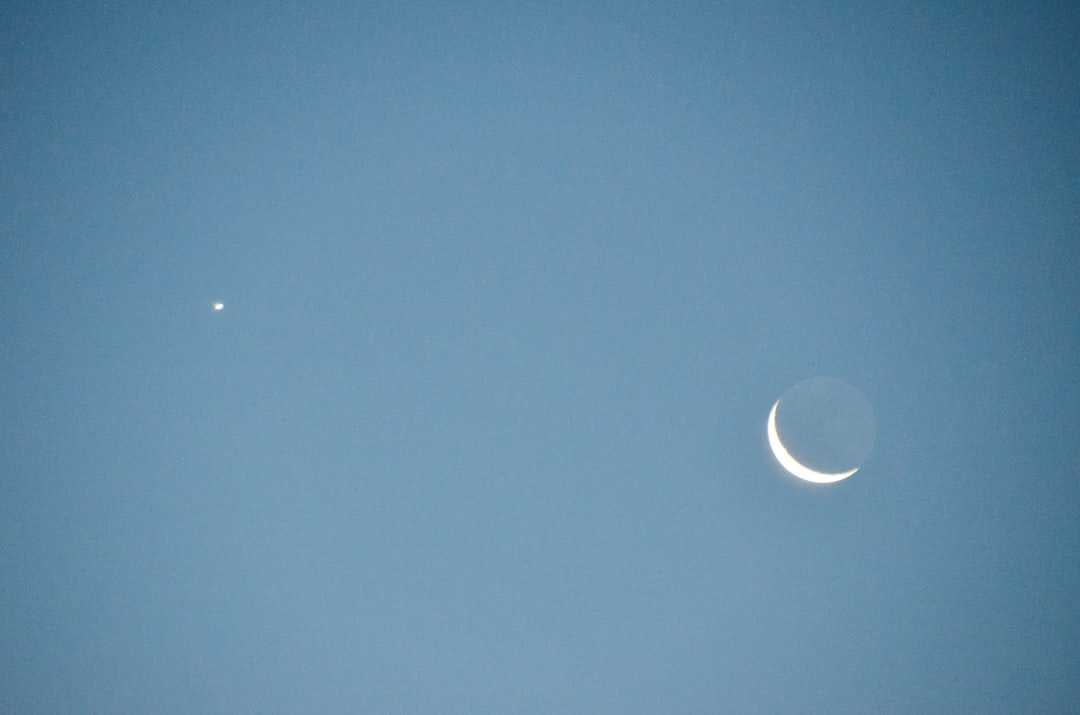
The month's most visually dramatic event arrives mid-month, as the +12% waxing crescent Moon occults the brilliant planet Venus on September 14th, visible at dusk for observers across southeast Asia. Europe, the United Kingdom, northeast Africa, and the Middle East will witness this event under daytime skies — a challenging but deeply rewarding observing opportunity for the prepared skywatcher.
At magnitude -4.7, Venus is bright enough to be spotted with the naked eye in a clear blue daytime sky if you know exactly where to look — and the nearby crescent Moon provides the perfect guidepost. At the time of the event, Venus and the Moon are 41 degrees east of the Sun, placing them well clear of the solar glare for careful observers.
- Venus apparent diameter at event: approximately 37 arcseconds
- Venus illumination: 29% — a crescent phase visible through any telescope
- Duration of occultation: just over one minute
- Key visual highlight: the famous "horns of Venus" peeking above the dark lunar limb just before disappearance
The prospect of seeing the horns of Venus — the elegant, tapering cusps of Venus's crescent phase — briefly silhouetted against the dark edge of the Moon before vanishing is a genuinely rare and breathtaking sight. Because Venus's atmosphere is thick and highly reflective, its crescent extends noticeably beyond 180 degrees when near inferior conjunction, creating that distinctive arcing horn shape that has captivated observers for centuries.
"The daytime occultation of Venus by the Moon is one of the most striking and underappreciated spectacles in amateur astronomy — two worlds, one crescent-shaped, one a thin sliver, meeting in a blue afternoon sky."
The Moon occults Venus one final time in 2026 on November 7th, though that event occurs over a remote, largely inaccessible stretch of the southeastern Pacific Ocean. The September 14th event is thus the last broadly observable Venus occultation of the year. Explore NASA's overview of Venus and its fascinating atmosphere.
September 17th: The Moon Occults Antares
Next, the +38% waxing crescent Moon occults the brilliant red supergiant star Antares (Alpha Scorpii) on September 17th, with the ground track falling across the southern Indian Ocean region. While this event is geographically challenging for most land-based observers, it is scientifically significant.
Antares is one of the largest and most luminous stars visible to the naked eye — a red supergiant with a diameter estimated at roughly 700 times that of our Sun, located approximately 550 light-years away. If placed at the center of our Solar System, Antares would extend beyond the orbit of Mars. Occultation timing of Antares has historically provided some of the most precise measurements of its angular diameter, complementing modern interferometric techniques.
Along with Regulus, Antares is one of four bright first-magnitude stars currently occulted by the Moon in the present epoch — the other two being Aldebaran and Spica. As the Moon's orbital nodes shift over its 18.6-year nodal precession cycle, these occultation series begin and end, making it important to observe them while the opportunity exists. ESA's Space Science portal offers further reading on stellar measurement techniques.
September 30th: The Moon Occults the Pleiades
Closing out what is an extraordinarily busy month, the waning gibbous Moon (approximately 80% illuminated) occults the legendary Pleiades open star cluster (Messier 45) on September 30th. This will be a fine and photogenic event for observers across northern Europe, who will be treated to the sight of the Moon gradually swallowing and then releasing the Seven Sisters — one of the most celebrated star clusters in human history and mythology.
The Pleiades lie approximately 444 light-years from Earth and contain hundreds of stars, though only the brightest six or seven are visible to the naked eye under typical conditions. The cluster's hot, luminous B-type stars are surrounded by faint reflection nebulosity, giving long-exposure photographs of the region their characteristic misty, ethereal quality.
The Moon typically visits the Seven Sisters cluster during "hilly years" in its 18.6-year nodal cycle, when its path is most wide-ranging from north to south, sweeping across the higher ecliptic latitudes where the Pleiades reside. These periods of Pleiades occultation series are particularly cherished by both amateur observers and professional astronomers, as the cluster's multiple bright members mean that several distinct disappearance and reappearance events can be timed in a single night — each providing an independent scientific measurement. View the Hubble Space Telescope's stunning imagery of the Pleiades and surrounding nebulosity.
How to Observe and Record Lunar Occultations
Observing and recording a lunar occultation is a rewarding activity accessible to skywatchers at virtually every experience level, from casual enthusiasts to dedicated citizen scientists contributing real data to the scientific community.
Equipment and Preparation
- Binoculars or a small telescope (60mm–150mm aperture) are sufficient for planetary and bright-star occultations
- A video camera or smartphone adapter for your eyepiece allows you to capture the event for later precise timing
- A GPS-referenced time signal or internet-synchronized clock ensures your timings are scientifically useful
- A planetarium program such as Stellarium allows you to preview the event from your exact location and determine local ingress/egress times
- The International Occultation Timing Association (IOTA) publishes precise predicted times for select locations for all major planetary occultations
Observing Tips
A practical and proven approach: acquire the Moon in your field of view approximately 10 minutes prior to the predicted event. Take time to carefully adjust your contrast, focus, and magnification so that both the Moon's limb and the target object are simultaneously visible and sharp. Begin recording video at least one full minute before the predicted ingress to ensure you capture the complete disappearance event, accounting for any timing uncertainties in your setup.
For daytime occultations, begin locating the Moon early — well before the event — as finding and tracking the Moon in a blue sky requires patience and practice. A GoTo telescope mount with daytime coordinates capability is extremely helpful. Alternatively, use a solar finder or coordinate dial to slew to the Moon's known position.
Precise occultation timings submitted to the International Occultation Timing Association (IOTA) contribute directly to scientific databases used to refine the Moon's orbital parameters, map its limb profile in extraordinary detail, and even measure the angular diameters of distant stars — making amateur observations genuinely scientifically valuable.
Looking Ahead: October Promises Even More
September's rich sequence of lunar occultations serves as an ideal warm-up for an equally exciting October lineup, highlighted by the widely visible lunar occultation of Jupiter on October 6th for the contiguous United States —