Pulsar Timing Arrays Could Look for Evidence of Dark Matter Stars
Among the most extraordinary objects in the known universe, pulsars are rapidly rotating neutron stars that emit beams of electromagnetic radiation with a regularity so precise they rival atomic clocks. This stunning precision makes them invaluable tools for probing the fundamental physics of the cosmos. By monitoring subtle shifts in the arrival times of their pulses — caused by the Doppler effect as space-time itself is stretched and compressed — astronomers can detect phenomena that would otherwise be completely invisible to us. In fact, pulsar timing observations provided the first indirect evidence for the existence of gravitational waves decades before the landmark direct detection achieved by LIGO in 2015.
This remarkable sensitivity has inspired the concept of a Pulsar Timing Array (PTA) — a galaxy-scale gravitational wave detector constructed not from steel and mirrors, but from the fabric of space-time itself. By simultaneously monitoring dozens or even hundreds of pulsars spread across our galaxy and looking for correlated timing shifts, astronomers can effectively create a detector sensitive to gravitational waves of extraordinarily long wavelengths — waves that no ground-based instrument could ever hope to measure.
NANOGrav and the Gravitational Wave Background
One of the most ambitious PTA experiments currently operating is the North American Nanohertz Observatory for Gravitational Waves (NANOGrav). In a landmark 2023 result, NANOGrav scientists analyzed data from 67 pulsars observed over 15 years, searching for the faint imprint of a gravitational wave background permeating the cosmos. The hope was to find direct evidence of primordial gravitational waves — ripples in space-time generated during the epoch of cosmic inflation, the extraordinarily rapid expansion that occurred in the universe's first fractions of a second after the Big Bang.
"Just as the Big Bang left behind a thermal afterglow in the form of the Cosmic Microwave Background, inflation theory predicts a corresponding gravitational wave background — a relic hum of primordial space-time distortions that should still be detectable today."
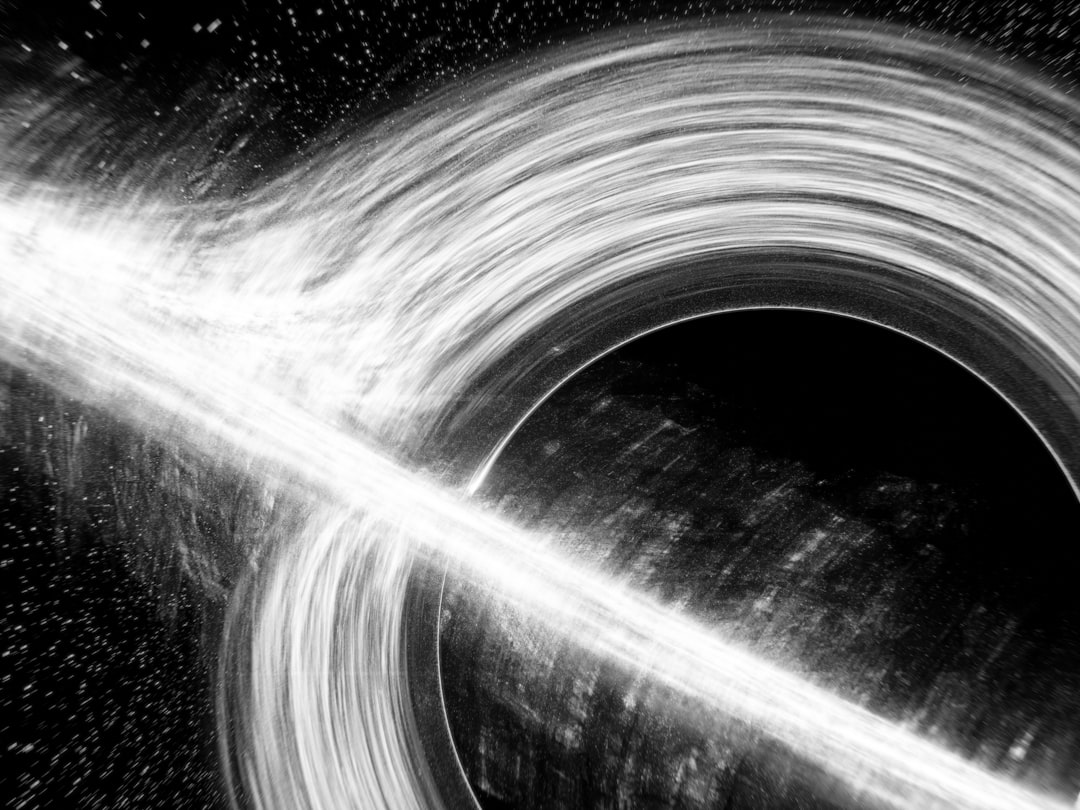
NANOGrav did indeed detect a stochastic gravitational wave background — a pervasive, low-frequency hum of gravitational waves — but the signal's characteristics pointed away from inflation as the primary source. Instead, the data strongly suggested that the dominant contribution comes from supermassive black hole binaries: pairs of colossal black holes, each containing billions of solar masses, slowly spiraling toward one another at the centers of merging galaxies. The gravitational "noise" produced by these cosmic giants appears to overwhelm any subtler signal from the inflationary epoch, at least with current detector sensitivity.
This finding, while not what was originally hoped for, opened a profound new line of inquiry: if the gravitational wave background is shaped so strongly by supermassive black holes, what can it tell us about how these monsters formed in the first place?
The Mystery of Early Supermassive Black Holes
One of the most pressing unsolved problems in modern cosmology is the origin of supermassive black holes (SMBHs) — those behemoths with masses ranging from millions to billions of times that of our Sun — that appear to have existed when the universe was less than a billion years old. Observations from the Hubble Space Telescope and, more recently, the James Webb Space Telescope (JWST) have revealed quasars and active galactic nuclei powered by supermassive black holes at extraordinarily high redshifts, implying these objects assembled their enormous masses with breathtaking speed.
Standard astrophysical models, in which black holes grow gradually from stellar remnants through successive mergers and accretion, struggle to explain how these objects could have reached such staggering sizes so quickly. This has led theorists to propose more exotic "seeding" mechanisms — processes that could have produced much more massive black hole progenitors in the early universe. A new study by Sohan Ghodla and Cosmin Ilie, published in Physical Review D (2026), examines two of the most compelling such proposals through the lens of pulsar timing array observations.
Mechanism One: Direct Collapse Black Holes
Direct Collapse Black Holes (DCBHs) represent one of the leading theoretical pathways to early supermassive black holes. Unlike conventional stellar-mass black holes, which form from the gravitational collapse of massive stars after they exhaust their nuclear fuel, DCBHs are thought to arise from the direct collapse of massive primordial clouds of hydrogen and helium gas — without ever passing through a stellar phase.
For such a collapse to occur, conditions must be very specific. The gas cloud must be prevented from fragmenting into smaller clumps (which would otherwise form individual stars) by the suppression of molecular hydrogen cooling. This can happen in regions bathed in intense ultraviolet radiation from nearby star-forming galaxies. Under these conditions, a single monolithic cloud — potentially containing tens of thousands to hundreds of thousands of solar masses — could collapse directly into a seed black hole with a mass far greater than any stellar remnant. In the dense, gas-rich environment of the early universe, such seeds could then accrete material rapidly enough to reach supermassive scales.
- DCBHs could form around the same epoch as the first generation of stars, known as Population III stars
- Initial masses for DCBH seeds are estimated between 10,000 and 100,000 solar masses
- They require specific environmental conditions, making them inherently rare events
- Gravitational wave analysis suggests no more than one DCBH per 10 cubic megaparsecs could have existed without exceeding observed signal levels
Ghodla and Ilie found that the gravitational wave signal produced by a population of DCBHs is consistent with current PTA observations, but only if DCBHs were indeed extremely rare — perhaps one per million cubic megaparsecs, well below the observational upper limit. This is encouraging: it means DCBHs remain a viable seeding mechanism without violating what we currently measure.
Mechanism Two: Supermassive Dark Stars
The second seeding mechanism examined in this study is far more speculative — and potentially far more transformative for our understanding of dark matter. Supermassive Dark Stars (SMDSs) are a theoretical class of astronomical objects in which dark matter plays not merely a passive gravitational role, but an active energy-generating one.
In the standard model of structure formation, both dark matter and ordinary (baryonic) matter collapse together under gravity in the early universe. In most scenarios, only the baryonic matter forms luminous structures. But in the SMDS hypothesis, if dark matter particles can self-annihilate — interacting with themselves to produce heat and radiation — then this annihilation energy could power an enormous, diffuse stellar-like object. Instead of nuclear fusion as the energy source (as in ordinary stars), a dark star would be sustained by dark matter annihilation products.
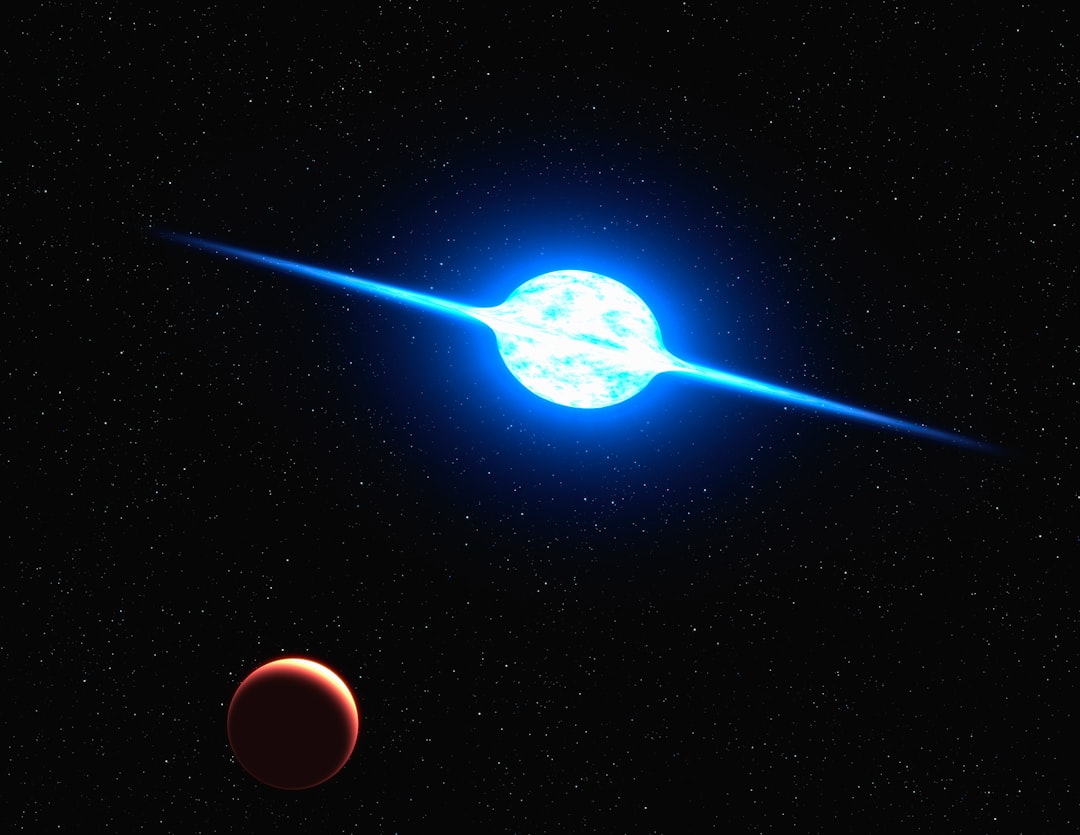
"Supermassive Dark Stars, if they existed, would have been among the largest and most luminous objects in the early universe — bloated, diffuse giants shining with the power of a million suns, fueled not by thermonuclear reactions, but by the self-destruction of dark matter."
The predicted properties of SMDSs are extraordinary:
- Masses potentially exceeding one million solar masses
- Surface temperatures and spectral characteristics resembling a blue giant star, despite their very different internal physics
- Radii far larger than any conventional star — potentially astronomical unit-scale in size
- Eventual collapse into supermassive black holes once the dark matter fuel supply is exhausted
- Far greater cosmic abundance than DCBHs, due to the ubiquity of dark matter throughout the universe
This last point is crucial. Since dark matter constitutes approximately 27% of the total energy content of the universe — roughly five times more than ordinary matter — conditions favorable for SMDS formation could have been far more widespread than those required for DCBHs. If SMDSs existed in significant numbers, they would have collectively produced a substantially stronger gravitational wave background than DCBHs. According to Ghodla and Ilie's analysis, the gravitational wave signal from a realistic SMDS population could, in fact, be the dominant component of what NANOGrav and other PTAs are currently observing.
What Pulsar Timing Arrays Can — and Cannot — Tell Us
It is important to be precise about what this research does and does not claim. The analysis does not prove that Supermassive Dark Stars existed. Rather, it demonstrates that their existence is consistent with current gravitational wave observations — and that if they were sufficiently common, they could account for a significant portion of the observed signal. Distinguishing between the SMDS scenario and other contributions (such as supermassive black hole binaries) will require significantly more sensitive PTA measurements and improved theoretical modeling.
The good news is that the field of pulsar timing is advancing rapidly. Collaborations such as the International Pulsar Timing Array (IPTA), which combines data from NANOGrav, the European Pulsar Timing Array (EPTA), and the Parkes Pulsar Timing Array (PPTA), are steadily improving sensitivity. The addition of new, ultra-precise pulsars and the development of next-generation radio telescopes — such as the Square Kilometre Array (SKA) — promise to dramatically sharpen our view of the gravitational wave background in the coming decades. Learn more about these efforts at the SKA Observatory website.
Implications for Dark Matter Physics
Beyond their implications for black hole formation, Supermassive Dark Stars — if their gravitational wave signatures could be confirmed — would represent a revolutionary discovery for particle physics and cosmology. The existence of SMDSs would require dark matter particles capable of self-annihilation, a property associated with leading dark matter candidates such as Weakly Interacting Massive Particles (WIMPs). This would provide indirect evidence not just for the existence of dark matter (already well-established through gravitational evidence), but for its specific particle nature — a question that has so far resisted all attempts at direct detection.
The implications cascade further: if dark matter can self-annihilate efficiently enough to power billion-solar-mass stars, it may also leave subtle imprints in other cosmological observables, from the Cosmic Microwave Background to the large-scale distribution of galaxies. Pulsar timing arrays, in this sense, may open an entirely new window onto the physics of dark matter — complementing direct detection experiments, particle colliders, and gamma-ray observations in humanity's ongoing quest to understand the invisible scaffolding of the universe.
Looking Ahead
The study by Ghodla and Ilie exemplifies the increasingly powerful role that multi-messenger astrophysics — combining gravitational wave astronomy with traditional electromagnetic observations — is playing in answering the deepest questions about the cosmos. Pulsar timing arrays, originally conceived as gravitational wave detectors, are evolving into probes of the earliest epochs of cosmic history, capable of distinguishing between competing models of how the universe's most massive structures came to be.
Whether the gravitational wave background ultimately reveals the imprint of Direct Collapse Black Holes, Supermassive Dark Stars, or some combination of exotic early-universe phenomena, one thing is clear: the ancient, rhythmic ticking of pulsars scattered across our galaxy is telling us something profound about the nature of reality. We are only just beginning to learn how to listen.
Reference
Ghodla, Sohan, and Cosmin Ilie. "Reconstructing PTA measurements via early seeding of supermassive black holes." Physical Review D 114.4 (2026): L041303.