The iconic image of Luke Skywalker gazing at twin suns setting over the desert horizon of Tatooine has captivated science fiction fans for decades. While George Lucas may have drawn inspiration from Frank Herbert's Dune universe, this cinematic moment raises a fascinating scientific question: could planets actually exist in systems with two stars? Recent groundbreaking research from astrophysicists at the University of California, Berkeley and the American University of Beirut reveals why such circumbinary planets—worlds orbiting binary star systems—are extraordinarily rare in our galaxy, and the answer lies in one of physics' most revolutionary theories.
Despite binary star systems comprising between one-third and one-half of all stellar configurations in the Milky Way, planets orbiting both stars simultaneously represent a cosmic rarity. Of the more than 6,100 confirmed exoplanets discovered to date, only 14 are known to orbit binary pairs. This dramatic scarcity has puzzled astronomers since the dawn of exoplanet discovery, particularly given that roughly 4,500 stars with planetary systems have been identified. The mystery deepens when considering that most stars in our galaxy likely formed as binary pairs, only losing their stellar companions through gravitational interactions over billions of years.
Einstein's Theory Holds the Key to Missing Worlds
In a study published in The Astrophysical Journal Letters on December 8th, titled "Capture into Apsidal Resonance and the Decimation of Planets around Inspiraling Binaries," Mohammad Farhat, a Miller Postdoctoral Fellow at UC Berkeley, and Jihad Touma, a physics professor at the American University of Beirut, present compelling evidence that Einstein's Theory of General Relativity is responsible for this planetary desert around tight binary systems. Their mathematical models and computer simulations demonstrate that relativistic effects disrupt approximately 80% of exoplanets around close binary pairs, with three-quarters of these worlds meeting catastrophic ends.
The research builds upon decades of observational data from NASA's Kepler mission and the Transiting Exoplanet Survey Satellite (TESS), both of which employed the transit method to detect exoplanets by measuring periodic dips in stellar brightness. While these missions revolutionized our understanding of planetary systems, they also uncovered a perplexing anomaly in the exoplanet census.
The Great Circumbinary Planet Shortage
During its primary mission, Kepler identified approximately 3,000 eclipsing binary stars—systems where one star periodically passes in front of its companion from our perspective. Given that roughly 10% of single Sun-like stars host massive planets, astronomers reasonably expected to find about 300 circumbinary planets around these binary systems. Instead, they discovered only 47 candidates, with a mere 14 confirmed as genuine transiting circumbinary planets.
"You have a scarcity of circumbinary planets in general, and you have an absolute desert around binaries with orbital periods of seven days or less," explained Farhat. "The overwhelming majority of eclipsing binaries are tight binaries and are precisely the systems around which we most expect to find transiting circumbinary planets."
This dramatic deficit becomes even more pronounced when examining tight binary systems—pairs of stars orbiting each other with periods of a week or less. Around these closely-bound stellar duos, planets are virtually nonexistent, creating what researchers describe as an "absolute desert" in the exoplanet landscape.
How Binary Stars Consume Their Planetary Children
The destructive mechanism identified by Farhat and Touma involves a complex gravitational dance between the binary stars and their orbiting planets. Most binary star systems consist of two stars with comparable masses circling each other in elliptical orbits. According to current astronomical theories, these pairs typically form far apart but gradually spiral inward over eons due to interactions with the surrounding protoplanetary gas cloud from which they originated.
Over billions of years, tidal interactions further shrink the binary orbit until the stars complete a full revolution around their common center of mass in approximately a week or less. As this occurs, the point of closest approach between the two stars—known as periastron—begins to precess, or rotate around the orbital path. This phenomenon, first explained by Einstein's General Theory of Relativity in 1915, describes how massive objects warp the fabric of spacetime itself.
The Deadly Resonance Effect
For a planet orbiting a binary pair, the combined gravitational influence of both stars causes the planet's orbital axis to precess as well. However, as the binary stars draw closer together, their precession rate accelerates while the planet's precession rate decelerates. When these two rates synchronize—a condition known as apsidal resonance—catastrophic consequences ensue for the planetary orbit.
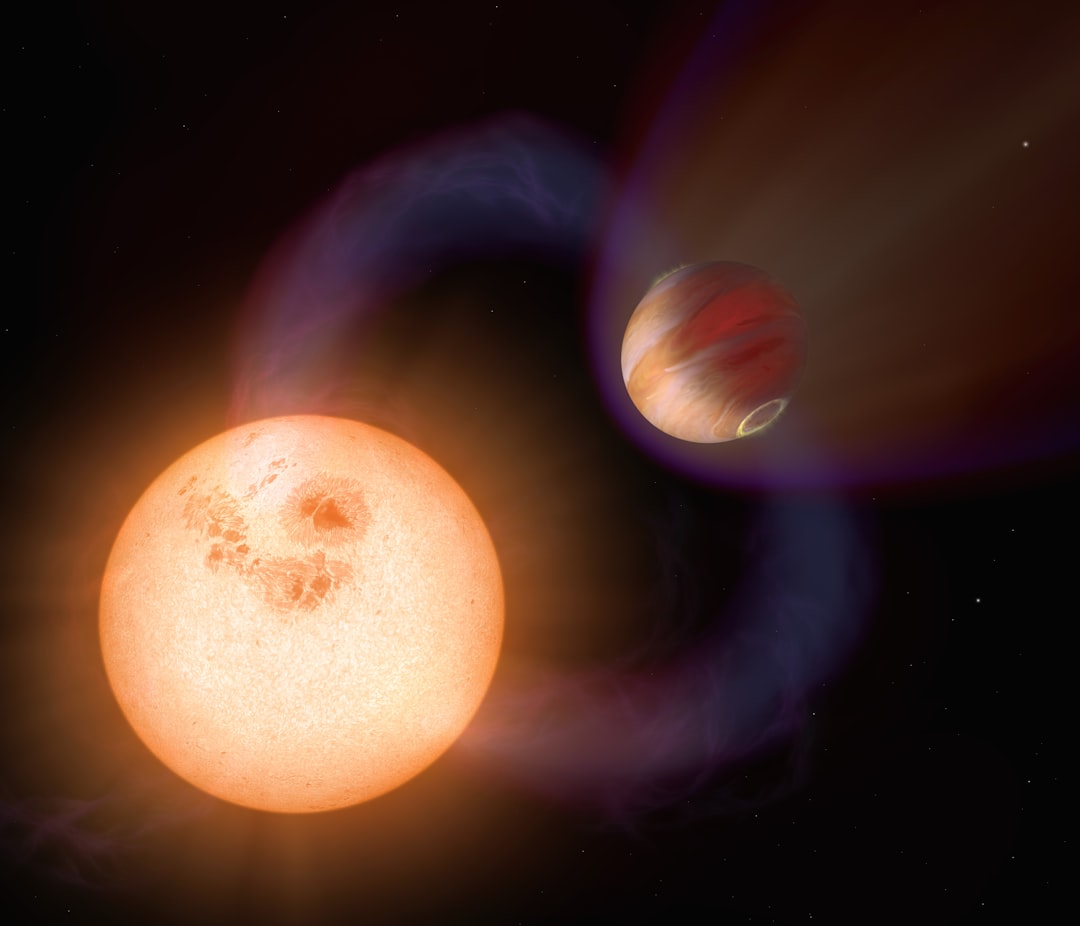
The resonance effect causes the planet's orbit to elongate dramatically, stretching it into an extreme ellipse that carries the world much farther from the binary at aphelion (its most distant point) while simultaneously bringing it dangerously close at perihelion (its nearest approach). This orbital deformation inevitably draws the planet toward the instability zone surrounding the binary stars, where three-body gravitational interactions become dominant and chaotic.
Planetary Destruction: A Cosmic Eviction Process
Using sophisticated mathematical models and computer simulations, Farhat and Touma calculated the fate of planets caught in this gravitational trap. Their findings paint a grim picture for circumbinary worlds. Once a planet enters apsidal resonance with its host binary, two catastrophic outcomes become possible, both resulting in the planet's removal from the system:
- Tidal disruption or stellar engulfment: The planet's orbit brings it so close to the binary pair that it either experiences catastrophic tidal forces that tear it apart or plunges directly into one of the stars, being consumed in the stellar furnace
- Gravitational ejection: The chaotic three-body interactions perturb the planet's orbit so severely that it gains sufficient velocity to escape the system entirely, becoming a rogue planet wandering through interstellar space
- Rapid timescale: This entire destructive process unfolds over merely tens of millions of years—a cosmological eyeblink—explaining why we observe so few circumbinary planets today
- Formation barriers: Even if planets somehow avoided destruction, the instability zone makes initial planet formation extremely difficult, as Farhat noted: "Forming a planet at the edge of the instability zone would be like trying to stick snowflakes together in a hurricane"
"A planet caught in resonance finds its orbit deformed to higher and higher eccentricities, precessing faster and faster while staying in tune with the orbit of the binary, which is shrinking," Touma explained. "And on the route, it encounters that instability zone around binaries, where three-body effects kick into place and gravitationally clear out the zone."
Observational Evidence Supports the Theory
The Kepler and TESS datasets provide compelling observational support for this theoretical framework. Remarkably, none of the 14 confirmed circumbinary exoplanets orbit tight binary systems with periods shorter than approximately seven days. Furthermore, 12 of these survivors are located just beyond the outer edge of their system's instability zone, suggesting they may have migrated outward to safer orbital distances over time—a scenario far more plausible than forming in such turbulent regions initially.
This distribution pattern precisely matches the predictions of Farhat and Touma's models, lending strong credibility to their General Relativity-based explanation. The research demonstrates that while circumbinary planets can exist, they require special circumstances: either formation at safe distances beyond the instability zone or survival through fortunate orbital configurations that avoided resonance capture during the binary's evolution.
Broader Implications for Astrophysics
The implications of this research extend far beyond explaining the scarcity of Tatooine-like worlds. The same relativistic effects that doom circumbinary planets may influence other extreme gravitational environments throughout the universe. Farhat and Touma are currently applying their models to understand how General Relativity affects star clusters orbiting pairs of supermassive black holes at galactic centers—systems where gravitational forces reach truly extreme magnitudes.
In a more speculative direction, the researchers are investigating whether similar mechanisms might explain the notable absence of planets around binary pulsars—rapidly rotating neutron stars that emit beams of electromagnetic radiation. These exotic systems, which include some of the most precisely measured objects in astronomy, may harbor their own relativistic surprises.
As Touma reflected on their findings, he highlighted the continuing relevance of Einstein's revolutionary insights nearly a century after their formulation:
"Interestingly enough, nearly a century following Einstein's calculations, computer simulations showed how relativistic effects may have saved Mercury from chaotic diffusion out of the solar system. Here we see related effects at work disrupting planetary systems. General relativity is stabilizing systems in some ways and disturbing them in other ways."
The Future of Circumbinary Planet Research
While this research explains why close-orbiting circumbinary planets are rare, it doesn't preclude the existence of planets around binary stars entirely. Many binary systems likely host planets that orbit at greater distances, well beyond the reach of the transit method's detection capabilities. Future observatories, including the James Webb Space Telescope and upcoming missions like the ESA's Euclid telescope, may employ alternative detection methods such as direct imaging or gravitational microlensing to discover these more distant circumbinary worlds.
The research also raises intriguing questions about planetary habitability in binary systems. While the iconic double sunset of Tatooine captures our imagination, any potentially habitable circumbinary planet would need to maintain a stable orbit far from the instability zone—likely at distances where both stars would appear as a single bright point of light rather than the dramatic dual orbs of science fiction. Understanding these orbital dynamics becomes crucial as we continue searching for potentially habitable worlds beyond our solar system.
This groundbreaking work demonstrates how fundamental physics shapes the architecture of planetary systems throughout our galaxy. From Einstein's equations describing spacetime curvature to the chaotic gravitational interactions that sculpt planetary orbits, the research reveals the intricate cosmic mechanisms that determine where planets can—and cannot—survive. While Tatooine-like worlds may be rare, their scarcity teaches us profound lessons about the dynamic, sometimes violent processes that govern planetary system evolution across the universe.