Researchers Develop a New Way to Check the Weather on an Exoplanet
In a landmark demonstration of modern astronomical technique, an international team of researchers has successfully decoded the weather patterns on a distant exoplanet using data from the James Webb Space Telescope (JWST). The study, published in Astronomy & Astrophysics, not only sheds new light on a well-studied cosmic neighbor but also introduces a powerful analytical method that could reshape how scientists study planetary atmospheres far beyond our Solar System.
The Target: SIMP J0136+09, a Brown Dwarf Next Door
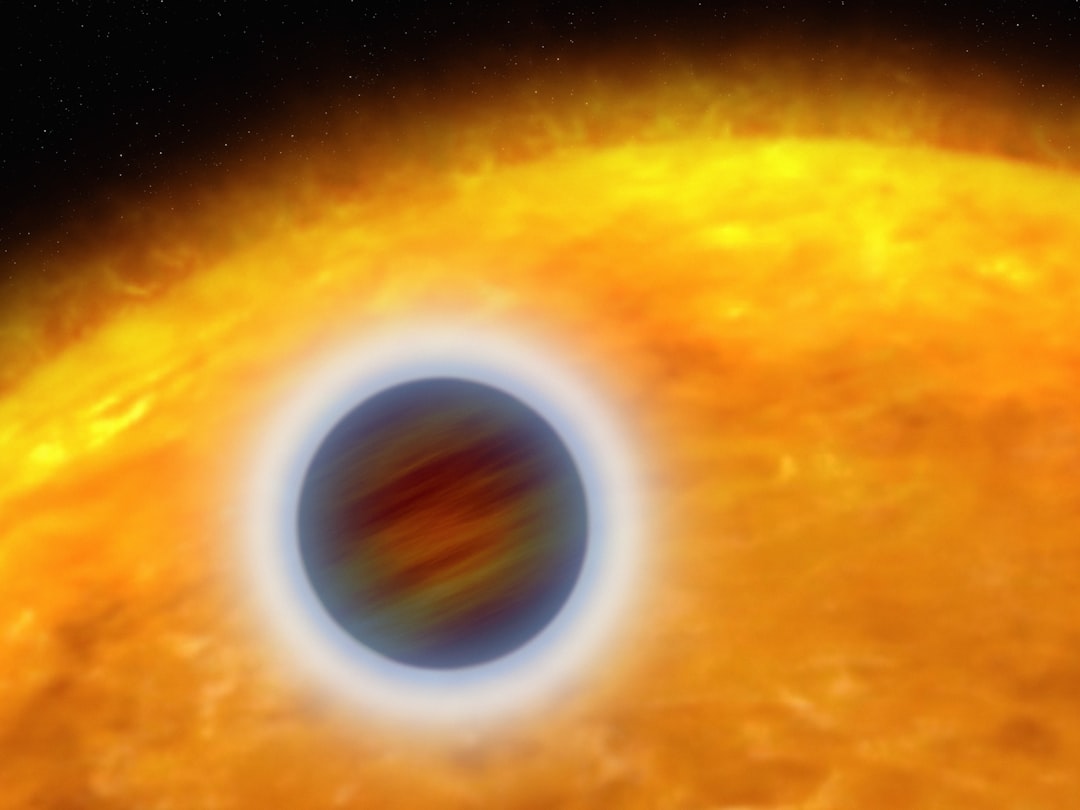
The subject of this investigation is SIMP J0136+09 (commonly abbreviated as SIMP 0136), a brown dwarf located approximately 20 light-years from Earth in the constellation Pisces. In cosmic terms, this makes it one of our nearest substellar neighbors — close enough to study with extraordinary precision, yet alien enough to challenge our understanding of planetary physics.
Brown dwarfs occupy a fascinating and enigmatic middle ground in the universe. Larger and hotter than gas giant planets like Jupiter, yet lacking the mass necessary to ignite the sustained hydrogen fusion that defines a true star, they are sometimes called "failed stars" or "super-planets." SIMP 0136, with an estimated mass roughly 13 times that of Jupiter, sits right at the boundary of what astronomers classify as a planetary-mass object versus a brown dwarf — making it an especially compelling target for atmospheric study.
- Mass: Approximately 12–13 Jupiter masses
- Distance from Earth: ~20 light-years
- Location: Constellation Pisces
- Classification: Planetary-mass brown dwarf (T2.5 spectral type)
- Notable feature: One of the strongest known magnetic fields of any substellar object
Unlike brown dwarfs bound to a host star, SIMP 0136 is a free-floating object, drifting through the galaxy without a stellar companion. This isolation is actually an advantage for atmospheric science: researchers do not have to contend with the overwhelming glare of a nearby star, allowing them to observe its atmosphere with far greater clarity. NASA's James Webb Space Telescope has proven uniquely suited to exploiting this advantage.
A Dynamic, Cloud-Covered World
SIMP 0136's atmosphere is anything but static. Previous observations had already hinted at a world swathed in planet-sized, rapidly evolving cloud systems — dynamic structures that constantly shift and reform, altering the amount and spectrum of light that reaches our telescopes. These clouds are not composed of water vapor as on Earth, but rather of exotic materials such as iron droplets, silicate dust, and magnesium sulfide, condensed from the extreme heat of the brown dwarf's interior atmosphere.
As SIMP 0136 rotates — completing a full turn roughly every 2.4 hours — these cloud features sweep in and out of view, producing detectable changes in brightness. It is precisely these subtle photometric and spectroscopic variations that the JWST's instruments were designed to capture, and that the research team set out to decode.
"The technique has helped us develop a better understanding of what drives the weather on this faraway world and how these weather patterns interact and co-exist, but perhaps even more importantly, it shows how this approach can be further refined and applied to other, less well-known brown dwarfs in different parts of space." — Merle Schrader, PhD Candidate, Trinity College Dublin
The Method: Bringing Statistical Power to Astrophysics
The true innovation of this study lies not just in what was observed, but in how it was analyzed. The team employed Principal Component Analysis (PCA), a sophisticated statistical technique widely used in fields ranging from machine learning to genomics, but relatively novel in the context of exoplanet atmospheric science.
At its core, PCA works by identifying the most significant patterns within a large, complex dataset — retaining the variables that change together in a correlated way while discarding redundant information and random noise. In the context of SIMP 0136, this meant sifting through a rich stream of spectroscopic and photometric data to isolate the dominant physical processes driving observed changes in the brown dwarf's brightness and spectral features.
The research was conducted as part of the JWST's General Observer Program 3548, which used time series observations (TSO) combined with low-resolution spectroscopy. Two of the JWST's most powerful instrument suites were employed:
- NIRSpec (Near-Infrared Spectrograph): Capturing light in wavelengths from 0.6 to 5.3 micrometers, revealing molecular absorption features from water, methane, and carbon monoxide in the upper atmosphere.
- MIRI (Mid-Infrared Instrument): Probing deeper, cooler layers of the atmosphere at wavelengths from 5 to 28 micrometers, sensitive to the thermal emission of cloud layers and the lower atmospheric structure.
Together, these instruments provided an unprecedented multi-wavelength portrait of the brown dwarf's atmosphere across an entire rotation period. Rather than relying on computationally intensive atmospheric forward models — which require significant assumptions about chemical abundances and cloud properties — PCA allowed the team to let the data speak for itself, objectively identifying the dominant sources of variability. Learn more about NIRSpec's capabilities at the Space Telescope Science Institute.
Key Findings: Two Dominant Weather Drivers
The PCA analysis revealed that the observable variability in SIMP 0136's atmosphere is governed by two primary physical processes:
- Temperature variations: Regions of the atmosphere that are significantly hotter or cooler than the global average, producing brightness contrasts analogous to hot spots and cold spots on Jupiter or on the Sun itself.
- Vertical cloud structure: Variations in the altitude and optical thickness of cloud decks — with some regions hosting thin, high-altitude clouds that allow deeper, hotter emission to escape, and others dominated by thick, vertically extended cloud columns that insulate and obscure the warmer interior layers.
In practice, the team identified three recurring weather patterns that together explain the full range of observed brightness changes: zones of elevated temperature with thinner cloud cover, broader regions of cooler temperature with thick and vertically extended clouds, and transitional areas where these regimes interact. This bears a striking resemblance — at least in broad conceptual terms — to the banded cloud structure of Jupiter, where alternating zones and belts of rising and sinking atmospheric gas produce persistent large-scale weather patterns.
"Our findings will transform how astronomers analyze future JWST observations. Since our approach rapidly identifies the dominant components of the atmosphere, it offers an efficient first step before we begin computationally intensive modeling." — Prof. Johanna Vos, Associate Professor, Trinity College Dublin
Why This Matters: A New Lens on Planetary Atmospheres
The implications of this research extend far beyond a single brown dwarf. Understanding cloud formation, atmospheric circulation, and heat transport under extreme conditions is central to one of astronomy's most urgent challenges: characterizing the atmospheres of exoplanets in enough detail to assess their potential habitability.
Brown dwarfs like SIMP 0136 serve as critical natural laboratories for testing atmospheric models. Because they can be directly imaged — unlike most exoplanets that are only detectable by their effect on their host star's light — they offer a rare opportunity to observe atmospheric dynamics with high signal-to-noise ratios. The physical processes at work in a brown dwarf's atmosphere — particularly those in the cooler, planetary-mass regime — are believed to be directly analogous to those operating in the atmospheres of giant exoplanets. The European Space Agency's Webb science portal provides further context on how JWST is advancing atmospheric characterization.
Furthermore, the efficiency of the PCA approach is a significant practical advantage. As the JWST continues to accumulate vast quantities of atmospheric spectral data on dozens of brown dwarfs and exoplanets, researchers need tools that can rapidly identify the most important atmospheric signals without requiring weeks of computationally demanding modeling for each object. PCA provides exactly this kind of rapid, objective first assessment — a diagnostic step that can prioritize which objects and which atmospheric features merit the deepest, most resource-intensive follow-up modeling.
The Broader Context: Webb's Atmospheric Science Revolution
One of the JWST's primary scientific objectives is to obtain spectra of exoplanet atmospheres — measuring how starlight filtered through or emitted by a planet's atmosphere encodes the chemical fingerprints of molecules like water, carbon dioxide, methane, and ammonia. Each of these molecules carries profound implications for our understanding of a planet's formation history, climate, and potential for life. HubbleSite's overview of JWST's mission offers an accessible guide to the telescope's revolutionary capabilities.
Since its first science observations in 2022, JWST has already delivered a string of landmark atmospheric detections, including the definitive identification of carbon dioxide in the atmosphere of WASP-39b and the detection of complex organic molecules around distant star-forming regions. The application of PCA to SIMP 0136 adds a new methodological tool to this rapidly growing toolkit — one that could prove equally valuable when applied to the atmospheres of smaller, potentially habitable worlds.
Looking Ahead: Roman Telescope and the Road to Earth-Like Worlds
The timing of this research is particularly significant given the imminent arrival of a powerful new space observatory. When the Nancy Grace Roman Space Telescope becomes fully operational, its wide-field imaging capability and coronagraphic instrument are expected to enable the direct imaging of smaller exoplanets orbiting closer to their host stars — the regime where rocky, Earth-like planets are most likely to be found. The PCA methodology developed and validated on SIMP 0136 could be directly applied to Roman's future atmospheric datasets, accelerating the pace of discovery. NASA's Nancy Grace Roman Space Telescope mission page outlines the telescope's planned science operations and launch timeline.
Taken together, this study represents a meaningful step forward on the long road toward answering one of humanity's most profound questions: Are we alone in the universe? By refining our ability to read the weather on distant worlds, researchers are building the observational and analytical foundation needed to one day identify the atmospheric signatures of life itself.
Conclusion
The successful application of Principal Component Analysis to JWST spectroscopic data of SIMP 0136 marks a significant methodological advance in exoplanet atmospheric science. By demonstrating that complex weather patterns on a brown dwarf 20 light-years away can be robustly identified using a statistically transparent and computationally efficient technique, the research team at Trinity College Dublin has provided the astronomical community with a valuable new tool — one poised to accelerate our understanding of planetary atmospheres across the galaxy.
As lead author Merle Schrader and her colleagues continue to refine and expand this approach, and as next-generation telescopes prepare to peer at even smaller and more Earth-like worlds, the dream of truly forecasting the weather on another planet feels less like science fiction — and more like tomorrow's headline.