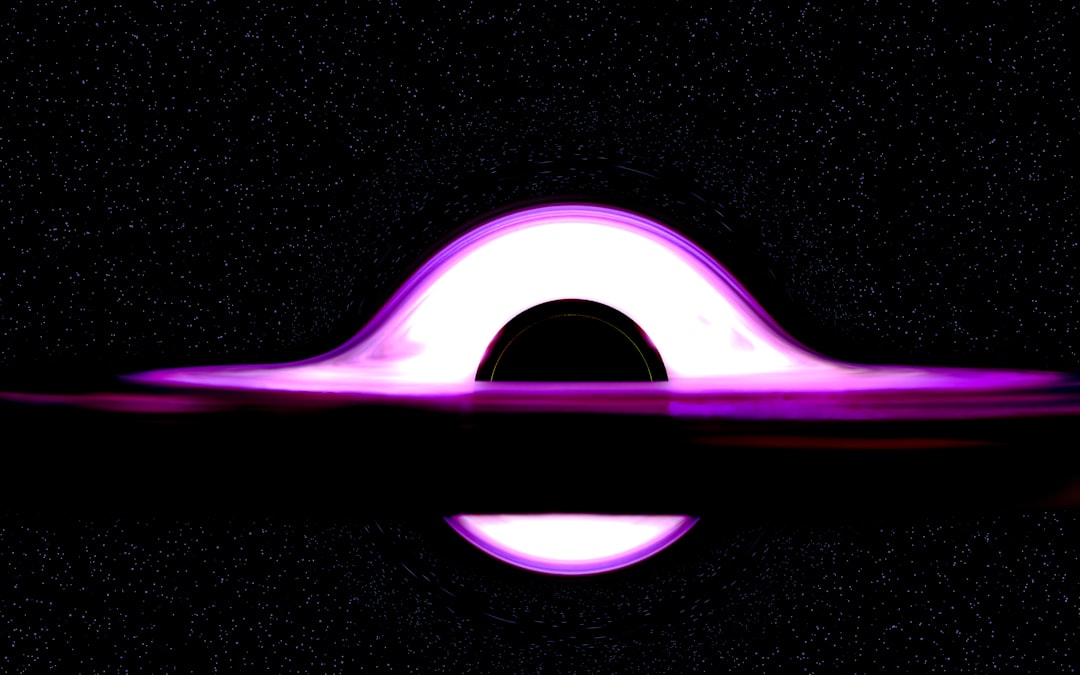
Researchers Prove Black Hole Energy Extraction Theory in a Laboratory Setting
In a landmark achievement bridging theoretical astrophysics and experimental physics, researchers at the Advanced Science Research Center at the City University of New York Graduate Center (CUNY-ASRC) have successfully demonstrated a phenomenon that English mathematician and physicist Sir Roger Penrose predicted more than 50 years ago. The experiment, published in the prestigious journal Nature, represents the first laboratory-scale validation of a process once thought confined to the violent, exotic environments surrounding rotating black holes — one of the most extreme objects in the known Universe.
The Penrose Process: Energy from the Edge of a Black Hole
To appreciate the magnitude of this achievement, it is essential to understand the theoretical framework underpinning it. In 1969, Sir Roger Penrose — who would later share the 2020 Nobel Prize in Physics for his work on black holes — proposed a remarkable mechanism by which energy could be extracted from a rapidly spinning black hole, now formally known as a Kerr black hole (named after New Zealand mathematician Roy Kerr, who first described their geometry in 1963).
Unlike non-rotating black holes, a Kerr black hole possesses a unique region outside its event horizon — the boundary beyond which nothing, not even light, can escape — called the ergosphere. Within the ergosphere, spacetime itself is dragged along with the rotation of the black hole in a phenomenon known as frame dragging. No physical object can remain stationary in this region; it is inevitably swept along by the black hole's immense rotational influence.
The Penrose Process exploits this remarkable property. According to Penrose's prediction, if an object were to enter the ergosphere and split into two fragments — one falling into the black hole and one escaping — the escaping fragment could carry away more energy than the original object brought in. The black hole itself would lose a small but measurable amount of its rotational energy. In theory, this mechanism could allow a civilization of sufficient technological advancement to harvest enormous quantities of energy directly from a black hole's rotation.
"The ergosphere is a region where the extraction of rotational energy becomes not just possible, but inevitable under the right conditions — a cosmic loophole written into the laws of general relativity itself."
Zeldovich's Extension: Waves as Energy Harvesters
In 1971, Soviet physicist Yakov Zeldovich expanded upon the Penrose Process in a profound way. Zeldovich predicted that not just physical objects, but electromagnetic waves could also extract and amplify energy from a rapidly rotating body — a process now referred to as the Penrose–Zel'dovich (PZ) process. Specifically, he proposed that waves striking a rotating cylinder spinning faster than the wave's own phase velocity would be amplified, gaining energy at the expense of the cylinder's rotation.
This concept carries deep implications not only for black hole physics but also for quantum mechanics, as it is intimately related to the quantum phenomenon of superradiance — a process in which radiation emitted by a quantum system can be amplified through stimulated emission. Zeldovich's insight suggested that the boundary between classical astrophysics and quantum field theory is far more porous than previously imagined.
The critical experimental challenge, however, was staggering. To replicate this process mechanically would require a physical object spinning at a significant fraction of the speed of light — far beyond any engineering capability available today or in the foreseeable future. For over five decades, the Penrose–Zel'dovich process remained a triumph of theoretical physics with no feasible path to experimental verification. Until now.
A Synthetic Solution: Engineering Ultrafast Rotation
The CUNY-ASRC team, all members of the center's Photonics Initiative, devised an ingenious workaround. Rather than attempting to physically spin a device at impossible speeds, they created what they term synthetic rotation — a carefully engineered electromagnetic mimic of ultrafast spinning that sidesteps the mechanical limitations entirely.
Their device consists of a ring-shaped network of electronic resonators whose properties were rapidly modulated in a precise, timed sequence. This modulation produced a traveling electromagnetic pattern that circled the ring — while the physical device itself remained perfectly stationary. The result was a form of synthetic motion that behaves, from the perspective of interacting waves, as though the device were rotating at ultrafast speeds far exceeding what any mechanical system could achieve.
Crucially, this approach also opens the door to a striking theoretical possibility: synthetic rotation can simulate motion faster than the speed of light. While no physical object or information can exceed the speed of light — a foundational tenet of Einstein's Special Theory of Relativity — the pattern of electromagnetic modulation is not subject to this constraint, as it does not physically transport matter or information. This provides researchers with an extraordinary tool for probing extreme physics in a safe, controlled laboratory environment.
Key Features of the Experimental Device
- A ring-shaped network of electronic resonators capable of precise electromagnetic modulation
- A timed modulation sequence that produces a traveling wave pattern simulating rotation
- The ability to achieve effective rotational speeds far beyond mechanical limits, including apparent superluminal pattern velocities
- A platform capable of generating broadband selective amplification of interacting electromagnetic waves
- Utilization of engineered metamaterials designed to precisely control wave propagation
Experimental Results: Theory Becomes Reality
The team's experiment directly addressed the fundamental question at the heart of Zeldovich's decades-old prediction: can electromagnetic waves sent to a stationary device behave as though they were interacting with an object rotating at ultrafast speeds — and extract energy from it? The answer, the experiment unequivocally demonstrates, is yes.
Waves with the appropriate rotational characteristics were observed to extract energy from the synthetic rotating system and emerge amplified — precisely reproducing the essential physics of the Penrose–Zel'dovich process in a laboratory setting for the first time in history.
"Our approach facilitates a new method of wave–matter interaction in which waves with selected rotational properties extract energy from synthetic time-engineered rotation, producing a form of broadband selective amplification." — Andrea Alù, Distinguished and Einstein Professor of Physics, CUNY Graduate Center, and founding director of the CUNY-ASRC's Photonics Initiative
According to lead author Hadiseh Nasari, a post-doctoral researcher with the CUNY-ASRC's Photonics Initiative, the success of the experiment marks a decisive transition from theoretical speculation to experimental proof — and opens a vast new landscape of scientific inquiry.
"Waves with the appropriate rotational characteristics extracted energy from the system and became amplified, reproducing the essential physics of the Penrose–Zel'dovich process. Our approach relies on engineered metamaterials that are designed to control how waves propagate." — Hady Moussa, former PhD student, CUNY-ASRC Photonics Initiative
Scientific and Technological Implications
The implications of this work extend far beyond the elegance of confirming a 50-year-old theoretical prediction. By successfully translating the Penrose–Zel'dovich process into a laboratory-scale experiment, the CUNY-ASRC team has created what they describe as a versatile experimental platform for exploring a broad range of phenomena at the intersection of astrophysics, wave physics, and quantum science.
Fundamental Science
From a pure science perspective, this experiment provides an unprecedented testbed for studying extreme rotational dynamics, superradiance, and the behavior of waves in conditions that would otherwise be accessible only through astrophysical observation — where controlled experimentation is impossible. It may also yield new insights into Hawking radiation, the quantum mechanical process by which black holes are theorized to slowly evaporate over cosmic timescales, as the two phenomena share deep theoretical connections.
Technological Applications
The potential technological spinoffs are equally compelling. The principles demonstrated in this experiment could drive advances in:
- Classical and quantum optics — enabling new methods of light manipulation and amplification
- Wireless communications — offering novel approaches to signal processing and amplification that could enhance bandwidth and efficiency
- Photonic systems — advancing the development of devices that process information using light rather than electrical signals
- Quantum information science — providing new experimental tools for studying and harnessing quantum wave phenomena
- Metamaterial engineering — pushing the boundaries of artificially structured materials designed to interact with waves in unprecedented ways
This successful experiment moves ideas about extreme rotational dynamics from theory to practice and creates a versatile experimental platform for exploring a broad range of phenomena at the intersection of astrophysics, wave physics, and quantum science. The research potential is immense, giving scientists the ability to manipulate light, process information, and investigate wave phenomena taking place in the most extreme environments in the Universe.
Looking Ahead
The CUNY-ASRC team envisions this work as the foundation for a new generation of experiments probing the boundaries of physics. Looking ahead, they hope to extend their findings to photonic and quantum studies, adapting the synthetic rotation platform for ever more sophisticated investigations. The possibility of simulating, in a controlled laboratory environment, conditions analogous to those found near rotating black holes represents a profound democratization of astrophysical experimentation — bringing the cosmic within reach of the laboratory bench.
In a broader sense, this achievement serves as a powerful reminder that some of the most exotic predictions of general relativity and quantum field theory need not forever remain beyond experimental reach. With sufficient ingenuity, the Universe's most extreme phenomena can be studied, tested, and ultimately harnessed — not at the edge of a black hole, but in a laboratory in New York City.