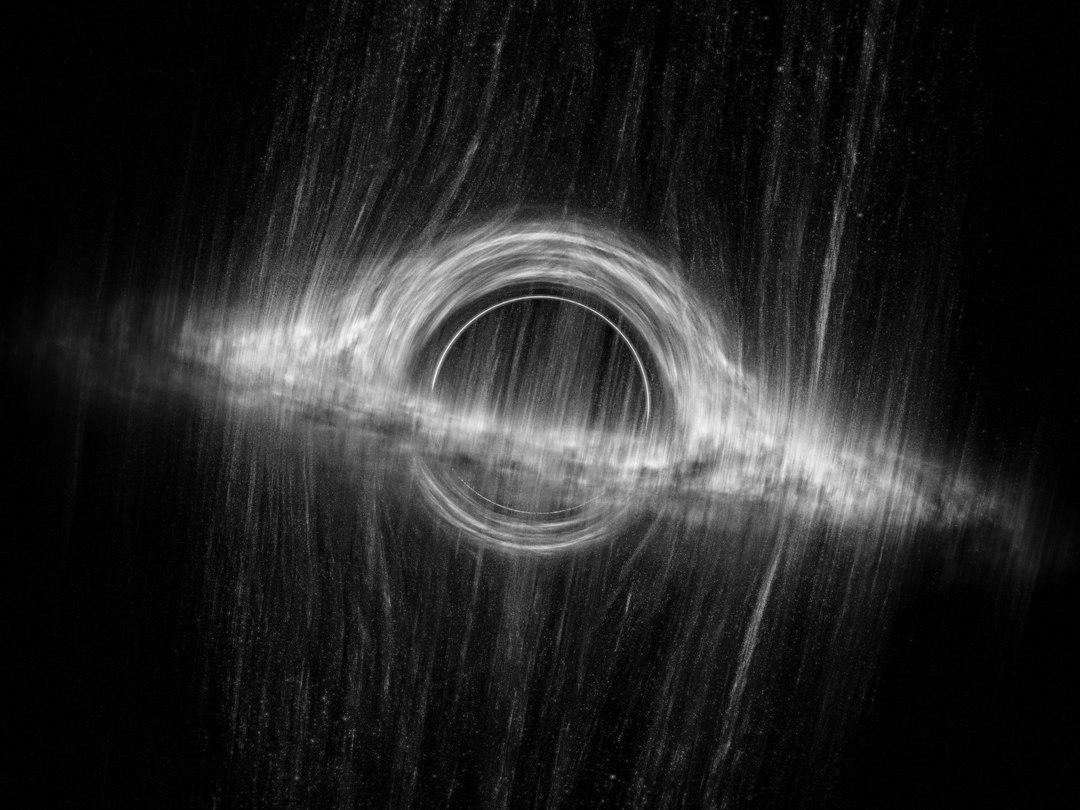
Ringing Black Holes Offer Precision Tests of Relativity
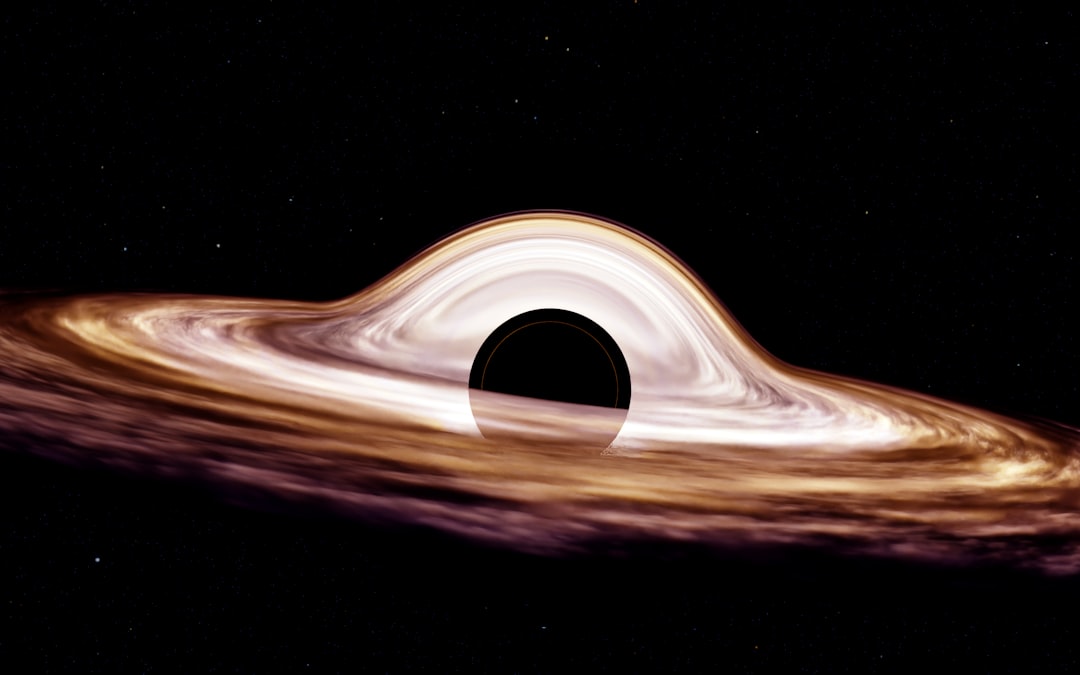
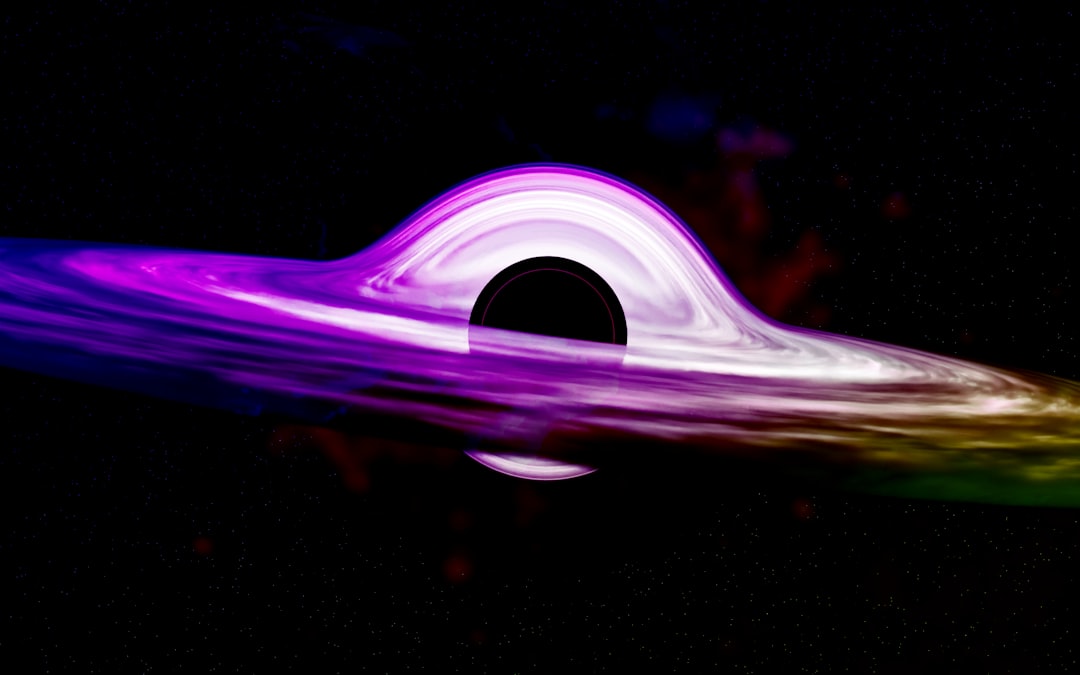
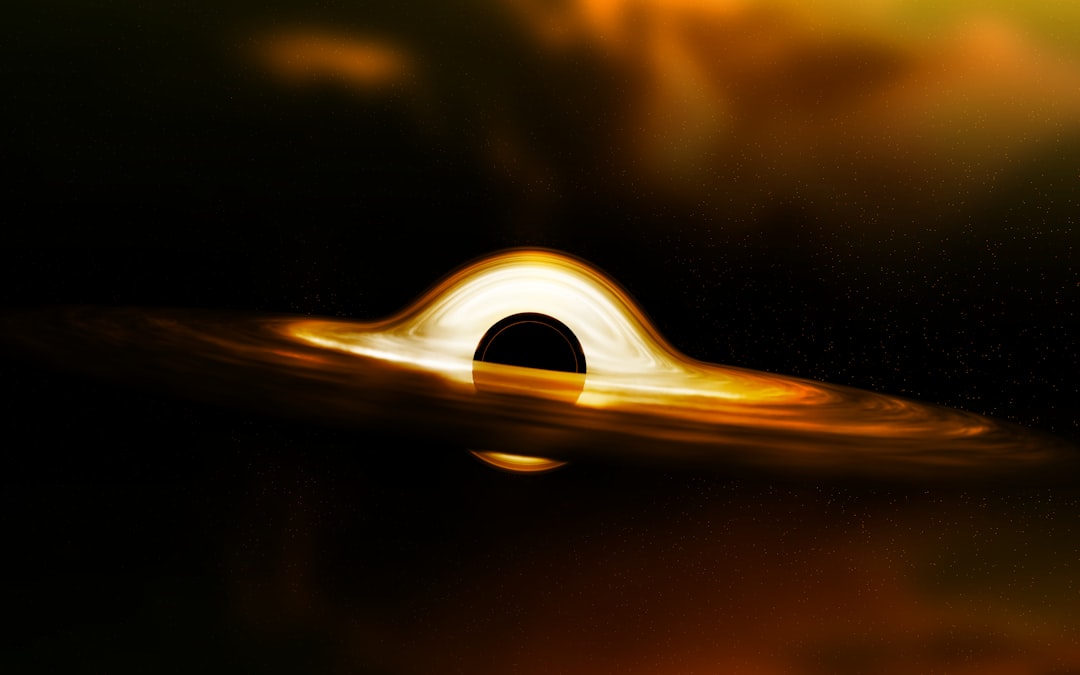
Black holes remain among the most mysterious and awe-inspiring celestial objects ever studied. Their profound enigma stems largely from an inherent observational paradox: these cosmic giants cannot be directly imaged in the traditional sense, revealing themselves only through their gravitational influence on surrounding matter — most dramatically when they interact with nearby stars, gas clouds, or, most spectacularly of all, one another. This invisibility has fueled decades of theoretical work, pushing the boundaries of physics and challenging our most fundamental assumptions about the nature of space, time, and gravity itself.
Several distinct categories of black holes populate our universe, each born and sustained through different astrophysical processes. Stellar-mass black holes, typically ranging from roughly 5 to 100 times the mass of our Sun, are forged in the catastrophic gravitational collapse of massive stars at the end of their lives — explosions we know as core-collapse supernovae. Free-floating black holes drift silently through the interstellar medium, unbound to any host star system. At the extreme end of the mass spectrum, supermassive black holes — containing millions to billions of solar masses — anchor the centers of virtually all large galaxies, including our own Milky Way, where Sagittarius A* reigns with a mass approximately four million times that of the Sun. More recently, astronomers have identified a potential intermediate class, the aptly named intermediate-mass black holes, which may serve as a critical evolutionary bridge between their stellar and supermassive cousins.
But perhaps no scenario involving black holes is more intellectually captivating — or scientifically consequential — than what happens when two of these cosmic titans collide and ultimately merge. These cataclysmic events release more energy in a fraction of a second than our Sun will emit over its entire ten-billion-year lifetime, primarily in the form of gravitational waves: ripples in the very fabric of spacetime itself. Now, an international collaboration of more than 70 researchers has taken a landmark step toward unlocking the physics of these extreme collisions.
Black Hole Spectroscopy: From Theory to Practice
Published in the prestigious journal Classical and Quantum Gravity, the new study represents a sweeping effort to transform a long-theorized observational technique into a practical scientific tool. The central objective was to elevate the concept of black hole spectroscopy — a methodology that has existed largely in the realm of theoretical physics — into a robust, data-driven discipline capable of yielding precise measurements from real-world observations.
The concept of black hole spectroscopy draws a compelling analogy to classical atomic spectroscopy, where the unique light signatures emitted by different elements serve as precise fingerprints of atomic structure. In the gravitational domain, when two black holes spiral inward and merge, the newly formed remnant does not immediately settle into a quiet equilibrium. Instead, it enters what physicists call the ringdown phase — a period during which the distorted, asymmetric black hole radiates gravitational waves at characteristic frequencies as it relaxes toward a stable, symmetric state described by the Kerr metric. These emitted frequencies, known as quasinormal modes (QNMs), are uniquely determined by just two properties of the final black hole: its mass and its spin. This elegant simplicity, often summarized as the "no-hair theorem" of general relativity, is precisely what makes the ringdown such a powerful probe of fundamental physics.
"By listening to the ringing of newly formed black holes, we are turning gravitational waves into a tool for exploring some of the deepest questions in physics, from the nature of gravity itself to the possibility of discovering entirely new forms of matter and energy." — Dr. Gregorio Carullo, Assistant Professor, School of Physics and Astronomy, University of Birmingham
The team, led in part by Dr. Gregorio Carullo of the University of Birmingham, employed a sophisticated combination of computational modeling and an extensive literature review to analyze hundreds of observed black hole merger events catalogued by the LIGO (Laser Interferometer Gravitational-Wave Observatory) and Virgo gravitational wave detector networks. Their analysis focused specifically on characterizing the ringdown signals and comparing the observed behavior against the precise predictions of Einstein's theory of General Relativity.
What the Ringdown Reveals
The ringdown phase of a black hole merger lasts only milliseconds, yet it encodes an extraordinary wealth of information. As the newly formed black hole oscillates and settles, it emits gravitational waves at a spectrum of discrete frequencies — its quasinormal mode spectrum. Each mode decays exponentially over time, characterized by both a frequency and a damping time. If General Relativity is correct, these frequencies and decay rates should depend only on the mass and spin of the remnant black hole, with no other physical parameters permitted by the no-hair theorem.
Detecting deviations from these predicted values — even subtle ones — would be a profound signal that our current understanding of gravity is incomplete, potentially pointing toward new physics such as quantum gravity effects, exotic compact objects, or modifications to General Relativity in the strong-field regime. This is the ultimate scientific promise of black hole spectroscopy: a precision test of gravity's most extreme predictions in the most extreme environments the universe provides.
- Quasinormal modes (QNMs): Characteristic gravitational wave frequencies emitted during a black hole's ringdown, analogous to the resonant tones of a struck bell.
- No-hair theorem: The principle that a black hole in equilibrium is fully described by only three parameters — mass, spin (angular momentum), and electric charge.
- Kerr metric: The exact mathematical solution to Einstein's field equations describing the spacetime geometry around a rotating black hole.
- Damping time: The characteristic timescale over which ringdown oscillations decay, providing an independent constraint on the black hole's properties.
- Gravitational wave strain: The fractional change in distance between test masses caused by a passing gravitational wave, measured with extraordinary precision by interferometric detectors.
Crucially, the researchers found that the ringdown behavior observed across hundreds of black hole merger events is consistent with the predictions of General Relativity to the precision currently achievable with existing detector technology. This represents not merely a confirmation of a well-established theory, but a systematic, statistically powerful demonstration that Einstein's framework holds up under some of the most extreme physical conditions observable in the modern universe.
Einstein's Legacy: General Relativity and Its Predictions
To fully appreciate the significance of these findings, it is worth revisiting the intellectual revolution that underpins them. Albert Einstein first presented the core mathematical equations of his theory of General Relativity in November 1915, with a comprehensive paper following in 1916. This work represented a radical reconceptualization of gravity, displacing Isaac Newton's centuries-old framework in which gravity was modeled as an instantaneous, action-at-a-distance force operating across empty space.
In Einstein's formulation, gravity is not a force in the traditional sense at all. Rather, massive objects curve and warp the four-dimensional fabric of spacetime, and other objects — including light — follow the resulting curved paths. The mathematics of General Relativity, encoded in the Einstein field equations, proved both breathtakingly elegant and remarkably predictive. Among the solutions to these equations was a theoretical object so extreme that even Einstein himself found it unpalatable: the black hole, an object so dense that spacetime curves back upon itself, creating a region from which nothing — not even light — can escape.
Paradoxically, Einstein remained skeptical that black holes could actually exist in nature. He believed that matter could not realistically collapse inward upon itself to the degree required to form such an object — a conviction he held until his death in 1955. History, however, would prove him wrong. In 1964, astronomers detected Cygnus X-1, a powerful X-ray source located approximately 7,200 light-years from Earth in the constellation Cygnus, which subsequent observations identified as one of the first confirmed stellar-mass black holes. Today, Cygnus X-1 is recognized as a canonical black hole binary system, with a black hole of approximately 21 solar masses in orbit with a blue supergiant companion star.
More than half a century later, on September 14, 2015 — almost exactly one hundred years after Einstein first proposed their mathematical existence — the LIGO detectors registered the first direct detection of gravitational waves, designated GW150914. The signal originated from two merging black holes located over a billion light-years away and lasted a mere fraction of a second, yet it represented one of the most consequential experimental achievements in the history of science. The discovery earned Kip Thorne, Rainer Weiss, and Barry Barish the 2017 Nobel Prize in Physics.
The Limitations of Current Detectors and the Promise of Next-Generation Observatories
While the results of this new study are scientifically compelling, the researchers are candid about the limitations imposed by current observational technology. The gravitational wave signals detected by LIGO and Virgo, though revolutionary, carry inherent constraints in their signal-to-noise ratios — particularly during the brief ringdown phase, which follows the much louder inspiral and merger signals. Extracting precise quasinormal mode measurements from existing data requires overcoming significant noise challenges, limiting the precision with which deviations from General Relativity can be bounded.
The scientific community is acutely aware of these limitations and is actively working toward the next generation of gravitational wave infrastructure. Projects such as the Einstein Telescope — a proposed underground, cryogenic detector in Europe — and Cosmic Explorer in the United States are designed with sensitivities orders of magnitude greater than current instruments. These facilities would be capable of detecting gravitational wave signals from across the observable universe and resolving the ringdown phase with sufficient precision to perform genuine spectroscopic analyses of multiple quasinormal modes simultaneously. The detection of even two distinct ringdown modes from a single event would constitute a stringent, model-independent test of the no-hair theorem.
Complementing these ground-based ambitions, the space-based LISA (Laser Interferometer Space Antenna) mission, developed through a collaboration between ESA and NASA, is scheduled for launch in the 2030s. LISA will be sensitive to lower-frequency gravitational waves, enabling the observation of supermassive black hole mergers across cosmic time — events that will produce ringdown signals of exceptional strength and duration, ideal for precision spectroscopic studies.
Broader Implications: Probing the Universe's Deepest Secrets
The implications of a mature black hole spectroscopy program extend far beyond testing General Relativity. A confirmed deviation from the predicted quasinormal mode spectrum could signal the presence of exotic compact objects — theoretical alternatives to classical black holes such as gravastars, boson stars, or fuzzballs predicted by string theory — that mimic the external appearance of a black hole but possess fundamentally different internal structures. Such a discovery would have transformative consequences for both gravitational physics and quantum mechanics, potentially illuminating the long-sought reconciliation of General Relativity with quantum field theory.
Furthermore, precision ringdown measurements offer a pathway to constraining theories of modified gravity — alternative theoretical frameworks that deviate from General Relativity in the strong-field, high-curvature regime while remaining indistinguishable from it in the weak-field environments typically accessible to classical tests. The extreme spacetime curvature near a merging black hole represents a natural laboratory for probing these modifications, one that cannot be replicated in any terrestrial experiment or solar system observation.
The study's authors emphasize that their work establishes important theoretical and methodological groundwork for the analyses that next-generation detectors will make possible. By systematically cataloguing the ringdown properties of hundreds of observed mergers and demonstrating consistency with General Relativity, they have both validated the spectroscopic approach and defined the precision benchmarks that future observations must surpass to reveal genuinely new physics.
Looking Ahead
As gravitational wave astronomy matures from its pioneering phase into a precision science, the study of ringing black holes stands poised to become one of its most powerful investigative tools. Each detected merger adds another data point to humanity's growing catalog of extreme gravitational events, and each technological advance in detector sensitivity brings the theoretical promise of black hole spectroscopy closer to experimental reality.
The questions that animate this research are among the most profound in all of science: Does General Relativity hold at the absolute extremes of spacetime curvature? Do black holes truly possess no properties beyond their mass, spin, and charge? Could the gravitational wave sky harbor signatures of physics entirely beyond our current theoretical paradigm? The answers, encoded in the fleeting millisecond ring of freshly born black holes, are waiting to be heard.
With next-generation observatories on the horizon and an ever-growing international community of researchers refining the analytical tools needed to interpret their data, the coming decades promise to transform these deep questions from philosophical speculation into precision empirical science — a testament to both the enduring genius of Albert Einstein and the relentless ingenuity of the scientists who continue to test, refine, and ultimately transcend his vision of the cosmos.