A Rare Close-Up: Supernova SN 2026ahvu Offers Astronomers an Extraordinary Window into Stellar Death
In the grand theater of the cosmos, few events rival the sheer violence and luminosity of a supernova. These cataclysmic stellar explosions can, for a brief period, outshine entire galaxies containing hundreds of billions of stars. Now, astronomers have been gifted a front-row seat: a newly discovered supernova blazing within NGC 1433, a beautiful barred spiral galaxy located approximately 50 million light-years from Earth in the southern constellation Horologium. While that distance may sound incomprehensibly vast by human standards, in cosmological terms it is practically next door — and close enough to allow an unprecedented level of detailed scientific scrutiny.
The supernova, formally designated SN 2026ahvu, was first detected on November 2nd, 2026, by the ATLAS (Asteroid Terrestrial-impact Last Alert System) survey. Though ATLAS was originally conceived and optimized to provide early warning of near-Earth asteroid impacts, its all-sky monitoring capability makes it an increasingly vital tool in time-domain astronomy. This latest discovery is a testament to the scientific dividends that can arise from infrastructure built for one purpose being cleverly repurposed for another.
Decoding the Name: What SN 2026ahvu Tells Us
To the uninitiated, the designation SN 2026ahvu may seem like a string of arbitrary characters, but it encodes meaningful information. The prefix "SN" identifies it as a supernova, "2026" marks the year of discovery, and the suffix "ahvu" is a chronological identifier assigned by the Transient Name Server (TNS) — the official transient registry sanctioned by the International Astronomical Union (IAU). Crucially, this suffix reveals that SN 2026ahvu is the 41,855th transient discovered in 2026 alone, a staggering figure that underscores just how dynamic and event-rich the observable universe truly is. Even among such an enormous catalogue of cosmic events, this particular supernova stands out for two compelling reasons: its relative proximity and the fact that it was caught early in its evolution.
Not All Supernovae Are Created Equal: The Type Ia Distinction
Understanding what makes SN 2026ahvu scientifically special requires appreciating the fundamental difference between the two main classes of supernovae. The more visually dramatic variety — core-collapse supernovae (Types Ib, Ic, and II) — occurs when a massive star, typically more than eight times the mass of our Sun, exhausts its nuclear fuel. Without the outward pressure of fusion to counterbalance gravity, the stellar core implodes catastrophically in a fraction of a second, triggering a shockwave that blasts the star's outer layers into space. These events are the birthplaces of neutron stars and black holes.
SN 2026ahvu, however, belongs to a different and arguably more scientifically consequential category: the Type Ia supernova. Rather than being triggered by the death of a single massive star, a Type Ia event originates in a binary star system involving a white dwarf — the dense, Earth-sized remnant left behind when a Sun-like star exhausts its nuclear fuel and sheds its outer layers.
In the most widely accepted model, known as the single-degenerate scenario, the white dwarf (the accretor star) gravitationally strips material from a companion star (the donor star), which may be a main-sequence star, a giant, or even another evolved stellar remnant. This stolen material — predominantly hydrogen and helium — accumulates on the white dwarf's surface. The critical threshold is the famous Chandrasekhar limit, approximately 1.44 times the mass of our Sun. When the white dwarf's mass approaches this limit, the pressure from electron degeneracy — the quantum mechanical force that had previously prevented further gravitational collapse — can no longer hold. A thermonuclear runaway ignites in the core, consuming the entire white dwarf in a matter of seconds in a catastrophic explosion that leaves no stellar remnant behind.
An alternative mechanism, the double-degenerate scenario, involves two white dwarfs in a tight binary orbit. As they spiral together due to the emission of gravitational waves, they eventually merge. If their combined mass exceeds the Chandrasekhar limit, the result is the same: a spectacular Type Ia detonation. Determining which of these two pathways — or what combination of both — is responsible for the population of Type Ia supernovae we observe remains one of the most active and contested debates in modern stellar astrophysics.
"Type Ia supernovae are among the most powerful and precisely calibrated tools in the astrophysicist's arsenal — they are both cosmic catastrophes and cosmic rulers, simultaneously destroying a star and illuminating the structure of the universe."
ATLAS: The Sky's Vigilant Sentinel
The discovery of SN 2026ahvu by ATLAS highlights the extraordinary capabilities of modern automated sky surveys. The ATLAS system comprises a network of five 0.5-meter telescopes strategically positioned across the globe: two on Hawaii (at Haleakala and Mauna Loa), one in Chile (El Sauce), one in South Africa (Sutherland), and a fifth unit in the Canary Islands (Tenerife). This geographic distribution allows ATLAS to survey the entire accessible sky with a cadence of approximately one day between declinations of −50° and +50°, and every two days in the polar regions, weather permitting.
The AstroNote published on the TNS for SN 2026ahvu described it succinctly:
"We report a new transient source, most likely a supernova in the galaxy NGC 1433. We are submitting AstroNotes for transients that are either within 100 Mpc, or have some other interesting feature to bring to the community's attention, such as bright nuclear transients, slowly rising or rapidly fading objects."
The 100 Megaparsec (~326 million light-year) threshold cited in the AstroNote is not arbitrary. Supernovae detected within this volume are bright enough and spatially resolved enough to allow detailed spectroscopic follow-up, multi-wavelength photometry, and even potential detection by space-based observatories across the electromagnetic spectrum, from X-ray to radio wavelengths.
A Supernova Caught in the Act: Why Early Detection Matters
When SN 2026ahvu was first detected by ATLAS, it registered an apparent magnitude of approximately 17 — faint enough to be invisible to the naked eye, but well within reach of professional telescopes. Within just a few days, it had brightened dramatically to magnitude 13.5, a stunning increase in luminosity. (In astronomy, the apparent magnitude scale is counterintuitive: lower numbers indicate brighter objects. The full Moon, for instance, sits around magnitude −12.7, while the faintest objects visible to the naked eye are around magnitude 6.)
This rapidly rising brightness is scientifically crucial. Catching a supernova before or at peak brightness allows astronomers to study the full arc of its light curve from near the moment of detonation. Observations made in these earliest hours and days — sometimes called the "shock breakout" phase — can reveal the radius and structure of the progenitor star system, the initial distribution of radioactive isotopes in the ejecta, and the density of any circumstellar material that the blast wave is plowing through. Each of these observational windows closes permanently as the supernova evolves, making early detection genuinely irreplaceable.
The Physics of Light: Understanding the Type Ia Light Curve
One of the most elegant aspects of Type Ia supernovae is the predictability of their luminosity evolution over time — the so-called light curve. The initial peak of a Type Ia supernova, reached roughly two to three weeks after explosion, is powered primarily by the radioactive decay of Nickel-56 (⁵⁶Ni), an unstable isotope synthesized in enormous quantities during the thermonuclear detonation. A single Type Ia event can forge anywhere from 0.1 to 1.0 solar masses of ⁵⁶Ni, making it one of the universe's most prolific factories of this element.
The decay chain proceeds in two steps:
- ⁵⁶Ni → ⁵⁶Co (half-life of approximately 6.1 days), releasing gamma rays that heat the expanding ejecta and power the luminous peak.
- ⁵⁶Co → ⁵⁶Fe (half-life of approximately 77.2 days), producing a slower, extended tail of emission that keeps the supernova visible for months.
- The final product, ⁵⁶Fe (iron-56), is completely stable and represents the endpoint of this radioactive chain — it becomes part of the permanent chemical enrichment of the host galaxy.
The total visible lifetime of a Type Ia supernova spans roughly six months before it fades below easy detection thresholds. However, in a remarkable phase transition approximately two to three months post-explosion, the expanding ejecta becomes thin enough — sufficiently optically transparent — that astronomers can peer through the outer layers and observe spectral signatures from the entire mass of the exploded star, not just its outermost shell. This nebular phase is scientifically invaluable, offering a nearly complete chemical fingerprint of the progenitor white dwarf.
Standard Candles: How Type Ia Supernovae Measure the Universe
Perhaps the most profound contribution of Type Ia supernovae to modern science lies not in their spectacular pyrotechnics, but in their role as standard candles in the cosmic distance ladder. This is the hierarchical system of overlapping measurement techniques that astronomers use to determine distances to objects far beyond the reach of direct geometric methods like stellar parallax.
The key insight, first fully exploited in the late 1990s, is that Type Ia supernovae — after a correction technique called the Phillips relation (or "stretch correction") that accounts for variations in peak brightness — all reach essentially the same intrinsic luminosity at maximum light. Because astronomers can calculate how bright these explosions truly are, they can determine how far away they must be simply by measuring how bright they appear to us.
It was precisely this technique, applied to distant Type Ia supernovae, that led to the Nobel Prize-winning discovery in 1998 that the expansion of the universe is accelerating — driven by a mysterious repulsive force now known as dark energy. The teams led by Saul Perlmutter, Brian Schmidt, and Adam Riess shared the 2011 Nobel Prize in Physics for this discovery, which fundamentally reshaped our understanding of the cosmos. Every new, well-observed Type Ia supernova — especially one as nearby and well-caught as SN 2026ahvu — has the potential to refine the value of the Hubble constant (H₀) and sharpen our model of cosmic expansion.
The Telescopes Watching Closely
Following ATLAS's alert, the global astronomical community responded rapidly. Two of the most powerful ground-based facilities in the Southern Hemisphere have already trained their instruments on SN 2026ahvu:
- The Dark Energy Camera (DECam), mounted on the Víctor M. Blanco 4-meter Telescope at the Cerro Tololo Inter-American Observatory (CTIO) in Chile, has captured stunning before-and-after images of NGC 1433. The "before" images, drawn from the archives of the Dark Energy Survey (DES), provide an invaluable baseline, while the "after" image dramatically reveals the new stellar beacon blazing within the galaxy's disk. A foreground Milky Way star, rendered orange by its cooler temperature, can be seen near the supernova's position — a reminder that even images of distant galaxies are populated by our own galaxy's stars.
- The Gemini South Telescope, also located in Chile on Cerro Pachón, has contributed additional high-resolution observations, lending its 8.1-meter mirror to the effort of characterizing the supernova's spectral evolution in detail.
As SN 2026ahvu continues to brighten, it may become accessible not only to professional observatories but also to advanced amateur astrophotographers equipped with moderate-aperture telescopes, potentially yielding a wealth of community-contributed photometric data. The American Association of Variable Star Observers (AAVSO) and similar organizations provide structured frameworks for amateur observers to contribute scientifically valuable brightness measurements during exactly these kinds of events.
A Glimpse into NGC 1433: The Host Galaxy
The host of SN 2026ahvu, NGC 1433, is itself a fascinating object. Classified as a barred spiral galaxy of Seyfert type, it is known to harbor a relatively low-luminosity active galactic nucleus (AGN) — a supermassive black hole at its center that is accreting material and producing excess radiation. The galaxy is well-studied and has been imaged by multiple space-based observatories including the Hubble Space Telescope and the European Space Agency's Herschel Space Observatory. Its prior characterization in multi-wavelength surveys makes it an excellent laboratory: astronomers have detailed maps of its stellar populations, star-forming regions, and interstellar medium against which the evolving supernova can be precisely contextualized.
From Explosion to Nebula: A Legacy Written in Light
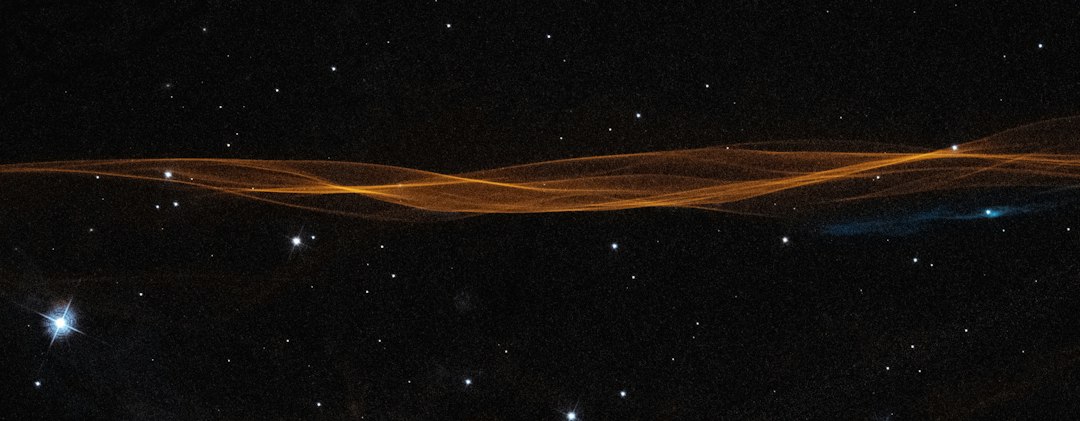
Looking further into the future of SN 2026ahvu, the physics is predictable in its broad strokes, though endlessly surprising in its details. Over the coming months, the supernova ejecta will continue to expand at velocities of roughly 10,000 to 20,000 kilometers per second — a significant fraction of the speed of light. As this material thins and cools, it will transition from a brilliant point source into an extended, evolving supernova remnant, eventually forming a nebula as it sweeps up and shocks the surrounding interstellar medium.
The most famous example of such a remnant is the iconic Crab Nebula in