In a groundbreaking achievement that pushes the boundaries of exoplanetary science, astronomers have successfully detected water-ice clouds in the atmosphere of a distant super-Jupiter, marking a significant milestone in our quest to understand worlds beyond our solar system. This remarkable discovery, made possible by the James Webb Space Telescope (JWST), challenges long-held assumptions about planetary atmospheric models and opens new chapters in comparative planetology.
The finding centers on Eps Ind Ab, a massive exoplanet located just 12 light-years from Earth—practically in our cosmic backyard. What makes this discovery particularly compelling is not just the detection of water-ice clouds themselves, but what their presence reveals about the limitations of our current atmospheric modeling techniques. For decades, scientists have relied on simplified computational models that deliberately excluded cloud formations to make calculations more manageable. This new observation suggests that such simplifications may have caused us to overlook critical atmospheric processes that govern the behavior and evolution of giant planets.
Published in The Astrophysical Journal Letters, this research represents an international collaboration that utilized JWST's unprecedented infrared capabilities to peer into the atmospheric layers of this distant world. The implications extend far beyond a single exoplanet, potentially requiring a fundamental reassessment of how we model and understand the atmospheres of cold giant planets throughout the galaxy.
Understanding Super-Jupiters and Their Atmospheric Complexity
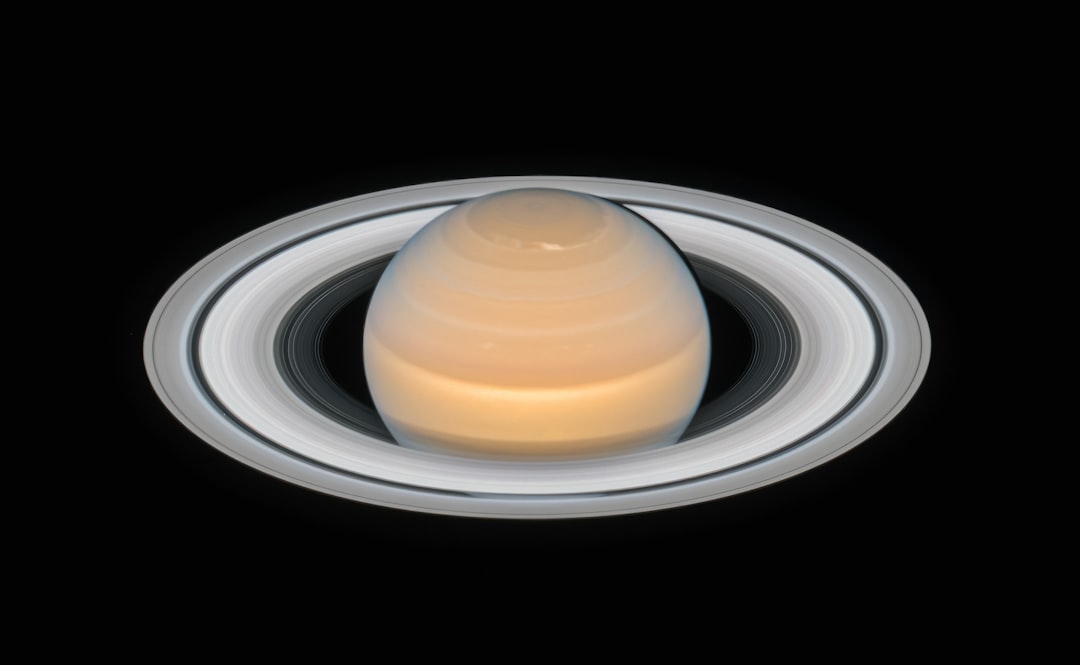
The giant planets within our own solar system—Jupiter, Saturn, Uranus, and Neptune—have long served as natural laboratories for understanding planetary formation and atmospheric dynamics. These massive worlds, with their swirling cloud bands, powerful storms, and complex chemical compositions, have provided scientists with invaluable data through missions like NASA's Juno spacecraft and the historic Voyager flybys. However, studying exoplanets presents an entirely different set of challenges and opportunities.
Eps Ind Ab belongs to a class of exoplanets known as super-Jupiters—worlds that exceed Jupiter's mass but remain below the threshold where they would become brown dwarfs. With an estimated mass of approximately 7.6 times that of Jupiter, this particular exoplanet occupies a fascinating middle ground in the planetary mass spectrum. Its orbital distance of roughly 30 astronomical units (AU) from its host star places it at a location analogous to Neptune's orbit in our solar system, making it what astronomers classify as a "cold" exoplanet.
The system itself presents an intriguing configuration. Eps Ind Ab orbits a K-type star designated Eps Ind A, while two brown dwarfs, Epsilon Indi Ba and Bb, orbit each other at a distant 1,460 AU from the primary star. This multi-body system provides a unique opportunity to study planetary formation and evolution in a complex gravitational environment.
Revolutionary Observations Through Webb's Advanced Capabilities
The research team employed JWST's sophisticated infrared instruments to conduct detailed spectroscopic analysis of Eps Ind Ab's atmosphere. Unlike previous observations, this study utilized higher wavelength observations that revealed unexpected brightness patterns in the exoplanet's atmospheric signature. This brightness anomaly became the key to unlocking the presence of water-ice clouds.
The exoplanet's atmospheric temperature of approximately 275 Kelvin (2 degrees Celsius or 35 degrees Fahrenheit) is notably warmer than Jupiter's frigid 140 Kelvin (-133 degrees Celsius/-208 degrees Fahrenheit). This temperature differential is particularly significant because it indicates that Eps Ind Ab is still in the early stages of its evolutionary timeline. As the planet continues to age, it will gradually radiate away its primordial heat and cool to temperatures more comparable to our solar system's gas giants.
"It's a great problem to have, and it speaks to the immense progress we're making thanks to JWST. What once seemed impossible to detect is now within reach, allowing us to probe the structure of these atmospheres, including the presence of clouds. This reveals new layers of complexity that our models are now beginning to capture and opens the door to even more detailed characterization of these cold, distant worlds."
This statement from James Mang, a PhD student at the University of Texas at Austin and co-author of the study, encapsulates both the excitement and the challenges presented by these new observations. The detection capabilities of JWST have essentially outpaced our theoretical frameworks, forcing a productive crisis in atmospheric modeling.
The Ammonia Puzzle and Cloud Formation Mysteries
One of the most intriguing aspects of this discovery involves the unexpectedly low levels of ammonia detected in Eps Ind Ab's atmosphere. A previous 2024 study had already identified ammonia in the planet's atmospheric composition, but the new observations revealed concentrations significantly lower than theoretical models predicted. This finding is particularly puzzling when compared to Jupiter, whose upper atmosphere contains substantial quantities of both ammonia gas and ammonia-based clouds.
The research team's analysis suggests that the observed brightness variations can be attributed to water-ice cloud formations within the atmospheric layers. This discovery has profound implications for atmospheric chemistry and dynamics. The presence of water-ice clouds indicates active condensation processes occurring at specific temperature and pressure levels within the atmosphere, creating distinct cloud decks that affect how we observe the planet from Earth.
The relationship between cloud formation and atmospheric composition is far more complex than previously modeled. Traditional atmospheric simulations have deliberately omitted cloud physics to maintain computational tractability and reduce the number of variables in already complex calculations. However, as this research demonstrates, clouds are not merely decorative features—they play crucial roles in:
- Radiative transfer: Clouds significantly affect how heat and light move through atmospheric layers, influencing temperature gradients and atmospheric circulation patterns
- Chemical equilibrium: The condensation of certain compounds into cloud particles removes them from the gas phase, altering the chemical balance and affecting spectroscopic observations
- Atmospheric dynamics: Cloud formation and precipitation drive convective processes that redistribute heat and materials vertically through the atmosphere
- Observable properties: Clouds dramatically change the brightness, color, and spectral characteristics of exoplanets as observed from Earth
Methodological Innovations: Combining Direct Imaging and Astrometry
This research represents a sophisticated synthesis of multiple observational techniques. While the initial 2024 study employed direct imaging to observe Eps Ind Ab, this follow-up investigation incorporated astrometric measurements to refine estimates of the planet's mass and orbital characteristics. This multi-method approach exemplifies modern exoplanetary science at its finest.
Direct imaging, one of the most challenging exoplanet detection methods, involves using specialized instruments called coronagraphs to block the overwhelming glare of the host star, allowing the faint light from the planet itself to be detected and analyzed. This technique is particularly effective for large planets orbiting at substantial distances from their stars, making Eps Ind Ab an ideal target.
Astrometry, conversely, measures the precise positions and motions of celestial objects over time. By tracking the subtle wobble that Eps Ind Ab induces in its host star's position, astronomers can calculate the planet's mass and orbital parameters with remarkable precision. The refined measurements revealed an orbital eccentricity of approximately 0.24, indicating a moderately elliptical orbit—significantly more eccentric than Earth's nearly circular 0.01 or Jupiter's 0.04.
The combination of these techniques, enabled by JWST's exceptional sensitivity and resolution, provides a comprehensive picture that neither method could achieve alone. Scientists at the Space Telescope Science Institute continue to develop innovative observational strategies that maximize the scientific return from these precious telescope observations.
Challenging Atmospheric Models and Theoretical Frameworks
Perhaps the most significant outcome of this research lies in its challenge to existing atmospheric models. For years, computational constraints and the desire for simplified calculations led atmospheric scientists to create models that assumed cloud-free atmospheres for giant planets. While researchers acknowledged this limitation, the lack of observational data meant there was little impetus to develop more complex, cloud-inclusive models.
The detection of water-ice clouds in Eps Ind Ab's atmosphere changes this calculus entirely. The observed brightness patterns cannot be explained without invoking cloud formation, and the reduced ammonia levels suggest that condensation processes are actively sequestering certain atmospheric constituents into solid or liquid particles. This reality necessitates a new generation of atmospheric models that incorporate:
- Microphysical cloud processes: Models must now account for nucleation, condensation, particle growth, and precipitation within exoplanet atmospheres
- Multi-phase chemistry: Chemical reactions occurring on cloud particle surfaces and within liquid droplets can differ significantly from gas-phase chemistry
- Vertical mixing and transport: Convection and other atmospheric motions transport cloud particles and affect their distribution throughout atmospheric layers
- Radiative feedback effects: Clouds alter the thermal structure of atmospheres, which in turn affects where and how clouds form, creating complex feedback loops
Research groups at institutions like the European Southern Observatory are already working on next-generation atmospheric models that incorporate these complexities. The computational demands are substantial, but modern supercomputing facilities are increasingly capable of handling such sophisticated simulations.
Implications for Planetary Formation and Evolution
The characteristics of Eps Ind Ab's atmosphere provide valuable clues about its formation history and evolutionary trajectory. The planet's relatively warm temperature suggests it is still radiating the gravitational contraction energy from its formation, a process that can continue for hundreds of millions of years after a giant planet coalesces from the protoplanetary disk.
The presence of water-ice clouds indicates that water was abundant in the region of the protoplanetary disk where Eps Ind Ab formed. This supports models of giant planet formation that involve the accretion of large amounts of icy material beyond the "snow line"—the distance from a star where temperatures are cold enough for water ice to exist. The substantial mass of the planet, combined with its relatively distant orbit, suggests it may have formed through core accretion, where a solid core of rock and ice grew large enough to gravitationally capture a massive hydrogen and helium envelope.
The moderately eccentric orbit raises interesting questions about the system's dynamical history. Such eccentricity could result from gravitational interactions with other bodies in the system, possibly the distant brown dwarf binary, or could indicate past encounters with additional planets that have since been ejected or consumed by the star.
Future Research Directions and Unanswered Questions
This discovery opens numerous avenues for future investigation. The research team specifically highlighted the need to determine whether the low ammonia concentrations observed in Eps Ind Ab represent a unique characteristic of this particular world or a common feature of cold super-Jupiters. Answering this question will require systematic observations of additional exoplanets with similar characteristics.
Key questions that remain to be addressed include:
- Cloud composition and structure: Are the water-ice clouds pure water, or do they contain other condensed species? What is their vertical extent and particle size distribution?
- Atmospheric dynamics: What circulation patterns exist in the atmosphere? How do clouds affect and respond to these patterns?
- Chemical inventory: Beyond water and ammonia, what other molecules are present in the atmosphere? Are there organic compounds or other species of astrobiological interest?
- Temporal variability: Do the clouds and atmospheric properties change over time? Are there storm systems or seasonal variations?
- Comparative planetology: How does Eps Ind Ab compare to other super-Jupiters and to the giant planets in our solar system?
Future observations with JWST and upcoming facilities like the Extremely Large Telescope will help address these questions. The ability to conduct time-series observations and obtain higher-resolution spectra will be particularly valuable for understanding atmospheric dynamics and chemistry in unprecedented detail.
Broader Context: Revolutionizing Exoplanet Atmospheric Science
The detection of water-ice clouds on Eps Ind Ab represents more than an isolated discovery—it exemplifies the transformative impact that JWST is having on exoplanetary science. Since beginning science operations, the telescope has repeatedly exceeded expectations, detecting atmospheric features and molecular species that were previously beyond our observational reach.
This research contributes to a rapidly growing body of knowledge about exoplanet atmospheres across the full range of planetary types, from hot Jupiters to temperate super-Earths. Each new observation refines our understanding of how planets form, evolve, and maintain their atmospheric characteristics over billions of years. The insights gained from studying diverse exoplanetary systems, in turn, provide fresh perspectives on our own solar system's formation and the processes that shaped Earth into a habitable world.
As we continue to push the boundaries of what's observable and measurable, we move closer to answering fundamental questions about planetary diversity, the prevalence of different atmospheric types, and ultimately, the conditions necessary for life to emerge and thrive. The water-ice clouds of Eps Ind Ab, detected across 12 light-years of space, remind us that we live in an era of unprecedented discovery—a golden age of astronomy where the impossible becomes routine, and each observation brings new surprises that challenge and expand our understanding of the cosmos.
This is why we science, and why we must keep looking up.