Spin-Reversing Comet 41P May Face Self-Destruction, Hubble Data Reveals
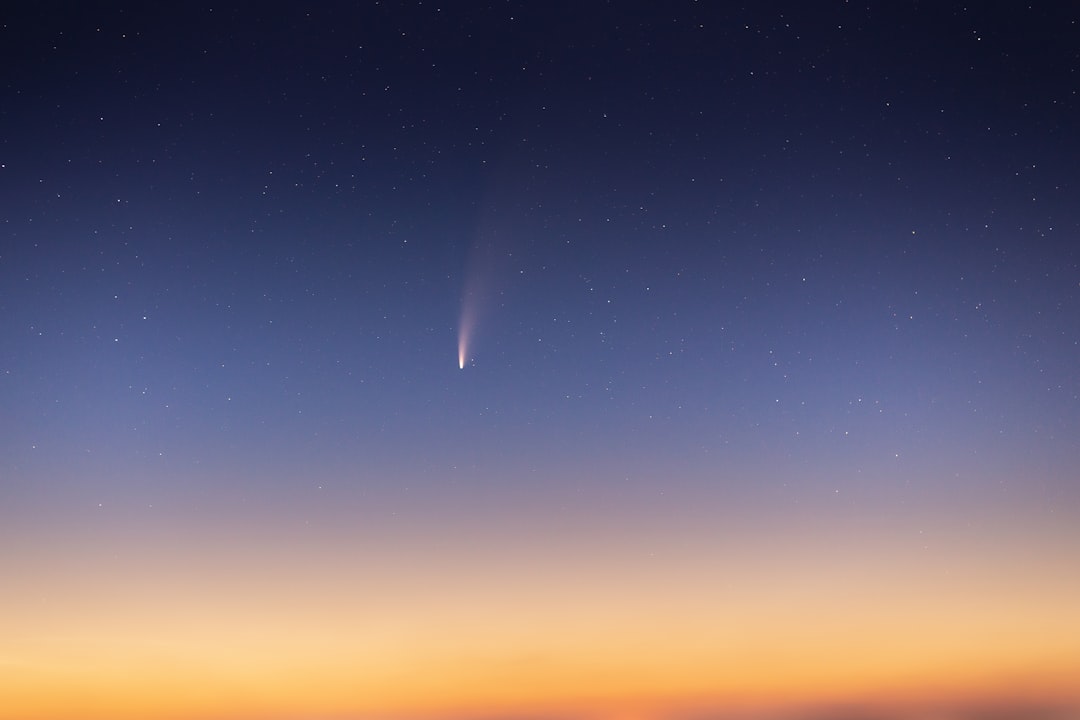
Comets have captivated human imagination for millennia — those ghostly, luminous visitors that streak across the night sky with their spectacular, glowing tails. These tails emerge when a comet ventures close to the Sun and its volatile ices — water, carbon dioxide, and carbon monoxide — sublime directly from solid to gas, dragging dust particles outward to form the iconic twin tails: one composed of ionized gas and one of dust. Yet for planetary scientists, comets are far more than a photogenic phenomenon. They are cosmic time capsules, preserving the pristine chemical and physical conditions of the nascent solar system some 4.6 billion years ago, offering a window into the building blocks that ultimately gave rise to planets, oceans, and perhaps even life.
Against this ancient backdrop, a remarkable new discovery has emerged. A lone researcher from the University of California, Los Angeles (UCLA) has announced the first-ever confirmed observation of a comet that has completely reversed its direction of spin — a finding with profound implications for our understanding of comet dynamics, surface evolution, and longevity. The discovery centers on a small, enigmatic comet designated 41P/Tuttle-Giacobini-Kresák (commonly referred to as 41P), and it was made possible through the extraordinary observational power of NASA's Hubble Space Telescope.
A First in Cometary Science: The Reverse Spin Discovery
The findings, published in March 2026 in The Astronomical Journal, were authored solely by Dr. David Jewitt, a Distinguished Professor in the Department of Earth, Planetary, and Space Sciences at UCLA and one of the most influential figures in modern planetary science — co-discoverer of the first Kuiper Belt Object beyond Pluto. Using archival and observational data from Hubble, Dr. Jewitt determined that comet 41P underwent a dramatic rotational transformation during its closest approach to the Sun — its perihelion — in 2017. Rather than maintaining a steady spin, the comet's nucleus slowed, halted, and then began rotating in the opposite direction.
"Jets of gas streaming off the surface can act like small thrusters. If those jets are unevenly distributed, they can dramatically change how a comet, especially a small one, rotates. It's like pushing a merry-go-round. If it's turning in one direction, and then you push against that, you can slow it and reverse it."
— Dr. David Jewitt, Distinguished Professor, UCLA Department of Earth, Planetary, and Space Sciences
The mechanism Dr. Jewitt proposes is driven by outgassing jets — powerful streams of sublimating gas that erupt asymmetrically from the comet's sun-facing surface. These jets act as natural thrusters, exerting torques on the nucleus. If active vents are concentrated on one side of the comet, or if the distribution of volatiles is uneven, the cumulative rotational force can overpower the comet's existing angular momentum. For small comets with relatively low rotational inertia, like 41P, this effect can be especially dramatic. This phenomenon is sometimes referred to as the YORP-like effect in cometary contexts — an analogy to the Yarkovsky–O'Keefe–Radzievskii–Paddack effect that governs the spin evolution of small asteroids under radiation pressure.
Surface Changes: A Quarter Century of Rapid Evolution
Beyond the spin reversal itself, Dr. Jewitt's analysis revealed another striking anomaly: comet 41P's surface activity in 2017 was measurably lower than what was observed during its previous perihelion in 2001. In the context of cometary geology, this is deeply unusual. Comet surfaces are generally expected to evolve slowly — on timescales of centuries to millennia — as solar heating gradually erodes their outermost crusts and reshapes their terrain. Yet here, significant changes in outgassing behavior occurred within just 25 years, or roughly five orbital periods.
This accelerated surface evolution could indicate that 41P's most volatile surface layers were rapidly depleted during or after the 2017 perihelion passage, exposing less-active material underneath, or alternatively that specific active venting regions were exhausted or physically altered. Such rapid changes challenge existing models of cometary surface evolution and underscore how dynamically active — and fragile — these small bodies can be. Researchers studying ESA's Rosetta mission data from comet 67P/Churyumov-Gerasimenko have similarly documented localized cliff collapses and dramatic surface changes, hinting that cometary geology is far more turbulent than previously appreciated.
On the Brink: 41P's Race Against Self-Destruction
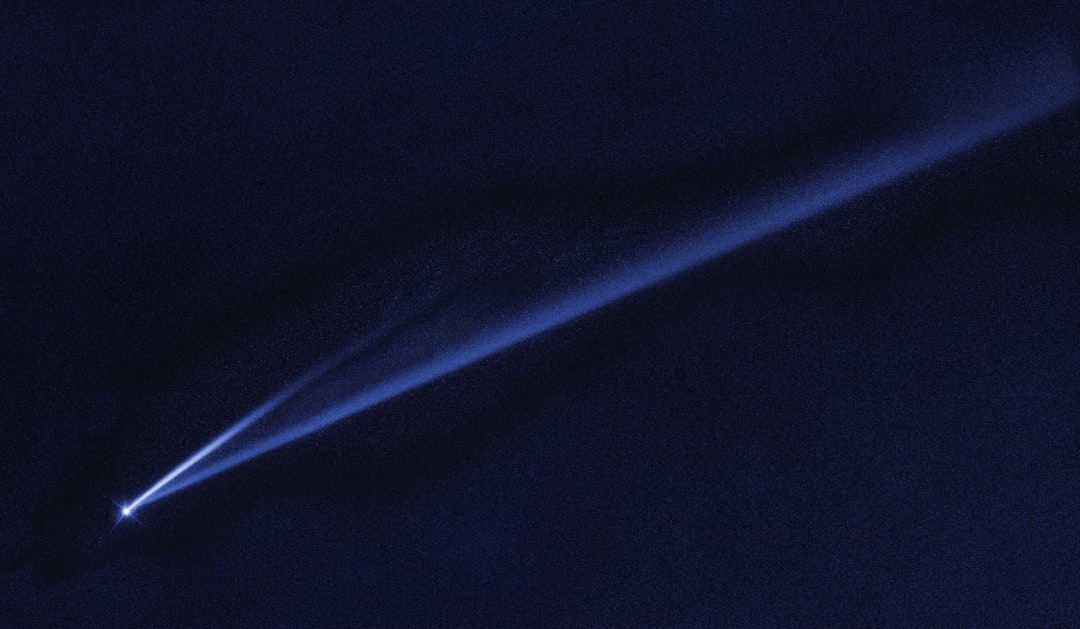
The most urgent implication of Dr. Jewitt's findings is the projected fate of comet 41P. Computer modeling indicates that at the comet's current spin rate — which has been significantly altered by the reverse-spin event — the nucleus is subject to centrifugal stresses that may exceed the tensile strength of its loosely bound, porous material. In other words, 41P may be spinning fast enough to tear itself apart.
The study estimates that 41P's nucleus could survive for only a few more decades, a stark contrast to the typical cometary nucleus lifetime of approximately 1,000 years. This would make 41P an extraordinarily short-lived object by astronomical standards. To put this in perspective:
- Nucleus diameter: Approximately 1 kilometer (0.6 miles), as estimated by Hubble observations — classifying it as a relatively small cometary nucleus.
- Projected survival time: Only a few decades, versus the ~1,000-year average nucleus lifetime for short-period comets.
- Spin-driven disruption: Centrifugal forces from the altered spin rate may exceed the structural cohesion of the nucleus material, leading to gradual shedding or catastrophic fragmentation.
- Possible origin: The study raises the possibility that 41P is itself a fragment broken off from a much larger parent comet in the distant past, which could explain its unusually high outgassing rate relative to its size.
- Outgassing anomaly: 41P may be emitting significantly more gas per unit surface area than typical comets, accelerating both its spin evolution and its mass loss.
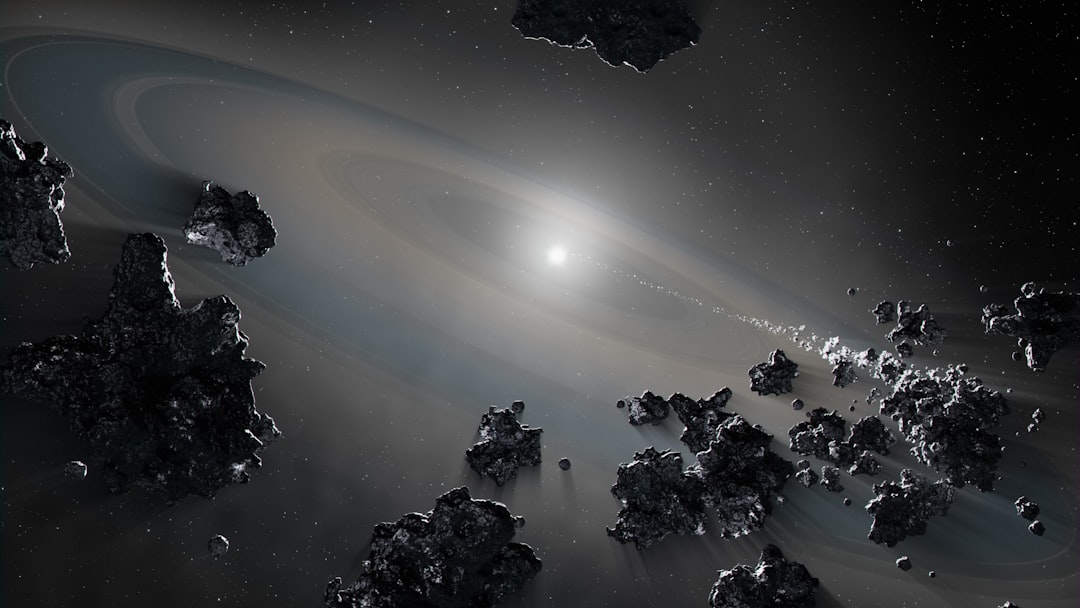
Cometary disruption events are not without precedent. The dramatic breakup of Comet Shoemaker-Levy 9 — torn apart by Jupiter's tidal forces before its fragments crashed into the giant planet in 1994 — stands as one of the most spectacular examples of cometary fragmentation in recorded history. While 41P faces a different mechanism, its potential self-destruction via rotational instability would represent an equally significant, though more gradual, cometary demise.
The Origins of 41P: From the Kuiper Belt to the Inner Solar System
Comet 41P/Tuttle-Giacobini-Kresák belongs to a family of comets that originate in the Kuiper Belt — a vast, donut-shaped reservoir of icy bodies located between approximately 30 and 50 astronomical units (AU) from the Sun, extending beyond the orbit of Neptune. The Kuiper Belt is estimated to harbor trillions of cometary nuclei, many of which are composed of materials that have remained largely unchanged since the formation of the solar system. Learn more about the Kuiper Belt at NASA's Solar System Exploration.
41P is classified as a short-period comet (also known as a Jupiter-family comet), completing one full orbit around the Sun every 5.4 years. This relatively frequent return to the inner solar system — where solar heating drives intense outgassing — means that 41P undergoes repeated cycles of volatile loss far more often than long-period comets, accelerating its evolutionary timeline. It is one of approximately 4,000 to 5,000 comets that have been cataloged making this journey from the outer solar system into the realm of the planets.
The Outer Frontier: The Oort Cloud and Long-Period Comets
Beyond even the Kuiper Belt lies the Oort Cloud — a vast, spherical shell of icy bodies thought to represent the outermost gravitational boundary of our solar system. Its inner region begins at an estimated 2,000 to 5,000 AU from the Sun, while its outer edge stretches to an almost inconceivable ~100,000 AU — roughly halfway to Proxima Centauri, our nearest stellar neighbor. Like the Kuiper Belt, the Oort Cloud is believed to contain trillions of cometary bodies, but these give rise to long-period comets that take thousands to millions of years to complete a single orbit.
Occasionally, gravitational perturbations from passing stars or the Milky Way's tidal forces nudge Oort Cloud objects onto trajectories that send them plunging toward the inner solar system for the first time — pristine relics making their debut appearance after billions of years in the deep freeze. Studying both Kuiper Belt comets like 41P and Oort Cloud newcomers allows scientists to compare the chemistry and physics of objects from very different dynamical histories, building a more complete picture of our solar system's formation. More on cometary science can be found at the NASA Jet Propulsion Laboratory's comet research page and HubbleSite's Solar System science hub.
Broader Implications for Planetary Science
The discovery of 41P's spin reversal is more than a curiosity — it has meaningful consequences for how scientists model the long-term evolution of cometary populations throughout the solar system. If outgassing torques can reverse the spin of a comet in a single perihelion passage, this process may be far more common than previously modeled, especially among small, volatile-rich nuclei. This would imply that the rotational states of short-period comets are far less stable and predictable than assumed, with major implications for:
- Comet population dynamics: A higher rate of spin-driven disruption could mean that small comets fragment and are destroyed more rapidly than current models suggest, affecting estimates of cometary influx into the inner solar system.
- Water delivery to early Earth: Since comets are a proposed mechanism for delivering water and organic molecules to early Earth, understanding their survival rates and outgassing behavior is directly relevant to the study of life's origins.
- Future spacecraft mission planning: Missions targeting cometary nuclei — like the proposed Comet Interceptor mission by ESA — must account for the possibility of rapidly changing rotational states when planning approach trajectories and surface interaction strategies.
- Telescopic survey strategies: Identifying other comets at risk of spin-driven disruption could become a new priority for survey telescopes, enabling scientists to observe rare fragmentation events in real time.
Dr. Jewitt's work on 41P joins a distinguished legacy of comet discoveries enabled by Hubble's unparalleled ultraviolet and optical resolution. As next-generation observatories — including the James Webb Space Telescope and future ground-based extremely large telescopes — bring new infrared and spectroscopic capabilities to bear on cometary science, we can expect an era of accelerating discoveries about these ancient, fragile wanderers.
Looking Ahead
Comet 41P/Tuttle-Giacobini-Kresák will continue to make its regular 5.4-year visits to the inner solar system for as long as it survives. Each perihelion passage offers astronomers a fresh opportunity to monitor its evolving spin state, outgassing activity, and structural integrity. If Dr. Jewitt's models are correct, future observations may document the ongoing disintegration of this remarkable little comet — a fleeting but scientifically invaluable spectacle that could reveal in real time how comets die.
What other comets are quietly reversing their spins or teetering on the edge of self-destruction, undetected in the vast archive of observational data? With the powerful tools of modern astronomy at our disposal, the answers may be closer than we think — and they promise to reshape our understanding of the most ancient inhabitants of our solar neighborhood.