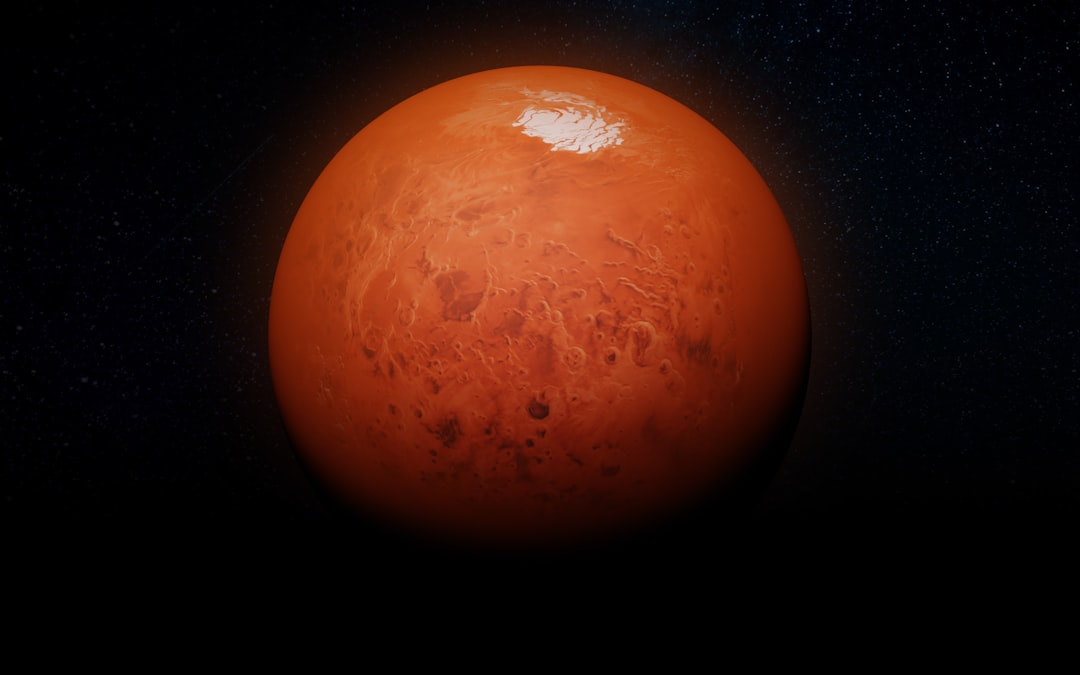
Electrically Charged Mars Dust Storms: A Hidden Threat to Future Exploration
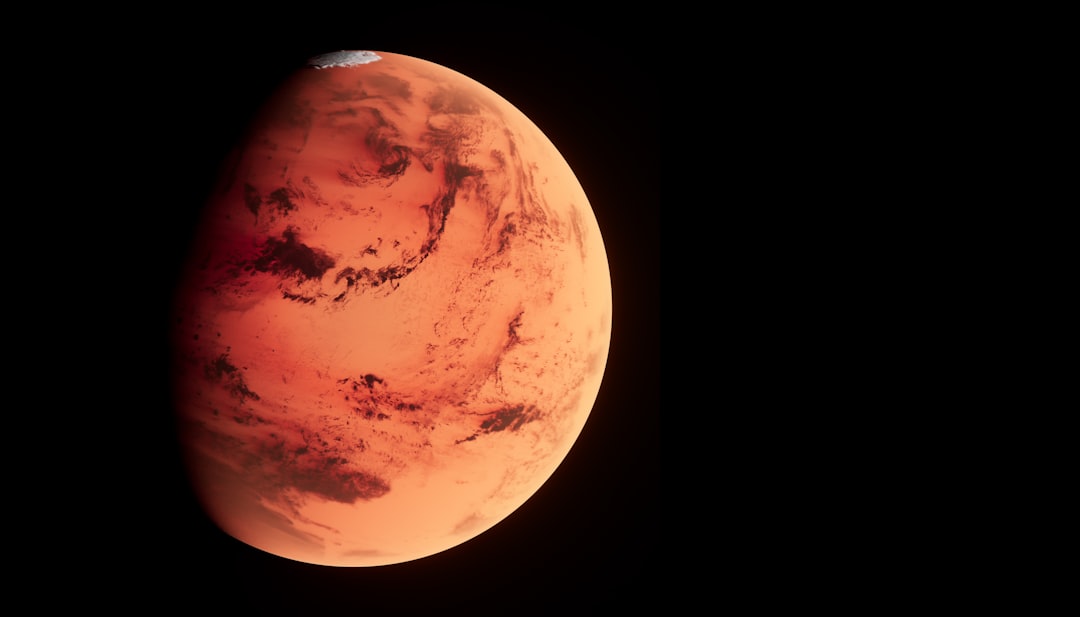
Martian dust storms rank among the most fascinating and destructive planetary weather phenomena ever observed. Of all the known worlds in our solar system, only three harbor active dust storms: Earth, Mars, and Titan, Saturn's largest moon. Yet Mars stands in a category of its own. Unlike the localized dust storms of Earth's deserts or Titan's hydrocarbon haze-driven surface winds, Martian dust storms can grow to truly planetary scales — ultimately engulfing the entire planet in a thick, ochre veil of suspended particles. This phenomenon, known as a global dust storm or planet-encircling dust event (PEDE), renders the Martian surface completely invisible from orbit, slashes incoming solar radiation to a fraction of its normal intensity, and poses extraordinary challenges for both robotic and future human exploration.
For decades, scientists and mission planners have recognized the physical hazards of these storms: reduced visibility, clogged mechanical components, and dramatically diminished solar power generation. But a compelling new body of research suggests that these well-understood risks may only tell part of the story. What if Martian global dust storms also transform the lower atmosphere into a structured electrostatic environment — one capable of producing powerful electric fields that could threaten spacecraft electronics, surface habitats, and even human explorers?
The New Study: Electrostatics in the Martian Atmosphere
A trio of researchers from the University of Alabama in Huntsville (UAH) and the NASA Marshall Space Flight Center have put forward a striking hypothesis: that Martian dust storms may cause the lower atmosphere to become significantly electrically charged, potentially approaching what scientists call breakdown-favorable conditions — the threshold at which electrical discharges, analogous to lightning, could theoretically occur.
Their findings, published in The Planetary Science Journal, are based on a detailed analysis of atmospheric data from Martian Year 34, a period spanning May 5, 2017 to March 23, 2019. The team specifically examined the behavior of the lower Martian atmosphere during the catastrophic global dust storm of mid-2018, one of the most intense and consequential dust events in recent Martian history.
To conduct their analysis, the researchers drew on data from the Mars Climate Database v.6.1, a high-resolution, publicly available Martian weather dataset derived from sophisticated Mars General Circulation Model (GCM) simulations. These models synthesize orbital and surface observations to reconstruct atmospheric conditions — including temperature profiles, wind patterns, dust optical depth, and pressure — with remarkable fidelity across the entire planet.
"For future Mars exploration, our study suggests that major dust storms should be evaluated not only as atmospheric, thermal and visibility hazards, but also as structured electrostatic environments. We do not quantify risk to a specific spacecraft, habitat, instrument or communication system. What we show is that during the Martian Year 34 global dust storm, the lower atmosphere developed localized and altitude-dependent regions where charge separation could persist, and modeled electric fields approached breakdown-favorable conditions."
— Chali Idosa Uga, PhD student, Department of Space Science, UAH, and lead author of the study.
Understanding Martian Years and the 2018 Dust Storm
To appreciate the significance of this research, it helps to understand the Martian calendar. One Martian year lasts approximately 687 Earth days — nearly twice as long as an Earth year — owing to Mars's greater orbital distance from the Sun. The scientific community formally began tracking Martian Years in 2000, with the counting origin set to April 11, 1955, a date selected because it immediately preceded the historic global dust storm observed telescopically from Earth in 1956, one of the earliest well-documented examples of a planet-encircling event.
The Martian Year 34 global dust storm — which erupted in June 2018 — rapidly grew from a regional disturbance near Hellas Basin into a full planetary-scale event within weeks. At its peak, it reduced solar irradiance at the Martian surface by more than 99% in some regions, making it one of the most severe dust storms observed since the Viking landers of the 1970s. It also provided an unprecedented natural laboratory for studying Martian atmospheric dynamics, with multiple spacecraft in orbit and on the surface monitoring the event simultaneously.
How Dust Storms Generate Electric Fields
The mechanism by which dust storms generate electrical charge is not unique to Mars — it has been well-studied in terrestrial environments. On Earth, triboelectric charging (or contact electrification) occurs when particles collide and exchange electrons, causing some particles to acquire positive charges and others negative charges. In large, turbulent storms, this process leads to macroscopic charge separation, ultimately producing the strong electric fields responsible for lightning in terrestrial thunderstorms and dust devils.
On Mars, however, the conditions are profoundly different. The Martian atmosphere is composed primarily of carbon dioxide (CO₂) at a mean surface pressure of only about 600 pascals — roughly 0.6% of Earth's sea-level pressure. Despite this thin atmosphere, the prevalence of fine, electrostatically susceptible dust particles suspended across vast altitudes during a global storm creates ideal conditions for charge separation. The researchers found that this charging effect is not uniform — rather, it creates localized, altitude-dependent regions where electric fields could build to dangerous levels, particularly in the lowest layers of the atmosphere where future human activities would be concentrated.
The concept of electrical breakdown refers to the point at which the electric field in a medium becomes strong enough to ionize the surrounding gas, causing it to conduct electricity — essentially, the precursor to a lightning strike. While Mars's thin atmosphere means that breakdown can occur at lower absolute field strengths than on Earth, the implications for sensitive electronics, fuel systems, and human spacesuits could nonetheless be severe.
The 2018 Storm and Its Infamous Casualties
The 2018 global dust storm holds a particularly poignant place in the history of Mars exploration. NASA's Curiosity rover, operating inside Gale Crater with its nuclear-powered Multi-Mission Radioisotope Thermoelectric Generator (MMRTG), was able to continue operations throughout the storm and provided invaluable ground-level data on dust opacity, temperature inversions, and atmospheric pressure changes. Curiosity's ability to function independent of solar power made it uniquely suited to serve as a surface-based monitor during this extraordinary event.
Far less fortunate was NASA's Opportunity rover — affectionately known as Oppy — which had been exploring the Martian surface since January 2004, some 14 years beyond its original 90-sol (Martian day) mission design. Opportunity's remarkable longevity was partly attributable to a serendipitous phenomenon: dust devils periodically swept across its solar panels, cleaning away accumulated dust and allowing for consistent battery recharging. When the 2018 global dust storm descended, however, no such cleaning mechanism could compensate for the near-total blackout of sunlight. Opportunity fell silent on June 10, 2018, and despite hundreds of recovery attempts over the following months, NASA officially declared the mission concluded on February 13, 2019.
Meanwhile, a fleet of orbiting spacecraft provided critical multi-perspective monitoring of the 2018 event. NASA's Mars Reconnaissance Orbiter (MRO) tracked the storm's growth and evolution using its suite of cameras and spectrometers. NASA's MAVEN (Mars Atmosphere and Volatile EvolutioN) spacecraft examined how the storm affected the upper atmosphere and accelerated the escape of water vapor into space. ESA's Trace Gas Orbiter (TGO) contributed measurements of trace atmospheric constituents and provided additional data on how the storm altered global wind patterns and solar heating profiles.
Implications for Future Human Missions to Mars
This research carries profound implications for NASA's long-term goal of sending humans to Mars, a mission architecture that has been discussed for the 2030s and beyond. Understanding the full spectrum of environmental hazards on the Martian surface is not merely an academic exercise — it is an engineering and survival imperative. Current Mars mission planning already accounts for dust accumulation on solar panels, thermal management during storms, and communication blackouts caused by increased atmospheric dust opacity. The addition of electrostatic hazards introduces an entirely new dimension of risk that mission planners must now incorporate into their models.
The specific risks that electrically charged dust storms could pose for human exploration include:
- Electrostatic discharge (ESD) damage to sensitive electronic systems, including life support computers, navigation instruments, and communication hardware.
- Fuel ignition risks in surface habitats and propellant storage facilities, where electrostatic sparks near volatile materials could be catastrophic.
- Spacesuit integrity concerns, as electrostatic buildup could interfere with helmet visors, seal mechanisms, or biosensors worn by astronauts on EVAs (extravehicular activities).
- Dust adhesion amplification, since electrostatically charged dust particles are significantly more adhesive and harder to remove from surfaces, exacerbating the already-serious problem of dust coating solar panels, optical sensors, and mechanical joints.
- Disruption of surface-to-orbit communications, as ionized layers in the lower atmosphere could interfere with radio frequency signals critical for mission operations.
It is worth noting that the researchers deliberately stopped short of quantifying the specific risk to any particular piece of hardware or human. Their goal was to establish the existence and structure of these electrostatic environments and to call attention to a hazard that has been underrepresented in mission risk assessments. The next phase of research will require more targeted modeling, laboratory simulations of Martian dust charging dynamics, and ideally, direct in-situ measurements from future landers equipped with electric field sensors.
Broader Context: Mars Exploration and Atmospheric Science
This study fits into a broader, rapidly maturing field of Martian atmospheric science that has expanded enormously over the past two decades. Missions such as NASA's InSight lander — which operated on Mars from 2018 to 2022 — provided a treasure trove of meteorological data, including detailed records of dust devil pressure signatures, wind speeds, and seismic activity. The forthcoming Mars Environmental Dynamics Analyzer (MEDA) instrument aboard NASA's Perseverance rover continues to expand our understanding of near-surface atmospheric conditions, including humidity, radiation, and dust particle properties.
Understanding Martian electrical environments also has relevance beyond human exploration. Electrostatic fields generated during dust storms can influence the chemical evolution of the Martian atmosphere by driving reactions between dust minerals and atmospheric gases — potentially affecting the distribution of reactive chemical species such as hydrogen peroxide (H₂O₂) and ozone (O₃), which have implications for the search for biosignatures and the long-term habitability of the Martian surface.
Looking Ahead
The research by Uga and colleagues at UAH and NASA Marshall represents an important early step in characterizing a previously underappreciated hazard of Mars exploration. As humanity's ambitions on the Red Planet grow from robotic precursors to crewed outposts, the stakes of understanding every facet of the Martian environment rise correspondingly. Global dust storms are not merely inconveniences or power generation problems — they are complex, multi-dimensional atmospheric phenomena with thermal, optical, chemical, and electrostatic consequences that must all be addressed in the design of future missions.
Future research will likely involve developing dedicated electric field monitoring payloads for Mars landers and rovers, refining GCM simulations to better capture the microphysics of dust charging, and conducting laboratory experiments that replicate the low-pressure, CO₂-rich Martian conditions under which triboelectric charging occurs. International collaboration — between NASA, ESA, and other space agencies — will be essential in building the comprehensive atmospheric models needed to protect the next generation of Mars explorers.
The Red Planet has never been a forgiving destination. But with each study like this one, humanity inches closer to understanding the full measure of what it will take to live and work on another world — and to doing so safely.