Tears of the Lion: Catching the 2026 Leonid Meteors
Every November, Earth passes through one of the most storied and scientifically significant meteor streams in the solar system. The Leonid meteor shower — named for its apparent origin point in the constellation Leo — is a celestial event that has captivated astronomers, frightened civilizations, and reshaped scientific understanding across more than a millennium of recorded history. While 2026 is not expected to be a legendary "storm year," the shower promises a respectable performance, and the stage is quietly being set for potentially enhanced activity as we move deeper into the late 2020s and early 2030s.
The Source: Comet 55P/Tempel-Tuttle
At the heart of the Leonid meteor shower lies periodic comet 55P/Tempel-Tuttle, a frozen traveler on an elliptical orbit that takes approximately 33 years to complete a single journey around the Sun. First co-discovered by Ernst Tempel in 1865 and Horace Tuttle in 1866, the comet has since been recognized as the progenitor of one of the sky's most dynamic annual light shows. Each time the comet swings close to the Sun, solar radiation and the solar wind strip away layers of ice and dust, releasing fresh trails of debris that linger along its orbital path like a scattered river of cosmic rubble.
As Earth intersects this debris field each November, the particles — most no larger than a grain of sand — slam into our upper atmosphere at extraordinary velocities, superheating the surrounding air and producing the characteristic streaks of light we call meteors. Comet 55P/Tempel-Tuttle is next scheduled to reach perihelion — its closest approach to the Sun — on May 20, 2031, at a distance of just 0.975 Astronomical Units (AU), placing it slightly inside Earth's own orbit. The closer the comet passes to the Sun and to Earth's path, the denser the debris trails it deposits, and the more spectacular the resulting meteor storms can become.
"The Leonid meteor shower is one of nature's most dramatic reminders that Earth is not an island — it is a traveler in a solar system still rich with the ancient debris of its own formation."
For a deeper look at comet science and how cometary debris produces meteor showers, visit the NASA Solar System Exploration: Leonids overview.
What to Expect in 2026
Peak Timing and Projected Rates
The 2026 Leonid meteor shower is projected to peak on November 17th at 03:00 Universal Time (UT). This timing is favorable for observers across Europe and western Asia, who will experience peak activity in the pre-dawn hours. Observers in North America will follow just a few hours behind, still catching a productive portion of the shower as morning twilight approaches. Current models project a Zenithal Hourly Rate (ZHR) of approximately 20 meteors per hour under ideal conditions — a modest but consistently rewarding display for dedicated skywatchers.
Favorable Moon Conditions
One of the most practical considerations for any meteor observer is the phase and position of the Moon. In 2026, the Moon will be approximately 41% illuminated, reaching its First Quarter phase on the night following the shower's peak. Crucially, the Moon will set in the western sky just as the Leonid radiant climbs above the eastern horizon, leaving several prime dark-sky hours for unobstructed viewing. This lunar geometry represents a meaningfully better scenario than many recent Leonid apparitions, where a bright Moon washed out fainter meteors throughout the night.
A Remarkable Celestial Tableau
As an added visual bonus in 2026, the planets Mars and Jupiter will both be positioned in close proximity to the Leonid radiant, alongside the brilliant first-magnitude star Regulus (Alpha Leonis) and the antihelion point — the region of sky directly opposite the Sun, toward which Earth itself is currently traveling. This clustering of bright solar system objects will make the pre-dawn eastern sky a particularly spectacular backdrop against which Leonid meteors will blaze.
The Radiant Point: The Sickle of Leo
All Leonid meteors appear to radiate outward from a specific point in the sky known as the radiant, located within the distinctive "Sickle of Leo" asterism — a backward, question mark-shaped grouping of stars that forms the head and mane of the celestial lion. During November, the radiant tracks from the +3rd magnitude star Epsilon Leonis past the bright double star Algieba (Gamma Leonis). Any meteor whose trail, when traced backward across the sky, converges on this region can be identified as a genuine Leonid. Sporadic meteors and members of other minor showers will not share this common origin point.
The radiant rises in the northeast in the late evening hours but climbs highest above the horizon in the hours before dawn — which is precisely when Earth's rotational motion carries observers directly into the oncoming meteor stream, dramatically increasing the observed count. This is a consistent principle for virtually all meteor showers: the best rates are always seen in the pre-dawn hours.
Speed Demons of the Meteor World
What sets the Leonids apart from other annual showers is not just their historical storm potential, but their extraordinary velocity. The particles that produce Leonid meteors slam into Earth's atmosphere at approximately 70 kilometers per second (158,000 miles per hour) — approaching the planet nearly head-on as Earth travels in the opposite direction around the Sun. This is among the highest entry velocities of any annual meteor shower, approaching the theoretical maximum for meteors originating in the inner solar system.
At such speeds, even a particle as small as a grain of sand carries sufficient kinetic energy to produce a brilliant, luminous streak. The extreme velocity also makes Leonid meteors prone to producing characteristic persistent trains — glowing ionized columns of atmosphere that can linger for several seconds or even minutes after the meteor itself has vanished. Some Leonid fireballs produce trains visible for a minute or more, drifting and distorting in the high-altitude winds of the mesosphere.
- Entry velocity: ~70 km/s (~158,000 mph)
- Peak altitude of ablation: approximately 100–120 km above Earth's surface
- Particle size: mostly sand-grain to pea-sized fragments
- Color: often brilliant white or blue-white due to extreme ionization
- Persistent trains: common among brighter Leonid meteors
A History Written in Fire: The Great Leonid Storms
The historical record of the Leonid meteor shower is remarkably rich, stretching back over a millennium. Arab astronomers documented a significant Leonid display as early as 902 AD, recording what they described as "stars falling like rain." Similar accounts appear in Chinese, Japanese, Korean, and European chronicles over subsequent centuries, each coinciding with the comet's approximately 33-year orbital cycle.
The Storm of 1833: A Turning Point in Science
No event in the shower's history is more consequential than the Great Leonid Storm of November 12–13, 1833. Residents along the entire eastern seaboard of the United States awoke to a sky so saturated with falling meteors that many believed the end of the world had come. Estimates suggest rates may have reached 100,000 meteors per hour or more at the storm's peak. The spectacle was visible across much of North America and produced widespread panic among those who had no framework for understanding what they were witnessing.
Yet the storm's scientific legacy was profound. Denison Olmsted of Yale University conducted systematic observations and analysis in the months that followed, publishing his conclusion that the meteors originated from a point in space — a fixed radiant — and therefore could not be an atmospheric phenomenon as previously assumed. The 1833 storm is widely regarded as one of the founding moments of modern meteor astronomy, firmly establishing that meteors originate from material in interplanetary space. The shower also gave rise to or accelerated several American religious movements of the early 19th century, leaving an indelible cultural mark.
The Storm of 1966: 160,000 Per Hour
Perhaps the most intense Leonid storm in modern recorded history unfolded on the morning of November 17, 1966, when observers across the American Southwest reported observed rates exceeding an almost incomprehensible 160,000 meteors per hour at the storm's peak. That translates to roughly 44 meteors every single second — a rate so overwhelming that witnesses described the sky as appearing to "spin" due to the visual overload. This shower remains a benchmark event in modern meteor science and a defining memory for everyone fortunate enough to have witnessed it.
The 1998–1999 Events: A Modern Reminder
The most recent major Leonid outburst cycle produced spectacular results in 1998 and 1999. The 1999 storm, in particular, was predicted with unprecedented accuracy by meteor scientists using newly developed dust trail models, with European observers witnessing ZHR values exceeding 3,700 meteors per hour. Equally memorable, however, was the surprise performance of 1998, when observers across the Middle East and Asia were treated to a brilliant, unanticipated display rich with slow-moving fireballs and persistent glowing trains — a vivid reminder that the Leonids do not always follow their script.
Learn more about the science of meteor shower prediction at the International Meteor Organization (IMO), the global body that coordinates amateur and professional meteor observations worldwide.
Looking Ahead: Will the 2030s Bring Another Storm?
With comet 55P/Tempel-Tuttle approaching perihelion in 2031, the natural question is whether Earth will witness another great Leonid storm during that apparition cycle. The answer, according to current dust trail modeling, is cautiously pessimistic for a true storm but optimistic for enhanced activity. Contemporary models — far more sophisticated than anything available during the 1990s — suggest that the geometry of the 2031 comet pass will not deliver a dense, fresh debris trail directly across Earth's orbital path in a manner that would trigger rates above the 1,000 per hour "storm" threshold.
However, older, more diffuse debris trails deposited during previous perihelion passages may still deliver rates well above the annual background level — potentially exceeding 100 meteors per hour in the early 2030s. This would comfortably surpass the peak rates of the celebrated Perseid and Geminid showers, which typically top out around 100–150 ZHR under ideal conditions and represent the standard for annual meteor watching. Current models point toward 2099 as the next candidate year for a truly great Leonid storm — a sobering timeline, but one that makes every Leonid display in the intervening decades feel all the more precious.
The mid-point of the current 33-year cycle passed in 2017, and the gradual uptick in activity that characterized the late 1990s has not yet repeated itself in a comparable fashion, though the shower has shown modest enhancements during several recent apparitions. Researchers at institutions including the European Space Agency (ESA) continue to refine models of cometary dust trail evolution to improve the accuracy of long-range meteor storm forecasting.
How to Observe the 2026 Leonids
Basic Observing Tips
Watching a meteor shower requires no special equipment, no telescope, and no previous astronomy experience. The key requirements are clear skies, a dark location, and patience. Here are the essentials for making the most of the 2026 Leonid display:
- Go outside at least 30 minutes before you plan to observe to allow your eyes to fully dark-adapt.
- Lie back on a reclining chair or blanket and face east, keeping the radiant in Leo within your general field of view without staring directly at it — meteors appear across the whole sky but trail away from the radiant.
- The best viewing window is from local midnight onward, with peak rates in the 2–4 AM local time frame.
- Dress warmly — November nights are cold in the Northern Hemisphere, and chilled observers tend to go inside prematurely.
- Avoid using your phone or any white-light source; use a red flashlight if you need to see anything on the ground.
Astrophotography of the Leonids
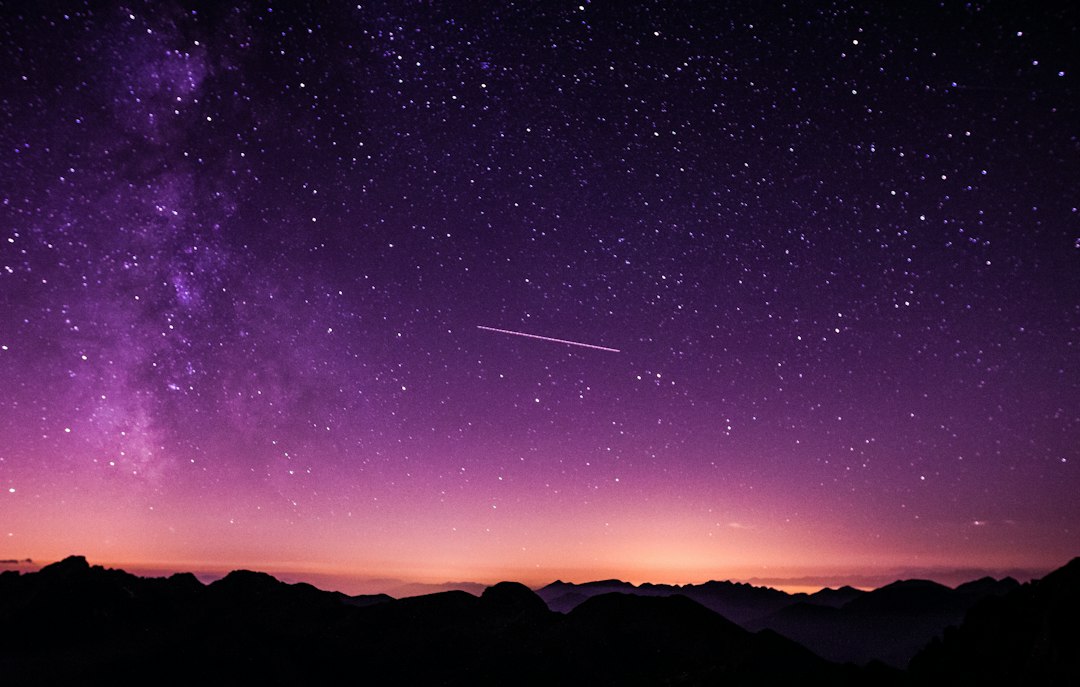
Capturing Leonid meteors on camera is a highly rewarding pursuit and requires only modest equipment. A DSLR or mirrorless camera mounted on a sturdy tripod, fitted with a wide-angle lens (14mm–24mm focal length is ideal), and set to take continuous long exposures of 20–30 seconds at ISO 1600–3200 and f/2.8 or wider, will capture a satisfying sample of the shower over a few hours. An intervalometer allows the camera to run autonomously, freeing you to observe visually while the camera works. Stack your images afterward using free software like Sequator or DeepSkyStacker to produce composite images showing multiple meteor trails.
Citizen Science: Why Your Observations Matter
Professional meteor science depends heavily on coordinated observations from amateur astronomers around the globe. Even simple visual counts — recording the number of Leonids seen per 15-minute interval, the sky limiting magnitude, and the fraction of sky blocked by clouds — provide genuinely useful scientific data when aggregated across thousands of observers worldwide. The International Meteor Organization (IMO) maintains an online observation submission system and publishes real-time activity reports during major showers. For North American observers, the American Meteor Society (AMS) offers a parallel reporting platform and maintains an extensive fireball database fed entirely by public reports.
Additionally, the NASA Meteor Watch program coordinates observations using all-sky camera networks across the United States, providing complementary data on meteor brightness, trajectory, and origin that complement visual and photographic reports from citizen scientists.
The Enduring Appeal of the Leonids
Few phenomena in observational astronomy so elegantly connect the intimate experience of lying beneath an open sky with the grand, deep-time