The dream of transforming Mars into a habitable world has captivated scientists, engineers, and science fiction enthusiasts for generations. However, a comprehensive new analysis from Dr. Slava Turyshev at NASA's Jet Propulsion Laboratory reveals that the greatest obstacle to terraforming the Red Planet isn't the climate engineering itself—it's the staggering industrial scale required to accomplish it. The pre-print paper, available on arXiv, provides a sobering quantitative assessment of what it would actually take to make Mars Earth-like, and the numbers are almost incomprehensible in their magnitude.
While the concept of planetary engineering has been discussed since the mid-20th century, recent decades have brought increasingly sophisticated analyses of the practical challenges involved. What emerges from Dr. Turyshev's calculations is a picture not of impossibility, but of a project so vast it would require energy outputs and material resources far beyond anything humanity has ever attempted. This isn't simply a matter of releasing greenhouse gases or deploying solar mirrors—it's an industrial undertaking that would dwarf all of human civilization's combined infrastructure projects throughout history.
The implications extend beyond mere technical feasibility. Understanding the true scale of terraforming helps us appreciate both the remarkable resilience of Earth's biosphere and the enormous challenges facing any future Martian colonists. As researchers at the NASA Mars Exploration Program continue to study the Red Planet, these calculations provide crucial context for planning realistic approaches to human settlement.
The Five Stages of Planetary Transformation
Dr. Turyshev's analysis breaks down the terraforming process into five distinct milestones, each representing a progressively more ambitious engineering goal. Understanding these stages helps clarify the enormous gap between Mars's current state and a truly habitable world.
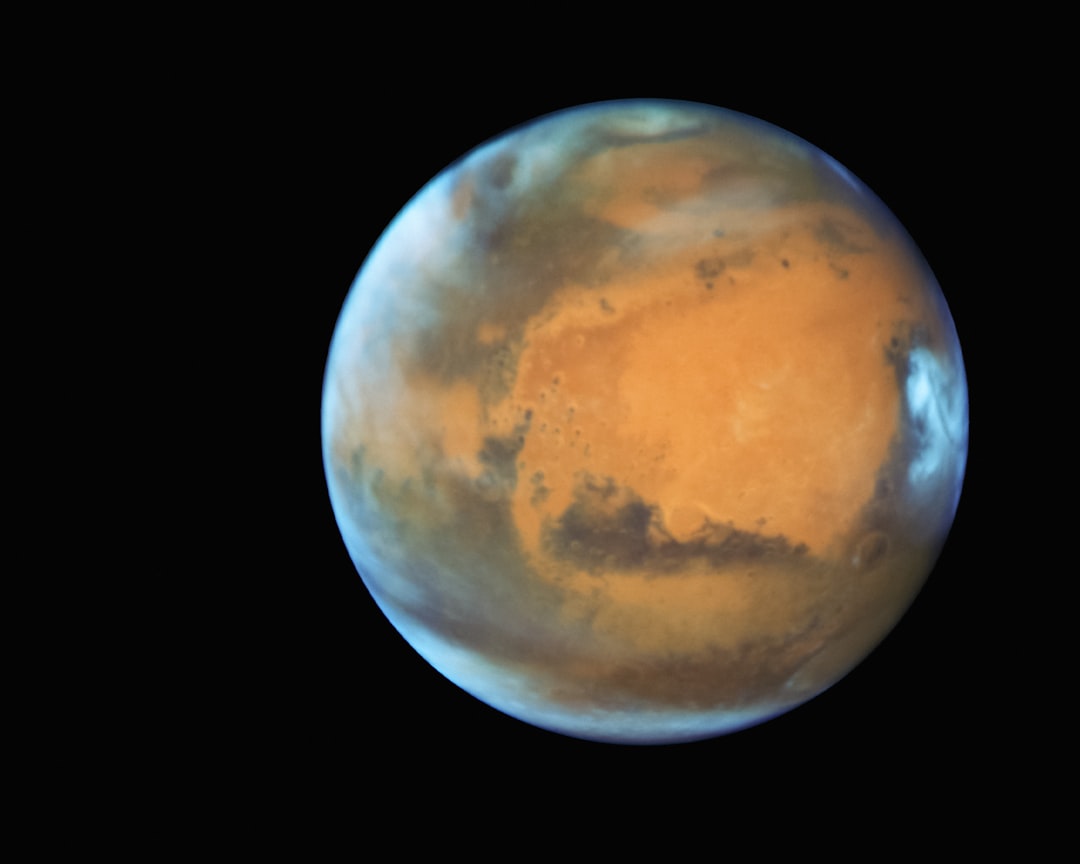
The first stage is Mars as it exists today: a frozen desert world with surface temperatures averaging minus 60°C and atmospheric pressure barely 0.6% of Earth's. Any human presence requires complete life support systems, pressure suits, and radiation shielding. This is the baseline from which all terraforming efforts must begin.
The second milestone involves raising atmospheric pressure above the triple point of water—approximately 6.1 millibars at 0°C. At this critical threshold, water can exist simultaneously as ice, liquid, and vapor in thermodynamic equilibrium. This represents the minimum condition for liquid water to exist on the Martian surface, even temporarily. Achieving this would require adding roughly 3.89×10¹⁵ kilograms of atmospheric gases—a mass nearly equivalent to Deimos, Mars's smaller moon.
The third stage envisions what engineers call "paraterraforming"—creating large-scale enclosed habitats or "shirtsleeve greenhouses" where agriculture could flourish. These structures would maintain internal pressures around 100 millibars, taking advantage of the pressure differential to support their structural integrity. According to research published in the journal Acta Astronautica, such enclosed ecosystems could theoretically be scaled up to encompass entire regions or even the whole planet in a concept known as a "world house."
The Blood-Boiling Threshold and Beyond
The fourth milestone addresses a crucial physiological requirement: preventing human blood from boiling. At Mars's current atmospheric pressure, exposed bodily fluids would vaporize at normal human body temperature. To prevent this gruesome outcome, the global atmospheric pressure must reach at least 62.7 millibars—the point where water (and blood) remains liquid at 37°C. This represents a minimum requirement for any form of unprotected human presence on the surface.
The final and most ambitious stage would create a fully breathable atmosphere with approximately 210 millibars of oxygen buffered by nitrogen, totaling around 500 millibars of pressure—roughly half of Earth's sea-level pressure. This would require adding approximately 10¹⁸ kilograms of gas, equivalent to the mass of Janus, one of Saturn's irregular moons. While this sounds impossibly large, astronomers estimate hundreds of similar-sized bodies exist throughout the solar system, making the raw materials theoretically available.
The Thermal Challenge: Warming a Frozen World
Atmospheric pressure tells only half the story. Mars must also be warmed by an average of 60°C to reach temperatures where water remains stably liquid across much of the surface. This thermal engineering challenge presents its own set of daunting obstacles.
Several approaches have been proposed, each with significant drawbacks. One concept involves injecting shortwave-absorbing nanoparticles into the atmosphere to trap solar radiation more efficiently. Another suggests releasing massive quantities of carbon dioxide and other greenhouse gases to create a runaway warming effect. Research from the European Space Agency has explored various greenhouse gas combinations, but all require industrial production on scales never before attempted.
Perhaps the most visually dramatic proposal involves deploying enormous orbital mirrors to concentrate additional sunlight onto Mars's surface. However, Dr. Turyshev's calculations reveal that this approach would require approximately 70 million square kilometers of reflective surface—an area roughly equivalent to the entire continent of Australia. Manufacturing, transporting, and positioning such megastructures lies far beyond current or near-future industrial capabilities.
"The energy requirements for terraforming Mars don't just exceed our current capabilities—they exceed them by orders of magnitude. We're talking about sustained power outputs that would make our entire global energy infrastructure look like a flashlight by comparison."
The Oxygen Paradox: Water We Have, Energy We Don't
One of the most surprising findings in Dr. Turyshev's analysis concerns water availability. Creating a breathable atmosphere would require producing approximately 8.2×10¹⁷ kilograms of oxygen, most practically obtained by splitting water molecules through electrolysis. This process would consume slightly more water than the oxygen produced, as hydrogen is lost in the conversion.
The encouraging news: Mars actually possesses sufficient water resources. The required amount translates to roughly six cubic meters of water for every square meter of Mars's surface. Recent discoveries by missions like the Mars Reconnaissance Orbiter have revealed that easily accessible surface ice on Mars could provide this quantity and still leave enough for substantial oceans and lakes. In fact, the atmospheric oxygen requirements would consume only about 20% of the known surface ice.
This finding eliminates the need for some more extreme proposals, such as deliberately crashing water-rich comets into Mars—a concept that appeared in numerous early terraforming scenarios. The water is already there, frozen beneath the rusty soil.
The Energy Bottleneck
However, the water abundance creates a cruel irony: the limiting factor isn't raw materials but energy. Splitting enough water to oxygenate Mars's atmosphere would require a minimum of 1.2×10²⁵ joules of energy. To put this in perspective, even if spread over a millennium, this would demand a continuous power output of approximately 380 terawatts—nearly 20 times humanity's current total annual energy consumption on Earth.
This energy requirement assumes perfect efficiency, which is thermodynamically impossible. Real-world conversion processes would likely require several times more energy due to inevitable losses. The infrastructure needed to generate, distribute, and apply this energy would itself represent an engineering project of unprecedented scale.
Current proposals for Martian power generation include massive solar panel arrays, nuclear fission reactors, and even fusion power plants. However, studies from institutions like the California Institute of Technology's Division of Geological and Planetary Sciences suggest that even optimistic projections of fusion technology wouldn't provide sufficient power density for terraforming timescales measured in centuries rather than millennia.
A Civilization-Scale Undertaking
Dr. Turyshev's analysis reveals that terraforming Mars isn't merely a technical challenge—it's a measure of civilizational capability. The Kardashev Scale, which classifies civilizations by their energy usage, suggests that terraforming a planet requires capabilities approaching a Type II civilization (one that can harness the total energy output of its star). Humanity currently ranks around 0.7 on this scale.
The industrial throughput required presents equally staggering challenges. Manufacturing and deploying the necessary equipment, processing billions of tons of raw materials, and maintaining the infrastructure over centuries would require a level of coordination and resource allocation without historical precedent. Every aspect of the project—from mining operations to atmospheric processing to temperature regulation—must operate continuously at scales that make current megaprojects like the International Space Station look trivial by comparison.
Practical Pathways: Paraterraforming as a First Step
Despite these sobering calculations, Dr. Turyshev's work doesn't argue that Mars colonization is impossible—merely that full terraforming lies far in our future. The most practical near-term approach involves paraterraforming: creating enclosed habitable zones rather than transforming the entire planet.
This incremental strategy offers several advantages:
- Scalability: Enclosed habitats can start small and expand gradually as technology and resources allow, without requiring commitment to a planet-wide project from the outset
- Energy efficiency: Maintaining pressure and temperature in enclosed volumes requires orders of magnitude less energy than planetary-scale atmospheric engineering
- Reversibility: Unlike full terraforming, paraterraforming allows for adjustments and corrections without irreversibly altering an entire planetary environment
- Scientific preservation: Maintaining Mars in largely its natural state preserves invaluable scientific information about planetary evolution and potential past life
- Economic viability: Smaller-scale projects can generate returns and support growing populations without waiting centuries for full planetary transformation
Science fiction author Kim Stanley Robinson famously depicted rapid terraforming in his acclaimed Mars Trilogy, but his timeline of roughly 200 years now appears wildly optimistic given our understanding of the actual energy and material requirements. However, his vision of initial enclosed settlements gradually expanding and merging represents a more realistic pathway that aligns with Dr. Turyshev's analysis.
Implications for Humanity's Future in Space
This research carries profound implications for how we think about space settlement and humanity's long-term future. The enormous gap between current capabilities and terraforming requirements suggests several important conclusions.
First, any serious Mars colonization effort must plan for enclosed habitats as the primary living environment for many generations, possibly centuries. This affects everything from architectural design to psychological preparation of colonists. Second, the energy requirements highlight the critical importance of developing advanced power generation technologies—particularly fusion power—before large-scale planetary engineering becomes feasible.
Third, the sheer scale of resources required suggests that terraforming, if it happens at all, will likely be a project undertaken by a mature spacefaring civilization with access to asteroid mining, advanced automation, and energy resources far beyond what we can currently imagine. It may require technological capabilities that won't exist for centuries.
However, the analysis also provides hope: the raw materials exist, the physics allows it, and the path forward—though extraordinarily long—is at least theoretically clear. Mars won't become Earth in our lifetimes or those of our great-grandchildren, but Dr. Turyshev's work helps define what would actually be required, moving the discussion from speculation to quantitative engineering analysis.
As robotic missions continue to explore Mars and plans for human missions advance, this research provides crucial context for realistic expectations. The Red Planet will likely remain red for centuries to come, but understanding exactly why helps us plan more achievable goals for near-term exploration and settlement. The dream of a green Mars persists, but it's a dream measured in millennia, not decades—a project for our distant descendants rather than ourselves.