High above our heads, stretching from the edge of space to nearly a tenth of the distance to the Moon, exist two of nature's most remarkable yet invisible shields. These radiation belts—vast, doughnut-shaped zones of energetic particles trapped by Earth's magnetic embrace—have protected life on our planet for billions of years while simultaneously posing one of the greatest challenges to space exploration. Named after pioneering space physicist James Van Allen, who identified them in 1958 through data from the Explorer 1 satellite, these belts represent a dynamic, ever-changing environment that scientists are only now beginning to fully comprehend.
On March 10, 2026, one of the most sophisticated spacecraft ever designed to study these mysterious regions made its final descent through Earth's atmosphere. Van Allen Probe A, a 600-kilogram sentinel that had spent nearly seven years unraveling the secrets of our planet's radiation environment, completed its mission not in 2034 as originally predicted, but eight years ahead of schedule—a victim of the very solar activity it had been designed to monitor and understand.
The story of Van Allen Probe A's premature return offers a compelling narrative about the interconnected nature of solar physics, space weather, and the invisible forces that shape our cosmic neighborhood. It also serves as a reminder that even as we develop increasingly sophisticated tools to study space, the Sun remains capable of surprising us with its unpredictable behavior.
Earth's Invisible Armor: Understanding the Van Allen Radiation Belts
The Van Allen radiation belts consist of two distinct regions of highly energetic charged particles—primarily protons and electrons—confined by Earth's magnetic field at altitudes ranging from approximately 640 kilometers to an astonishing 58,000 kilometers above the surface. This dual-belt structure acts as both guardian and threat, creating a complex environment that space agencies must carefully navigate.
The inner belt, located between 1,000 and 6,000 kilometers above Earth, contains primarily high-energy protons originating from cosmic ray collisions with atoms in the upper atmosphere. The outer belt, extending from roughly 13,000 to 60,000 kilometers, is dominated by electrons and exhibits far more dynamic behavior, responding dramatically to solar activity and geomagnetic storms. Between these two regions lies the slot region, a relatively particle-free zone that scientists once believed was permanently depleted—until the Van Allen Probes discovered otherwise.
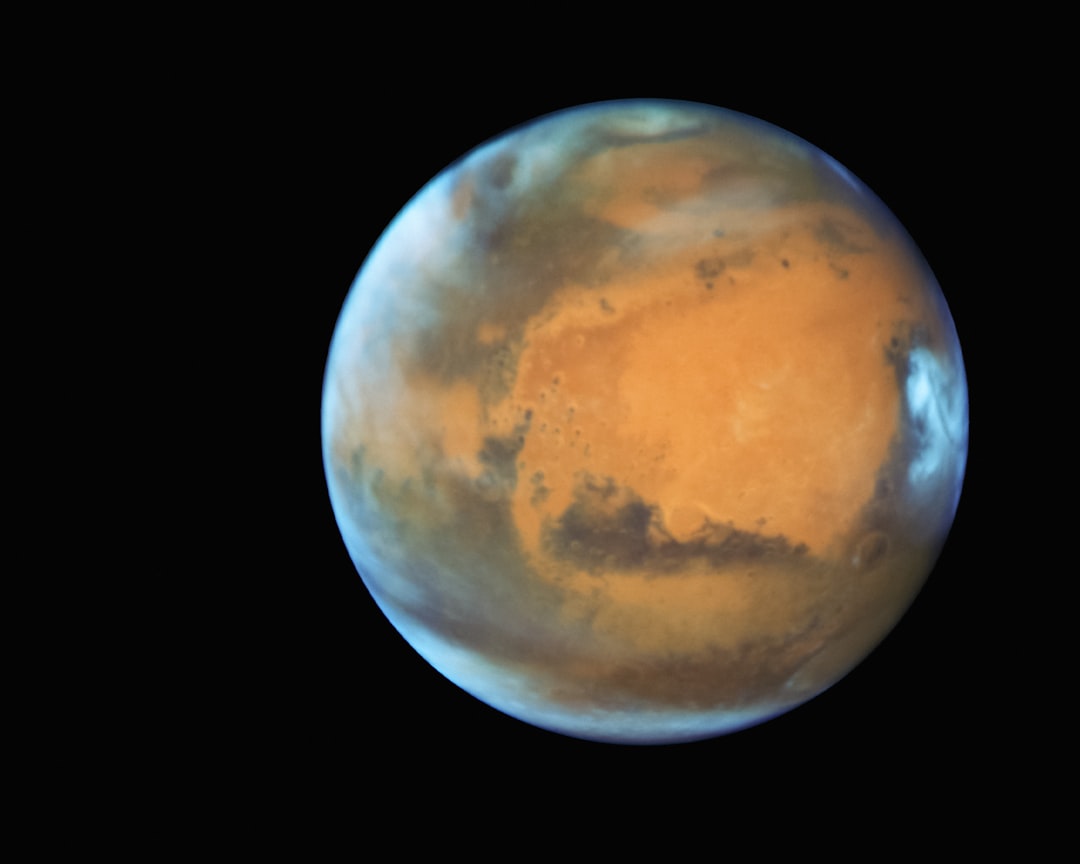
These belts perform a critical protective function, deflecting the relentless barrage of solar wind particles and high-energy cosmic radiation that would otherwise bombard Earth's surface. Without this magnetic shield, our planet's atmosphere would gradually be stripped away, much like what happened to Mars billions of years ago. However, for spacecraft and astronauts venturing beyond low Earth orbit, these same belts present a formidable hazard, capable of damaging electronics, degrading solar panels, and exposing crews to dangerous radiation doses.
A Mission Born from Necessity: The Van Allen Probes Initiative
By the early 2000s, scientists recognized that despite decades of study, fundamental questions about the radiation belts remained unanswered. How do particles within the belts achieve such extreme energies? What mechanisms control their intensity and distribution? How do solar storms affect these regions, and can we predict their behavior with enough accuracy to protect critical satellite infrastructure?
To address these questions, NASA launched the Radiation Belt Storm Probes (later renamed the Van Allen Probes) on August 30, 2012, from Cape Canaveral Air Force Station. The mission deployed two identical spacecraft into highly elliptical orbits that would carry them repeatedly through both radiation belts, providing unprecedented measurements of this hazardous environment.
Each probe carried an impressive array of scientific instruments, including the Electric and Magnetic Field Instrument Suite and Integrated Science (EMFISIS), the Energetic Particle, Composition, and Thermal Plasma Suite (ECT), and the Relativistic Electron-Proton Telescope (REPT). These sensors could detect particles across an enormous energy range and measure the electric and magnetic fields that control their motion with unprecedented precision.
"The Van Allen Probes revealed dynamics in the radiation belts that were all but invisible to previous sensors," explained Sasha Ukhorskiy, project scientist at the Johns Hopkins Applied Physics Laboratory. "We discovered that these regions are far more variable and complex than anyone had imagined."
Revolutionary Discoveries from Seven Years in the Belts
Originally designed for a two-year primary mission, the Van Allen Probes exceeded all expectations, operating for nearly seven years and fundamentally transforming our understanding of Earth's radiation environment. Among their most significant discoveries:
- The Third Belt Phenomenon: In September 2012, just weeks after launch, the probes observed the formation of a temporary third radiation belt—a structure that persisted for four weeks before being destroyed by a powerful interplanetary shock wave. This observation proved that the radiation belts are far more dynamic than previously understood.
- Acceleration Mechanisms: The mission identified specific processes by which electrons are accelerated to near-light speeds within the belts, including chorus wave acceleration and radial diffusion. These findings resolved decades-old debates about particle energization.
- Storage Ring Effect: Scientists discovered that the outer belt can act as a highly efficient particle accelerator, trapping and energizing electrons through interactions with electromagnetic waves in ways that mirror human-made particle accelerators.
- Protective Bubble Formation: The probes revealed how a protective "bubble" of cold plasma from Earth's atmosphere can shield satellites in certain orbital regions from radiation belt particles during geomagnetic storms.
Solar Maximum and the Accelerated Demise
When the Van Allen Probes were finally decommissioned in July 2019 after exhausting their fuel supplies, mission planners calculated that atmospheric drag would gradually lower the spacecraft's orbits over the following years. For Van Allen Probe A, which had a slightly lower orbit than its twin, reentry was projected for approximately 2034—fifteen years in the future.
However, these calculations were based on models of solar activity that assumed a relatively quiet Sun. The current Solar Cycle 25 had other plans. Throughout 2023 and 2024, solar activity exceeded forecasts dramatically, with the Sun producing numerous X-class flares and powerful coronal mass ejections. By mid-2024, scientists confirmed that the Sun had reached solar maximum—the peak of its approximately eleven-year activity cycle—far earlier and more intensely than predicted.
This enhanced solar activity had a direct and dramatic effect on Earth's upper atmosphere. Increased ultraviolet and X-ray radiation from the Sun heated the thermosphere—the atmospheric layer between 90 and 600 kilometers altitude—causing it to expand significantly. This expansion increased atmospheric density at the altitudes where Van Allen Probe A orbited, dramatically increasing drag on the spacecraft.
The effect was striking: Van Allen Probe A's orbital decay accelerated far beyond predictions, shaving eight years off its expected lifetime in orbit. By early 2026, it became clear that the spacecraft would reenter Earth's atmosphere within months rather than years.
The Final Descent: Tracking a Spacecraft's Last Hours
As March 2026 approached, the U.S. Space Force's 18th Space Defense Squadron intensified monitoring of Van Allen Probe A's trajectory. The spacecraft, now a derelict tumbling through space without power or control, was descending inexorably toward its fiery end. Predictions placed reentry on the evening of March 10, 2026, though the exact time and location remained uncertain until the final hours—a common limitation when tracking uncontrolled reentries.
NASA's analysis indicated that while most of the spacecraft's structure would vaporize during the intense heat of reentry—temperatures exceeding 1,650 degrees Celsius—some components were likely to survive. Titanium fuel tanks, instrument mounting brackets, and certain high-temperature alloys were expected to reach the ground or ocean surface as debris. The statistical risk of any person being struck by falling debris was calculated at approximately 1 in 4,200—low by orbital debris standards, though not negligible.
Given that roughly 70 percent of Earth's surface is covered by ocean, and that much of the remaining land area is sparsely populated, the overwhelming probability was that any surviving fragments would splash down harmlessly in the sea. No injuries or damage were reported following the reentry, suggesting this prediction proved accurate.
A Twin Still Orbiting: Van Allen Probe B's Extended Mission
While Van Allen Probe A has completed its journey, its identical twin, Van Allen Probe B, remains in orbit—though not for much longer. Having started in a slightly higher orbit, Probe B is experiencing the same enhanced atmospheric drag but on a delayed timeline. Current predictions suggest it will reenter Earth's atmosphere before 2030, bringing the Van Allen Probes mission to a definitive close.
The data collected by both spacecraft continues to provide value to the scientific community. Researchers are still analyzing measurements from the mission, publishing new findings about radiation belt dynamics, and using the observations to refine models of space weather and its effects on Earth's magnetic environment.
Legacy and Future Implications
The Van Allen Probes mission represents one of the most successful space physics endeavors in NASA's history. Operating for more than three times their designed lifetime, these spacecraft revolutionized our understanding of Earth's radiation environment and provided critical data for protecting both astronauts and satellite systems.
The mission's findings have direct applications for future space exploration. As NASA plans for sustained lunar operations through the Artemis program and eventual crewed missions to Mars, understanding radiation exposure during transit through the Van Allen belts becomes crucial for crew safety. The data from the Van Allen Probes helps engineers design better shielding and plan trajectories that minimize radiation exposure.
For the satellite industry, the mission's insights into how space weather events affect the radiation belts enable better prediction of hazardous conditions. This knowledge helps operators protect multi-billion-dollar satellite constellations that provide GPS navigation, communications, weather forecasting, and countless other services that modern civilization depends upon.
There's a poetic symmetry to Van Allen Probe A's final chapter. A spacecraft built to study the invisible forces protecting Earth from solar radiation was ultimately brought home early by an unexpectedly active Sun—the very star whose behavior it had dedicated nearly seven years to helping us understand. As the probe burned up in Earth's atmosphere, it joined the countless meteors and space debris that have met the same fate, its atoms dispersing in the upper atmosphere it had studied so thoroughly.
The Van Allen Probes mission reminds us that space exploration isn't only about venturing outward to distant worlds. Sometimes the most important discoveries lie in understanding the invisible forces surrounding our own planet—forces that have shaped Earth's habitability for billions of years and will continue to influence humanity's expansion into space for generations to come.