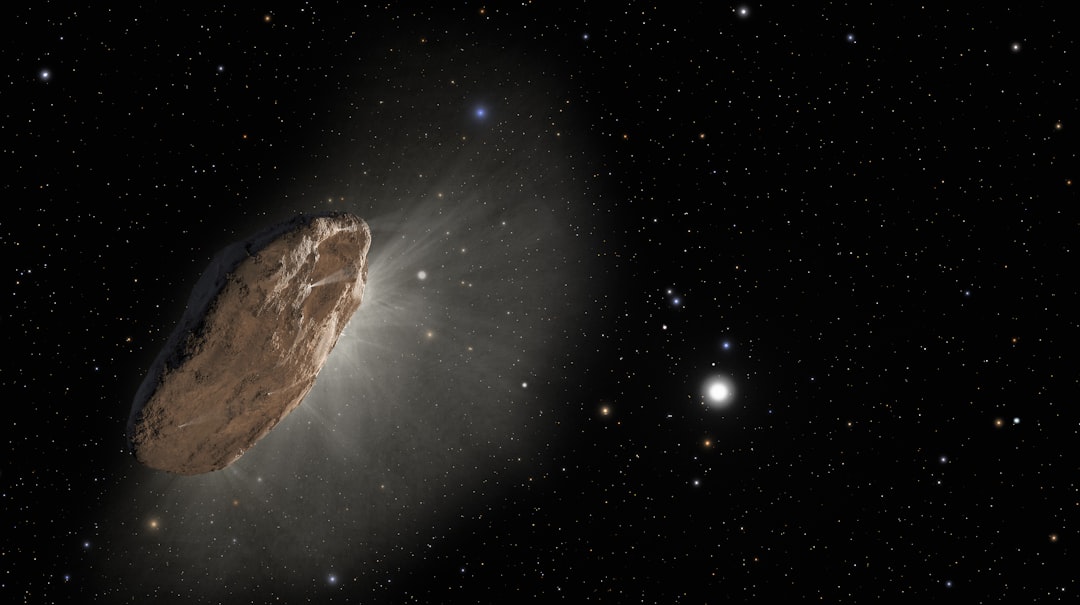
In a groundbreaking discovery that challenges our understanding of early solar system chemistry, scientists analyzing samples from the asteroid Bennu have identified unusual organic compounds that researchers have informally dubbed "space gum." These nitrogen-rich polymeric materials, officially described as nitrogen- and oxygen-enriched organic sheets, represent some of the most pristine extraterrestrial organic matter ever studied. The finding, published in research examining samples returned by NASA's OSIRIS-REx mission, is forcing planetary scientists to reconsider long-held theories about how asteroids formed and evolved in the early solar system.
What makes this discovery particularly intriguing is not just the presence of complex organic molecules on an asteroid—scientists have known for decades that space rocks contain organic compounds—but rather the unique chemical composition and preservation of these materials. The polymer sheets found on Bennu contain significantly higher concentrations of nitrogen and oxygen than typical asteroid organics, which usually consist primarily of carbon and hydrogen. This unusual chemistry suggests that Bennu's parent body underwent chemical processes that scientists are only beginning to understand, potentially involving reactions in extremely cold environments before the asteroid experienced any heating or water exposure.
The implications extend far beyond understanding one particular asteroid. These findings provide crucial evidence supporting the hypothesis that the chemical precursors necessary for life could have formed naturally on asteroids and been delivered to early Earth through impacts. As researchers continue analyzing the approximately 121.6 grams of material returned from Bennu in September 2023, each new discovery adds another piece to the puzzle of how life's building blocks became distributed throughout our solar system—and potentially throughout the universe.
The Painstaking Process of Isolating Space Gum
The journey from asteroid sample to scientific breakthrough required extraordinary technical precision and patience. Scientists have been meticulously examining Bennu samples for nearly two years, and the research continues to yield fascinating results. The particular sample containing the polymeric organic material underwent an especially rigorous preparation process that highlights the extreme care required when handling these irreplaceable extraterrestrial specimens.
To isolate and study the delicate organic material, researchers employed techniques borrowed from materials science and nanotechnology. The sample first required reinforcement with platinum strips to provide structural support without contaminating the organic compounds. Using a transmission electron microscope, scientists then welded a microscopic tungsten needle to the sample and carefully separated it from the surrounding material—a procedure requiring steady hands and extraordinary precision at scales measured in micrometers.
Once isolated, the sample faced a battery of advanced analytical techniques. The research team employed electron microscopy to visualize the material's structure at near-atomic resolution, X-ray spectroscopy to identify elemental composition, a focused ion beam for ultra-precise sample preparation, and synchrotron radiation to probe the material's molecular bonds. This multi-faceted approach, utilizing some of the most sophisticated analytical instruments available to science, allowed researchers to definitively characterize the sample as a complex polymer with unique properties.
Understanding Polymers: From Earth to Space
To appreciate the significance of finding polymers on Bennu, it's essential to understand what polymers are and why they matter. Polymers are large molecules composed of repeating structural units connected by chemical bonds, forming long chains or networks. On Earth, polymers are ubiquitous—they form the basis of plastics, rubber, and even biological molecules like DNA and proteins. The discovery of naturally occurring polymers in space demonstrates that the fundamental chemistry underlying life and modern materials can arise through purely abiotic processes.
What distinguishes Bennu's "space gum" from typical terrestrial or meteoritic organics is its unusual elemental composition. While most asteroid organic materials consist primarily of carbon and hydrogen—similar to coal or petroleum—the Bennu polymer contains substantial amounts of oxygen and nitrogen. Specifically, the material includes amides, chemical groups that form the backbone of amino acids and proteins, as well as amines, which serve as building blocks for many plastics and pharmaceuticals.
"The nitrogen-rich nature of these polymers suggests they formed under conditions and through processes we haven't fully appreciated before," explains Dr. Scott Sandford, lead author of the study. "This isn't just another organic compound—it's a window into the cold chemistry that occurred in the early solar system."
The presence of these nitrogen-bearing functional groups is particularly significant because nitrogen is essential for life as we know it. Amino acids, nucleotides, and many other biological molecules require nitrogen. Finding nitrogen-rich organic polymers on a primitive asteroid strengthens the case that the raw materials for life were present in the early solar system and could have been delivered to Earth through asteroid and comet impacts during the planet's formation.
The Cold-First Formation Theory: A New Paradigm
One of the most puzzling aspects of the space gum discovery involves its survival. Scientists know that Bennu originated from a larger parent asteroid that experienced hydrothermal activity—meaning liquid water flowed through its interior, heated by radioactive decay and residual heat from the asteroid's formation. Complex organic molecules typically don't survive such conditions; they either dissolve in hot water or break down into simpler compounds. So how did Bennu's delicate polymer sheets remain intact?
The research team proposes an innovative explanation they call the "Cold-First" formation scenario. According to this hypothesis, Bennu's parent asteroid initially consisted of ammonia and carbon dioxide ices mixed with dust particles, existing at temperatures below -70°C (-94°F). In this frigid environment, chemical reactions still occurred, but they followed different pathways than reactions in warmer conditions or liquid water.
During this cold phase, the ices reacted to produce ammonium carbamate, a reactive intermediate compound. Over extended periods—potentially millions of years—this chemical gradually linked together molecular fragments, building up the large polymer chains observed in the samples. This process, known as cryochemistry or cold chemistry, represents a relatively unexplored frontier in astrochemistry.
By the time radioactive elements within the asteroid had decayed sufficiently to generate heat and melt ice into liquid water, the polymer sheets had already formed. Crucially, these sheets proved to be water-resistant—much like modern plastic materials. Instead of dissolving, the polymers became trapped within and between rock fragments on the asteroid's surface, where they remained preserved for billions of years until the OSIRIS-REx spacecraft collected them.
Implications for Asteroid Formation Models
The Cold-First theory challenges conventional models of asteroid evolution, which typically assume that organic chemistry occurred primarily during the aqueous alteration phase when liquid water was present. If cold chemistry played a more significant role than previously thought, scientists may need to revise their understanding of:
- Timing of organic synthesis: Complex molecules may have formed earlier in solar system history than previously believed, during the cold accretion phase rather than later hydrothermal processing
- Distribution of organic materials: Different asteroids may have experienced varying degrees of cold versus warm chemistry, explaining the diversity of organic compounds found in meteorites
- Preservation mechanisms: Water-resistant polymers formed in cold conditions could have protected other sensitive organic molecules from destruction during subsequent heating
- Delivery to early Earth: If complex organics formed earlier and survived better than expected, asteroid impacts may have delivered more diverse and intact organic materials to the young Earth
Comparing Bennu to Other Asteroid Samples
The discovery gains additional context when compared to samples from other asteroids. Japan's Hayabusa2 mission returned samples from asteroid Ryugu in 2020, providing scientists with a second pristine asteroid sample for comparison. Interestingly, Ryugu's organic materials show lower nitrogen content in their polymer chains compared to Bennu's space gum, suggesting the two asteroids experienced different formation and evolution histories.
These differences hint that Bennu's parent body may have undergone unique chemical processes not experienced by Ryugu's parent asteroid. Factors that could account for these variations include:
- Formation location: The asteroids may have formed at different distances from the Sun, experiencing different temperatures and chemical environments
- Ice composition: Different ratios of water, ammonia, and carbon dioxide ices would lead to different organic chemistry
- Timing and intensity of heating: Variations in radioactive element content would affect when and how much heating occurred
- Duration of cold phase: Longer cold periods would allow more extensive cryochemical reactions
Bennu's samples also differ markedly from meteorites found on Earth, even those classified as similar types of carbonaceous chondrites. Meteorites face two major sources of contamination and alteration: the intense heat and chemical reactions during atmospheric entry, and exposure to Earth's environment after landing. Water, oxygen, and biological activity can all modify organic compounds in meteorites, making it difficult to determine their original composition. The pristine samples returned by spacecraft like OSIRIS-REx and Hayabusa2 provide an uncontaminated window into asteroid chemistry, revealing details that meteorite studies might miss.
Implications for the Origin of Life
Perhaps the most profound implication of the space gum discovery relates to understanding life's origins. The finding adds compelling evidence to the panspermia hypothesis—not in the sense of life itself spreading between worlds, but rather the idea that life's chemical precursors formed in space and were delivered to Earth through asteroid and comet impacts.
The presence of amide-containing polymers on Bennu is particularly significant because amides form the peptide bonds that link amino acids into proteins. While the space gum isn't biological—it formed through purely chemical processes—it demonstrates that the types of molecular structures essential for life can arise naturally in space. When these materials arrived on early Earth, they would have provided a ready-made inventory of organic molecules that could be incorporated into emerging biological systems.
Scientists estimate that during Earth's first billion years, our planet was bombarded by countless asteroids and comets in an event called the Late Heavy Bombardment. Each impact delivered not only water but also organic compounds. If asteroids like Bennu were common, Earth would have received a steady supply of nitrogen-rich organic polymers and other complex molecules—a cosmic gift that may have jump-started the chemistry leading to life.
"We may never know the exact process by which life originated on Earth, but discoveries like this show us that the universe is remarkably efficient at creating the molecular building blocks of life," notes astrobiologist Dr. Jennifer Stern. "If these processes occurred in our solar system, they're likely happening around other stars as well."
Future Research Directions and Ongoing Analysis
The OSIRIS-REx sample analysis is far from complete. With over 120 grams of material returned—far more than initially expected—scientists anticipate decades of productive research. Future studies will likely focus on:
- Isotopic analysis: Measuring the ratios of different isotopes in the organic compounds can reveal the temperature and conditions under which they formed
- Molecular structure determination: More detailed analysis of the polymer chains' exact structure will clarify how they formed and what reactions were involved
- Comparison with cometary materials: Future sample return missions to comets could reveal whether similar cold chemistry occurs in those icy bodies
- Laboratory simulations: Recreating the cold conditions of the early solar system in the lab could help confirm the Cold-First formation theory
- Search for other biomolecule precursors: The samples may contain other organic compounds relevant to life's origins that haven't been discovered yet
NASA's upcoming sample return missions, including Mars Sample Return, will provide additional opportunities to study pristine extraterrestrial organic materials. Each new sample adds to our understanding of how organic chemistry operates throughout the solar system and beyond.
The Broader Context: Organic Molecules Throughout the Cosmos
The discovery of space gum on Bennu fits into a larger picture that has emerged over recent decades: organic molecules are abundant throughout the universe. Radio telescopes have detected complex organic compounds in interstellar clouds, the building blocks of new solar systems. The Rosetta mission found organic molecules on Comet 67P/Churyumov-Gerasimenko. Mars rovers have discovered organic compounds in ancient Martian rocks. Even Saturn's moon Titan has lakes of liquid hydrocarbons and a thick atmosphere rich in organic chemistry.
This widespread distribution of organic materials suggests that the chemistry leading to life may be a natural outcome of cosmic evolution rather than an unlikely accident. When stars form, they create the elements necessary for organic chemistry—carbon, nitrogen, oxygen, and others. These elements combine in the cold environments of space to form increasingly complex molecules. Some of these molecules are delivered to planets, where they can participate in the chemistry of emerging life.
The space gum on Bennu represents just one example of this universal organic chemistry, but it's an important one. Its unique composition and preservation provide insights into chemical processes that occurred over 4.5 billion years ago, when our solar system was young. By studying these ancient materials, scientists are not just learning about one asteroid—they're uncovering the chemical heritage that made Earth's biosphere possible and understanding the potential for life throughout the cosmos.
As research continues and new discoveries emerge from the Bennu samples, one thing becomes increasingly clear: the universe has been conducting organic chemistry experiments for billions of years, and the results are far more diverse and interesting than scientists once imagined. Whether in the form of "gum" or countless other molecular structures, the building blocks of life appear to be a natural and perhaps inevitable product of cosmic evolution—a finding with profound implications for our understanding of life's place in the universe.