The JWST May Have Found Where Heavy Black Hole Seeds Formed
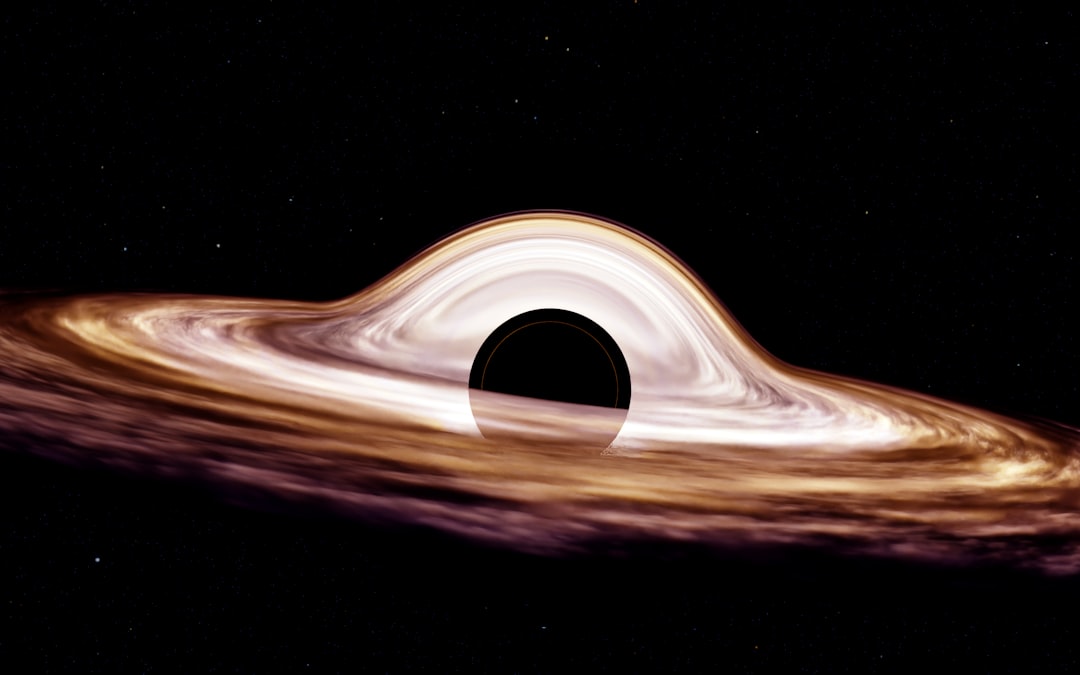
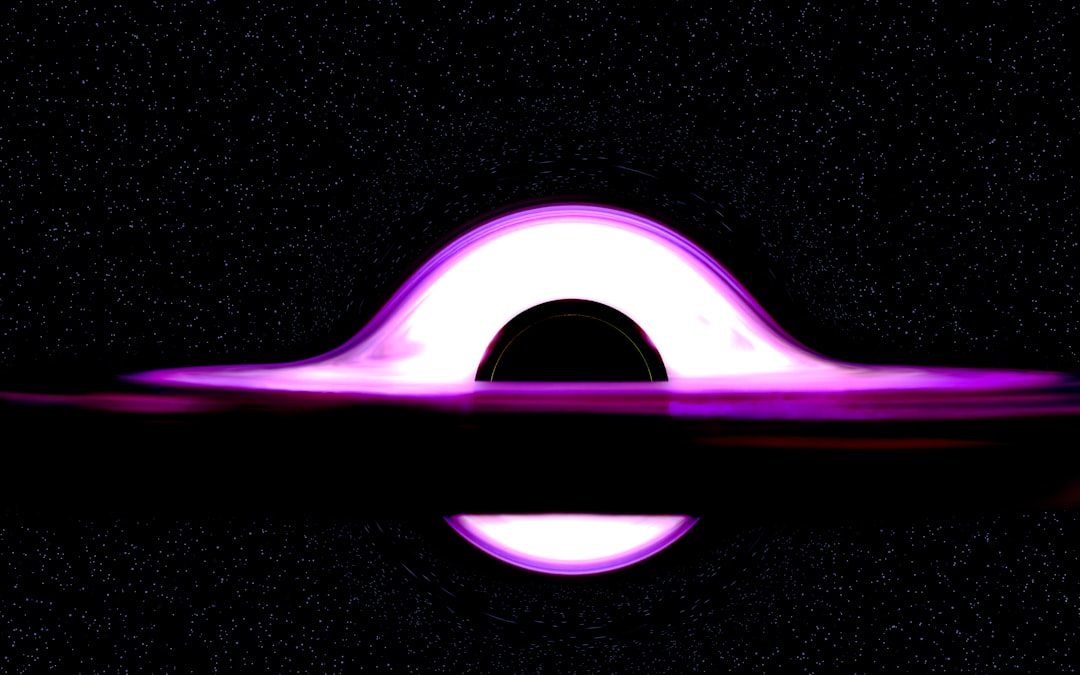
One of the most profound unsolved mysteries in modern astrophysics is how the supermassive black holes (SMBHs) we observe at the centers of nearly every large galaxy — including our own Milky Way — grew so extraordinarily massive. These cosmic titans, some weighing in at billions of solar masses, could not have assembled themselves overnight. Yet observations consistently reveal them lurking in the hearts of galaxies when the Universe was still in its cosmic infancy. Now, new research leveraging the extraordinary power of the James Webb Space Telescope (JWST) may have identified the precise environments where their seeds were sown.
The Hierarchical Black Hole Framework
The prevailing scientific consensus holds that today's supermassive black holes are the product of a long, complex evolutionary process known as the hierarchical black hole mergers framework. Under this model, SMBHs do not spring into existence fully formed. Instead, they begin as comparatively modest seeds — stellar-mass black holes — that grow over cosmic time through a combination of mergers with other black holes and the relentless accretion of surrounding gas and dust.
Two primary astrophysical mechanisms are thought to generate these stellar-mass black hole seeds:
- Core-collapse supernovae: When massive stars between approximately 8 and 50 solar masses exhaust their nuclear fuel, they may explode as supernovae. The resulting stellar core, stripped of the outward pressure from fusion, collapses under gravity to form a black hole.
- Direct collapse: Some sufficiently massive stars may bypass the supernova stage entirely, collapsing directly into a black hole without a spectacular explosion.
- Neutron star mergers: When two neutron stars in a binary system spiral inward and collide, the combined mass can exceed the maximum neutron star mass limit, triggering a collapse into a black hole.
Yet a fundamental puzzle remains: stellar-mass black holes, typically ranging from a few to tens of solar masses, face an enormous gulf between themselves and the billion-solar-mass behemoths observed in the early Universe. Even with continuous growth, the timescales required to bridge that gap through ordinary accretion appear prohibitively long — especially given that astronomers have detected SMBHs when the Universe was less than a billion years old. This tension has driven theorists to search for a missing link: intermediate-mass black holes (IMBHs).
The Elusive Intermediate-Mass Black Hole
Intermediate-mass black holes occupy the mass range between approximately 100 and 100,000 solar masses, bridging the theoretical gap between stellar-mass black holes and their supermassive counterparts. Despite decades of searching, direct observational evidence for IMBHs has remained frustratingly sparse — though a handful of compelling detections have brought scientists tantalizingly close to confirmation.
In a landmark 2024 study, researchers turned their attention to Omega Centauri, a spectacular globular cluster orbiting the outskirts of the Milky Way. By analyzing the anomalously high velocities of stars near the cluster's core — motions that could not be explained by the collective gravitational pull of visible matter alone — astronomers concluded that an IMBH with a mass of approximately 8,200 solar masses must reside at the center. This represented one of the strongest indirect cases yet for IMBH existence.
Perhaps the most dramatic direct evidence came from gravitational wave astronomy. A 2020 paper announced the detection of gravitational waves from a merger event designated GW190521, in which two black holes of approximately 85 and 66 solar masses collided to produce a remnant with roughly 142 solar masses — squarely within the IMBH mass range. This event, detected by the LIGO-Virgo gravitational wave observatories, provided the first unambiguous direct evidence that IMBHs can form through black hole mergers. Notably, the progenitor black holes also fell within the so-called pair-instability mass gap, raising additional intriguing questions about their own origins.
"Forming such heavy seeds is highly beneficial to form SMBHs at high redshift." — Bocchi et al., Astronomy & Astrophysics
JWST Reveals Ancient Stellar Nurseries
A new research paper titled "Massive star clusters detected by JWST as natural birth places to form intermediate-mass black holes", published in Astronomy and Astrophysics and led by Viola Bocchi of the Sapienza University of Rome, may represent a significant leap forward in understanding where IMBH seeds originally formed. The study focuses on two remarkable early-Universe objects imaged by the JWST: the Cosmic Gems arc and the Firefly Sparkle.
Both objects are gravitationally lensed systems, meaning their light has been magnified and distorted by the gravity of intervening galaxy clusters — nature's own cosmic magnifying glasses that allow astronomers to study objects that would otherwise be far too faint to detect. This gravitational lensing effect is a critical tool in observational cosmology, enabling the Hubble Space Telescope and now the James Webb Space Telescope to peer into the very first chapters of cosmic history.
The Cosmic Gems Arc
The Cosmic Gems arc was first identified by the Hubble Space Telescope during its Reionization Lensing Cluster Survey (RELICS), which flagged it as a powerful emitter of ionizing radiation during the Epoch of Reionization — the pivotal era when the first stars and galaxies lit up the neutral hydrogen fog that filled the early Universe. When the JWST turned its infrared-sensitive golden mirror toward the Cosmic Gems in 2024, it unveiled something remarkable: five dense, young massive star clusters (YMCs), representing the oldest such clusters ever discovered. We observe their light as it was when the Universe was a mere 460 million years old, corresponding to a redshift of approximately z ∼ 10.2.
These clusters are extraordinarily compact. Their half-mass radii — the radius of the sphere enclosing half the cluster's total mass, a measure of its compactness — are approximately 1 parsec (roughly 3.26 light-years), making them among the densest stellar environments ever observed in the early Universe. Their total masses range between 105 and 107 solar masses. This extreme density is precisely the kind of environment theorists have long predicted would be conducive to the runaway stellar collisions needed to forge an IMBH.
The Firefly Sparkle
The Firefly Sparkle is another gravitationally lensed early galaxy, observed as it appeared just 600 million years after the Big Bang at a redshift of approximately z ∼ 8.3. The JWST identified 10 young massive clusters within it, providing an even richer dataset for statistical analysis. However, the Firefly Sparkle's clusters differ meaningfully from those in the Cosmic Gems: they tend to have significantly larger half-mass radii (approximately 4–6 parsecs) and somewhat lower total masses (105–106 solar masses), making them less extreme environments for runaway collisions.
How Intermediate-Mass Black Holes Form in Dense Clusters
The physical mechanism at the heart of this research is called the runaway collision model. In an extraordinarily dense star cluster, gravitational dynamics cause massive stars to sink rapidly toward the cluster's core through a process known as dynamical friction. Once concentrated in the core, these massive stars begin colliding and merging at a rate that outpaces the time needed for them to evolve off the main sequence. The result is a runaway stellar merger chain, producing a single, extraordinarily massive "super-star" that can eventually collapse into a black hole with a mass far exceeding what any individual star could achieve on its own.
A critical complication in modeling this process is the role of stellar winds. Massive stars lose significant mass through powerful winds throughout their lifetimes, and without careful accounting for these losses, models would overestimate the final black hole mass. This is where the metallicity of the stellar environment becomes decisive.
The Critical Role of Low Metallicity
In astronomy, metallicity refers to the abundance of elements heavier than hydrogen and helium — collectively called "metals" — within a star or gas cloud. The clusters in both the Cosmic Gems and the Firefly Sparkle have extremely low metallicities, measured at less than 2% of the solar metallicity (Z ≲ 0.02 Z⊙). This is expected: in the very early Universe, insufficient time had elapsed for generations of stars to live, die, and seed the interstellar medium with heavier elements through supernovae and stellar winds.
This low metallicity has a profound effect on stellar wind strength. Metal-rich stars drive far more powerful winds, losing mass at prodigious rates. Metal-poor stars, by contrast, retain much more of their mass throughout their lives. In the context of runaway collisions, this means that the growing stellar merger product sheds far less mass to winds, allowing the eventual black hole to retain a significantly higher fraction of the accreted stellar material. As the authors note:
"The low metallicity (Z ≲ 0.02 Z⊙) is a critical factor for retaining the seed mass despite stellar winds." — Bocchi et al.
Modeling the Results: Black Hole Mass Estimates
Given the extraordinary density of these clusters, direct N-body simulations — which track the gravitational interactions of every individual star — were computationally prohibitive. Instead, the research team employed an analytical model based on the runaway collision and stellar wind mass-loss framework, subsequently validating their results against direct N-body simulations of more compact, tractable cluster configurations.
The results paint a striking picture:
- Cosmic Gems clusters (half-mass radius ~1 pc, masses up to 107 M⊙): Estimated IMBH masses of 1,600–2,700 solar masses. The extreme compactness of these clusters drives efficient runaway collisions and produces the heaviest seeds.
- Firefly Sparkle clusters (half-mass radii ~4–6 pc, masses 105–106 M⊙): Estimated IMBH masses of approximately 180–810 solar masses. The larger radii and lower masses reduce core density, limiting the efficiency of the runaway collision process.
- Overall IMBH mass range across both systems: approximately 100 to 4,000 solar masses, with typical formation efficiencies on the few percent level.
The lower end of this range is comparable to black holes that theoretical models predict could form from the collapse of Population III stars — the hypothetical first generation of stars in the Universe, thought to have been extraordinarily massive due to the absence of metal-based cooling mechanisms in the primordial gas. The upper end of the mass range, however, ventures significantly into the "heavy seed" regime, with masses that provide a far more favorable starting point for the rapid growth needed to produce the SMBHs observed in the early Universe.
Implications for the Early Universe and the JWST's "Little Red Dots"
The broader implications of this research extend well beyond these two specific systems. The JWST has, over its relatively short operational lifetime, fundamentally challenged our understanding of early galaxy and black hole formation. Among its most puzzling discoveries is a population of compact, faint red objects at high redshifts, colloquially dubbed "Little Red Dots" (LRDs). The spectral signatures of these objects are frequently interpreted as evidence of actively accreting SMBHs — yet their sheer number and the apparent masses of their central black holes are difficult to reconcile with standard growth models starting from lightweight seeds.
The findings of Bocchi and colleagues offer a compelling potential resolution. If dense, metal-poor young massive clusters in the early Universe routinely produced IMBH seeds in the mass range of thousands of solar masses, those seeds would have a significant head start in the race to become SMBHs within the first billion years of cosmic history. As the authors write:
"Our results suggest that dense massive star clusters could provide possible massive seeds from which the SMBHs in the LRDs may have grown." — Bocchi et al.
This research also reinforces the importance of the Epoch of Reionization as a period of intense and consequential astrophysical activity. The young massive clusters identified in the Cosmic Gems and Firefly Sparkle were not only potential IMBH nurseries — they were also powerful sources of the ionizing ultraviolet radiation that is thought to have driven the reionization of hydrogen in the intergalactic medium, fundamentally transforming the structure of the Universe. For more on this transformative era, the ESA Webb mission page provides extensive resources on how JWST is reshaping our understanding of cosmic dawn.
Caveats and Future Directions
The researchers are admirably candid about the limitations and assumptions underlying their work. Several important properties of these ancient clusters remain observationally unconstrained:
- Cluster rotation: The angular momentum of a cluster affects the dynamics of stellar interactions and mergers. Higher rotation could suppress or enhance the runaway collision process in ways not yet fully quantified.
- Internal structure: The detailed density profile of each cluster — whether stars are distributed uniformly or concentrated toward the core — significantly influences collision rates and ultimately the mass of the resulting IMBH.
- Initial mass function (IMF): The distribution of stellar masses at the time of cluster formation is unknown. If the IMF is top-heavy in these extreme early environments — favoring the formation of an unusually high proportion of massive stars — the resulting IMBH masses could be considerably higher than current estimates suggest.
- Primordial mass segregation: If the most massive stars were preferentially concentrated toward the cluster center from the outset, rather than gradually sinking there via dynamical friction, the conditions for runaway collisions would be even more favorable.
The authors acknowledge that exploring these parameter spaces in greater detail represents fertile ground for future work. As JWST continues to survey the high-redshift Universe, it is expected to reveal an ever-growing population of ancient star clusters, providing larger statistical samples with which to test and refine these models. Complementary observations with the
Quick answers to common questions about this article
Frequently Asked Questions
1
What are supermassive black holes and how big can they get?
2
Why is it so hard to explain how supermassive black holes formed so early in the Universe?
3
What are intermediate-mass black holes and why do they matter?
4
How do black holes actually form from dying stars?
5
What has the James Webb Space Telescope discovered about black hole origins?
6
Where do supermassive black holes typically live in a galaxy?
Related Articles