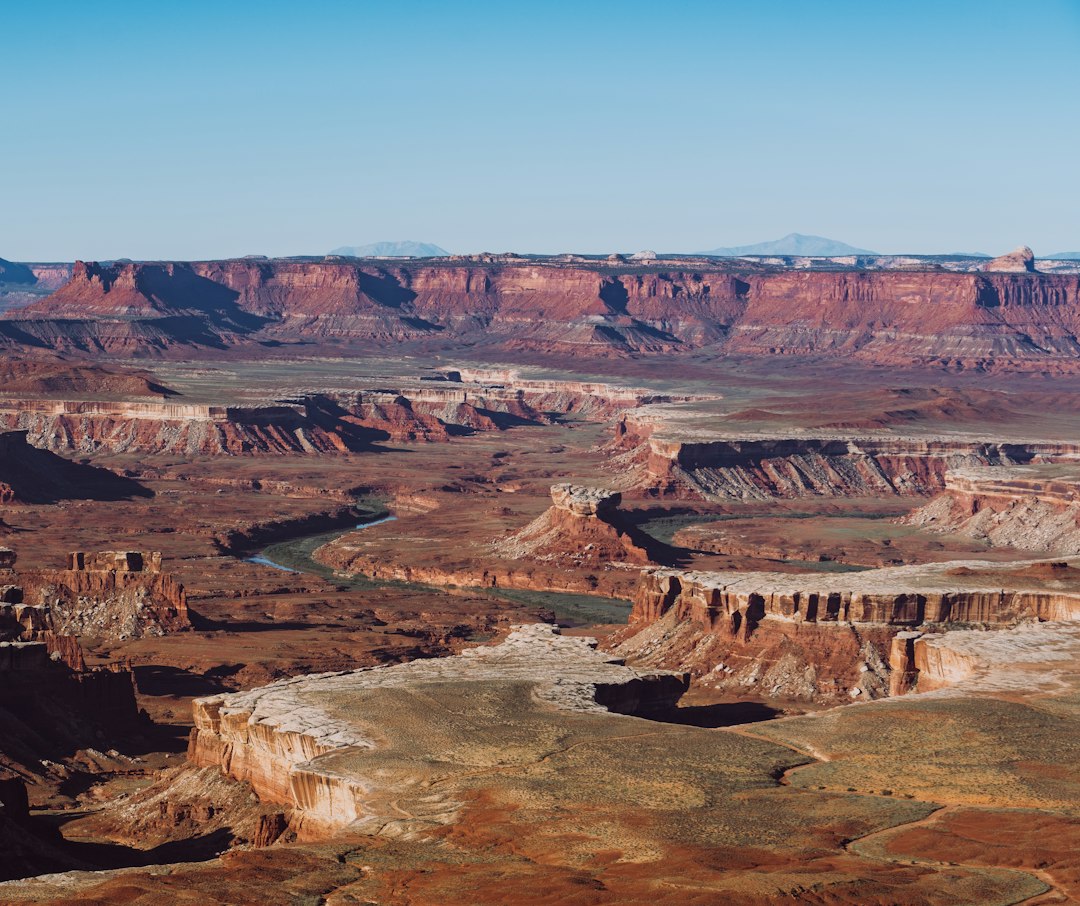
The Largest Canyon in the Solar System is Still Tectonically Active
For many decades, scientists assumed that Mars was geologically inactive — a cold, dead world whose dramatic landscapes were merely the fossilized remnants of a more turbulent past. While its surface is blanketed in features that attest to an extraordinary volcanic and tectonic history, all available evidence seemed to confirm that Mars had ceased its internal geological churning billions of years ago. This assumption was reinforced by a fundamental difference in planetary architecture: unlike Earth, Mars lacks tectonic plates. Instead, its entire lithosphere forms a single, rigid shell, classifying it as what planetary scientists call a "Stagnant Lid" planet — a world where heat escapes through conduction rather than the vigorous plate recycling that drives geological renewal on Earth.
That long-standing consensus, however, has been quietly dismantled over the past several years. With the arrival of NASA's InSight lander (Interior Exploration using Seismic Investigations, Geodesy and Heat Transport) on the Martian surface in November 2018, a cascade of revelations about the planet's inner workings began to accumulate. Mars, it turns out, is not as geologically dead as we once believed. Now, a landmark new study has provided the most compelling evidence yet: the largest canyon in the Solar System harbors active fault systems — and they are still capable of rupturing today.
A Marsquake Beneath the Grand Canyon of Mars
Beyond marsquakes triggered by meteoroid impacts, InSight detected seismic signals pointing to tectonic activity originating from deep within the planet's interior. In a recent study published in Nature Communications, scientists at Imperial College London and Columbia University presented compelling seismic evidence that a particular marsquake originated beneath Valles Marineris — the Solar System's most colossal canyon system. According to InSight's data, the seismic event designated S0976a was caused by blocks of rock slipping along fault lines deep within the Martian crust. These findings suggest that ancient fault structures, formed billions of years ago when Mars was far more geologically vigorous, remain mechanically unstable and capable of rupturing under accumulated stress.
The research was led by Jung-Hun Song, an Assistant Professor at Imperial College London's Department of Earth Science and Engineering. He was joined by collaborators from Columbia University's Department of Earth and Environmental Sciences and the Department of Earth Science and Environmental Change at the University of Illinois Urbana-Champaign. Together, this interdisciplinary team combined seismic analysis, orbital imagery, and geological modelling to build a definitive case for ongoing tectonic activity in one of the Solar System's most iconic landscapes.
"Valles Marineris is one of the most spectacular geological structures anywhere in the Solar System, but until now we didn't know for certain that its faults are still active. Our study opens up exciting possibilities for discovering ongoing seismic activity on other planetary bodies that we might otherwise consider geologically inactive." — Jung-Hun Song, Imperial College London
Valles Marineris: A Scar Across the Face of Mars
To appreciate the significance of this discovery, one must first understand the sheer scale and geological complexity of Valles Marineris. Named after the Mariner 9 spacecraft that first revealed it to the world in 1971, this immense canyon system stretches approximately 3,900 km (2,423 miles) in length, reaches widths of up to 600 km (373 miles), and plunges to depths exceeding 9 km (5.5 miles). To place this in perspective, if Valles Marineris were situated on Earth, it would span the entire width of the continental United States from coast to coast.
By comparison, the largest canyon system on Earth — the Yarlung Tsangpo Grand Canyon in Tibet — stretches a comparatively modest 505 km (313.5 miles) in length, reaches widths of up to 113 meters (371 feet), and achieves a maximum depth of approximately 6 km (3.7 miles). Even the iconic Grand Canyon of Arizona, at roughly 446 km long and 1.6 km deep, is dwarfed by its Martian counterpart. Like Olympus Mons — the Solar System's tallest volcano — and the vast Tharsis volcanic plateau, Valles Marineris is a superlative geological feature that exists at a scale our planet simply cannot match.
The most widely accepted theory holds that Valles Marineris was initially carved by rift faults created by tensional tectonic forces that literally pulled the crust apart. This rifting process is believed to be intimately linked to the intense volcanic activity that built the Tharsis Bulge — a massive volcanic province the size of North America — during the Noachian to Late Hesperian geological periods, roughly 4.1 to 3.0 billion years ago. As the enormous Tharsis region accumulated volcanic material and the underlying crust was stressed and warped, the adjacent terrain fractured along deep fault systems, opening the immense chasm we see today. Scientists theorize that the canyon was subsequently enlarged by erosion, groundwater sapping, and the catastrophic collapse of its rift walls — a process bearing strong similarities to the formation of the East African Rift Valley on Earth.
Decoding the Seismic Signature of S0976a
For their investigation, the research team focused on the seismic event S0976a, recorded by InSight's extraordinarily sensitive seismometer on August 25th, 2021. This was a remarkable detection on multiple fronts. S0976a was the only marsquake ever detected in Mars's western hemisphere, and its seismic waves traveled all the way through the planet's deep interior before being captured by InSight, which was stationed on the opposite side of Mars. Previous research had placed the epicentre near the western portion of Valles Marineris, but the precise cause of the event had remained stubbornly ambiguous. Candidate explanations included meteoroid impacts, large-scale landslides, and other forms of mass movement — all of which are known to occur on Mars and can generate seismic signals.
The team subjected each of these hypotheses to rigorous modelling, constructing simulations designed to reproduce the specific pattern of seismic waves recorded by InSight. None of the surface-driven explanations could satisfactorily account for the observed data. To corroborate this, the researchers also scrutinized high-resolution satellite imagery of the region captured by NASA's Mars Reconnaissance Orbiter (MRO) in the aftermath of the event, finding no trace of a fresh impact crater, no disturbed terrain consistent with a major landslide, and no other visible surface disruption that might explain the seismic signal.
The analysis converged on a single compelling explanation: a strike-slip fault mechanism, in which two large blocks of crustal rock slide horizontally past one another along a steeply inclined fault plane. The team determined that this faulting occurred at a depth of approximately 20 to 40 km (12 to 25 miles) below the surface of Valles Marineris — well within the brittle, seismically active portion of the Martian lithosphere. This type of fault motion is analogous to the movement seen along California's famous San Andreas Fault, though occurring in a very different geological context.
"What makes the result compelling is that several completely different types of evidence point in the same direction. The seismic waves tell us that there was a sideways sliding motion on a fault well below the surface, while the geology seen from orbit shows a region crossed by long-lived fault systems." — Jung-Hun Song
Why Are Ancient Faults Still Moving?
The confirmation that a deep fault beneath Valles Marineris remains seismically active raises a profound question: why would billion-year-old faults still be moving on a supposedly quiet planet? The study's authors point to several interacting mechanisms that may be keeping these ancient structures under stress:
- Long-term thermal contraction: As Mars has gradually cooled over billions of years, its interior has contracted, placing the overlying crust under compressional and tensional stress that can trigger fault movement along pre-existing weaknesses.
- Residual volcanic stresses: The immense Tharsis volcanic province continues to exert gravitational and mechanical stress on the surrounding crust, potentially destabilizing fault systems in adjacent regions like Valles Marineris.
- Canyon-scale topographic loading: The canyon itself, as a massive topographic void, may generate unique local stresses in the crust beneath and around it, analogous to how deep ocean trenches influence stress patterns in Earth's lithosphere.
- Inherited structural weakness: Once a fault has been created, it permanently weakens the rock along its trace. Even without active plate tectonics, these zones of weakness can slip when ambient stress conditions change sufficiently over geological time.
- Deep mantle dynamics: Thermal convection within the Martian mantle, while far more sluggish than on Earth, may not have entirely ceased, providing a subtle but persistent source of stress transmitted to the overlying lithosphere.
The results align with what planetary scientists would theoretically predict given our models of Mars's thermal and mechanical evolution — and they add crucial empirical evidence to those models. Crucially, the findings also add Valles Marineris to a growing list of regions where InSight detected signs of active faulting on modern-day Mars, a list that already includes the Cerberus Fossae fissure system and the southern reaches of Elysium Planitia. The geographic distribution of these seismic sources suggests that stresses in the Martian crust are neither uniform nor centrally controlled, but rather reflect a complex, regionally variable pattern of geological activity.
InSight's Enduring Legacy
Perhaps one of the most poignant aspects of this discovery is that it was made possible by data collected during the final months of a mission that officially ended in December 2022, when an accumulation of Martian dust on InSight's solar panels finally silenced the lander after four years of extraordinary scientific productivity. Yet InSight's scientific legacy has not been similarly silenced. Researchers continue to mine its rich seismic dataset, and discoveries like this one demonstrate that the mission's contributions to planetary science will resonate for years, if not decades, to come.
The S0976a event proved particularly valuable not only for what it revealed about Valles Marineris, but also for what its far-traveling seismic waves disclosed about the deep interior of Mars. Because the event was so distant from InSight's location, its waves necessarily passed through the planet's core before arriving at the instrument — providing a rare and scientifically invaluable probe of Mars's deepest structures. As Dr. Doyeon Kim, an Assistant Professor in Earth and Planetary Science at Imperial College London and a senior author on the study, explained:
"S0976a has turned out to be an extraordinary event, playing an important role in our understanding of the Red Planet. Its waves traveled through the core and helped us investigate the deepest part of Mars, and now they are telling us what happened at the source itself. From a single marsquake, we can learn both about the center of the planet and about an active fault beneath one of its most remarkable landscapes." — Dr. Doyeon Kim, Imperial College London
Broader Implications for Planetary Science
The implications of this study extend well beyond Mars. For decades, planetary scientists have operated under a general assumption that smaller, single-plate worlds lack the internal energy to sustain geological activity over long timescales. The emerging picture of Mars — a world with active fault systems, intermittent marsquakes, and geologically recent volcanic features — challenges that paradigm in important ways. It raises the intriguing possibility that other "geologically dead" worlds in our Solar System and beyond may harbor surprising levels of internal activity that we have simply lacked the tools to detect.
Future missions to Mars, including potential seismic networks with multiple landers, could dramatically improve our ability to map the planet's seismic landscape and understand the forces driving its ongoing geological evolution. The NASA Planetary Science Division and the European Space Agency's Space Science programme are already considering next-generation geophysical missions that would build upon InSight's foundation. Meanwhile, the study serves as a powerful reminder of the value of long-term seismic monitoring as a tool for understanding planetary interiors — a lesson that will inform mission planning for destinations as diverse as the Moon, Venus, and the icy moons of the outer Solar System.
For now, Valles Marineris stands revealed not merely as a geological monument to Mars's dramatic past, but as a living, breathing — if only faintly — testament to the planet's geological present. The largest canyon in the Solar System, it turns out, still has stories to tell.
Key Findings at a Glance
- Seismic event S0976a, recorded by NASA's InSight lander on August 25, 2021, originated from deep within Valles Marineris.
- Analysis determined the event was caused by a strike-slip fault mechanism at a depth of 20–40 km below the surface.
- Satellite imagery from Mars Reconnaissance Orbiter ruled out impact craters and landslides as alternative explanations.
- The active fault is consistent with stresses from long-term planetary cooling, Tharsis volcanic loading, and canyon-local effects.
- Valles Marineris joins Cerberus Fossae and Elysium Planitia as regions with confirmed active faulting on modern Mars.
- The findings challenge the assumption that single-plate "Stagnant Lid" planets are entirely geologically inert.
Further Reading: Imperial College London | Nature Communications | NASA InSight Mission Overview