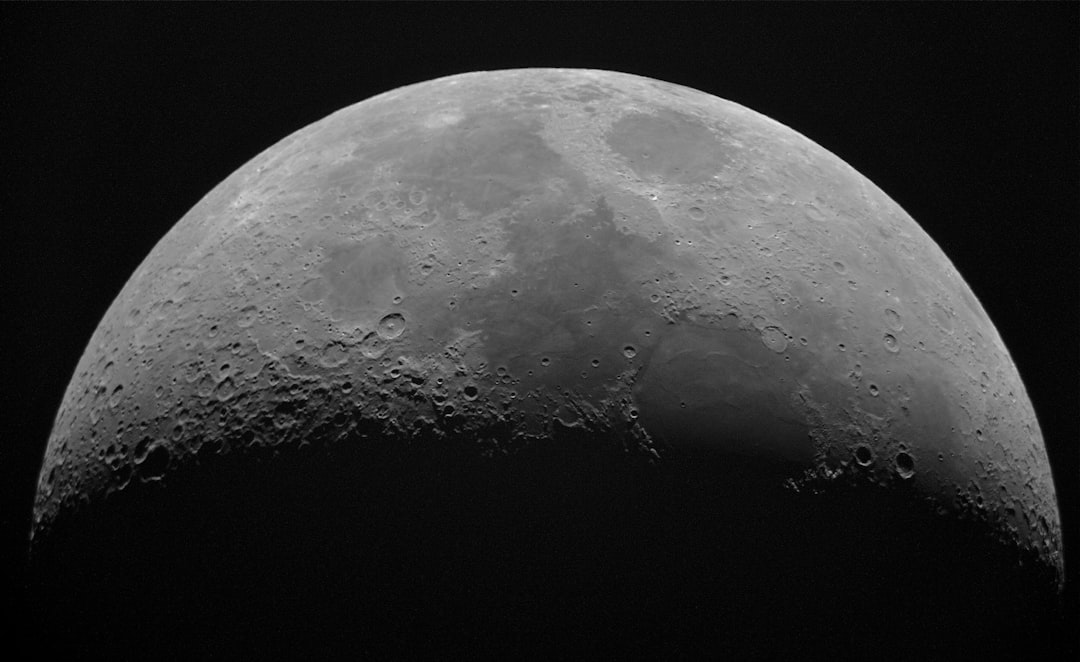
Among the most enigmatic bodies in our solar system, Saturn's moon Mimas presents a paradox that has captivated planetary scientists for years. With its massive impact crater giving it an uncanny resemblance to the fictional Death Star, this 400-kilometer-wide frozen world appears utterly lifeless—a geological graveyard floating through space. Yet beneath this deceptively dormant exterior lies one of the solar system's most remarkable secrets: a vast subsurface ocean that challenges everything we thought we knew about planetary evolution and habitability.
The revelation of Mimas's hidden ocean came not from direct observation, but from careful analysis of the moon's subtle orbital wobble—a telltale sign that liquid water sloshes beneath its icy shell. This discovery raises a profound question: how can a world with such an ancient, crater-scarred surface harbor an active ocean? The answer, according to groundbreaking research from the University of California, Davis, lies in the exotic physics of water under extreme conditions, where the familiar substance we drink every day behaves in ways that seem almost alien.
Recent findings published by a team led by Dr. Max Rudolph have unveiled a fascinating mechanism that operates beneath the ice shells of small ocean worlds throughout our solar system. Their research reveals that when ice melts from the bottom up on these diminutive moons, the resulting pressure changes can be so dramatic that the ocean doesn't just warm—it boils, not from heat, but from decompression. This phenomenon represents a fundamental process that shapes the geology, chemistry, and potential habitability of some of the most promising targets in the search for extraterrestrial life.
The Counterintuitive Physics of Ice and Water
At the heart of this discovery lies a peculiar property of water that most of us take for granted: ice is less dense than liquid water. This seemingly simple fact—the reason ice cubes float in your drink—has profound implications when scaled up to planetary dimensions. Unlike most substances, which contract when they solidify, water expands by approximately 9% when it freezes. On Earth, this property shapes everything from the cracking of rocks to the survival of aquatic life beneath frozen lakes.
On icy moons, this density difference creates a dynamic feedback system that drives dramatic geological processes. When ice at the base of a moon's thick shell melts into denser liquid water, the overall volume of the water-ice system decreases. This volume reduction causes pressure throughout the entire ocean to drop—sometimes precipitously. The researchers' calculations, detailed in their study available through AGU Publications, demonstrate that on the smallest ocean worlds, this pressure drop can be severe enough to push the ocean to water's triple point.
The triple point represents a unique condition where ice, liquid water, and water vapor can all coexist simultaneously in thermodynamic equilibrium. For water, this occurs at a temperature of 0.01°C and a pressure of just 611.657 pascals—about 0.6% of Earth's atmospheric pressure at sea level. When an ocean world's subsurface sea reaches these conditions, the results can be spectacular and geologically transformative.
Tidal Heating: The Engine Beneath the Ice
The energy driving these dramatic phase transitions comes from an elegant celestial mechanism: tidal heating. As moons like Mimas, Enceladus, and Miranda orbit their massive parent planets, gravitational interactions stretch and squeeze these small worlds like cosmic stress balls. The friction generated by this constant flexing converts mechanical energy into heat—the same principle that makes a paperclip warm when you bend it repeatedly.
However, unlike a paperclip, the intensity of tidal heating in these moons fluctuates over time due to changes in orbital dynamics and gravitational interactions with neighboring satellites. According to NASA's Cassini mission data, these heating variations create cycles of warming and cooling that profoundly affect the thickness of the overlying ice shell.
During periods of enhanced tidal heating, the ice shell melts from below and thins. When heating subsequently decreases, the ocean begins to freeze again, and the ice shell thickens. Dr. Rudolph's team had previously studied the thickening phase of this cycle, discovering that the expansion of freezing water generates enormous compressional stresses within the ice shell—stresses powerful enough to fracture the surface and create dramatic geological features.
The Enigma of Enceladus's Tiger Stripes
Perhaps the most spectacular example of this process can be found on Saturn's moon Enceladus, where four parallel fractures nicknamed "tiger stripes" cut across the south polar region. These fissures actively spew enormous plumes of water vapor, ice particles, and organic molecules into space—material that feeds Saturn's E ring and provides tantalizing hints about the ocean chemistry below.
"The tiger stripes on Enceladus represent one of the most dynamic geological features in the solar system. Our models suggest these fractures form when the expanding ice shell can no longer contain the compressional stresses generated by freezing, causing the surface to crack open like an overinflated balloon," explains Dr. Rudolph's research team.
The discovery that Enceladus harbors a global ocean beneath its ice shell ranks among the most significant findings in planetary science. The moon's active plumes provide direct samples of ocean material, allowing scientists to study the chemistry of an alien sea without drilling through kilometers of ice—a feat currently beyond our technological capabilities.
Boiling Oceans and Geological Transformation
While previous research focused on what happens when ice shells thicken, the new study examines the opposite scenario: what occurs during the thinning phase? The answer reveals processes even more dramatic than surface fracturing. When the ice shell thins on the smallest ocean worlds, the pressure drop from melting ice can drive the ocean to its triple point, causing explosive boiling throughout the subsurface sea.
This decompression boiling differs fundamentally from the thermal boiling we experience on Earth. Rather than adding heat to reach water's boiling point, the pressure drops so low that water spontaneously vaporizes at near-freezing temperatures. The process releases enormous amounts of energy and creates violent convection currents that can reshape the ice shell from below.
The researchers propose that this mechanism may explain some of the most puzzling geological features observed on icy moons. Uranus's moon Miranda, for instance, displays one of the most bizarre surfaces in the solar system. Images captured by NASA's Voyager 2 during its 1986 flyby reveal a patchwork landscape divided into distinct regions of ridges, grooves, and towering cliffs called coronae. These features suggest episodes of intense geological activity on a world that should be frozen solid.
The Miranda Mystery
Miranda's chaotic terrain has puzzled scientists for decades. Some regions appear ancient and heavily cratered, while others show evidence of recent resurfacing. The stark contrasts suggest that different parts of the moon's surface formed at different times or under vastly different conditions. Dr. Rudolph's team proposes that ocean boiling during ice shell thinning could provide the energy and mechanism needed to create these dramatic features.
When the ocean reaches its triple point, the rapid phase transitions generate powerful forces that can deform the overlying ice shell, creating the ridges and fractures observed on Miranda's surface. As the thinning phase ends and the ice begins to thicken again, these features become frozen in place, preserving a record of the violent processes that created them.
Size Matters: Different Fates for Different Worlds
The research reveals that an ocean world's size plays a crucial role in determining its geological destiny. On larger moons like Uranus's Titania—the largest of the Uranian satellites at 1,578 kilometers in diameter—the physics play out differently. The greater mass of these worlds means that even when ice melts from the bottom of the shell, the remaining pressure stays well above water's triple point.
Instead of boiling, Titania's ocean would experience less extreme pressure variations. However, these changes would still be sufficient to crack the ice shell, creating a different pattern of surface features. Geological evidence from Titania suggests a history of cyclic thinning and re-thickening, with pressure-induced fracturing but without the explosive phase transitions that smaller moons experience.
This size-dependent behavior creates a spectrum of possible ocean world environments:
- Smallest moons (Mimas, Enceladus, Miranda): Experience dramatic pressure drops that can trigger ocean boiling and explosive geological activity during ice shell thinning phases
- Medium-sized moons (Dione, Tethys): May experience moderate pressure variations that fracture the ice shell without reaching the triple point
- Larger moons (Titania, Ganymede): Maintain higher pressures that prevent boiling but still allow for tectonic activity and surface renewal
- Largest ocean worlds (Europa): Experience the most stable pressure conditions, potentially maintaining long-term habitable environments
The Paradox of Dead-Looking Mimas
The case of Mimas presents perhaps the most intriguing puzzle in this new understanding of icy moon physics. Unlike Enceladus with its active plumes or Miranda with its bizarre patchwork terrain, Mimas appears completely geologically dead. Its surface is ancient, heavily cratered, and shows no obvious signs of recent activity. The massive Herschel Crater—the feature that gives Mimas its Death Star appearance—is itself a testament to the moon's apparent geological inactivity, as such a large impact structure has remained largely unchanged for billions of years.
Yet orbital dynamics reveal that Mimas definitely harbors a subsurface ocean. The moon's slight wobble as it orbits Saturn—technically known as libration—can only be explained by the presence of liquid water beneath the ice. This creates a fascinating paradox: how can an active ocean exist beneath such a pristine, undisturbed surface?
The answer may lie in the specific pressure conditions during Mimas's ice shell thinning phases. If the pressure drops during thinning don't quite reach the threshold needed to fracture the ice shell—perhaps stopping just short of the triple point—the ocean could persist and even undergo phase transitions without leaving obvious surface scars. The ice shell would act as a pressure vessel, containing the ocean's dynamics and preventing them from manifesting as surface features.
"Mimas may represent a 'stealth' ocean world—a body that harbors a potentially habitable environment while maintaining the appearance of a geologically dead rock. This has profound implications for how we identify ocean worlds in other star systems, where we can only observe surfaces, not what lies beneath."
Implications for Astrobiology and the Search for Life
Understanding the physical processes beneath the surfaces of icy moons carries enormous implications for astrobiology—the study of life beyond Earth. Several of these ocean worlds, particularly Enceladus and Europa, rank among the solar system's most promising targets in the search for extraterrestrial life. The upcoming Europa Clipper mission, scheduled to launch in 2024, will investigate whether Jupiter's moon Europa possesses the conditions necessary for life.
However, not all subsurface oceans offer equally hospitable environments. The new research helps scientists distinguish between stable, potentially habitable oceans and those subject to violent phase transitions that might sterilize or severely stress any nascent biology. An ocean that periodically boils might experience such dramatic chemical and physical disruptions that complex chemistry—let alone life—cannot gain a foothold.
Conversely, oceans that maintain stable conditions over geological timescales provide the environmental consistency that life requires to emerge and evolve. The cyclic processes identified by Dr. Rudolph's team help researchers predict which ocean worlds might offer such stability and which experience conditions too extreme for biology as we understand it.
Reading the Stories Written in Ice
Just as geologists read Earth's rocks to understand our planet's 4.5-billion-year evolution—from the formation of the first continents to the rise of complex life—planetary scientists are learning to read the surfaces of icy moons to understand their histories. However, instead of stories written in stone, magma, and sediment, these alien worlds tell their tales through the transformations of water between its solid, liquid, and gaseous phases.
The fractures on Enceladus, the chaotic terrain on Miranda, the pristine surface of Mimas, and the ancient grooves on Titania all represent chapters in this ongoing narrative. Each surface feature provides clues about the processes occurring in the dark, pressurized seas below—oceans that may have remained liquid for billions of years, potentially providing the time and conditions necessary for life to emerge.
Future Exploration and Unanswered Questions
The research by Dr. Rudolph's team opens new avenues for understanding ocean worlds but also raises numerous questions that future missions will need to address. Key unknowns include:
- What is the exact composition and salinity of these subsurface oceans, and how do these factors affect the pressure-temperature relationships?
- How frequently do ice shell thinning and thickening cycles occur, and what triggers transitions between these phases?
- Can life survive the extreme conditions of ocean boiling, or do these events effectively reset the biological clock?
- How many other ocean worlds exist in our solar system that remain undetected due to inactive or ancient surfaces?
- What do these findings tell us about ocean worlds orbiting distant stars, which we can only study through indirect observations?
Future missions to the outer solar system will carry instruments designed to answer these questions. The proposed Enceladus Orbilander concept would not only orbit the moon but eventually land on its surface, potentially drilling through the ice to directly sample the ocean below. Similarly, concepts for missions to Uranus and its enigmatic moons could provide our first close-up views of Miranda, Titania, and other worlds since Voyager 2's brief encounter nearly four decades ago.
As we develop more sophisticated models of ocean world physics and gather additional observational data, our understanding of these alien seas will deepen. Each discovery brings us closer to answering one of humanity's most profound questions: are we alone in the universe, or do the dark, pressurized oceans of distant moons harbor life forms that evolved independently from Earth's biosphere? The strange physics beneath icy moons may ultimately provide the key to unlocking this cosmic mystery.