To Ancient Astronomers, Theta Eridani Was Brighter For A Thousand Years. Now We Know Why
The night sky that Ptolemy surveyed in the 2nd century AD looked subtly — but significantly — different from the one we observe today. Among the most intriguing discrepancies is the curious case of Theta Eridani, a star system roughly 167 light-years from Earth. Both Ptolemy in 137 AD and the Persian astronomer al-Sufi in 964 AD catalogued it among the thirteen brightest stars visible in the night sky. The Greek astronomer Hipparchus, working around 129 BC, may have recorded it as similarly brilliant. There is just one problem: Theta Eridani is nowhere near that bright today. For over a century, astronomers and historians of science have argued over this unsettling discrepancy. Now, a new study offers what may be the most compelling explanation yet — one that involves a rare and dramatic chapter in stellar evolution.
A Star System With a Hidden History
Theta Eridani resides in the constellation Eridanus, named for a mythical Greek river and one of the largest constellations in the sky. To the naked eye throughout antiquity, it appeared as a single point of light — one conspicuously brilliant. It was Italian astronomer Giuseppe Piazzi who, in 1814, first resolved Theta Eridani into two separate stars: Theta 1 Eridani (the primary) and Theta 2 Eridani (the secondary). However, the story does not end there. Modern high-resolution observations revealed that Theta 1 Eridani is itself a very tight binary pair, designated Theta Eridani Aa (the historical primary) and Theta Eridani Ab (its close companion). What ancient astronomers took to be a single radiant star is, in fact, a triple star system — and this remarkable structure is at the very heart of explaining the thousand-year mystery.
Today, Theta Eridani shines at a visual magnitude of V = 2.9. In astronomy, the visual magnitude scale — denoted by the letter V — is designed to mimic how the human eye perceives light. The scale operates in reverse and on a logarithmic basis: the brighter the object, the lower (or more negative) the number. For context, our own Sun blazes at V = −26.74, while Sirius, the brightest star in the night sky beyond the Sun, registers at V = −1.46. A star at V = 2.9 is certainly visible to the naked eye, but it is far from being among the most dazzling lights in the heavens. For Ptolemy and al-Sufi to have placed Theta Eridani among the thirteen brightest stars, it must have been shining at something closer to V ≈ 0.2 — making it roughly twelve times more luminous than it appears today.
"Theta Eridani was listed by both Ptolemy in 137 AD and by al-Sufi in 964 AD among the thirteen brightest stars in their (visible) night sky, in addition to being reported by Hipparchus around 129 BC as a particularly bright star. This is in stark contrast with its modern and relatively humble V = 2.9 brightness. The discrepancy with ancient observations has been a subject of controversy for over a century."
— Idel Waisberg & Boaz Katz, 2024
The new research is presented in a paper titled "The forgotten bright star: Theta Eridani as a millenary stellar transient observed by Hipparchus, Ptolemy and al-Sufi," available on arXiv.org. Its authors are Idel Waisberg, an independent researcher, and Boaz Katz of the Department of Particle Physics and Astrophysics at the Weizmann Institute of Science in Israel. They note that among the approximately 1,000 stars catalogued in Ptolemy's landmark 2nd-century work Almagest, the discrepancy for Theta Eridani — ΔV ≈ 2.7 magnitudes — is the largest of any star in the entire catalogue. This places it in a unique and historically significant category.
Decoding the Ancient Sky: What the Data Reveals
To crack this centuries-old puzzle, Waisberg and Katz employed a sophisticated, multi-pronged observational approach. Using interferometric, spectroscopic, and photometric data gathered from multiple observatories and telescopes, the team precisely mapped out the orbital geometry, physical dimensions, and masses of the close inner binary pair Theta Eridani Aa+Ab. What they found painted a vivid picture of a stellar couple that had once been locked in a turbulent gravitational embrace.
The two stars of the inner binary are remarkably similar in character. Theta Eridani Aa carries a mass of approximately 2.3 solar masses, while its companion Theta Eridani Ab weighs in at about 2.2 solar masses — making them near-twins. Both are somewhat larger and hotter than our own Sun, falling into the class of intermediate-mass stars. The pair orbits each other at an extraordinarily close distance, with a semi-major axis of just 0.083 AU — less than one-tenth the distance between Earth and the Sun. By comparison, the planet Mercury orbits our Sun at roughly 0.39 AU, meaning this binary pair is nearly five times closer together than Mercury is to the Sun. Their orbit carries a slight eccentricity of 0.105, giving it a mild oval shape rather than a perfect circle.
- System distance: ~167 light-years from Earth
- Architecture: Triple star system (Aa, Ab, and the wider Theta 2 Eridani)
- Inner binary semi-major axis: 0.083 AU (less than 1/10th Earth-Sun distance)
- Orbital eccentricity: 0.105 (slightly elliptical)
- Mass of Theta Eridani Aa: ~2.3 solar masses
- Mass of Theta Eridani Ab: ~2.2 solar masses
- Historical brightness: V ≈ 0.2 (approximately 12× brighter than today's V = 2.9)
- Historical magnitude discrepancy: ΔV ≈ 2.7 — the largest in Ptolemy's Almagest
The Roche Lobe, Common Envelopes, and Stellar Transients
To understand what caused Theta Eridani's ancient brilliance, one must first understand a key concept in binary star physics: the Roche lobe. Named after the 19th-century French astronomer Édouard Roche, a Roche lobe is a teardrop-shaped region of gravitational influence surrounding each star in a binary system. So long as a star's material remains contained within its Roche lobe, the system is stable and well-behaved. But when a star expands — as stars inevitably do as they age — and begins to fill its Roche lobe, material can overflow across the gravitational boundary separating the two stars. This triggers a period of intense mass transfer, with potentially dramatic consequences for the brightness and structure of both stars. You can learn more about stellar evolution and binary star physics from NASA's educational resources.
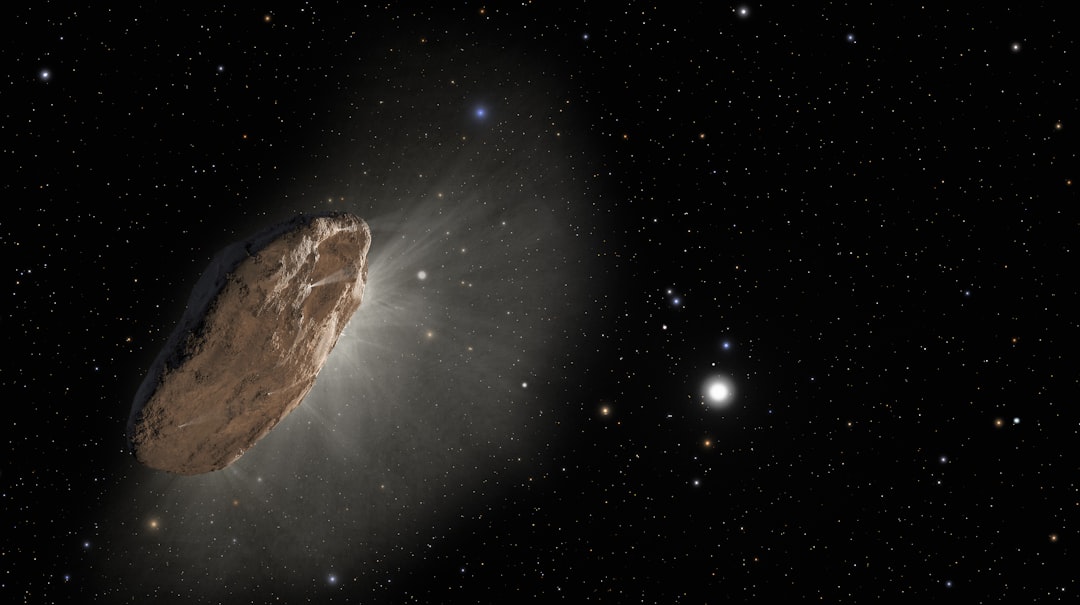
Waisberg and Katz found that Theta Eridani Aa is currently very close to filling its Roche lobe. This is a crucial clue. The authors propose that between roughly 2,000 and 1,000 years ago — corresponding precisely with the period during which Hipparchus, Ptolemy, and al-Sufi made their observations — Theta Eridani Aa did in fact fill and overflow its Roche lobe. The resulting mass transfer onto its companion star, Theta Eridani Ab, released substantial orbital energy and created a shared common envelope of hot gas surrounding both stars. It is the luminosity of this common envelope, powered by the release of gravitational and orbital energy, that would have dramatically elevated the system's apparent brightness — raising it from its modern V = 2.9 all the way to a spectacular V ≈ 0.2 visible to observers across the ancient world.
"The historical brightening of Theta Eridani was due to a millenary transient phase powered by orbital energy extraction during a long-lived 'common envelope' stage."
— Waisberg & Katz, 2024
The common envelope phase is one of the most energetically significant — and poorly understood — stages in binary star evolution. During this stage, the outer layers of the expanding primary star engulf both stars in a shared gaseous shroud. Friction and drag within this envelope cause the two stars to spiral closer together, releasing enormous amounts of gravitational energy in the process. This energy can partially unbind and expel the envelope, and some of it is radiated away as light — producing a stellar flare-up visible for years, decades, or even centuries. The Hubble Space Telescope has observed the aftermath of similar events in the form of luminous red novae and other stellar transients, helping astronomers piece together the timeline of these dramatic episodes in stellar life. For deeper reading on common envelope evolution, ESA's stellar science pages provide excellent background material.
The Role of Stellar Evolution: The End of Core Hydrogen Burning
The authors identify a second critical element in this story: the current evolutionary status of Theta Eridani Aa. The research indicates that this star has just finished burning hydrogen in its core — a pivotal milestone in a star's life cycle known as the end of the main sequence phase. During its main sequence lifetime, a star like Theta Eridani Aa fuses hydrogen into helium in its core, maintaining a delicate balance between the inward pull of gravity and the outward pressure of nuclear fusion. When the core hydrogen supply is exhausted, this balance is disrupted. The core contracts and heats up, while the outer layers of the star expand dramatically — the star begins its transformation into a red giant.
This expansion is key. As the star's outer layers swell outward, its total surface area increases enormously. Although a star transitioning off the main sequence does not necessarily become much hotter — in fact, red giants are cooler on the surface than their main sequence progenitors — the sheer increase in radiating surface area causes a dramatic rise in total luminosity. For a star in a close binary system like Theta Eridani Aa, this expansion would inevitably bring its outer layers into contact with, and eventually past, the boundary of its Roche lobe. The timing aligns perfectly: the post-main-sequence expansion of Theta Eridani Aa approximately 1,000–2,000 years ago would have initiated the Roche lobe overflow, mass transfer, and common envelope phase that raised the system's brightness to the levels recorded by Ptolemy and al-Sufi. You can explore more about stellar life cycles through NASA's Stars science portal.
Eventually, the common envelope was expelled or the mass transfer subsided, the system settled into a tighter, slightly less eccentric orbit, and the brilliant transient faded back to the modest stellar light we measure today at V = 2.9. The whole episode — lasting perhaps several centuries — left the three ancient observers as the only human witnesses to one of nature's most extraordinary stellar performances.
A Ubiquitous Phenomenon Hidden in Plain Sight?
The implications of this discovery stretch well beyond the historical mystery of one particular star. Common envelope evolution is considered a critical, if fleeting, phase in the lifecycle of close binary systems — and it is thought to be responsible for producing a wide range of exotic objects, including cataclysmic variable stars, X-ray binaries, and even some of the binary neutron star and black hole systems that eventually merge and produce the gravitational wave signals detected by observatories such as LIGO (Laser Interferometer Gravitational-Wave Observatory). Despite its importance, the common envelope phase is notoriously difficult to observe directly because it unfolds on timescales of years to centuries and leaves behind only subtle forensic evidence in the resulting stellar system.
Theta Eridani may represent an extraordinarily rare case: a binary system caught in the act, its common envelope phase inadvertently documented by some of antiquity's most meticulous astronomers. If such events can produce systems with the precise orbital and physical parameters now observed in Theta Eridani, they may be far more common in the universe than current observational surveys suggest — simply because we lack historical records long enough to catch them in the act.
"The discovery and characterization of more binary systems undergoing such process in modern photometric surveys holds the potential to better understand what may be a ubiquitous, short-lived but determinant phase in the evolution of close binaries."
— Waisberg & Katz, 2024
Looking forward, modern photometric surveys — such as those conducted by the Vera C. Rubin Observatory (formerly known as the Large Synoptic Survey Telescope) and space-based missions like NASA's TESS and ESA's Gaia — are monitoring billions of stars with unprecedented precision. They are uniquely positioned to detect new transient brightening events in close binary systems in real time. Where Hipparchus, Ptolemy, and al-Sufi watched Theta Eridani's dramatic rise and fall over centuries without understanding what they were witnessing, future astronomers may be able to observe similar events as they unfold, capturing the physics of common envelope evolution in unprecedented detail.
The Enduring Value of Ancient Observations
Perhaps one of the most remarkable takeaways from this study is the scientific value of meticulous historical recordkeeping. The observations of Hipparchus, Ptolemy, and al-Sufi were made without telescopes, without photometers, and without any understanding of the nuclear physics underlying stellar luminosity. And yet their careful cataloguing of relative stellar brightnesses has, two millennia later, provided modern astrophysicists with a critical