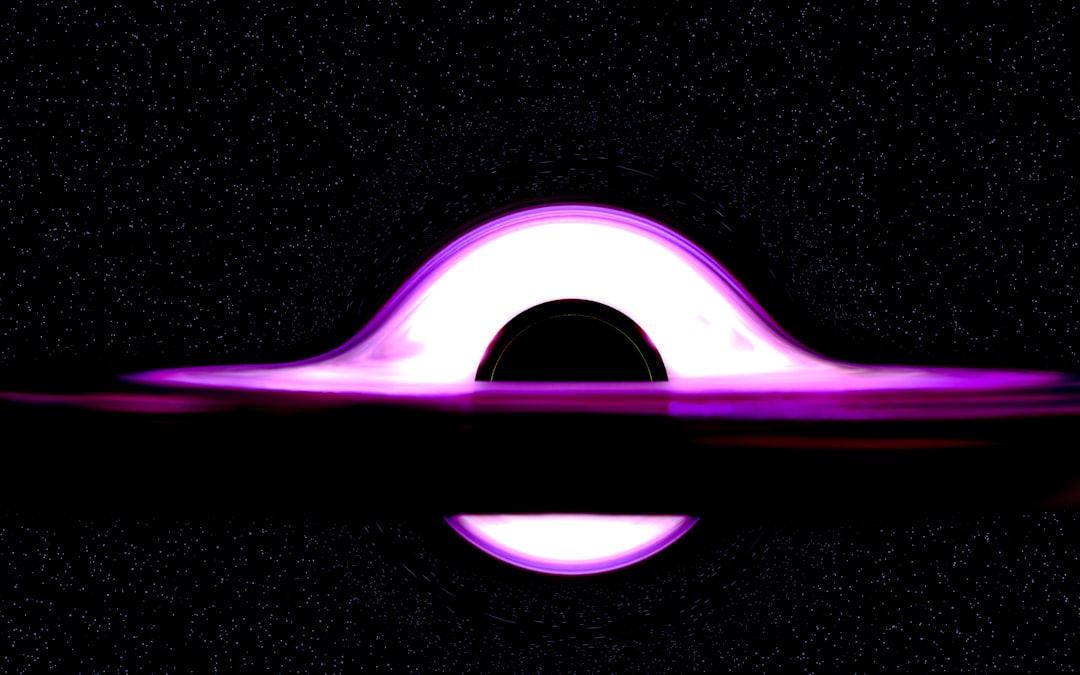
In the realm of modern astrophysics, few achievements have captured the public imagination quite like the first photograph of a black hole released by the Event Horizon Telescope collaboration in 2019. Yet behind that iconic orange ring surrounding the supermassive black hole M87* lies an extraordinary technical challenge: coordinating radio telescopes scattered across our entire planet to function as a single, Earth-sized instrument. Now, researchers at the Korea Advanced Institute of Science and Technology (KAIST) have developed a revolutionary solution that could dramatically sharpen our view of these cosmic behemoths—by replacing conventional electronic timing systems with the fundamental precision of laser light itself.
The breakthrough centers on optical frequency comb technology, a sophisticated laser-based system that provides unprecedented timing accuracy for radio telescope arrays. This innovation addresses one of the most stubborn obstacles in Very Long Baseline Interferometry (VLBI), the technique that enables astronomers to achieve angular resolution far beyond what any single telescope could accomplish. By harnessing the inherent stability of optical frequencies rather than electronic signals, the KAIST team has opened a pathway toward capturing black hole images with clarity that was previously unattainable.
The Synchronization Challenge in Radio Astronomy
Understanding why this development matters requires grasping the fundamental principle behind VLBI observations. When astronomers want to photograph distant cosmic objects like black holes, they face a daunting problem: angular resolution—the ability to distinguish fine details—depends directly on the size of your telescope's aperture. For objects as compact and distant as black holes, even the largest single radio dishes on Earth fall woefully short.
The ingenious solution involves linking multiple radio telescopes separated by thousands of kilometers, effectively creating a virtual telescope with an aperture as large as the distance between them. The Event Horizon Telescope, for instance, combines observations from stations in Hawaii, Arizona, Chile, Spain, and Antarctica, achieving an effective diameter approaching that of Earth itself—roughly 10,000 kilometers.
However, this technique demands something extraordinary: every telescope in the array must record signals at precisely the same moment, with their data streams synchronized to within billionths of a second. Any timing error translates directly into phase misalignment, which corrupts the interference patterns scientists need to reconstruct images. As Professor Jungwon Kim from KAIST's Department of Mechanical Engineering explains, this synchronization challenge becomes exponentially more difficult as astronomers push toward higher frequencies to resolve finer details.
From Electronic Signals to Optical Precision
Traditionally, VLBI networks have relied on hydrogen maser atomic clocks and electronic signal generators to maintain synchronization. Each telescope site operates its own atomic clock, and sophisticated algorithms later align the recorded data during post-processing. While this approach has enabled remarkable achievements—including those stunning black hole images—it encounters fundamental limitations at the higher radio frequencies astronomers increasingly want to explore.
The problem intensifies at millimeter and submillimeter wavelengths, where the radio waves oscillate hundreds of billions of times per second. At these frequencies, maintaining phase coherence across continental distances using electronic references becomes extraordinarily challenging. Electronic signal generators suffer from inherent instabilities and drift, much like trying to measure microscopic distances with a ruler that slightly expands and contracts with temperature changes.
The KAIST team's solution represents a paradigm shift: optical frequency combs. These remarkable devices, which earned their inventors the 2005 Nobel Prize in Physics, generate not a single laser frequency but tens of thousands of precisely spaced frequencies simultaneously. Imagine a ruler made entirely of light, where each marking represents an exact wavelength, all perfectly evenly spaced with intervals that can be controlled to atomic precision.
"By feeding optical frequency combs directly into radio telescope receivers, we establish phase alignment with the fundamental stability of light itself, overcoming the limitations that have constrained electronic signal generation," Professor Kim noted in describing the breakthrough.
How Optical Frequency Combs Work
An optical frequency comb produces a spectrum of laser light consisting of millions of equally spaced frequencies, typically spanning from infrared to visible wavelengths. The spacing between these "teeth" in the frequency comb can be precisely controlled and measured using atomic clock references. Because scientists know the exact frequency of each tooth with extraordinary accuracy—often to fifteen decimal places or better—they possess what amounts to an ultra-precise ruler made of electromagnetic radiation.
The KAIST innovation involves delivering these laser combs via optical fiber networks directly to each radio telescope's receiver system. Rather than relying on locally generated electronic signals that might drift independently at each site, all telescopes reference the same optical frequency standard. This approach exploits a fundamental property of light: optical frequencies are inherently more stable and can be measured with far greater precision than their electronic counterparts.
验证 and Testing Across Multiple Sites
The research team validated their technology through rigorous observations using the Korea VLBI Network (KVN), which operates three 21-meter radio telescopes at Yonsei University in Seoul, Ulsan, and Jeju Island. Initial tests at the Yonsei Radio Telescope successfully demonstrated that the optical frequency comb system could establish and maintain stable interference patterns—the fundamental requirement for VLBI imaging.
More recently, the team expanded their testing to include the KVN Pyeongchang Radio Telescope, proving that the system functions reliably across multiple geographically separated sites simultaneously. These tests involved comparing observations made with traditional electronic references against those using the new laser-based timing system, with results showing measurable improvements in phase stability and coherence.
The implications extend beyond simply sharper images. With improved phase coherence, astronomers can observe at higher frequencies where atmospheric turbulence and other effects typically degrade signal quality. This capability could enable observations at wavelengths as short as 0.8 millimeters or even shorter, potentially revealing details of black hole accretion disks and jets that remain invisible at longer wavelengths.
Applications Beyond Black Hole Imaging
While the motivation for this research stems from astronomical observations, the technology's applications span multiple scientific domains. The same precision timing capabilities that enable better telescope synchronization could revolutionize several other fields:
- Intercontinental Atomic Clock Comparisons: The optical frequency comb system enables atomic clocks separated by thousands of kilometers to be compared with unprecedented accuracy, potentially reaching precision levels of 10^-18 or better. This capability supports fundamental physics research, including tests of general relativity and searches for variations in fundamental constants.
- Space Geodesy: By improving the precision of VLBI measurements, the technology enhances our ability to track subtle movements in Earth's crust, monitor continental drift, and measure variations in Earth's rotation. These measurements contribute to understanding seismic hazards, climate change effects, and the fundamental dynamics of our planet.
- Deep Space Navigation: More precise timing signals could improve tracking of spacecraft exploring the outer solar system and beyond. The Voyager probes, now in interstellar space, and future missions to the outer planets would benefit from enhanced positional accuracy.
- Gravitational Wave Detection: Future space-based gravitational wave observatories, such as the proposed Laser Interferometer Space Antenna (LISA), require extraordinarily precise timing and phase measurements. Optical frequency comb technology could contribute to these next-generation detectors.
The Future of High-Resolution Radio Astronomy
As astronomers plan the next generation of VLBI networks, including the proposed next-generation Event Horizon Telescope (ngEHT), technologies like optical frequency combs become increasingly essential. The ngEHT aims to create movies of black holes, capturing not just static images but the dynamic evolution of matter swirling around these cosmic monsters. Such observations demand even more stringent timing requirements than current capabilities provide.
The KAIST breakthrough also aligns with broader trends in astronomical instrumentation. The Square Kilometre Array, currently under construction in Australia and South Africa, will eventually incorporate thousands of radio antennas spread across vast distances. Maintaining coherence across such a distributed array presents challenges similar to those in VLBI, making precision timing technologies crucial for realizing the facility's full potential.
Professor Kim's team continues refining their system, working toward deployment across additional telescope sites and testing at even higher radio frequencies. The ultimate goal: making arrays of radio telescopes function so seamlessly together that astronomers can probe the universe with angular resolution limited only by the size of Earth itself—and perhaps, eventually, by arrays extending into space.
Implications for Understanding Black Holes
Sharper black hole images promise to answer fundamental questions about how these objects shape their cosmic environments. Scientists want to understand the mechanisms that launch relativistic jets—streams of particles accelerated to nearly the speed of light that extend for millions of light-years. They seek to test Einstein's general relativity in the extreme gravitational fields near event horizons. They aim to probe the physics of accretion disks, where matter spiraling into black holes releases more energy than nuclear fusion.
Each improvement in imaging resolution brings these questions closer to resolution. The difference between seeing a blurry ring and resolving detailed structures in the accretion flow could determine whether alternative theories of gravity can be ruled out or whether black holes possess properties that current physics doesn't predict.
By replacing the fundamental timing reference from electronic signals to laser light, the KAIST team has provided astronomers with a more precise ruler for measuring the cosmos. In the quest to photograph black holes with ever-greater clarity, this innovation represents not merely an incremental improvement but a fundamental advance—harnessing the stability of light itself to see deeper into the universe's most extreme environments.