Watching Dawn and Dusk on a Distant Hot Jupiter
What would it be like to stand at the boundary between night and day on a planet locked forever facing its star? It is one of the most evocative questions in modern planetary science — and astronomers have just found the closest thing yet to an answer. Using the extraordinary power of the James Webb Space Telescope (JWST), a research team has caught, for the first time, a distant world's twilight boundaries evolving in real time, revealing a tale of two starkly different atmospheres separated by nothing more than longitude.
Meet WASP-121 b: A World of Extremes
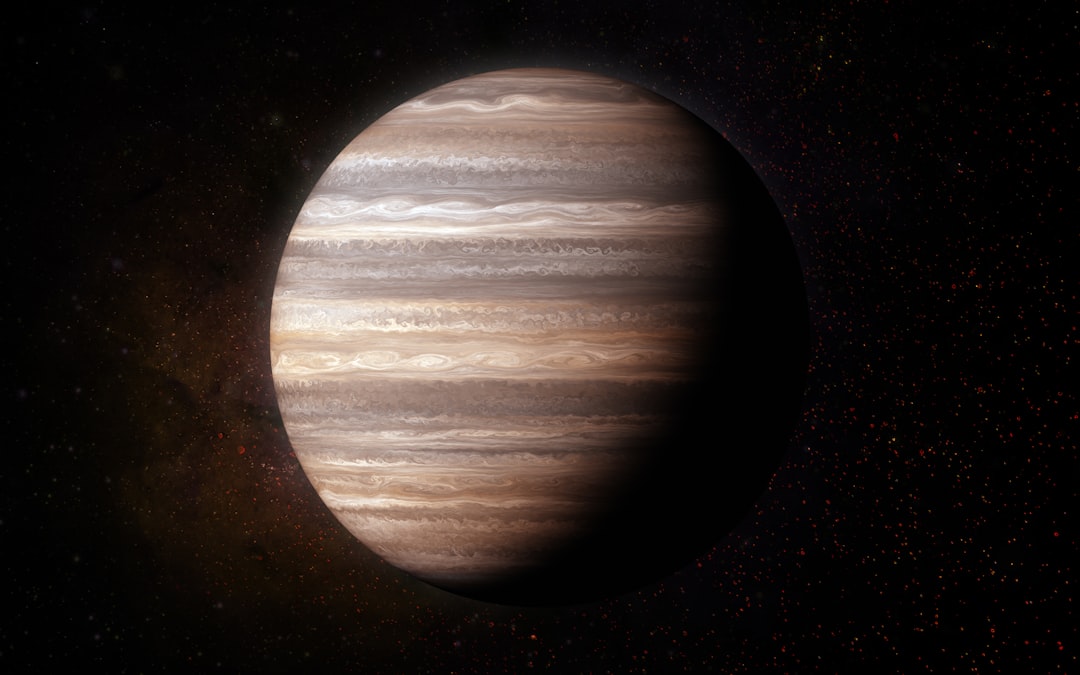
The planet at the center of this story is WASP-121 b, one of the most extreme worlds known to science. Classified as an ultra-hot Jupiter — a subclass of gas giants orbiting perilously close to their host stars — WASP-121 b completes a full orbit in barely thirty hours, racing around its star at a distance so small that it would fit comfortably inside our own Sun. First discovered in 2015 and located approximately 880 light-years from Earth in the constellation Puppis, this planet has become a cornerstone of exoplanetary atmospheric science.
That extreme proximity has profound consequences. Gravitational forces have long since synchronized the planet's rotation with its orbit, a phenomenon known as tidal locking — the same process that ensures our Moon always presents the same face to Earth. One hemisphere of WASP-121 b is therefore subjected to the relentless fury of its host star, a F-type star slightly larger and hotter than our own Sun, while the opposite hemisphere is plunged into permanent, frigid darkness. Average temperatures on the scorched dayside reach a staggering ~2,500 degrees Celsius — hotter than many stars — while the permanent nightside sits at a comparatively mild 725 degrees Celsius. That temperature swing of nearly 1,800 degrees Celsius across a single planetary body represents one of the most extreme thermal gradients ever documented in an exoplanet.
"WASP-121 b is not just an exotic curiosity — it is a natural laboratory for understanding the physics of atmospheres pushed to their absolute limits."
At these temperatures, the atmosphere of WASP-121 b behaves in ways almost unrecognizable compared to planets in our own Solar System. Metals vaporize, molecules are torn apart by heat, and ferocious jet streams likely roar around the planet's equator, redistributing heat from the blistering dayside into the cooler nightside. For years, astronomers have sought to map these dynamics in detail. Now, with JWST, they finally have the tools to do so.
The Science of Terminators: Where Day Meets Night
The zones where daylight gives way to darkness on a tidally locked world are called terminators. Unlike Earth's terminator, which sweeps across our globe as we rotate, the terminators of a tidally locked planet are fixed in space — a permanent morning terminator where the planet's atmosphere faces into the oncoming starlight, and a permanent evening terminator where that same atmosphere trails away into night. These two thin atmospheric columns experience vastly different histories: air flowing around from the dayside arrives at the evening terminator already superheated, while the morning terminator is fed by cooler air completing its long journey across the nightside.
Understanding these terminator regions is not merely an academic exercise. The terminator is precisely the zone through which starlight passes when an exoplanet transits — moves across the face of its star as seen from Earth. When astronomers study an exoplanet's atmosphere using the technique of transmission spectroscopy, they are, in fact, reading the chemical fingerprints left in starlight that has filtered through these terminator regions. For years, however, that light was treated as carrying a single, averaged atmospheric signal. The nuance of morning versus evening had been largely invisible — until now.
Learn more about transmission spectroscopy and exoplanet atmospheres at the NASA James Webb Space Telescope Exoplanet Science page.
A New Approach: Mapping a Planet in Real Time
Led by Cyril Gapp, a PhD student at the Max Planck Institute for Astronomy (MPIA) in Heidelberg, Germany, the research team set out to do something ambitious: rather than treating the transit as a single, averaged event, they resolved it in time, tracking how starlight filtering through the atmosphere changed second by second across the full duration of the transit.
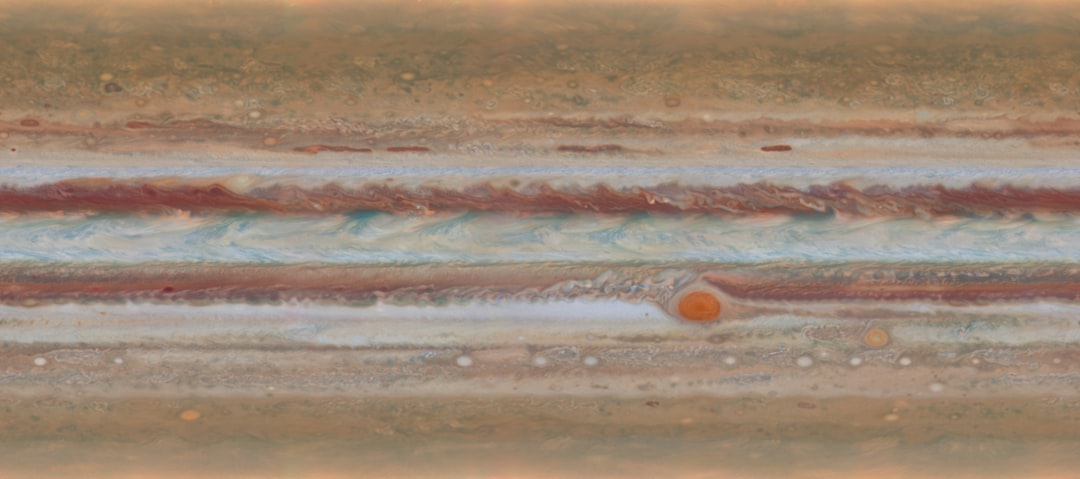
The key insight behind this approach lies in geometry. As WASP-121 b crosses in front of its star, the planet itself rotates by approximately thirty degrees over the course of the transit. This means that at the very beginning of the transit, we are looking through one terminator — the morning side — while by the end, we have rotated our view to encompass the evening side, with brief glimpses of the blazing dayside atmosphere along the way. By splitting the transit data into precise time segments and analyzing each independently, the team constructed the most detailed longitudinal atmospheric map of any exoplanet yet achieved.
- Instrument used: JWST's Near Infrared Camera (NIRCam) in grism spectroscopy mode
- Wavelength range: Near-infrared, sensitive to key molecular absorbers including water and carbon monoxide
- Transit duration analyzed: Approximately 2.5 hours of continuous high-precision spectroscopic data
- Effective longitudinal resolution: First-ever time-resolved terminator mapping of an ultra-hot Jupiter
This technique — sometimes described as ingress-egress differential spectroscopy — had long been theorized as a goal for next-generation telescopes. JWST's unprecedented photometric stability and infrared sensitivity have finally made it a practical reality.
Two Terminators, Two Worlds
The results were striking. The two terminator regions of WASP-121 b emerged as dramatically distinct environments, separated by nothing more than the direction of the planet's relentless atmospheric circulation.
The evening terminator — fed by air that has just crossed the scalding dayside — showed markedly elevated temperatures compared to its morning counterpart. Fierce eastward-blowing jet streams, driven by the enormous temperature contrast between the two hemispheres, sweep superheated air around the planet's equator with wind speeds potentially reaching several kilometers per second. This excess heat made itself apparent in the spectroscopic data in two important ways. First, the evening terminator absorbed noticeably more starlight overall, its puffed-up, hotter atmosphere presenting a larger effective cross-section to the starlight passing through it. Second, astronomers detected a clear enhancement in the carbon monoxide (CO) absorption signal on the evening side, consistent with the higher temperatures promoting the chemical equilibrium that favors CO formation.
The story told by water vapor (H₂O), however, was perhaps the most dramatic of all. On the searing evening terminator, temperatures climbed high enough to initiate thermal dissociation — the process by which intense heat tears apart molecular bonds, reducing water molecules into their constituent hydrogen and oxygen atoms. As a result, the evening terminator showed measurably less water vapor than the cooler morning side, where lower temperatures allowed water molecules to survive intact. This asymmetry in water abundance is one of the clearest observational signatures yet of thermal dissociation operating in a real exoplanetary atmosphere — a phenomenon that had previously been inferred indirectly but never mapped across a planet's terminators in this way.
"The difference in water abundance between the two terminators is a direct window into the thermal and chemical structure of the atmosphere — something we have never been able to resolve on an exoplanet before."
A Physics Puzzle: When Reality Outstrips the Models
When the team compared their observational results against state-of-the-art three-dimensional general circulation models (GCMs) — sophisticated computer simulations of the planet's atmospheric dynamics — a fascinating discrepancy emerged. The observed asymmetry between the morning and evening terminators was stronger than the models predicted. The real atmosphere of WASP-121 b appeared to be more differentiated — more extreme in its contrasts — than even the best current simulations suggested.
The most compelling explanation proposed by the team involves mineral clouds. Unlike the water or ice clouds familiar from Earth, the morning terminator of WASP-121 b, though cooler than its evening counterpart, is still hot enough to vaporize rock. However, as air circulates from the nightside and begins to warm in the approaching starlight, some minerals — particularly silicates such as magnesium silicate (MgSiO₃), as well as iron and other refractory compounds — may condense into tiny solid or liquid particles, forming exotic cloud decks that are entirely unlike anything in our Solar System. These mineral clouds could act as an infrared blanket, trapping heat emitted from the atmosphere's lower layers and thereby suppressing the outgoing thermal emission that the models use to estimate temperatures.
Cloud modeling remains, by the admission of most atmospheric scientists, one of the most notoriously difficult challenges in both terrestrial and exoplanetary atmospheric physics. The complexity of cloud microphysics — how particles nucleate, grow, settle, and interact with radiation — is extraordinarily difficult to capture in global circulation models. The discrepancy between observation and model in this study therefore offers a precise, quantitative target for theorists seeking to improve next-generation atmospheric simulations.
For broader context on cloud formation in exoplanet atmospheres, the European Space Agency's Exoplanet Science portal provides excellent resources.
JWST's Role: A New Era of Atmospheric Mapping
The success of this study is inseparable from the capabilities of the James Webb Space Telescope, which has fundamentally transformed exoplanetary science since its science operations began in 2022. JWST's 6.5-meter segmented primary mirror collects roughly seven times more light than the Hubble Space Telescope, and its suite of infrared instruments can detect the minute dips in starlight caused by molecular absorption with a precision previously unimaginable. For a planet like WASP-121 b, this translates into the ability not just to detect the presence of molecules in the atmosphere, but to map their spatial distribution across the planet's disk.
Previous studies of WASP-121 b, conducted with Hubble's Wide Field Camera 3 and the Spitzer Space Telescope, had already hinted at atmospheric complexity — detecting water vapor, iron, and even evidence for a thermal inversion layer where temperature increases with altitude on the dayside. But those studies necessarily averaged signals across the entire transit, losing the spatial information that JWST is now able to preserve. The new results represent the full realization of a goal that atmospheric scientists have pursued for over a decade.
Explore JWST's full scientific capabilities and mission objectives at the official Webb Space Telescope website.
Beyond WASP-121 b: A Growing Atlas of Alien Weather
Perhaps the most consequential aspect of this work lies in its implications beyond a single planet. The team has already identified several additional ultra-hot Jupiters — including candidates such as WASP-76 b, WASP-189 b, and HAT-P-7 b — whose orbital and physical parameters make them well-suited to the same time-resolved terminator mapping technique. Each of these worlds offers a different set of stellar radiation environments, different orbital distances, and different atmospheric compositions, providing a diverse sample with which to build a comprehensive, comparative understanding of atmospheric dynamics on tidally locked gas giants.
- WASP-76 b: Famous for its asymmetric iron abundance, with iron rain theorized on the nightside — an ideal comparative target
- WASP-189 b: Orbiting a particularly hot A-type star, exposing it to intense ultraviolet radiation that may drive distinct photochemistry
- HAT-P-7 b: Among the first exoplanets to show evidence of equatorial super-rotation via Kepler phase curve observations
In the longer term, the methodology pioneered here may be adapted to the study of smaller, potentially habitable worlds. While current technology does not yet permit terminator mapping of rocky exoplanets orbiting in stellar habitable zones, the theoretical framework being developed with hot Jupiters today will be invaluable when the next generation of extremely large ground-based telescopes — such as the Extremely Large Telescope (ELT) currently under construction in Chile — begins to turn its eye toward smaller, more temperate worlds. The terminators of tidally locked rocky planets in the habitable zones of red dwarf stars, in particular, have been identified as critical regions governing whether liquid water — and potentially life — could persist on such worlds.
Conclusion: One Twilight at a Time
The study of WASP-121 b's twin terminators marks a watershed moment in exoplanetary science. It is the first time astronomers have successfully resolved and separately characterized the morning and evening atmospheric boundaries of a world hundreds of light-years away — transforming an exoplanet from a point of averaged light into a place with geography, weather, and measurable complexity that varies from longitude to longitude. The contrast in temperature, molecular composition, and cloud coverage between the two terminator zones of a single planet is now not merely a theoretical prediction but an observed reality.
The discrepancy between observation and model, far from being a frustration, is perhaps the most valuable scientific gift the data has to offer. It tells researchers precisely where their understanding of atmospheric physics — particularly cloud formation — remains incomplete, and provides a quantitative benchmark against which improved models can be tested. Science, at its most productive, is exactly this: an iterative conversation between what we observe and what we think we understand.
As JWST continues its mission, with years of observations still ahead, and as the community systematically applies this new technique to a growing roster of worlds, we are on the cusp of possessing something remarkable: a genuine comparative climatology of alien planets. Not a catalog of averaged blobs of atmosphere, but a richly textured atlas of alien weather systems, mapped one twilight zone at a time, from the quiet chill of eternal dawn to the searing fury of a sky that never knows night.
The full research findings are published and available through the Max Planck Institute for Astronomy. Additional background on exoplanet atmospheric science can be found through the NASA Exoplanet Exploration Program.